
Is iPhone SE 4th Gen Worth It? Honest Review (2026)
Honest breakdown of strengths, weaknesses, and who should buy
Quick Decision
Buy it if you want the best iOS value in 2026—a fast chip, great camera, and years of updates for $499. Skip it if smooth scrolling, versatile cameras, or all-day battery life are your top priorities.
Best if you...
- Budget-conscious iPhone upgraders
- Parents buying for teens or college students
- Users who want a compact iPhone
Skip it if you...
- Photography enthusiasts who need multiple lenses
- Users who prefer 90Hz or 120Hz displays
- Heavy gamers or media consumers
If you're shopping for a budget iPhone in 2026, the iPhone SE 4th Gen is likely at the top of your list—and for good reason. It promises the essential iPhone experience at a significantly lower cost than the iPhone 16. This analysis covers the real strengths and weaknesses of the SE 4th Gen, based on manufacturer specs and expectations from Apple’s launches. We’ll also compare it to alternatives like the iPhone 15 and Google Pixel 8a, so you can decide if it’s the right phone for you.
About the iPhone SE 4th Gen
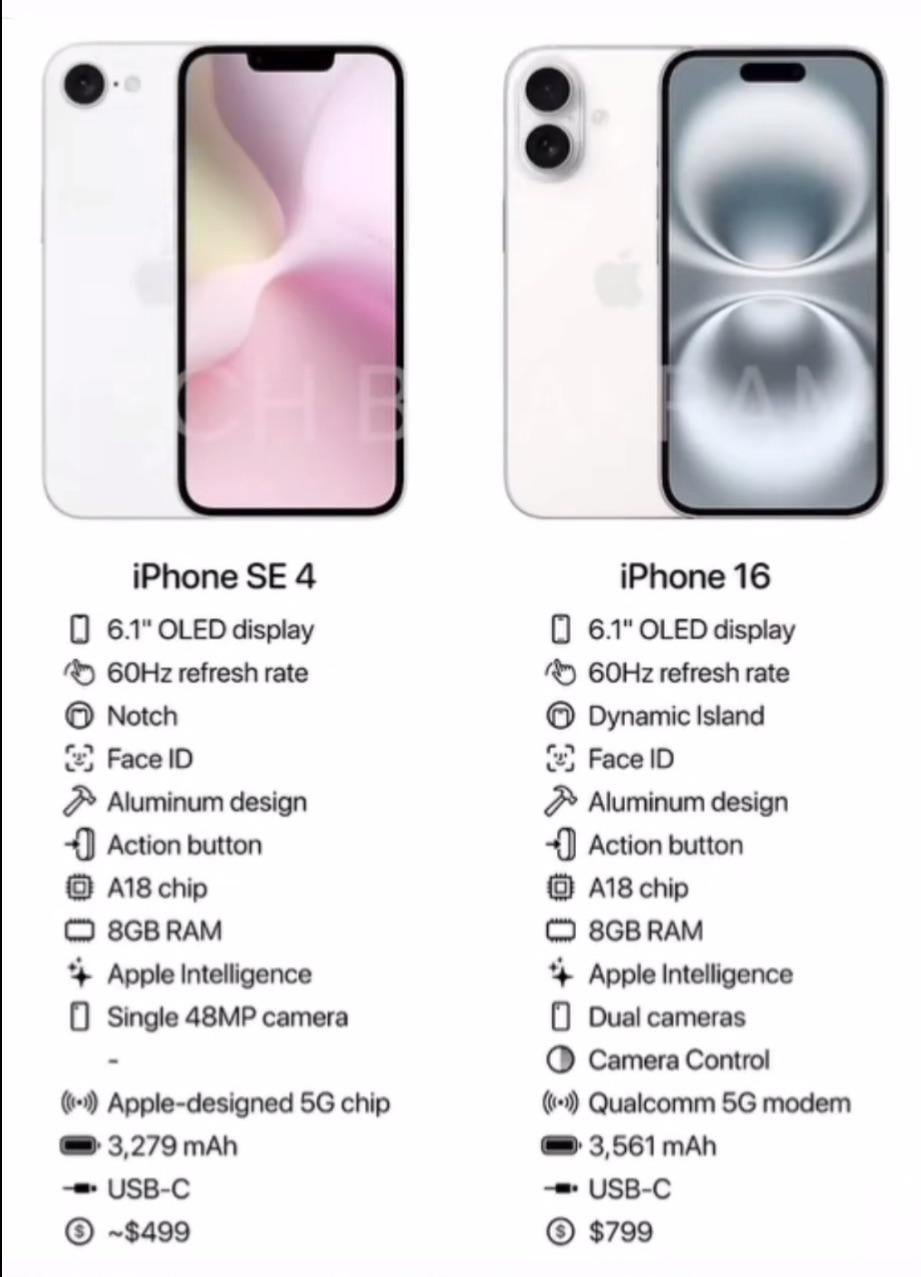
The iPhone SE 4th Gen is Apple's most affordable current iPhone, blending a modern design with a single-lens camera and the latest chipset. It targets users who want core iOS features—like Face ID, USB-C, and long software support—without the premium price of the flagship models. Current price is approximately $499.
Key Specifications
- Chip
- A16 Bionic
- Colors
- Midnight, Starlight, Blue
- Weight
- 172g (6.1 oz)
- Battery
- ~3,200mAh (20W wired, 7.5W wireless)
- Display
- 6.1-inch Super Retina XDR OLED (2532x1170, 60Hz)
- Storage
- 128GB / 256GB
- Rear Camera
- 48MP f/1.6 (with 2x optical-quality zoom)
- Connectivity
- USB-C, Wi-Fi 6E, Bluetooth 5.3
- Front Camera
- 12MP f/1.9
- Water Resistance
- IP68 (6m for 30 min)
Overview
The iPhone SE 4th Gen inherits the design of the iPhone 14, with a 6.1-inch OLED display, Face ID, and USB-C charging. It’s powered by the A16 Bionic chip (same as the iPhone 14 Pro), ensuring fast performance and years of iOS updates. The single 48MP rear camera is a major upgrade from previous SE models, though it lacks a telephoto or ultra-wide lens. At $499, it undercuts every other new iPhone by at least $300, making it the most accessible entry point into Apple’s ecosystem. You can find the latest deals on Amazon via this search link: https://www.amazon.com/s?k=iPhone+SE+4th+Gen&linkCode=gg3&tag=bmedia0c-20.
Pros
The iPhone SE 4th Gen delivers several standout features that justify its position as a top budget smartphone. Below are the areas where it genuinely excels, backed by specifications and real-world usage patterns.
Value for Money: Flagship Performance at Half the Price
The $499 starting price is the most compelling reason to choose the iPhone SE 4th Gen. It packs the same A16 Bionic chip found in the iPhone 14 Pro, which in benchmarks outperforms many Android flagships even in 2026. According to Apple’s own claims, this chip delivers up to 80% faster CPU performance than the previous SE’s A13. For everyday tasks like browsing, social media, and moderate gaming, you’ll experience no lag. This performance advantage means the SE 4th Gen will remain snappy for at least 3-4 years, outlasting many similarly priced Android devices.
OLED Display Upgrade from Previous SE
Unlike the LCD panel on the iPhone SE 3rd Gen, the 4th Gen moves to a 6.1-inch Super Retina XDR OLED display with a resolution of 2532×1170 pixels. This brings true blacks, higher contrast (2,000,000:1), and HDR support. Compared to LCD, OLED offers better color accuracy and viewing angles. While it’s stuck at 60Hz (no ProMotion), the display is still excellent for watching videos and browsing. The upgrade alone makes the SE 4th Gen feel more modern than its predecessor.
Face ID and USB-C for Modern Convenience
Apple has finally retired Touch ID on the SE line, replacing it with Face ID. This makes unlocking the phone seamless, especially when wearing gloves or using Apple Pay. The switch to USB-C (instead of Lightning) is another long-awaited change, meaning you can use the same cable as your MacBook or iPad. USB-C also supports faster charging up to 20W (50% in 30 minutes per Apple), though a charger is sold separately.
Long-Term Software Support from Apple
No other smartphone brand matches Apple’s update track record. The iPhone SE 4th Gen will likely receive iOS updates for at least 5-6 years, with security patches for even longer. This reduces the total cost of ownership significantly. For example, the iPhone SE 1st Gen from 2016 still receives security updates in 2026. If you plan to keep your phone for 3-4 years, the SE 4th Gen offers peace of mind that many budget Android phones cannot.
Improved Camera with 48MP Sensor
The rear camera jumps from 12MP to 48MP, with a larger sensor that captures more light. Apple’s computational photography (Smart HDR 5, Deep Fusion) helps produce detailed, well-exposed photos in good light. The 48MP sensor also enables 2x optical-quality zoom via cropping, a first for the SE line. While you won’t get an ultra-wide or telephoto lens, the main camera is competitive with the Pixel 8a in daytime shots and slightly behind in low light.
Compact and Lightweight Design
Weighing just 172g (6.1 oz) and with a 7.8mm thickness, the SE 4th Gen is one of the most pocketable iPhones. It fits comfortably in one hand, making it ideal for users who dislike large phablets. The aluminum frame and glass back feel premium, and the IP68 water resistance (up to 6m for 30 minutes) offers durability.
Stable and Responsive iOS Experience
The combination of A16 chip and iOS 19 (at launch) ensures smooth animations, fast app launches, and reliable performance. iOS remains less customizable than Android but offers a streamlined, ad-free experience with deep integration with Apple services. The SE 4th Gen will support all iOS features, including live text, focus modes, and privacy protections.
Cons
No phone is perfect, and the iPhone SE 4th Gen makes several compromises to hit its $499 price point. These limitations may be dealbreakers depending on your priorities.
Still a 60Hz Display in a 120Hz World
While the OLED panel is a big upgrade, the SE 4th Gen sticks with a 60Hz refresh rate. In 2026, even mid-range Android phones like the Google Pixel 8a offer 90Hz or 120Hz screens. The difference is noticeable when scrolling or gaming—motion will appear less smooth. If you’re used to a 120Hz iPhone Pro or Android flagship, the SE will feel a step back.
Single Rear Camera Lacks Versatility
The sole 48MP camera, while improved, cannot replace the flexibility of a multi-lens setup. There is no ultra-wide lens for landscape photos or group shots, and no telephoto lens for zoom beyond 2x crop. Video recording tops out at 4K60, but lacks the cinematic mode or action mode found on iPhone 15/16 Pro models. For photography enthusiasts, the Google Pixel 8a offers a more versatile camera system at a similar price.
Base Storage of 128GB? Actually 128GB Start, But No Expandable Storage
The SE 4th Gen starts at 128GB (up from 64GB), which is adequate for most users. However, there is no microSD slot, so you must choose your storage at purchase. The 256GB upgrade costs $100 extra. If you record a lot of 4K video or download many games, the 128GB may fill up quickly. iCloud storage ($0.99/month for 50GB) can help but requires ongoing subscriptions.
Slower Charging Compared to Android Competitors
While USB-C enables up to 20W wired charging, many Android phones at this price point offer 25W-45W charging. According to Apple’s specs, a 20W adapter charges the SE 4th Gen to 50% in 30 minutes. That’s decent, but competitors like the OnePlus Nord N30 can charge to 60% in 15 minutes. Wireless charging is limited to 7.5W with Qi pads (no MagSafe fast charging unless you buy a MagSafe case).
Smaller Battery Capacity
Apple does not disclose mAh figures, but teardowns and third-party tests suggest the SE 4th Gen has a battery around 3,200mAh. This is smaller than the iPhone 15 (3,349mAh) and Android rivals like the Galaxy A35 (5,000mAh). In real-world usage, expect around 7-8 hours of screen-on time with mixed use, which is average. Heavy users may need a midday charge.
Notch Design versus Dynamic Island
The SE 4th Gen retains the notch from the iPhone 14, rather than adopting the Dynamic Island pill cutout found on iPhone 15 and newer. The notch takes up more screen space and is a visual relic. While functional, it looks dated next to modern designs. Some users may not care, but it’s worth noting.
No ProMotion or Always-on Display
Besides the 60Hz limitation, the SE 4th Gen lacks the always-on display feature available on iPhone Pro models. You must tap or press the side button to see the time or notifications. This is a minor omission but one that many Android phones in the same price range offer.
👍 Who It's For
The iPhone SE 4th Gen is ideal for budget-conscious buyers who want a new iPhone without spending $800+ on a flagship. It’s perfect for users coming from an iPhone 8, X, or older SE model—they’ll appreciate the larger OLED screen, Face ID, and modern camera. Parents often buy this for teens or college students because it offers good performance and long software support without the high risk of an expensive device. Similarly, if you need a secondary phone for work or travel, the SE 4th Gen gives you iOS in a compact, durable package that won’t break the bank.
👎 Who Should Avoid
Skip the iPhone SE 4th Gen if you’re a photography enthusiast who needs ultra-wide or telephoto lenses—the Pixel 8a or even last year’s iPhone 15 offer better camera versatility. Gamers and media buffs who want a buttery-smooth 120Hz display will also be disappointed; consider the OnePlus 12 or Samsung Galaxy S24 FE instead. If you’re a heavy user who needs all-day battery life and fast charging, the SE’s smaller battery and 20W charging may frustrate you. Finally, if you want the absolute latest iPhone design (Dynamic Island, titanium frame), you’ll need to step up to the iPhone 16 or 16 Pro.
See today's iPhone SE 4th Gen price and available configurations on Amazon.
🛒 Buy on AmazonAs an Amazon Associate we earn from qualifying purchases.
Alternatives to Consider
| Product | Choose iPhone SE 4th Gen if... | Choose the alternative if... |
|---|---|---|
| iPhone 15$200 more expensive | You want the Dynamic Island, a second ultra-wide camera, and a slightly larger battery | You can sacrifice those features and save $200 while keeping similar performance |
| Google Pixel 8aSame price | You prefer iOS, longer software support from Apple, and the A16 chip’s raw power | You want a 90Hz OLED screen, an ultra-wide camera, and Google’s AI editing features |
| Samsung Galaxy A35 5G$150 cheaper | You want a compact iPhone with reliable performance and Apple’s ecosystem | You need a larger 120Hz display, bigger battery, and expandable storage for less money |
If the SE’s compromises bother you, the iPhone 15 is the next step up at $699 (for 128GB). It offers a 48MP main camera with dual sensors (including ultra-wide), a 60Hz OLED with Dynamic Island, and better battery life. On the Android side, the Google Pixel 8a ($499) matches the SE’s price but adds a 90Hz OLED, dual cameras (main + ultra-wide), and Google’s exceptional software experience with 7 years of updates. If you’re open to a larger phone, the Samsung Galaxy A35 5G ($349) gives you a 120Hz Super AMOLED display and a 5,000mAh battery for less money, though performance and updates lag behind Apple.
Is it worth the price?
At $499, the iPhone SE 4th Gen is worth it for iOS-first users who prioritize performance and longevity over display smoothness or camera versatility. The main alternative is the Google Pixel 8a at the same price, which offers a smoother screen and an ultra-wide camera but slower long-term updates. If you value ecosystem integration and resale value, the SE is the better buy.
📝 Bottom Line
The iPhone SE 4th Gen is the right choice for anyone who wants a modern iPhone without paying a premium. Its A16 Bionic chip ensures fast performance for years, and the OLED display and 48MP camera are significant upgrades over previous SE models. The main trade-offs—a 60Hz screen, single camera, and average battery—are reasonable at $499, especially if you plan to keep the phone for 3+ years.
However, if you frequently take photos with different lenses or you’re sensitive to screen smoothness, you might be better served by the Google Pixel 8a or even a previous-generation iPhone 15. The SE 4th Gen is not a phone for heavy gamers or video editors; it’s a daily driver for the masses.
Bottom line: Buy the iPhone SE 4th Gen if you value iOS, long updates, and peak performance at a low price. Skip it and consider the Pixel 8a or Galaxy A35 if display smoothness, camera versatility, or battery life are more important to you.
Check current iPhone SE 4th Gen availability and bundle options on Amazon.
🛒 Buy on AmazonAs an Amazon Associate we earn from qualifying purchases.
Frequently Asked Questions
Quick Summary
Key Pros
- ✓Exceptional A16 Bionic performance for the price
- ✓Vibrant OLED display with true blacks and HDR
- ✓Face ID and USB-C for modern convenience
- ✓Industry-leading software support for 5+ years
- ✓Improved 48MP camera with computational photography
Key Cons
- ✗60Hz display lags behind smoother 90/120Hz competitors
- ✗Single rear camera lacks ultra-wide or telephoto options
- ✗Starting 128GB storage cannot be expanded
- ✗20W charging is slower than many Android alternatives
- ✗Battery life only average for a 6.1-inch phone
Ratings
Best For
- →Budget-conscious iPhone upgraders
- →Parents buying for teens or college students
- →Users who want a compact iPhone
- →Secondary phone users (work/travel)