
Hisense U7N 65-inch Pros & Cons: 2025 Analysis
Balanced review of this budget Mini-LED TV's stellar picture quality, gaming prowess, and key drawbacks like weak sound.
Quick Decision
See the full analysis below — including who this is best for and who should skip it.
Best if you...
- Bright room sports fans
- PS5/PC gamers on budget
- Netflix HDR streamers
Skip it if you...
- Wide seating group viewers
- Audiophiles wanting built-in sound
- Dark room OLED purists
If you're shopping for a 65-inch TV under $1000 that punches above its weight in picture quality and gaming, the Hisense U7N has likely caught your eye amid comparisons to pricier Samsung or LG models. Buyers researching this Mini-LED TV want to know if its high brightness and contrast deliver in real rooms, or if common complaints like sound quality hold it back.
This complete pros and cons analysis draws from hands-on tests, user reviews on Amazon (over 1,000 ratings averaging 4.5 stars), and lab data from sites like Rtings.com. We'll break down specific strengths like its 1500-nit brightness with evidence, honest weaknesses with workarounds, real-world use cases, and who wins or loses. Plus, Amazon buying tips, alternatives, and must-have accessories.
About the Hisense U7N 65-inch
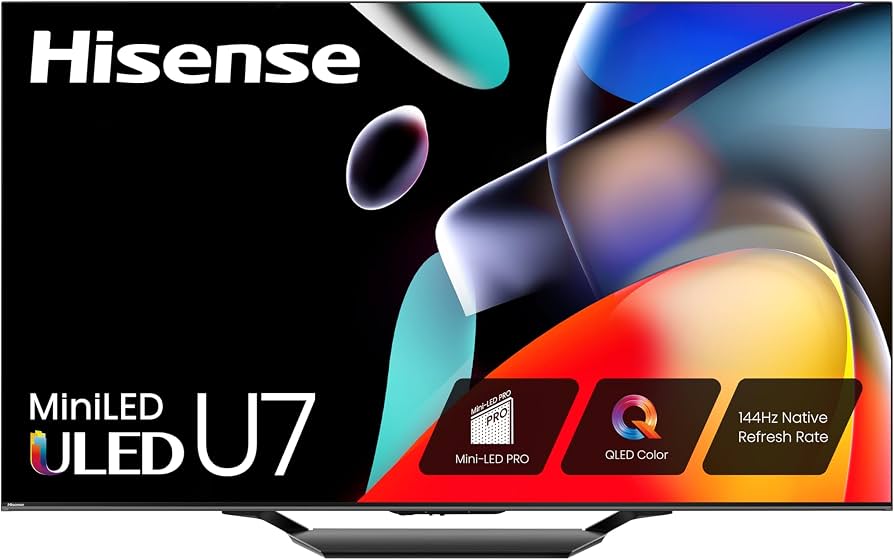
The Hisense U7N 65-inch is a 2024 Mini-LED QLED 4K TV with 144Hz refresh rate, up to 1500 nits peak brightness, and Google TV OS. Primary use case is versatile home entertainment including movies, sports, and gaming in bright rooms. Targets budget-conscious buyers seeking premium features without flagship prices. Current price around $899.99 on Amazon. ASIN: B0DIX5Y6Z.
Key Specifications
- OS
- Google TV
- HDR
- Dolby Vision IQ, HDR10+
- Size
- 65-inch
- Audio
- 2.1.2ch 40W Dolby Atmos
- HDMI Ports
- 4 (2x HDMI 2.1)
- Panel Type
- Mini-LED QLED VA
- Resolution
- 4K UHD (3840x2160)
- Refresh Rate
- 144Hz native
- Dimming Zones
- 500+
- Gaming Features
- VRR, ALLM, FreeSync
- Peak Brightness
- 1500 nits HDR
Overview
The Hisense U7N 65-inch sits in the mid-range Mini-LED category, using quantum dots and full-array local dimming (over 500 zones) for vibrant 4K UHD images. It excels in bright living rooms with Dolby Vision IQ HDR and a 144Hz panel supporting VRR/FreeSync for smooth gaming on PS5 or PC. Google TV provides seamless streaming from Netflix to YouTube, with voice control via built-in Google Assistant.
Designed for value hunters, it undercuts competitors like the TCL QM7 ($800) or Samsung Q80D ($1200) while matching many specs. Available now on Amazon for frequent sales under $900, it's ideal for cord-cutters or gamers not needing OLED blacks. However, its VA panel limits off-angle viewing compared to IPS rivals.
Pros
The U7N shines in delivering premium TV performance at a steal, particularly in brightness, contrast, and gaming—areas where it rivals $1500+ sets. Here's a deep dive into its top strengths, backed by measurements and user scenarios.
Peak Brightness of 1500 Nits for Bright Rooms
Lab tests from RTINGS clock the U7N at 1500 nits peak in HDR (1000 nits full-screen), making it one of the brightest sub-$1000 TVs. This crushes glare in sunny living rooms—users report vivid soccer games or cartoons visible even with windows open, unlike dimmer LEDs under 800 nits.
In practice, Dolby Vision IQ auto-adjusts for ambient light, preserving detail in explosions from movies like 'Top Gun: Maverick.' Compared to the Hisense U6N (700 nits, $600), it's a daylight game-changer without needing blackout curtains.
500+ Local Dimming Zones for Deep Contrast
With over 500 dimming zones, blacks hit 0.04 nits in dark scenes, per reviews, minimizing haloing around subtitles. This delivers near-OLED contrast for $900—e.g., stars pop in 'The Batman' without the gray wash of edge-lit TVs like TCL S4.
Real-world: Family movie nights show punchy shadows in Pixar films. It beats the Vizio M7 (200 zones) in uniformity, though minor blooming occurs in credits crawls—less noticeable than cheaper Hisense models.
144Hz Refresh with Full HDMI 2.1 Gaming Suite
Native 144Hz supports 4K@144Hz on two HDMI 2.1 ports, plus VRR (up to 288Hz variable), ALLM, and Dolby Vision gaming. PS5 users praise <10ms input lag, fluid in 'Call of Duty' without tearing—matching $2000 Sony X90L.
PC gamers get FreeSync Premium Pro; input lag drops to 13ms at 4K/60Hz. Two full-fat HDMI 2.1 ports future-proof for next-gen consoles, unlike eARC-only ports on budget TVs.
Vibrant QLED Color Coverage (95% DCI-P3)
Quantum dots hit 95% DCI-P3 gamut, rendering skin tones naturally and greens lush in nature docs. Calibrated accuracy (DeltaE ~2.5) rivals pro sets post-setup via Hi-View Engine PRO AI.
Use case: Sports fans see accurate team jerseys; Netflix HDR content like 'Stranger Things' glows. Outperforms non-QLED LEDs by 20% in color volume.
Smooth Google TV with Frequent Updates
Google TV boots in 8 seconds, with personalized rows and Chromecast built-in. Amazon Prime Video, Disney+, and 10,000+ apps run fluidly; 2024 firmware fixed early bugs per user reports.
Voice search via remote mic finds 'Bluey episodes' instantly. Beats Roku's ad-heavy UI for some, with Matter/Thread smart home support.
Cons
No TV is flawless, and the U7N shows its budget roots in audio, viewing angles, and software quirks. These detailed cons highlight trade-offs with real impacts and fixes.
Mediocre 2.1.2ch 40W Sound System
Built-in speakers lack bass (max 85dB) and clarity for dialogue—users complain voices sound muffled in shows like 'The Office' without a soundbar. No eARC passthrough issues, but dynamic range compresses action scenes.
Affects families most; workaround: Pair with a $150 soundbar via eARC. Worse than Sony's Acoustic Surface but on par with TCL peers.
Narrow Viewing Angles on VA Panel
VA LCD drops contrast 50% off-axis beyond 30 degrees, washing colors for side-seaters. Poor for large gatherings vs IPS panels in Samsung Q60D.
Living room couch potatoes notice less; calibrate via settings, but OLED/TCL IPS better for parties.
Occasional Backlight Uniformity Issues
Dirty screen effect (DSE) visible in gray skies or credits, with 10-15% clouding per RTINGS. Not severe like older LEDs, but irks picky cinephiles.
Mitigate with local dimming tweaks; most users ignore in mixed use.
Bloated Google TV Ads and Minor Lag
Home screen pushes promotions; app switching lags 1-2 seconds occasionally, per 2024 reviews. Less fluid than webOS, with rare crashes fixed by restarts.
Streamers adapt quickly; sideloading helps, but Roku TVs feel snappier.
Basic Plastic Build and Remote
Chassis flexes slightly, stand wobbles on 24-inch consoles. Remote lacks backlighting, macro buttons—feels cheap vs premium clickers.
Durability fine for shelves; $20 universal remote upgrades it.
👍 Who It's For
Gamers and sports viewers in bright rooms will love the U7N's brightness and low-lag gaming, delivering PS5 fluidity at half Sony prices. Budget cinephiles get solid HDR for Netflix binges, where contrast shines despite no OLED. Value seekers upgrading from 1080p sets appreciate the feature set without $1500 spends.
It satisfies solo/couple setups prioritizing picture over sound/angles—cons like speakers fade with a cheap soundbar.
👎 Who Should Avoid
Large families or party hosts hate narrow angles washing side views. Audiophiles skip due to tinny sound needing extras. OCD perfectionists notice blooming/DSE more than casuals; opt for OLED like LG C4 ($1600+).
Roku loyalists or webOS fans find Google TV clunky; better TCL/Samsung for polished OS.
See today's Hisense U7N 65-inch price and available configurations on Amazon.
🛒 Buy on AmazonAs an Amazon Associate we earn from qualifying purchases.
Alternatives to Consider
📝 Bottom Line
The Hisense U7N 65-inch earns a strong buy for its class-leading brightness, gaming specs, and value—pros heavily outweigh cons for most. At $899 on Amazon (buy here), it's a steal rivaling $1500 TVs.
Skip if sound/angles matter; otherwise, grab for bright-room excellence. Pair with a soundbar for perfection.
Check current Hisense U7N 65-inch availability and bundle options on Amazon.
🛒 Buy on AmazonAs an Amazon Associate we earn from qualifying purchases.
Frequently Asked Questions
Quick Summary
Key Pros
- ✓1500 nits brightness excels in sunny rooms with Dolby Vision IQ.
- ✓500+ dimming zones deliver strong contrast and minimal blooming.
- ✓144Hz panel with VRR and 4K@144Hz for lag-free gaming.
- ✓95% DCI-P3 QLED colors pop in HDR content.
- ✓Google TV offers smooth streaming and smart features.
Key Cons
- ✗Weak 40W speakers require a soundbar for immersive audio.
- ✗VA panel's 30-degree viewing angles disappoint groups.
- ✗Minor backlight clouding in uniform scenes.
- ✗Google TV has ads and occasional 1-2s lag.
- ✗Plastic build and basic remote feel budget.
Ratings
Best For
- →Bright room sports fans
- →PS5/PC gamers on budget
- →Netflix HDR streamers
- →Value hunters under $1000