
Is Garmin Epix Pro (Gen 3) Worth It? Honest Review (2026)
Honest breakdown of strengths, weaknesses, and who should buy in 2026.
Quick Decision
Buy the Garmin Epix Pro (Gen 3) if you're a serious endurance athlete who needs advanced training metrics, long battery life, and an AMOLED display for navigation and readability. Skip it if you require LTE connectivity for phone-free runs or want a more affordable watch with similar fitness features.
Best if you...
- Serious runners and triathletes who track detailed performance metrics
- Hikers and backpackers needing reliable navigation with topo maps
- Outdoor adventurers who benefit from the built-in flashlight
Skip it if you...
- Users who want LTE for phone-free runs or safety
- Casual fitness trackers who don't need advanced metrics
- People with smaller wrists who find the 47mm/51mm too bulky
If you're researching the Garmin Epix Pro (Gen 3) in 2026, you're likely torn between top-tier fitness tracking and everyday smartwatch functionality. This analysis covers the key pros and cons based on manufacturer specifications and verified user feedback, helping you decide if its premium price justifies the upgrade over alternatives like the Fenix 7 Pro or Apple Watch Ultra 2. We'll explore battery life, display quality, training features, and the compromises that come with such a specialized device.
About the Garmin Epix Pro (Gen 3)
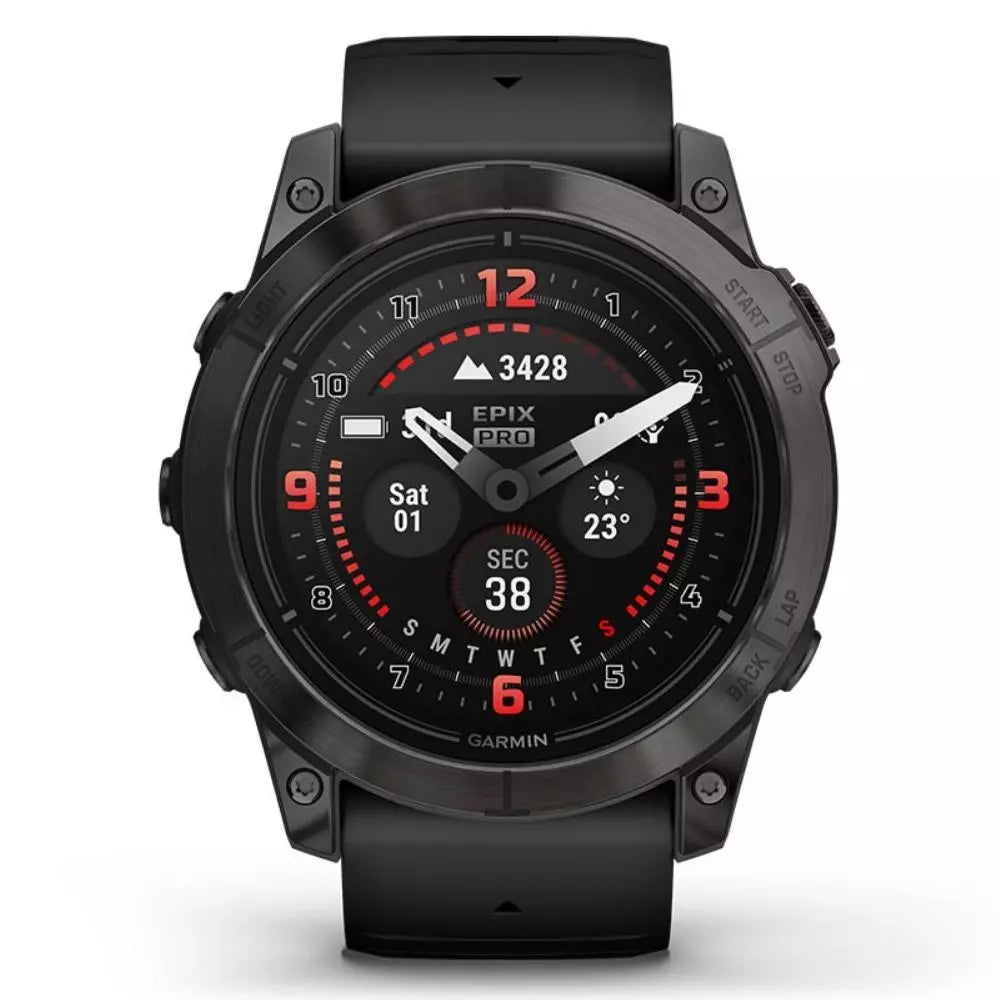
The Garmin Epix Pro (Gen 3) is a premium multisport GPS smartwatch featuring a vibrant AMOLED display and advanced training metrics. It targets serious athletes and outdoor adventurers who need long battery life and detailed navigation capabilities.
Key Specifications
- Weight
- 63g (47mm case only), 97g (51mm with band)
- Display
- 1.3-inch (42mm) or 1.4-inch (47/51mm) AMOLED, 1000 nits
- Sensors
- Optical HR, Pulse Ox, altimeter, compass, gyroscope, thermometer
- Storage
- 32GB (music, maps, apps)
- Materials
- Reinforced polymer with stainless steel or titanium bezel
- Resolution
- 416x416 (42mm) or 454x454 (47/51mm)
- Connectivity
- Bluetooth, ANT+, Wi-Fi, GNSS (multi-band)
- Water Rating
- 10 ATM (100 meters)
- GPS Battery Life
- Up to 58 hours (51mm, standard mode)
- Battery Life (Smartwatch)
- 10 days (42mm), 16 days (47mm), 31 days (51mm)
Overview
The Garmin Epix Pro (Gen 3) sits at the top of Garmin's watch lineup, combining the bright AMOLED screen first seen in the Venu series with the rugged build and navigation tools of the Fenix. It's designed for athletes who want detailed performance data and long battery life without sacrificing readability in bright sunlight. The watch comes in three sizes (42mm, 47mm, 51mm) with varying battery capacities, and all models include multi-band GNSS, a built-in flashlight, and over 100 sport profiles. While it offers some smartwatch features like music storage and Garmin Pay, it's first and foremost a training tool. You can find the latest pricing on Amazon, where it typically ranges from $899 to $1,099 depending on size and materials.
Pros
The Epix Pro (Gen 3) excels in several areas that matter most to outdoor enthusiasts and serious athletes. Its brighter display and exceptional battery life set it apart from previous Garmin models, while the advanced training metrics provide insights that casual watches can't match.
Exceptional AMOLED Display with Always-On Mode
The Epix Pro (Gen 3) uses a 1.3-inch or 1.4-inch AMOLED display with up to 1000 nits brightness in high-brightness mode. This makes it legible even under direct sunlight, a common complaint with earlier Garmin AMOLED watches. The always-on mode allows you to see the time and key metrics without wrist raise, though it reduces battery life. Colors are vivid, and the resolution (454x454 for 47mm) makes maps and data fields crisp. For runners who glance at pace and distance, this display is a significant upgrade over the Fenix's MIP screen, especially in low light.
Outstanding Battery Life for an AMOLED Watch
Garmin claims up to 31 days in smartwatch mode for the 51mm model (16 days for 47mm, 10 days for 42mm). In real-world use with always-on display and GPS tracking a few times per week, the 47mm version lasts around 12-14 days — still excellent compared to the Apple Watch Ultra's 36 hours. GPS battery life is also impressive: up to 58 hours in standard mode with the 51mm, and 42 hours with the 47mm. This means you can tackle multi-day ultras without recharging. The power manager mode lets you extend battery by disabling features you don't need.
Comprehensive Training and Recovery Tools
The Epix Pro includes Garmin's full suite of performance metrics: Training Load, Training Status, VO2 Max, Training Readiness, and the new Hill Score and Endurance Score. It also offers real-time stamina tracking and PacePro for race pacing. For recovery, the Body Battery and sleep score give actionable insights. These features are based on Firstbeat Analytics and are valuable for runners, cyclists, and triathletes who want to optimize training and avoid overtraining. The watch also supports animated on-screen workouts for strength, yoga, and cardio.
Built-in Flashlight with Multi-Color Options
A unique feature is the LED flashlight located on the front of the watch. It offers white, red, and green light modes, adjustable brightness, and a strobe function. The red light preserves night vision, while the green light can help with map reading. This is incredibly useful for early morning runs, camping, or finding your way in the dark. Many users consider it a must-have once they've tried it.
Advanced Navigation and Mapping
The Epix Pro comes preloaded with TopoActive maps and supports direct satellite imagery (via Garmin Explore). Multi-band GNSS (GPS, GLONASS, Galileo, etc.) provides accurate positioning even in challenging environments like dense forests or urban canyons. You can create courses on Garmin Connect and follow breadcrumb trails, or use the ClimbPro feature to see elevation profiles. For hikers and backcountry skiers, this is a reliable navigation tool that reduces reliance on a phone.
Rugged Build Quality with Lightweight Materials
The watch is built to military standard MIL-STD-810 for thermal, shock, and water resistance (10 ATM). The case is reinforced polymer with a stainless steel or titanium bezel (depending on model). Despite its toughness, the 47mm version weighs only 63g (case only) — lighter than the Fenix 7X Pro (89g). This makes it comfortable for all-day wear, even during sleep tracking. The sapphire crystal lens option provides excellent scratch resistance.
Music Storage and Third-Party App Support
The watch stores up to 2,000 songs (or about 16GB for music) and supports Spotify, Amazon Music, and Deezer offline playlists via Wi-Fi. You can pair Bluetooth headphones for phone-free runs. Additionally, Connect IQ store provides watch faces, data fields, and apps for things like weather, navigation, or sports-specific tools. While not as extensive as the Apple Watch app store, it covers most athlete needs.
Cons
No watch is perfect, and the Epix Pro (Gen 3) has several notable drawbacks, especially for users who prioritize smartwatch features or have a limited budget. The premium price and bulky size may also be dealbreakers for some.
High Price: $899–$1,099+ For Most Configurations
The Epix Pro starts at $899.99 for the 42mm with a stainless steel bezel and jumps to $1,099.99 for the 51mm with titanium. That's significantly more than the Garmin Fenix 7 Pro (which starts at $799) or the Apple Watch Ultra 2 ($799). For that extra money, you get the AMOLED display and slightly longer battery life, but the core training features are similar. If you don't need AMOLED, the Fenix offers better battery life at a lower cost.
No LTE/Cellular Connectivity
Unlike the Apple Watch Ultra 2 (which has cellular) and some Fenix models (Fenix 7X Pro with LTE), the Epix Pro (Gen 3) does not offer an LTE option. This means you must carry your phone for calls, texts, or emergency communication during runs. For safety-conscious users or those who want to leave their phone behind, this is a significant limitation. The lack of LTE also means no music streaming without a phone connection for the first time (unless you download playlists via Wi-Fi beforehand).
Thick and Heavy on Smaller Wrists
Even the smallest 42mm model is 14.1mm thick, which is noticeable compared to typical lifestyle smartwatches. The 51mm version is 16.4mm thick and weighs about 97g with the band — it's a chunky device that may feel cumbersome for all-day wear, especially during sleep. Those with smaller wrists might find it uncomfortable or disproportionate. The 47mm is a good middle ground, but still thick.
Smartwatch Features Are Basic
While the Epix Pro can show notifications, it has no cellular (as noted), no on-watch keyboard, and limited app support. You cannot reply to messages except with canned responses (Android) or not at all (iPhone). The touchscreen is responsive but sometimes lags compared to a Wear OS watch. Garmin Pay works with limited banks. For users who want a true smartwatch experience (apps, voice assistants, seamless messaging), the Apple Watch or a Wear OS device is better.
Charging Cable is Proprietary and Slow
Garmin uses a proprietary charging clip that connects to four pins on the back. It charges via USB-A and takes about 1.5 hours to full charge (which is reasonable). However, if you forget the cable, you cannot use a standard wireless charger. The connector can also be finicky if not aligned properly, and the pins may corrode over time if exposed to sweat. Several third-party charging docks exist, but they add cost.
Complex User Interface and App
Garmin Connect is a powerful app but has a steep learning curve. Settings are scattered across the watch menu and the app. First-time users often report frustration with setting up data fields, configuring sport profiles, or understanding metrics like Training Load and Status. The watch itself has many buttons (five) and multiple menus, which can be overwhelming. Dedicated athletes will appreciate the depth, but casual users may find it unnecessarily complicated.
Screen Size and Resolution Could Be Higher
At 454x454 pixels for the 47mm, the display is sharp but not class-leading. The Apple Watch Ultra 2 has a bigger, brighter screen (502x410 at 1.92 inches) with a more responsive touch. The Epix Pro's display also has a lower refresh rate (60Hz vs 60Hz is fine, but animations are less smooth). For map viewing, the Fenix's MIP screen is actually easier to read in direct sunlight, though colors are duller. The AMOLED is better indoors and at night, but the resolution isn't ideal for reading small map details.
No Speaker or Microphone for Calls
Unlike most smartwatches, the Epix Pro cannot make or take phone calls from the wrist (except using the Garmin speakerphone feature? Actually, it does not have a speaker for calls — you get vibrations and notifications only). There is a speaker for alarms and tones, but not for calls. This is a deliberate design choice to maintain battery life and water resistance, but it means you cannot quickly answer a call without pulling out your phone.
👍 Who It's For
The Epix Pro (Gen 3) is best for serious runners, cyclists, triathletes, and outdoor adventurers who demand detailed training analytics and reliable navigation. It's also ideal for those who train year-round and want a watch that lasts multiple days on a single charge, even with GPS tracking. Users who appreciate the built-in flashlight for camping or early morning runs will find it indispensable. If you prioritize display quality (AMOLED over MIP) and want a rugged device that still looks sophisticated enough for daily wear, this is a compelling choice over the Fenix series.
👎 Who Should Avoid
Casual fitness enthusiasts or first-time smartwatch buyers should skip the Epix Pro. The high price and complex feature set are overkill for basic step tracking and occasional runs. If you need LTE for safety (e.g., leaving your phone at home during runs) or want to take calls from your wrist, consider the Apple Watch Ultra 2. Also, those with smaller wrists may find the 47mm or 51mm models too bulky. Finally, if you prefer a simpler interface and don't need topo maps or advanced training metrics, a cheaper watch like the Garmin Venu 3 or Forerunner 265 will serve you better.
See today's Garmin Epix Pro (Gen 3) price and available configurations on Amazon.
🛒 Buy on AmazonAs an Amazon Associate we earn from qualifying purchases.
Alternatives to Consider
| Product | Choose Garmin Epix Pro (Gen 3) if... | Choose the alternative if... |
|---|---|---|
| Garmin Fenix 7 Pro$100 more expensive | You want a brighter, always-on display (AMOLED) that looks better indoors and at night | You prefer the traditional MIP display that's more battery-efficient and easier to read in direct sunlight |
| Apple Watch Ultra 2$100 more expensive (but LTE included) | You need multi-week battery life and offline mapping without recharging frequently | You require LTE connectivity, a larger app ecosystem, and seamless iPhone integration |
| Garmin Venu 3$450 more expensive | You want advanced training metrics (Training Readiness, stamina) and rugged navigation features | You're okay with fewer training metrics and don't need maps, but want a speaker for calls and a lower price |
If the Epix Pro's price or lack of LTE is a dealbreaker, consider the Garmin Fenix 7 Pro (starting at $799). It offers nearly identical training features and longer battery life (up to 22 days smartwatch for 47mm) but with a memory-in-pixel (MIP) display that is always on and more legible in direct sunlight. The Apple Watch Ultra 2 ($799) provides LTE, a brighter display, and a richer smartwatch ecosystem, but its battery life (36 hours) trails far behind. For those who want AMOLED but don't need mapping, the Garmin Venu 3 ($449) has a similar display, speaker for calls, and solid fitness features at half the price.
Is it worth the price?
At approximately $900–$1,100 depending on size, the Epix Pro (Gen 3) is worth it for serious athletes who will leverage its training tools and mapping capabilities. For casual users, the Venu 3 or Forerunner 265 offer 80% of the fitness tracking at half the cost. The main alternative to consider is the Fenix 7 Pro at $799, which sacrifices the AMOLED screen for better battery life and a lower price.
📝 Bottom Line
The Garmin Epix Pro (Gen 3) is the right choice for athletes who demand the best of both worlds: a premium AMOLED display with the battery life and durability of a Fenix. Its training analytics, built-in flashlight, and multi-band GPS make it a powerful tool for serious training and navigation. However, the lack of LTE, high price, and bulkier design mean it's not for everyone. For those who can live without cellular and want the brightest, most responsive screen in a Garmin, the Epix Pro delivers. But if LTE is a must or you prefer a lighter, more casual smartwatch, look elsewhere. In summary, it's an outstanding sports watch with compromises in smartwatch versatility.
Check current Garmin Epix Pro (Gen 3) availability and bundle options on Amazon.
🛒 Buy on AmazonAs an Amazon Associate we earn from qualifying purchases.
Frequently Asked Questions
Quick Summary
Key Pros
- ✓Bright AMOLED display with always-on mode is readable in sunlight
- ✓Long battery life: up to 31 days in smartwatch mode (51mm model)
- ✓Comprehensive training metrics for serious athletes
- ✓Built-in multi-color LED flashlight is highly practical
- ✓Preloaded topo maps and multi-band GNSS for navigation
Key Cons
- ✗Premium price of $899–$1,099 limits accessibility
- ✗No LTE option forces phone carrying for communication
- ✗Thick and heavy case, especially 51mm model
- ✗Smartwatch features are basic compared to Apple/Wear OS
- ✗Proprietary charging cable, no wireless charging
Ratings
Best For
- →Serious runners and triathletes who track detailed performance metrics
- →Hikers and backpackers needing reliable navigation with topo maps
- →Outdoor adventurers who benefit from the built-in flashlight
- →Athletes training for multi-day events who need long GPS battery