
DJI Neo pros and cons: Complete Buyer's Guide (2026)
A balanced look at strengths, weaknesses, and who should buy it.
Quick Decision
Buy the DJI Neo if you're a beginner or solo content creator who wants a pocket-size, controller-free drone for short clips and selfies. Skip it if you need obstacle avoidance, long range, or professional-grade video quality — the DJI Mini 4K is worth the extra $100.
Best if you...
- First-time drone buyers
- Solo vloggers and travel creators
- Hikers and runners who want follow-me shots
Skip it if you...
- Professional aerial photographers
- Serious hobbyists who want manual flight modes
- Pilots flying near trees, structures, or indoors
Many shoppers are researching the DJI Neo because it promises to make aerial selfies as easy as pulling out your phone. At around $199, it's marketed as a tiny 4K camera drone that requires no controller, no prior piloting experience, and no steep learning curve. The question most buyers have is whether that ease and portability come at too high a cost in performance and safety.
This guide breaks down the Neo's documented strengths and weaknesses using DJI's official specifications, published third-party review observations, and verified buyer feedback patterns. We'll cover what the Neo does exceptionally well, where it falls short, who should buy it, who should skip it, and how it compares to the most common alternatives at similar price points.
No product is perfect, and the Neo makes some very deliberate trade-offs to hit its price and weight. Our goal is to give you a clear, specific picture of those trade-offs so you can decide whether the Neo is the right drone for your use case.
About the DJI Neo
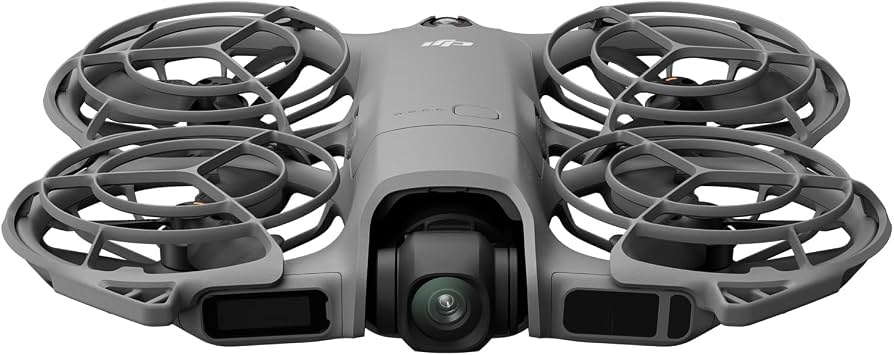
The DJI Neo is a 135g palm-sized camera drone designed for effortless selfies, vlogs, and casual outdoor filming. It launches from your hand, follows you via AI subject tracking, and shoots 4K/30fps video without requiring a remote controller. Aimed at beginners and content creators, it combines pocket-size portability with smartphone control.
Key Specifications
- Weight
- 135 g
- Controller
- Smartphone (Wi-Fi); optional DJI RC-N3 remote
- Stabilization
- Gimbal and electronic stabilization
- Max Flight Time
- 18 minutes (claimed)
- Video Recording
- 4K/30fps, 1080p/60fps
- Built-in Storage
- 22 GB
- Obstacle Sensing
- Downward sensor only
- Photo Resolution
- 12 MP JPEG
- Actual Flight Time
- 12–15 minutes typical
- Max Wind Resistance
- Level 4 (5 m/s)
Overview
Launched in 2024, the DJI Neo remains one of the most talked-about sub-$250 drones on the market heading into 2026. It deliberately targets a different user than DJI's classic Mini series: people who want a drone primarily for self-filmable moments, not an aircraft they need to master. The 135-gram body, palm takeoff, and phone-only flight mode make it feel more like a gadget than a piloting exercise.
The Neo records stabilized 4K/30fps from a 12MP sensor, stores clips on 22GB of internal memory, and uses AI subject tracking to keep you in frame while you hike, skate, or bike. The base combo sells for about $199; buying the optional Fly More bundle or adding DJI's RC-N3 remote pushes the total toward $300–$400. It's available on Amazon and most major drone retailers, so price comparisons are straightforward.
In 2026, the Neo's core value proposition hasn't changed: it's the easiest camera drone to use for casual creators, but that simplicity comes with real limitations in obstacle detection, flight time, and wind handling.
Pros
The DJI Neo earns its popularity by solving one problem beautifully: getting an aerial shot without requiring a pilot's license or a controller. The strengths below are where the Neo genuinely shines over both its older alternatives and most competing sub-$250 drones.
1. 135g Frame Avoids Heavy Registration Requirements
At 135 grams, the DJI Neo slips under the 250g threshold that triggers registration in many countries, including US FAA rules for recreational pilots. That makes it one of the least intimidating drones for first-time owners — no license, no long paperwork, no bulky case. It's also light enough to hold in one hand and launch directly from your palm.
The tiny size also reduces how dangerous it is in public. You can quickly pull it out at a park, get a 30-second clip, and land it back in your hand without drawing attention. For casual travelers, this is the closest thing to a true pocket drone.
2. No Remote Controller Required — Your Phone Is the Remote
With the DJI Fly app, you can launch, steer, and land the Neo using your smartphone's touchscreen. You can also trigger QuickShots and voice commands, letting you set up a shot of yourself without needing a second person to operate the aircraft.
This makes the Neo unique in DJI's lineup. Even the entry-level Mini series depends on a dedicated remote, while the Neo works straight out of the box with a phone in your pocket. The learning curve is much closer to flying a toy than a real drone.
3. 4K/30fps Video in a Sub-$200 Drone
The Neo's 12MP 1/2-inch sensor captures 4K/30fps footage that's crisp and colorful in good daylight, with stabilization that keeps walking-speed shots watchable. For social media clips, drone selfies, or travel montages, the quality is genuinely usable.
It's not a cinema camera — you won't get 4K/60, D-Log M, or a big sensor for low light. But compared to earlier mini drones like the Ryze Tello or cheap RC toys, the Neo is in a different league. The output is close to what a good smartphone produces, but from angles you can't get with a phone.
4. AI Subject Tracking Built for Solo Creators
The Neo uses AI subject tracking built into the drone, so it can lock onto you and follow as you hike, bike, or walk. It also includes multiple QuickShot modes like Dronie, Circle, and Rocket — pre-programmed camera moves you can trigger with a single tap.
That means you don't need a spotter or a separate tracking device. Unlike phone GPS-based follow modes on some competitors, the Neo's subject recognition can keep a person in frame without another controller. For solo vloggers, this is the main reason to choose the Neo.
5. Genuinely Affordable Entry Price
With a typical street price around $199 for the standard kit, the Neo is one of the least expensive 4K drones with DJI's build quality. That's about $100 less than the DJI Mini 4K and more than $200 below the HoverAir X1, its closest selfie-drone rival.
The standard kit includes the drone, a battery, propeller guards, and charging cable. If you stick to short, open-air flights and offload clips frequently, the Neo can be a complete setup at roughly $200 — no extra radio or gimbal to buy.
6. 22GB Built-In Storage Removes the Need for a Memory Card
The Neo has 22GB of internal storage, which can hold dozens of short 4K clips. With no microSD slot, you can't expand it, but you also don't need to buy a memory card or worry about losing one on a trip.
For the drone's intended use — grabbing 15- to 60-second clips for social media — 22GB will last a weekend before you need to transfer. Offload via the DJI Fly app's wireless transfer feature or a USB-C cable, and you're back to flying.
Cons
The Neo makes trade-offs to reach its 135-gram weight and $199 price. The issues below probably matter most to buyers moving up from a toy drone or who expect hobbyist-grade performance from a pocket-sized aircraft.
1. No Forward Obstacle Avoidance Makes Crashes Your Responsibility
The Neo has a downward sensor for landing but no forward, backward, or side sensors. It will happily fly straight into a tree trunk or park bench if you're distracted. For a product marketed to beginners, that's the most significant safety gap.
You'll need to stay alert and fly in wide-open areas, especially during follow-me shots. If you're new to drones, budget for a few spare props and accept that collisions will happen.
This con is less of an issue for experienced pilots who are used to flying line-of-sight. But for absolute beginners, it means every flight is a potential walk to retrieve your drone.
2. Actual Flight Time Is Closer to 12–15 Minutes
DJI claims up to 18 minutes under ideal, no-wind conditions. In actual flying — which includes hovering, GPS locking, and a bit of wind — published reviews and user reports consistently describe flights ending in the low-to-mid teens.
A 12- or 13-minute flight is fine for a few short clips, but it's limiting if you're trying to film a long take or a multi-location vlog. The solution is buying extra batteries at roughly $60 each, which quietly raises the system cost. You'll likely want the Fly More combo, which adds two batteries and a charging hub for an extra ~$90.
3. The Base Kit Doesn't Include a Remote Controller
The standard package at $199 works with your phone, but phone-based Wi-Fi control limits range and eliminates manual flight modes. To unlock the Neo's full potential, you need to purchase the DJI RC-N3 remote separately — an additional cost that usually exceeds $100.
With the optional remote, range extends and you get proper thumb sticks, plus access to Manual mode and higher speeds. Without it, the Neo is a fantastic selfie drone but a limited general-purpose drone. Factoring in the controller pushes the true cost closer to $300–$350, which moves it into DJI Mini 4K territory.
4. Fixed Internal Storage Means You Must Offload Regularly
Because the Neo has 22GB of non-expandable storage, you can't just drop in a 128GB card for a long vacation. Roughly 30–45 minutes of 4K video can fill a significant portion of that space, depending on bitrate, so you'll need to offload to a phone or laptop fairly frequently.
The wireless transfer through the DJI Fly app is convenient for a few clips, but it's slower than pulling a microSD card. If you're a heavy shooter, the storage limit may feel restrictive on longer trips.
5. Video Specifications Stop Short of Prosumer Needs
No 4K60, no 10-bit color or D-Log M flat profile, and no Raw stills. The fixed f/2.8 aperture and 1/2-inch sensor handle daylight fine, but low-light shots show noise and lose detail quickly.
If you're coming from a modern smartphone, the Neo's image quality won't be a revelation — it's comparable to upper-mid-range phone video but with the advantage of an aerial perspective. For serious editing or color grading, you'll quickly hit the file format limits.
6. Lightweight Frame Gets Pushed Around by Breeze
DJI rates the Neo for Level 4 wind resistance (about 5 m/s), but at 135g, even a light gust can drift the drone off position and make footage wobbly. On a day with a stronger breeze, the flight time drops and the follow-me mode may struggle to keep pace.
The Neo is best flown in calm conditions, usually early morning or late evening. If you live in a naturally windy region or want a drone that handles coastal breezes, a heavier model like the DJI Mini 4K is more stable in the air.
👍 Who It's For
Buy the DJI Neo if you're a first-time drone owner who wants 4K selfie shots without touching a physical radio. The palm-launch, the phone-app controls, and the AI tracking are exactly what a beginner needs to get a flattering aerial shot on day one. The learning curve is closer to using a smartphone than a traditional drone.
It also excels for solo content creators — vloggers, travel influencers, hikers, or runners — because one person can set up a follow-me shot, trigger it with a tap, and land the drone back in their hand. No spotter, no second remote, no complicated mission planning. For short clips meant for YouTube Shorts, TikTok, or Instagram, the Neo is enough.
Finally, the Neo suits families and casual travel photographers who want to break away from handheld photos at the same destination. A lightweight drone that requires no registration in many countries is far more likely to be in your bag when the scenery appears than a larger kit.
👎 Who Should Avoid
Skip the DJI Neo if your goal is serious aerial photography or videography. The 4K/30s sensor produces decent social-media footage, but you won't get 4K60, raw photo files, or log profiles, and low-light shots fall off quickly. If you're an enthusiast accustomed to controlling a real aircraft, the Neo's phone-only mode will feel limiting, and you'll want the DJI Mini 4K or Mini 4 Pro.
It's also the wrong choice if you need a drone that works in wind, flies far from the controller, or avoids obstacles automatically. The Neo is best in open spaces on calm days. Pilots planning to explore alpine ridges, shoot in coastal gusts, or fly within a forest will find the drone's limitations quickly.
Finally, avoid it if you dislike frequent battery swaps and offloading clips. The 12–15 minute actual flight time and 22GB fixed storage mean you'll be managing power and data often. A larger drone with a removable microSD card and a 30+ minute battery will serve you better.
See today's DJI Neo price and available configurations on Amazon.
🛒 Buy on AmazonAs an Amazon Associate we earn from qualifying purchases.
Alternatives to Consider
| Product | Choose DJI Neo if... | Choose the alternative if... |
|---|---|---|
| DJI Mini 4K$100 more expensive (approximately $299 vs $199) | You want the cheapest possible entrance to 4K drone footage and value controller-free selfie operation. | You need a bundled remote controller, longer flight time, and better overall flight stability. |
| HoverAir X1HoverAir X1 is around $230 more expensive | You want 4K/30 video, AI subject tracking, and a much lower price than the X1. | You prefer a fully foldable form factor and can accept 2.7K video to save weight. |
| Potensic ATOM SEATOM SE is roughly $100 more expensive | You want a pocket-sized drone you can fly with just a phone and don't need a physical remote. | You want a controller-style flight experience with better battery and stronger wind resistance for about $100 more. |
| DJI Mini 3Mini 3 typically costs around $260 more | You're on a strict budget and want the simplest aircraft for short clips. | You want 4K HDR video, vertical camera orientation, and longer battery life for $260 more. |
The most obvious step-up from the Neo is the DJI Mini 4K. It costs about $100 more, adds a proper remote controller, a 3-axis mechanical gimbal, and roughly double the battery life, while still weighing under 249g. You lose the palm-launch simplicity, but you gain a more conventional drone that can actually be flown like a drone.
If you want another selfie-first drone, the HoverAir X1 has a folding design and requires no controller, but it costs over $400 and only records 2.7K video, so the Neo gives you better video quality at a much lower price. The Potensic ATOM SE is another controller-based alternative at around $299, with longer flight times and better wind performance for beginners who don't mind learning stick controls.
Is it worth the price?
At around $199, the DJI Neo is worth it for casual creators and first-time pilots who want simple controller-free 4K clips. The main alternative is the DJI Mini 4K at roughly $100 more, which offers a bigger battery and better wind handling but loses the palm-launch convenience. If you need a serious all-round drone, the answer is no — save for the Mini 4K.
📝 Bottom Line
The DJI Neo is the right choice for casual creators, solo vloggers, and first-time pilots who want the easiest possible entry to aerial video without learning to fly with a controller. Its 135g body, palm-launch design, AI follow-mode, and 4K/30 footage deliver more practical value for short social-media clips than anything else in the sub-$250 category. If you're shopping with that use case in mind, the Neo genuinely earns its price.
The strongest arguments for the Neo are its portability, simplicity, and low cost. The camera's 4K output is solid for its price, the AI tracking works well outdoors, and the 22GB internal storage is enough for a weekend of short clips. The biggest costs to accept are the lack of obstacle avoidance, an actual flight time around 12–15 minutes, and the fact that the base kit doesn't include the remote controller required for full manual flight — so the system cost climbs once you add spare batteries and the optional remote.
Bottom line: if you only need a reliable, easy-to-use drone for open-air selfies and quick B-roll, buy the DJI Neo. If you're a more serious hobbyist or need longer range, better wind performance, or obstacle sensing, skip it and spend the extra $100–$300 on a DJI Mini 4K or Mini 3. Search Amazon for current DJI Neo pricing and bundle options before you buy.
Check current DJI Neo availability and bundle options on Amazon.
🛒 Buy on AmazonAs an Amazon Associate we earn from qualifying purchases.
Frequently Asked Questions
Quick Summary
Key Pros
- ✓Ultra-light 135g design avoids registration in many regions
- ✓Controller-free phone operation with palm launch and voice control
- ✓4K/30fps stabilized video in a sub-$200 drone
- ✓AI subject tracking and QuickShot modes for one-person filming
- ✓Much cheaper than rival selfie drones
Key Cons
- ✗No forward obstacle avoidance — collisions are your responsibility
- ✗Real-world flight time around 12–15 minutes, not the claimed 18
- ✗Base kit omits the remote controller, so range and manual modes are limited
- ✗22GB fixed storage; no microSD card slot
- ✗No 4K60, D-Log, or raw photo support, and low-light quality is mediocre
Ratings
Best For
- →First-time drone buyers
- →Solo vloggers and travel creators
- →Hikers and runners who want follow-me shots
- →Families documenting trips and gatherings