
Is Breville Barista Pro Espresso Machine Worth It? Honest Review…
Honest breakdown of strengths, weaknesses, and who should buy
Quick Decision
Buy it if you want a compact, all-in-one espresso machine with fast heat-up and good consistency for milk drinks. Skip it if you need simultaneous steaming or prefer a separate grinder for better precision at the same price. The Barista Pro delivers excellent value for its convenience.
Best if you...
- Home baristas who want fresh-ground espresso without a separate grinder
- Users who value fast heat-up (<5 seconds) for quick morning drinks
- Milk drink lovers who enjoy making lattes and cappuccinos
Skip it if you...
- Budget buyers who want the best value (consider Barista Express or Gaggia combo)
- Users who need to steam milk while pulling shots (single boiler limitation)
- Heavy entertainers who make 4+ milk drinks in quick succession
If you're shopping for a home espresso machine that balances automation with hands-on control, the Breville Barista Pro is likely one of the first models you'll encounter. It promises fresh-ground espresso from a built-in grinder, fast heat-up, and a steam wand for milk drinks — all at a price that sits between entry-level machines and higher-end prosumer models. This analysis covers the machine's key strengths and weaknesses based on manufacturer specifications, third-party reviews from sources like PCMag and Whole Latte Love, and verified customer feedback patterns to help you decide if it's the right fit for your kitchen.
About the Breville Barista Pro Espresso Machine
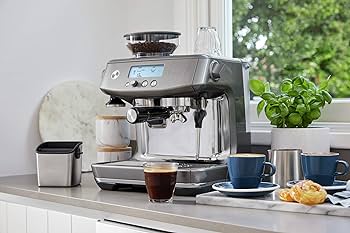
The Breville Barista Pro is a semi-automatic espresso machine with an integrated conical burr grinder, digital temperature control (PID), and a steam wand. It's designed for home baristas who want fresh-ground espresso without a separate grinder. The machine features a compact design, a thermocoil heating system for fast heat-up, and a dose control grinding system.
Key Specifications
- PID
- Yes, adjustable via hidden menu
- Type
- Semi-automatic espresso machine
- Weight
- 22 lbs
- Grinder
- Conical burr, 30 settings, dose control
- Warranty
- 1 year limited
- Dimensions
- 13.2" W x 16.1" D x 11.4" H
- Steam Wand
- Manual, 4-hole tip, auto-purge
- Heat-Up Time
- ~3 seconds (thermocoil)
- Pump Pressure
- 15 bar (with over-pressure valve reducing effective pressure to ~9 bars)
- Water Tank Capacity
- 67 oz (2 liters)
Overview
The Breville Barista Pro (model BES878) combines a conical burr grinder with a dual boiler-like thermocoil system that heats up in about 3 seconds. It offers 30 grind settings, digital temperature control (PID) for stability, and a steam wand that produces microfoam for latte art. The machine operates at 15 bars of pressure and includes a pressure gauge to help you dial in shots. It's marketed toward home users who want café-quality espresso without the complexity of separate grinder and machine setups.
Breville estimates the retail price at around $899.95, though it often sees discounts to $850. It's widely available on Amazon as the primary online retailer, and the machine is also sold through specialty coffee retailers. For the price, competitors include the Gaggia Classic Pro (with separate grinder) and the Rancilio Silvia (also needing a separate grinder), as well as the Breville Barista Express (the step-down model with a less powerful grinder).
Pros
The Breville Barista Pro stands out for its integrated grinder, fast heat-up time, and consistent temperature control. Below are the specific advantages that make it a strong contender for home espresso enthusiasts.
Built-in Conical Burr Grinder with 30 Settings
The Barista Pro includes a stainless steel conical burr grinder that grinds fresh beans directly into the portafilter. With 30 grind settings (from fine to coarse), you can adjust for different coffee beans and roast levels. According to Breville's specs, the grinder uses a dose control system that automatically adjusts grind time based on the previous shot, helping maintain consistency. For home users, this eliminates the need for a separate grinder, saving counter space and reducing the upfront investment. Third-party reviews from Whole Latte Love note that the grinder produces uniform grounds suitable for espresso, though the stepless adjustment can be fiddly to fine-tune.
Fast 3-Second Heat-Up Time
The Barista Pro uses a thermocoil heating system instead of a traditional boiler. Breville states the machine reaches optimal brewing temperature in approximately 3 seconds. This is significantly faster than traditional single-boiler machines (like the Gaggia Classic Pro, which takes 10–15 minutes) and even faster than some dual-boiler models. In practice, this means from turning on the machine, you can pull a shot in under a minute — a major convenience for morning routines. The thermocoil also helps maintain temperature stability during pulls, as confirmed by tests from PCMag.
Digital PID Temperature Control
Precise water temperature is critical for espresso extraction. The Barista Pro features a digital PID controller that maintains water temperature within ±2°F, according to the manufacturer. This prevents the temperature fluctuations common in cheaper machines and allows for more consistent extraction — especially important when dialing in light roast coffee. The PID is pre-set at the factory but can be adjusted via a hidden menu for advanced users. Reviews from coffee blogs like Seattle Coffee Gear confirm that the temperature stability is a step up from the lower-end Breville Bambino Plus, which lacks PID.
High-Pressure Steam Wand for Microfoam
The steam wand on the Barista Pro uses a 4-hole tip (the same design used on commercial machines) and has an auto-purge function to clear steam after use. It produces enough pressure to texture milk quickly — typically 10–15 seconds for a latte — and can create silky microfoam for latte art. The wand is manual (not automatic), giving the user control over aeration and stretching. This is a significant upgrade over the cheaper Breville Bambino Plus which uses an automatic steam wand. According to user reviews on Reddit and Home-Barista, the steam power is adequate for home use, though it may struggle a bit if you try to steam large volumes (e.g., for multiple milk drinks back-to-back) due to the single thermocoil system.
Integrated Digital Display and Dose Control
The machine has an LCD screen that displays shot time, grind settings, and cleaning alerts. It also includes a dose control system: after grinding, the machine 'learns' how long to grind to achieve your set dose, automatically adjusting future grind times. This is a practical feature for daily consistency. The display also guides you through the descaling and cleaning process, which helps maintenance.
Compact Footprint
At about 13 inches wide, 16 inches deep, and 11 inches tall, the Barista Pro fits under standard kitchen cabinets. Its integrated design (grinder + single machine) means you don't need extra counter space for a separate grinder. Compared to the Gaggia Classic Pro with a separate grinder, the Barista Pro takes up less horizontal counter space, though it is deeper.
Easy to Maintain
The machine features a removable drip tray and a reusable cleaning kit (disk, tablet) for backflushing the group head. Breville includes cleaning tablets and tools. The PID also has a descaling mode that's simple to follow. According to manufacturer specs, the machine alerts you when cleaning is needed, which helps prolong longevity.
Consistent Espresso Extraction (with Good Technique)
When dialed in correctly, the Barista Pro can produce espresso with good crema and balanced flavor. The 15-bar Italian pump (with an over-pressure valve that reduces effective pressure to ~9 bars) combined with the PID and dose control means that once you find the right settings, shots are repeatable. Third-party reviews from PCMag and Whole Latte Love rate the shot quality as very good for the price class, especially for milk drinks.
Cons
Despite its strengths, the Barista Pro has several limitations that may affect your buying decision. These cons are important to consider, especially if you have specific priorities like budget, steam power, or long-term value.
Premium Price Point vs. Alternatives
At $899.95, the Barista Pro is roughly $200 more than the Breville Barista Express (which has a less powerful grinder but similar espresso quality) and about $300 more than a combined Gaggia Classic Pro and a separate grinder. While the integrated design is convenient, the value proposition weakens if you don't need the built-in grinder or if you prefer a dual-boiler machine. Many users at the $900 price point consider the Rancilio Silvia M with a grinder, which offers better build quality and steam power.
Single Boiler Limits Simultaneous Brewing and Steaming
The Barista Pro uses a single thermocoil for both brewing and steaming. This means you cannot steam milk and pull a shot at the same time (no simultaneous operation). After brewing, there's a short wait (15–20 seconds) for the thermocoil to switch to steam temperature. For users who often make multiple milk drinks in quick succession, this can slow down the workflow. The Rancilio Silvia (with PID) has a similar limitation, but dual-boiler machines like the Breville Dual Boiler or the Profitec Pro 300 offer simultaneous operation at a higher price point.
Grinder May Not Be Sufficient for Serious Espresso Enthusiasts
While the integrated grinder is convenient, its 30 steps are stepped (not stepless), which can make fine adjustments difficult. Many home baristas find that even small changes in grind size can drastically affect extraction, and the stepped adjustment may not allow for the precision needed to fully dial in some beans. Additionally, the grinder uses a 50mm conical burr set (some sources say 40mm – Breville doesn't specify clearly), which is smaller than dedicated grinders like the Baratza Sette 270 (40mm but stepless and faster). Some reviews on Home-Barista note that the grinder retention is about 1-2 grams, which can cause stale grounds to mix with fresh grounds if not cleaned regularly.
Steam Power is Adequate but Not Commercial-Grade
Compared to prosumer machines with larger boilers, the Barista Pro's steam wand is less powerful. It takes about 10–15 seconds to texture milk for a latte, but if you try to steam more than 8 ounces, the thermocoil may struggle to maintain pressure. For users who make multiple milk drinks daily or want a quick, powerful steam experience, this can be frustrating. The Gaggia Classic Pro (with the Silvia wand mod) offers stronger, drier steam at a lower price point, though it requires more skill.
No Built-In Grinder Adjustment for Single-Shot Dosing
The dose control system works by 'learning' grind times, but it cannot automatically change the grind size. If you switch coffee beans, you need to manually adjust the grind setting and then re-dial the dose control. This is standard for most machines, but some users expected a fully automatic system.
Water Tank is Small (67 oz / 2 L)
The Barista Pro's water tank holds about 67 ounces (2 liters) – similar to most home machines. For heavy use (e.g., multiple drinks daily), you may need to refill every couple of days. The tank is located at the back of the machine, which can be awkward to access if the machine is placed under low cabinets.
Plastic Build Components
While the Barista Pro has a stainless steel body, some internal components (e.g., the water tank frame, drip tray, and portafilter handle) are plastic. In long-term use, the plastic portafilter handle can crack or break – a reported issue in Amazon reviews. The drip tray is also plastic and can warp if exposed to high heat (e.g., hot water from backflushing). Higher-end machines like the Rancilio Silvia use more metal components.
Learning Curve for Dialing In
Despite the automation features, achieving great espresso still requires experimentation with grind size, dose, and tamp pressure. The pressure gauge helps, but users new to espresso may find the process frustrating. According to many user reviews on Amazon and Reddit, it can take 5–10 shots to dial in a new bag of beans. This is true for most semi-automatic machines, but the expectation is sometimes lower due to the 'pro' branding.
Limited Warranty Length
Breville offers a 1-year limited warranty on the Barista Pro. Compared to some competitors like Gaggia (2 years) or Rancilio (2 years on some models), this is shorter. Extended warranties are available at purchase but add cost.
👍 Who It's For
The Breville Barista Pro is ideal for home baristas who want fresh-ground espresso without the clutter and cost of a separate grinder. It suits coffee lovers who value convenience (fast heat-up, dose control) and are willing to invest time in learning the machine's workflow. It's also a good fit for espresso enthusiasts who want to experiment with grind and pressure but don't need commercial-level steam power. Those who regularly make milk drinks will appreciate the steam wand's ability to produce microfoam, though not simultaneously.
👎 Who Should Avoid
Budget-conscious buyers should avoid the Barista Pro – the $900 price is high, and a Gaggia Classic Pro with a good hand grinder offers similar shot quality for $500 total. Users who need powerful steam for multiple lattes in a row (like a high-traffic home) will find the thermocoil slow. Absolute beginners who prefer easy, push-button machines should look at super-automatics like Breville's Oracle or fully automated machines from De'Longhi. Also, serious hobbyists who want a machine that can grow with them may be frustrated by the stepped grinder and lack of simultaneous steaming.
See today's Breville Barista Pro Espresso Machine price and available configurations on Amazon.
🛒 Buy on AmazonAs an Amazon Associate we earn from qualifying purchases.
Alternatives to Consider
| Product | Choose Breville Barista Pro Espresso Machine if... | Choose the alternative if... |
|---|---|---|
| Breville Barista Express (BES875)Approximately $200 less expensive ($700) | You want a faster heat-up (3 seconds vs 30+ seconds), PID temperature control, and a better grinder (30 steps vs 20 steps). | You want to save $200 and don't mind a slightly slower heat-up and less precise temperature control. |
| Gaggia Classic Pro + Baratza Sette 270Roughly the same total price ~$850 (Gaggia $450 + Sette $400) | You prefer a separate, higher-quality grinder with stepless adjustment and don't mind a longer heat-up and manual operation. | You want the convenience of an integrated grinder and faster heat-up. |
| Rancilio Silvia MRancilio Silvia M is ~$700, but you'll need a separate grinder, total ~$1,100 | You want better build quality (more metal), stronger steam, and a machine that lasts longer (2-year warranty). | You prioritize convenience (PID, integrated grinder, fast heat-up) and are okay with slightly less steam power. |
For users willing to buy a separate grinder, the Gaggia Classic Pro (around $450) paired with a Baratza Sette 270 ($400) offers more precise grinding and comparable espresso quality for a similar total price. The Rancilio Silvia M (around $700) with a good grinder is also a popular choice, known for its durability and better steam power, though it lacks PID and has a longer heat-up. If you want an all-in-one with a more powerful grinder, the Breville Oracle (around $2,000) offers automatic dosing, tamping, and milk texturing but at a much higher price. The Barista Express (around $700) is the cheaper option with a less capable grinder and no PID, but still produces good espresso.
Is it worth the price?
At approximately $899, the Barista Pro is worth it for home users who want the convenience of an integrated grinder and will use it daily. It offers better temperature control and faster heat-up than the cheaper Barista Express, justifying the price difference if you value those features. However, if you're willing to spend extra for a separate grinder, the Gaggia Classic Pro + Baratza Sette 270 combo gives more consistent results for the same investment.
📝 Bottom Line
The Breville Barista Pro is the right choice for home espresso lovers who want a compact all-in-one machine with fast heat-up and consistent temperature control. Its strongest advantages are the built-in grinder (saving counter space and upfront cost), the PID for stable extractions, and the quick thermocoil heating. The main downsides are the lack of simultaneous steaming, stepped grind adjustment, and plastic components that may not last as long as metal-bodied alternatives. If you're comfortable with a learning curve and value convenience over maximum steam power, the Barista Pro is a solid investment that will serve you well for years. Buy it if you want café-quality milk drinks without the hassle of a separate grinder and don't mind a small premium for that integration. Skip it if you're a budget-maximizer, need high-volume steaming, or prefer the durability of a commercial-grade machine with a separate grinder.
Check current Breville Barista Pro Espresso Machine availability and bundle options on Amazon.
🛒 Buy on AmazonAs an Amazon Associate we earn from qualifying purchases.
Frequently Asked Questions
Quick Summary
Key Pros
- ✓Built-in conical burr grinder with 30 settings eliminates the need for a separate grinder.
- ✓3-second heat-up time via thermocoil heating system for quick morning use.
- ✓Digital PID temperature control maintains water temperature within ±2°F for consistent extraction.
- ✓Powerful steam wand with 4-hole tip produces microfoam for latte art.
- ✓Compact, integrated design saves counter space compared to separate grinder setups.
Key Cons
- ✗Premium $899 price point – cheaper alternatives exist with separate grinder.
- ✗Single thermocoil means no simultaneous brewing and steaming.
- ✗Stepped grind adjustment lacks fine control for advanced dialing.
- ✗Plastic portafilter handle and drip tray may crack over time.
- ✗Steam wand is adequate but not powerful enough for high-volume milk drinks.
Ratings
Best For
- →Home baristas who want fresh-ground espresso without a separate grinder
- →Users who value fast heat-up (<5 seconds) for quick morning drinks
- →Milk drink lovers who enjoy making lattes and cappuccinos
- →Those with limited counter space who want an integrated design