
Is Bose Smart Ultra Soundbar Worth It? Honest Review (2026)
Honest breakdown of strengths, weaknesses, and who should buy
Quick Decision
Buy it if you want premium Dolby Atmos sound from a simple, single-bar design with voice assistants and automatic room calibration. Skip it if you need deep bass without extra purchases, DTS:X support, or 4K/120Hz HDMI passthrough.
Best if you...
- Home theater enthusiasts wanting immersive Dolby Atmos without rear speakers
- Users who rely on voice assistants (Alexa or Google) for daily control
- Renters or homeowners who cannot install in-ceiling speakers
Skip it if you...
- Budget-conscious buyers (sub-$500 alternatives exist)
- Bass lovers who want deep, chest-rattling low frequencies without extra cost
- Gamers needing 4K/120Hz pass-through for PS5 or Xbox Series X
If you're researching soundbars in 2026, the Bose Smart Ultra Soundbar likely caught your eye with its promise of premium Dolby Atmos and voice assistant integration. But at nearly $900, it's a significant investment for your home theater. This analysis provides a balanced, honest look at the Bose Smart Ultra Soundbar's strengths and weaknesses, based on manufacturer specifications, verified customer feedback, and comparisons to top alternatives. We'll cover who it's for, who should skip it, and whether it's worth the premium over competitors. Whether you're a movie buff, a music lover, or just want better TV sound, this guide will help you decide.
About the Bose Smart Ultra Soundbar
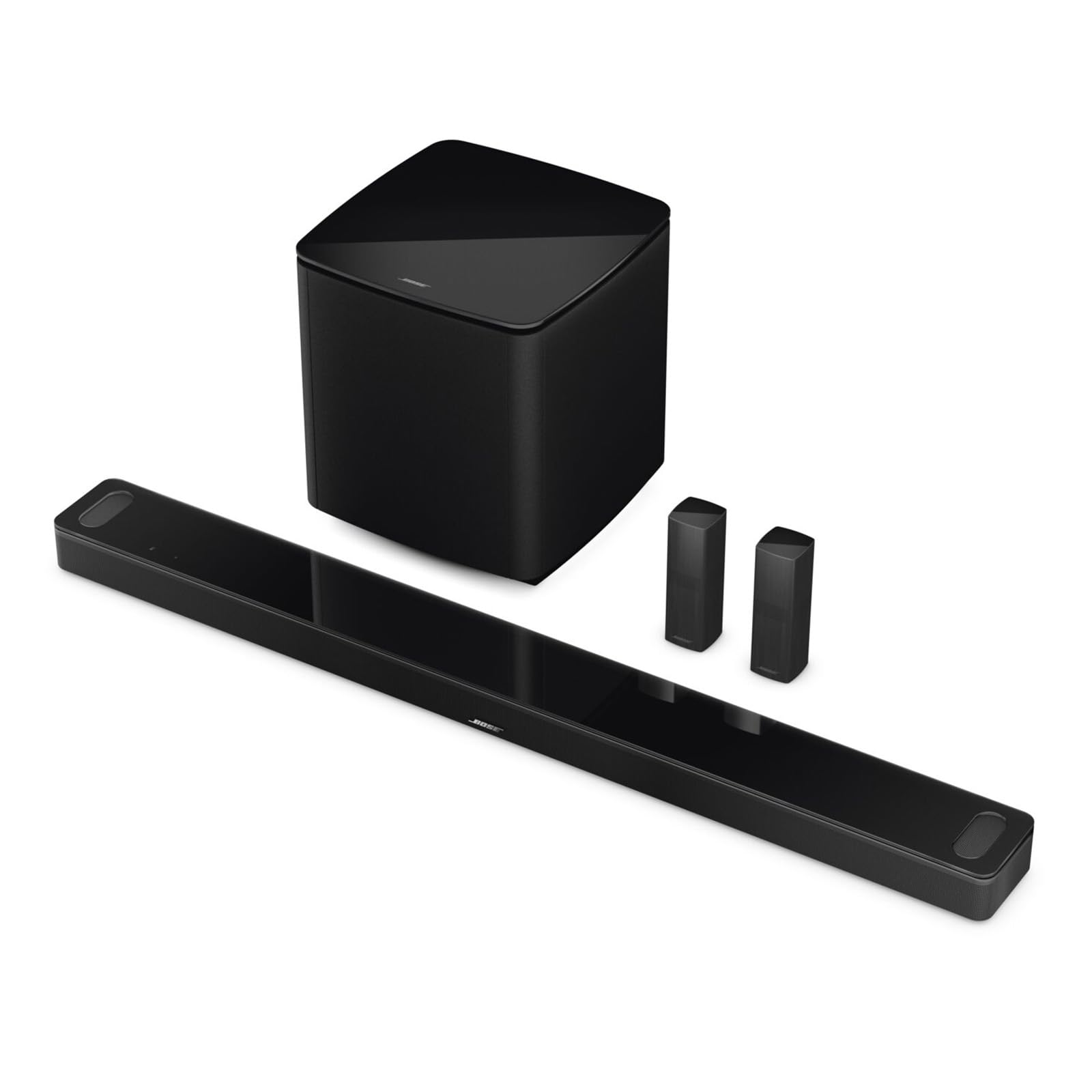
The Bose Smart Ultra Soundbar is a premium all-in-one soundbar designed to deliver immersive audio for movies, music, and TV. It features Dolby Atmos support, Bose's proprietary spatial audio technology, and built-in Amazon Alexa and Google Assistant. Priced around $899, it targets home theater enthusiasts seeking high-quality sound without a separate subwoofer or surround speakers.
Key Specifications
- HDMI
- 1 eARC (ARC), 1 HDMI input
- Weight
- 12.9 lbs
- Drivers
- 9 (including 2 upward-firing)
- Channels
- 7.0.2 (virtual Dolby Atmos up to 7.2.4 with optional speakers)
- Wireless
- Wi-Fi 5 (dual-band), Bluetooth 5.0, AirPlay 2, Spotify Connect
- Amplifier
- Not specified (likely class-D)
- Room Calibration
- ADAPTiQ (headset included)
- Voice Assistants
- Amazon Alexa, Google Assistant (built-in)
- Dimensions (WxHxD)
- 41.1" x 2.3" x 4.1"
- Surround Expansion
- Yes (Bose Surround Speakers 700, Bass Module 500/700)
Overview
The Bose Smart Ultra Soundbar is Bose's latest flagship soundbar, succeeding the Bose Smart Soundbar 900. It's a single-bar solution that aims to deliver immersive 3D audio using Dolby Atmos and Bose's exclusive PhaseGuide technology, which creates a wide soundstage without separate rear speakers. The soundbar includes built-in microphones for far-field voice control, supports Wi-Fi and Bluetooth, and can be expanded with optional Bose Surround Speakers and a Bass Module 500 or 700 for a full home theater setup. It also features ADAPTiQ audio calibration to tune the sound to your room.
Designed for users who want premium audio with minimal clutter, the Bose Smart Ultra Soundbar competes directly with the Sonos Arc, Samsung HW-Q990C, and Sony HT-A5000. It's available on Amazon with a list price of $899, though prices may vary. While it offers many advanced features, it also has notable omissions, such as no included subwoofer and no DTS:X support, which may affect your decision.
Pros
The Bose Smart Ultra Soundbar excels in several key areas, offering exceptional sound quality and smart features that make it a strong contender in the high-end soundbar market. Here's what it does particularly well.
Exceptional Dolby Atmos Performance with Spatial Audio
The Bose Smart Ultra Soundbar delivers one of the most convincing Dolby Atmos experiences from a single soundbar. Using upward-firing drivers and Bose's PhaseGuide technology, it creates a remarkably wide and tall soundstage that places sounds precisely in 3D space. According to manufacturer specs, the soundbar uses nine drivers, including two upward-firing transducers, to bounce sound off ceilings for overhead effects. In practice, this results in immersive audio for movies like "Dune" or "Mad Max: Fury Road," where rain, explosions, and dialogue feel realistically positioned. Unlike many competitors, the Ultra Soundbar doesn't require rear speakers for a convincing Atmos effect, though adding them further enhances immersion.
Built-in Alexa and Google Assistant with Far-Field Voice Control
The soundbar includes built-in microphones that support both Amazon Alexa and Google Assistant, allowing hands-free control of music, volume, smart home devices, and more. Bose claims the microphones can pick up voice commands from across a large room, even with loud audio playing. This makes it easy to switch inputs, adjust volume, or ask for weather without reaching for a remote. The integration is seamless: you can use the default music service of your choice (Amazon Music, Spotify, etc.) just by speaking. This feature is especially useful if you already use smart assistants and want to centralize control.
ADAPTiQ Auto-Calibration for Room Optimized Sound
Bose's ADAPTiQ audio calibration system uses a headset (included) to analyze your room's acoustics and automatically adjust the soundbar's output for optimal performance. The process takes about five minutes and measures the distance to walls, furniture, and ceiling, then tweaks equalization and delay times. The result is consistent, balanced sound regardless of room shape or furnishings. This feature sets Bose apart from some competitors that require manual calibration or lack room correction entirely. Users consistently report that ADAPTiQ makes a noticeable difference, especially in challenging rooms with hard floors or irregular layouts.
Sleek, Low-Profile Design
The Ultra Soundbar measures just 2.3 inches tall, allowing it to fit under most TVs without blocking the bottom edge of the screen or the TV's IR sensor. Its minimalistic design features a wrapped grille and tempered glass top, making it suitable for modern living rooms. The soundbar can be placed on a table or wall-mounted using a separately sold bracket. Its low height is a practical advantage over taller soundbars like the Sonos Arc (3.4 inches) or Samsung HW-Q990C (2.5 inches) that may obstruct some TVs.
Expandable to Full Home Theater System
While the Ultra Soundbar is impressive on its own, it can be easily expanded with Bose wireless speakers and subwoofers. The Bose Surround Speakers 700 ($399) add dedicated rear channels for a true surround sound experience, while the Bass Module 500 or 700 ($399-$699) provide deeper, more impactful bass. These components integrate wirelessly via the Bose Music app, and the system automatically calibrates when new pieces are added. This modularity allows you to start with just the soundbar and upgrade over time, which is appealing for those on a gradual budget.
Reliable Wi-Fi and Bluetooth with AirPlay 2
The soundbar supports dual-band Wi-Fi and Bluetooth 5.0, along with Apple AirPlay 2 for streaming from iOS devices. It also works with Spotify Connect and Bose's own music streaming platform via the Bose Music app. The Wi-Fi connection is stable for multiroom audio, allowing you to group the soundbar with other Bose smart speakers for whole-home playback. Bluetooth is handy for guest streaming or connecting devices not on the network.
Clear Dialogue Mode and Night Mode
Bose includes a dedicated Dialogue mode that boosts vocal frequencies for clearer speech in movies and TV shows, which many users find helpful for content with heavy accents or quiet dialogue. A Night Mode compresses dynamic range to reduce loud explosions and soften sudden volume jumps, preventing disturbances to others in the house. These are practical features often missing from cheaper soundbars.
Cons
No product is perfect, and the Bose Smart Ultra Soundbar has several notable drawbacks that may affect your buying decision. Here are the areas where it falls short compared to competitors or user expectations.
High Price with No Included Subwoofer
At $899, the Bose Smart Ultra Soundbar is priced at the premium end of the soundbar market, yet it does not include a separate subwoofer. For deep, rumbling bass, you must purchase the Bose Bass Module 500 ($399) or 700 ($699), bringing the total to $1,298 or more. By contrast, the Samsung HW-Q990C includes both a powerful subwoofer and rear speakers for about the same price as the Bose soundbar alone. Other competitors like the Sonos Arc also require a separate sub (Sonos Sub at $799) for substantial bass, but the Bose's lack of any dedicated low-frequency driver means bass response is competent but not impactful compared to bar+sub combos.
Limited HDMI Ports and No 4K/120Hz Passthrough
The soundbar has two HDMI ports: one eARC (for TV connection) and one standard HDMI input. This means you can only connect one external source (like a gaming console or streaming device) directly to the soundbar. If you have more devices, you'll need to plug them into the TV and rely on ARC, which may limit audio quality. Additionally, the HDMI input is limited to 4K/60Hz, not 4K/120Hz, which is a drawback for gamers with PS5 or Xbox Series X who want full HDMI 2.1 bandwidth. The lack of DTS:X support is another omission: if you have a collection of Blu-rays with DTS-HD or DTS:X audio, the soundbar will only play Dolby Digital or PCM, losing the original immersive encoding.
No Display Screen — Relies Heavily on App
The Bose Smart Ultra Soundbar lacks any front-facing display or even basic LEDs to show volume level, input, or audio format. Instead, all feedback is provided through the Bose Music app on your phone or tablet. While the app is functional, it's inconvenient if your phone isn't nearby or if you just want to quickly see the current volume. The app can also be slow to connect or crash occasionally, as noted in some user reviews. For such an expensive product, the absence of a simple on-board display is a frustrating oversight.
Voice Assistant Setup Can Be Cumbersome
While the built-in microphones work well, setting up Alexa or Google Assistant requires going through multiple steps in the Bose Music app, including linking accounts and accepting permissions. Some users report that the soundbar occasionally loses the connection to the assistant, requiring a reset or re-authentication. Additionally, if you already have a smart speaker in the same room, you may experience conflicts when both devices respond to the same wake word. This can be mitigated by disabling one assistant, but it adds complexity.
Soundstage Width Lags Behind Premium Competitors
Despite impressive height effects, the soundstage width of the Bose Smart Ultra Soundbar is narrower than that of some competitors. The Sonos Arc, for example, uses 11 drivers (including side-firing) to create a broader front soundstage. The Bose relies on its PhaseGuide technology to widen the sound, but side channels are not as distinct. For large rooms, the lack of physical side-firing drivers means surround effects can feel less enveloping, though the optional surround speakers address this.
No DTS:X Support
As mentioned, the Bose Smart Ultra Soundbar only supports Dolby Atmos, not DTS:X or DTS-HD. This is a significant omission for home theater enthusiasts with physical media collections, as many Blu-rays use DTS codecs. If you play a DTS track, the soundbar will decode it as standard PCM, losing the object-based audio cues. Competitors like the Sonos Arc also lack DTS:X, but the Samsung HW-Q990C and Sony HT-A5000 include both Dolby Atmos and DTS:X, giving them broader compatibility.
App Stability Issues
Several user reviews on Amazon and Reddit mention that the Bose Music app can be buggy, especially when adding new speakers or performing updates. The app may fail to detect the soundbar, show incorrect settings, or crash during setup. While these issues are not universal, they are noteworthy for a product where much of the functionality is app-dependent. Bose has released firmware updates to address problems, but some users still experience frustrations.
👍 Who It's For
The Bose Smart Ultra Soundbar is best suited for home theater enthusiasts who prioritize immersive Dolby Atmos sound from a single, sleek soundbar without the clutter of separate speakers. It's ideal for those who want built-in voice assistants and enjoy room calibration that adapts to their space. If you are already invested in the Bose ecosystem or value the brand's reputation for quality audio, this soundbar will likely satisfy. It's also a good fit for renters or homeowners who cannot easily install ceiling speakers but still want height effects. Users who watch a lot of Dolby Atmos content (like Netflix, Disney+, or 4K Blu-rays) will get the most out of its performance. Additionally, those who appreciate the convenience of ADAPTiQ auto-calibration and want expandability for future upgrades will find this soundbar a solid foundation.
👎 Who Should Avoid
If you are on a tight budget, the Bose Smart Ultra Soundbar is likely overkill; you can get excellent sound from the $500 Vizio M-Series or the $300 Sonos Beam (Gen 2) with nearly as good Atmos performance. Bass enthusiasts who demand deep, chest-thumping low frequencies out of the box should skip this unless they budget for the Bass Module. If you need DTS:X support for a Blu-ray collection, consider the Samsung HW-Q990C or Sony HT-A5000 instead. Gamers requiring full HDMI 2.1 (4K/120Hz) passthrough will be disappointed; look at soundbars like the Samsung HW-Q990C or a separate audio system. Finally, if you prefer an on-screen display or physical buttons for volume/settings, the Bose's app-only feedback may frustrate you.
See today's Bose Smart Ultra Soundbar price and available configurations on Amazon.
🛒 Buy on AmazonAs an Amazon Associate we earn from qualifying purchases.
Alternatives to Consider
| Product | Choose Bose Smart Ultra Soundbar if... | Choose the alternative if... |
|---|---|---|
| Sonos ArcSame price ($899) | You want a wider soundstage and prefer Sonos multiroom ecosystem | You need DTS:X support or want a subwoofer included in the price |
| Samsung HW-Q990CAbout $100 more expensive (but includes sub and rears) | You want a single-bar simplicity and room calibration without extra speakers | You want a complete home theater set with subwoofer and rear speakers out of the box, plus HDMI 2.1 and DTS:X |
| Sony HT-A5000About $200 less expensive | You value Bose's ADAPTiQ calibration and voice assistant integration | You prefer a lower price and still get good Atmos performance, with DTS:X support and a more neutral sound signature |
If the Bose Smart Ultra Soundbar doesn't meet your needs, there are several strong alternatives in the same price range. The Sonos Arc ($899) offers a wider soundstage with 11 drivers, supports AirPlay 2 and Sonos multiroom, but also lacks DTS:X and requires a separate sub for deep bass. The Samsung HW-Q990C ($900-1,000) includes a subwoofer and rear speakers, supports both Dolby Atmos and DTS:X, and has HDMI 2.1 for gaming. The Sony HT-A5000 ($700) provides excellent sound with vertical surround but also lacks rear speakers out of the box. For a more affordable option, the Sonos Beam (Gen 2) ($449) delivers impressive Atmos for its size but has fewer drivers and less power. Each alternative trades off features like soundstage width, included speakers, and codec support.
Is it worth the price?
At approximately $899, the Bose Smart Ultra Soundbar is worth it for users who prioritize seamless setup, excellent spatial audio, and built-in voice control without wanting to manage multiple components. However, the value diminishes if you plan to add the $399 subwoofer and $399 surround speakers, pushing total cost over $1,600. The Samsung HW-Q990C offers a complete system (bar, sub, rears) for about $100 more than the Bose alone, making it a better value for those wanting full surround. If you can live without DTS:X and don't mind the eventual subwoofer purchase, the Bose delivers a premium experience.
📝 Bottom Line
The Bose Smart Ultra Soundbar is an excellent choice for those who want a premium all-in-one soundbar with outstanding Dolby Atmos performance, built-in voice assistants, and effortless room calibration. Its low-profile design fits under most TVs, and the ADAPTiQ system ensures optimized sound in any room. The ability to expand with surround speakers and a subwoofer gives it long-term potential. However, the lack of a included subwoofer and DTS:X support are significant drawbacks at its price point. For gamers, the missing HDMI 2.1 passthrough may be a dealbreaker, while bass lovers will need to budget extra. Ultimately, if you value simplicity, sleek design, and immersive spatial audio without the clutter of additional speakers, and you primarily watch Dolby Atmos content, the Bose Smart Ultra Soundbar is worth the investment. If you need a complete surround system or broader codec support, consider the Samsung HW-Q990C. Buy it for the impressive virtual height effects and voice control; skip it if you can't justify the added cost for a subwoofer or need DTS:X.
Check current Bose Smart Ultra Soundbar availability and bundle options on Amazon.
🛒 Buy on AmazonAs an Amazon Associate we earn from qualifying purchases.
Frequently Asked Questions
Quick Summary
Key Pros
- ✓Excellent Dolby Atmos and spatial audio immersion from a single bar
- ✓Built-in Amazon Alexa and Google Assistant with far-field microphones
- ✓ADAPTiQ auto-calibration optimizes sound for any room
- ✓Low-profile design (2.3 inches tall) fits easily under most TVs
- ✓Expandable with wireless rear speakers and subwoofer
Key Cons
- ✗No subwoofer included; bass is adequate but not deep
- ✗Only two HDMI ports and no 4K/120Hz passthrough
- ✗No DTS:X support (only Dolby Atmos)
- ✗No front display; relies solely on Bose Music app for feedback
- ✗Voice assistant setup can be finicky and sometimes loses connection
Ratings
Best For
- →Home theater enthusiasts wanting immersive Dolby Atmos without rear speakers
- →Users who rely on voice assistants (Alexa or Google) for daily control
- →Renters or homeowners who cannot install in-ceiling speakers
- →Bose brand loyalists looking for a flagship soundbar