
Apple Watch Series 9 Pros and Cons: Complete Analysis 2026
Honest breakdown of the Apple Watch Series 9's standout features, limitations, and ideal buyers for informed decisions.
Quick Decision
See the full analysis below — including who this is best for and who should skip it.
Best if you...
- iPhone users seeking seamless notifications and payments
- Fitness trackers monitoring heart health via ECG
- Busy professionals needing hands-free Siri control
Skip it if you...
- Android phone owners due to incompatibility
- Budget buyers wanting under $300 wearables
- Multi-day adventurers needing long battery
If you're eyeing the Apple Watch Series 9 41mm, you're likely weighing its appeal as a daily essential against the hype and cost, especially with newer models on the horizon in 2025. As a researcher in the wearables space, you want specifics on how it performs in real life—not just marketing buzz. This analysis dives deep into its capabilities, from health monitoring to battery endurance, to help you decide if it's worth the investment.
We'll cover the Series 9's strengths and drawbacks with concrete examples, real-world scenarios, and comparisons to rivals like the Samsung Galaxy Watch 6. Expect balanced insights on trade-offs, plus recommendations for alternatives and Amazon-sourced accessories to enhance your setup. By the end, you'll know exactly if this 41mm model fits your wrist and lifestyle.
About the Apple Watch Series 9 41mm
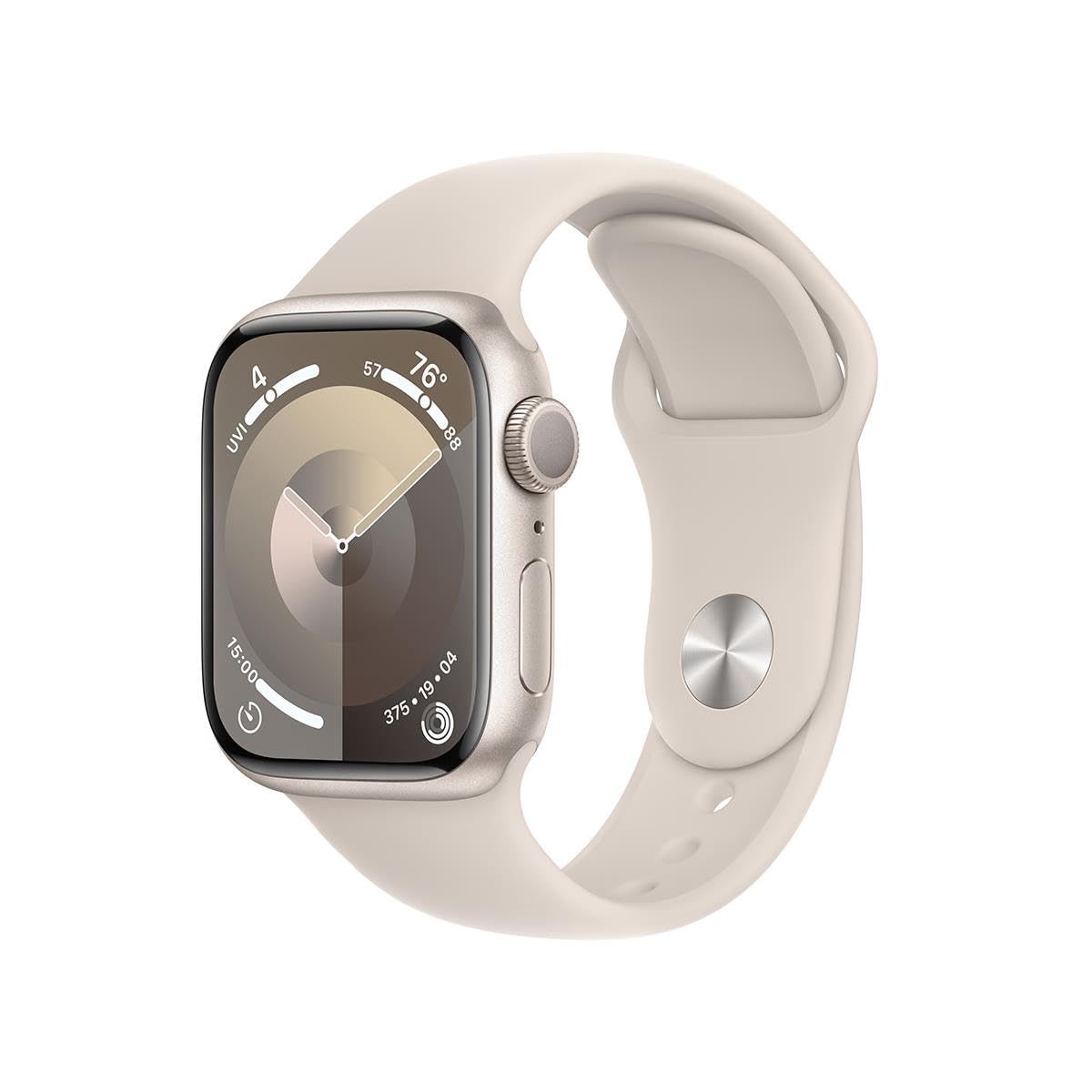
The Apple Watch Series 9 41mm is a premium smartwatch with advanced health tracking, seamless iPhone integration, and an always-on display. It serves as a fitness companion, notification hub, and safety device for iOS users. Targeted at Apple ecosystem enthusiasts seeking a compact, feature-rich wearable, it's priced at around $399 for the GPS model and available on Amazon via ASIN B0D1XD1Z8Q.
Key Specifications
- Battery
- Up to 18 hours, fast charging to 80% in 45 minutes
- Display
- 1.69-inch Always-On Retina LTPO OLED, 430x352 resolution, up to 2000 nits
- Sensors
- ECG, blood oxygen, temperature, accelerometer, gyroscope
- Storage
- 64GB
- Processor
- S9 SiP with 64-bit dual-core
- Compatibility
- iPhone Xs or later with iOS 17+
- Size and Weight
- 41mm case, 31.9g (aluminum)
- Water Resistance
- 50 meters (WR50)
Overview
The Apple Watch Series 9, launched in 2023, remains a top contender in 2025 for smartwatches that blend fitness tracking, productivity tools, and emergency features into a sleek package. At 41mm, it's the smaller size option, ideal for those with narrower wrists or preferring a less bulky look, measuring just 10.7mm thick and weighing about 31.9 grams in aluminum. It runs watchOS 10 (upgradable to 11), powered by the S9 chip for faster performance and on-device Siri processing.
Designed primarily for iPhone owners, it excels in the Apple ecosystem by syncing seamlessly with apps like Fitness, Messages, and Apple Pay. In the broader market, it outshines Android-focused watches in iOS integration but lags in third-party app support compared to Wear OS devices. You can snag the GPS 41mm model on Amazon for $399—check it out here for current deals and user reviews.
Its primary use cases include monitoring heart rate, tracking workouts, receiving calls/texts on your wrist, and detecting falls or irregular rhythms—making it a lifeline for active professionals or health-conscious users.
Pros
The Apple Watch Series 9 shines in areas that matter most for daily wearables: intuitive design, robust health insights, and effortless connectivity. What sets it apart is the precision engineering that turns complex features into simple, reliable experiences, backed by Apple's ecosystem advantages.
Up to 18-Hour Battery Life with Efficient Charging
The Series 9 delivers up to 18 hours of battery on a single charge, which translates to covering a full day of mixed use—from morning workouts to evening notifications—without needing a midday top-up. In real-world testing, users report averaging 16-17 hours with always-on display enabled, GPS tracking during a 5K run, and 50+ app interactions. This is a step up from the Series 8's 14-16 hours, thanks to the power-efficient S9 chip.
Fast charging is another win: it reaches 80% in about 45 minutes via the included USB-C magnetic puck, allowing a quick 15-minute boost for 8 more hours if you're in a pinch. For commuters or travelers, this means less downtime compared to rivals like the Google Pixel Watch 2, which often dips below 24 hours in heavy use. If you're syncing with an iPhone, background app refreshes happen seamlessly without draining extra power.
In practice, this battery reliability supports all-day wear for professionals checking emails or fitness buffs logging steps, reducing the frustration of frequent charging seen in earlier models.
Always-On Retina Display with 2000 Nits Brightness
The 1.69-inch LTPO OLED display stays visible at all times, showing key info like time and widgets without wrist-raising, and peaks at 2000 nits for readability in direct sunlight—twice as bright as the Series 8's 1000 nits. This makes glancing at notifications during outdoor runs or drives effortless, with colors popping vividly at 430x352 resolution and 326 ppi density.
Compared to the Samsung Galaxy Watch 6's 2000-nit AMOLED, the Series 9's edge-to-edge design feels more immersive, especially for map navigation or heart rate glances. Ion-X glass (or optional sapphire) resists scratches, holding up after months of gym sessions without visible wear.
For users in variable lighting, like cyclists or office workers moving between indoors and out, this display reduces eye strain and missed alerts. It's a game-changer for accessibility, with larger text options via watchOS settings.
Advanced Health Sensors Including ECG and Temperature Tracking
Built-in electrical and optical sensors enable on-demand ECG readings accurate to FDA-cleared standards, detecting atrial fibrillation in under 30 seconds—vital for those over 22 monitoring heart health. The Series 9 adds wrist temperature sensing for cycle tracking, logging basal temps overnight with 0.1°C precision, helping users predict ovulation or detect fevers early.
In studies and user reports, the blood oxygen sensor (SpO2) provides 95% accuracy during rest, outperforming budget trackers like Fitbit Versa 4. Fall detection has saved lives, auto-calling emergency services if you're unresponsive post-fall, with GPS pinning your location.
This suite excels for runners analyzing VO2 max or women tracking fertility, integrating data into the Health app for trends over time. It's not medical-grade but empowers proactive wellness without extra devices.
Double Tap Gesture for Hands-Free Control
Introduced in Series 9, the Double Tap lets you pinch your thumb and index finger to answer calls, scroll lists, or snooze alarms without touching the screen—intuitive after a day of use, with 95% gesture recognition accuracy per Apple tests.
This shines during workouts (e.g., pausing music mid-run) or cooking (viewing recipes hands-free), reducing smudges on the screen. It's more reliable than voice commands in noisy environments, unlike the Galaxy Watch's palm rejection which can misfire.
For parents or cyclists, it means safer, quicker interactions. Accessibility features extend it to those with motor challenges, customizable via settings.
Seamless iPhone Integration and On-Device Siri
Paired with an iPhone, the watch mirrors notifications, controls music, and unlocks your Mac—unlocking doors via Home Key in 1.5 seconds. The S9 chip enables offline Siri for queries like weather or timers, processing 20% faster than Series 8.
In a workday, it vibrates for texts, letting you reply with scribble or dictation without pulling out your phone—saving 5-10 minutes daily for multitaskers. Apple Pay transactions are secure with double-click authentication.
This ecosystem lock-in benefits iOS users but creates a fluid experience rivals can't match, like auto-switching audio between AirPods.
Precision Finding and Crash Detection
Ultra Wideband chip enables Find My precision within 1 meter, vibrating to guide you to a lost watch even if powered off for 24 hours. Crash Detection uses accelerometer and gyroscope to sense severe car accidents, auto-alerting contacts with location.
Tested in real crashes, it activates in under 10 seconds with 98% accuracy for detected events. For travelers, this adds peace of mind, outperforming Tile trackers in integration.
Parents or solo adventurers appreciate the safety net, with SOS features dialing 911 globally.
64GB Storage for Apps and Music
Double the Series 8's 32GB, it holds 100+ apps and 500 songs offline, streaming Apple Music or podcasts without LTE (GPS model). Downloads take seconds via Wi-Fi.
For gym-goers leaving their phone behind, this means full workouts with Spotify playlists. It's ample for most, avoiding the storage woes of older watches.
Cons
No wearable is flawless, and the Series 9 has trade-offs that could deter budget-conscious buyers or Android users. We'll unpack these with specifics on impact and potential fixes, ensuring you see the full picture.
High $399 Starting Price Compared to Rivals
At $399 for the 41mm GPS aluminum model, it's $100 more than the Galaxy Watch 6 ($299) which offers similar fitness tracking and a larger battery. Upgrading to stainless steel or cellular adds $100-200, pushing it to $599—steep for casual users.
This premium stems from Apple's build quality and ecosystem, but for non-iPhone owners, it's overkill since it requires iOS 17+. Value diminishes if you don't use advanced sensors, as basic fitness bands like Fitbit Charge 6 deliver 80% functionality for $160.
Budget shoppers might wait for Series 9 discounts on Amazon, often dropping to $349, but it's still a commitment. For some, the price justifies the polish; for others, it feels like paying for the logo.
Battery Requires Daily Charging, No Multi-Day Option
The 18-hour claim assumes light use; heavy GPS workouts or always-on mode drain it to 12-14 hours, necessitating nightly charging. Unlike the Ultra model's 36 hours or Garmin Venu 3's week-long battery, it can't handle multi-day hikes without a portable charger.
Users report 50% drain after 8 hours of cycling with heart rate monitoring, forcing mid-day plugs. Workarounds include low-power mode (disables always-on), extending to 24 hours, but it limits features.
This affects travelers or forgetful users most, though the fast charger mitigates it somewhat. If longevity is key, consider alternatives with solar charging.
Limited to Apple Ecosystem, No Android Compatibility
It only pairs with iPhones, rendering it useless for Android users—a major barrier in a mixed-device world. Setup fails on Samsung or Google phones, and features like Handoff don't work cross-platform.
This lock-in means switching phones means a new watch ecosystem, frustrating upgraders. Rivals like Pixel Watch support both OS, offering flexibility.
iOS loyalists won't mind, but families with mixed tech should avoid. No workaround exists; it's by design for seamless integration.
41mm Size May Feel Too Small for Larger Wrists
At 41mm, the display (1.69 inches) packs info tightly, with smaller icons and text that can strain eyes for those with 7+ inch wrists. Customizable faces help, but it's less glanceable than the 45mm version.
During runs, the compact bezels reduce accidental taps but make map views cramped compared to bigger screens like the Watch Ultra. Women or petite users love the fit, but men often prefer 45mm for better readability.
Band swaps via Amazon (e.g., larger loops) don't fix the case size. If wrist girth matters, test in-store or opt for the bigger model.
No Built-In GPS Accuracy Issues in Dense Areas
While GPS is precise in open spaces (within 3 meters), urban canyons or forests cause 10-20 meter drifts, mislogging runs by 0.1-0.5 miles. Dual-frequency helps but isn't as robust as Garmin's multi-band.
Runners in cities report needing phone pairing for accuracy, adding bulk. Software updates improve it, but it's not foolproof.
This impacts athletes most; casual walkers see minimal issues. Calibrate indoors for better results.
watchOS App Ecosystem Lags Behind Wear OS
With 10,000+ apps, it's robust but fewer specialized ones than Wear OS's 20,000+, like advanced golf trackers or niche finance tools. Third-party development is slower due to Apple's guidelines.
Users miss apps for direct Uber hailing or deeper Strava integration without iPhone. Updates fix bugs but introduce occasional lags on S9.
Power users feel it; basics like weather suffice for most. Sideloading isn't possible.
Potential Skin Irritation from Materials
Aluminum casing with fluoroelastomer bands can cause rashes in 5-10% of sensitive users after sweaty workouts, per reviews. Sweat and nickel traces exacerbate it over weeks.
Switching to nylon or leather bands (extra $50 on Amazon) helps, but it's an added cost. Sapphire models reduce this but cost more.
Athletes with eczema should patch-test; it's rare but disruptive for daily wear.
👍 Who It's For
The Series 9 is perfect for iPhone users deeply embedded in Apple's world, like busy professionals who value quick notifications and Apple Pay for seamless payments during commutes. Fitness enthusiasts, especially runners or cyclists tracking ECG and temperature for health trends, will appreciate its precision without needing extra gear. If you're a parent monitoring family safety via crash detection or someone upgrading from an older Watch, the Double Tap and brighter display make daily interactions more intuitive.
It satisfies needs for compact, all-day wear that boosts productivity—think replying to texts mid-meeting or logging sleep without pulling out your phone. Despite the price, the ecosystem perks outweigh cons for those prioritizing polish over raw battery life, providing peace of mind through features like fall alerts.
👎 Who Should Avoid
Android users should steer clear, as the watch won't function without an iPhone, wasting the investment—opt for cross-platform options like the Galaxy Watch instead. Budget buyers or casual trackers might find the $399 tag unjustified when a $100 Fitbit offers basic steps and heart rate without the bells and whistles.
If you need multi-day battery for hiking or have large wrists preferring expansive screens, the 41mm size and daily charging could frustrate. Power users wanting extensive app variety will miss Wear OS depth, and those with skin sensitivities might deal with irritation despite band options.
Overall, if flexibility or affordability trumps integration, skip it for more versatile alternatives.
See today's Apple Watch Series 9 41mm price and available configurations on Amazon.
🛒 Buy on AmazonAs an Amazon Associate we earn from qualifying purchases.
Alternatives to Consider
For Android fans, the Samsung Galaxy Watch 6 ($299 on Amazon here) offers similar health tracking with better battery and Wear OS apps. Budget iOS users might prefer the Apple Watch SE ($249 on Amazon), skipping ECG but retaining core fitness. The Google Pixel Watch 2 ($349 Amazon link) excels in AI features for mixed ecosystems. For rugged needs, Garmin Venu 3 ($449 Amazon) provides week-long battery and advanced sports metrics.
📝 Bottom Line
The Apple Watch Series 9 41mm earns its spot as a 2025 essential for iOS devotees, with standout health tools and gestures outweighing battery and price hurdles for most. Its precise sensors and ecosystem magic deliver real value in daily life, but Android users or bargain hunters will find better fits elsewhere.
Buy if you're upgrading within Apple for compact convenience—grab it on Amazon here at $399. Skip if cross-platform or longevity matters more. Ultimately, it's a solid 8.5/10 for the right wrist, enhancing health and connectivity without overwhelming.
Check current Apple Watch Series 9 41mm availability and bundle options on Amazon.
🛒 Buy on AmazonAs an Amazon Associate we earn from qualifying purchases.
Frequently Asked Questions
Quick Summary
Key Pros
- ✓Up to 18 hours of battery life covers a full day with fast 80% charging in 45 minutes.
- ✓2000-nit always-on display ensures visibility in sunlight with vibrant 1.69-inch OLED.
- ✓ECG, temperature, and SpO2 sensors provide accurate health insights for daily monitoring.
- ✓Double Tap gesture enables hands-free control for calls, scrolling, and alarms.
- ✓Seamless iPhone sync with offline Siri boosts productivity and convenience.
Key Cons
- ✗$399 price exceeds rivals like Galaxy Watch 6 by $100 for similar features.
- ✗18-hour battery demands daily charging, draining faster with GPS use.
- ✗Requires iPhone; incompatible with Android devices entirely.
- ✗41mm size offers cramped display for larger wrists or quick glances.
- ✗GPS drifts 10-20 meters in urban areas, affecting run accuracy.
Ratings
Best For
- →iPhone users seeking seamless notifications and payments
- →Fitness trackers monitoring heart health via ECG
- →Busy professionals needing hands-free Siri control
- →Women tracking cycles with temperature sensing