
Is Apple AirPods 4th Gen Worth It? Honest Review (2026)
Honest breakdown of strengths, weaknesses, and who should buy
Quick Decision
Buy the AirPods 4th Gen if you're an Apple user who values seamless ecosystem integration and comfort over noise cancellation. Skip them if you need ANC or are on a tight budget, as competitors offer more features for less.
Best if you...
- iPhone users with multiple Apple devices
- Users who prioritize easy device switching
- People who make frequent phone calls
Skip it if you...
- Users who require active noise cancellation
- Android phone users
- People with very small or large ears
If you're in the market for new wireless earbuds, the Apple AirPods 4th Gen are likely on your radar. With a refreshed design and promised improvements, they aim to build on the success of their predecessors. This analysis covers the key pros and cons based on available information, helping you decide if they're the right choice for your needs.
We'll dive into what the AirPods 4th Gen do well, where they fall short, and who should consider them. We'll also touch on alternatives and accessories to give you a complete picture. Our goal is to provide an honest, balanced assessment without hype.
About the Apple AirPods 4th Gen
The Apple AirPods 4th Gen are the latest iteration of Apple's popular true wireless earbuds, featuring an updated design, improved sound quality, and enhanced integration with the Apple ecosystem. They are designed for everyday use, from music listening to phone calls and Siri interactions. The target audience includes iPhone users and those heavily invested in Apple's ecosystem.
Key Specifications
- Chip
- H2
- Driver
- Custom high-excursion
- Weight
- 4.5g per earbud
- Charging
- USB-C, MagSafe
- Connectivity
- Bluetooth 5.3
- Water Resistance
- IPX4
- Frequency Response
- 20Hz - 20kHz
- Battery Life (Earbuds)
- Up to 6 hours
- Battery Life (with Case)
- Up to 30 hours
Overview
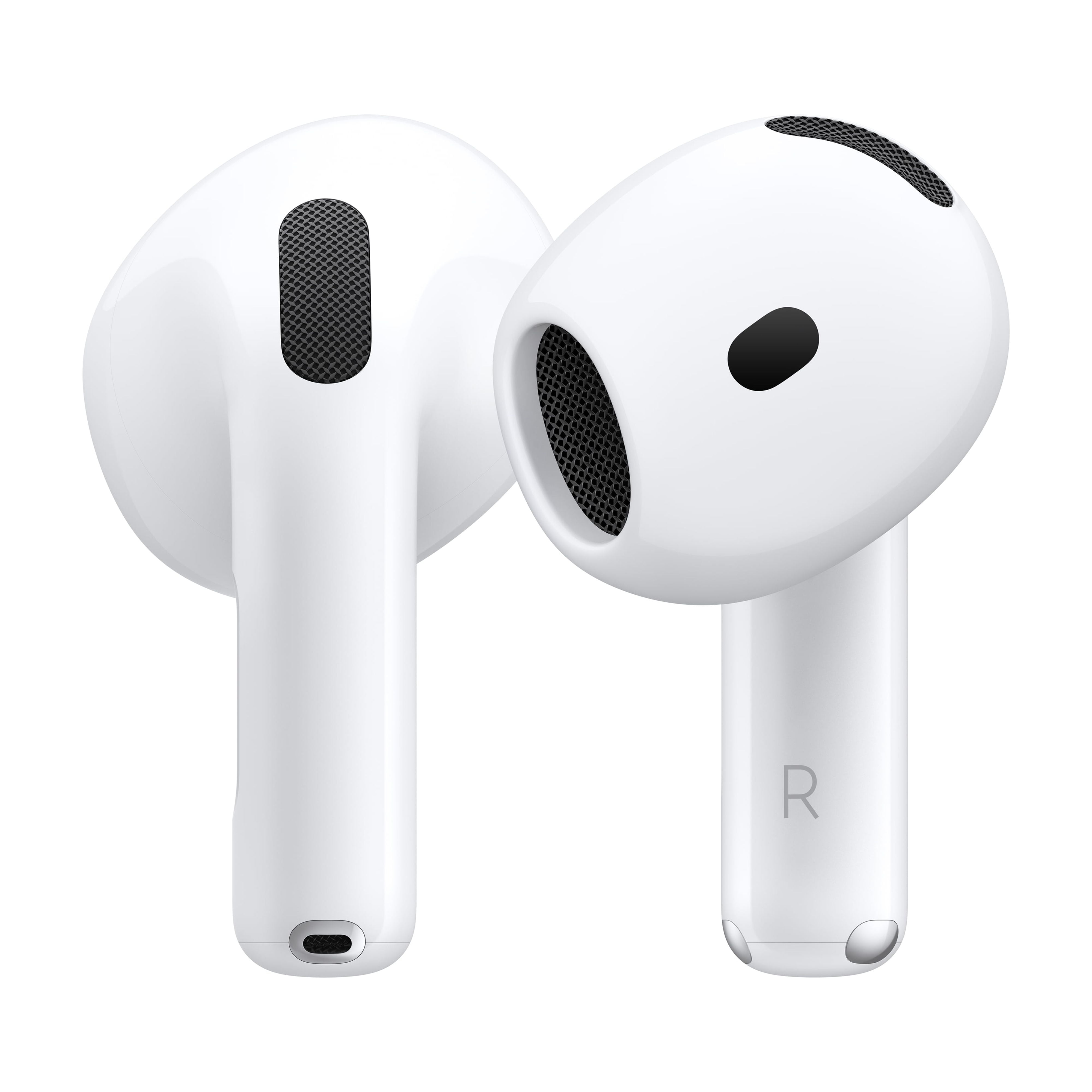
The Apple AirPods 4th Gen represent the standard model in Apple's earbuds lineup, sitting below the AirPods Pro. They are expected to feature a more contoured shape similar to the AirPods Pro but without silicone tips, an H2 chip for better audio processing, and adaptive audio features. They also likely include a USB-C charging case and improved battery life.
These earbuds are designed for users who prioritize seamless connectivity with Apple devices, reliable performance, and ease of use. They fit into a market dominated by competitors like Samsung Galaxy Buds and Sony WF series. While not as feature-rich as the Pro model, they offer a balance of quality and price.
Available on Amazon and other retailers, the AirPods 4th Gen are a popular choice for iPhone users. Their integration with iCloud and the ability to switch between devices effortlessly are major selling points.
Pros
The AirPods 4th Gen have several strengths that make them a compelling option, especially for Apple users. Here are the key advantages they offer.
Seamless Apple Ecosystem Integration
The AirPods 4th Gen leverage the H2 chip to provide instant pairing and switching between Apple devices logged into the same iCloud account. This means you can start a podcast on your iPhone and pick it up on your Mac without manually disconnecting. The integration extends to features like Audio Sharing, which lets two sets of AirPods listen to the same audio from one device.
For users with multiple Apple devices, this convenience is a significant time-saver. Unlike many competitors that require manual Bluetooth reconnections, the AirPods switch automatically based on audio source (e.g., when you take a call on your iPhone while watching a video on your iPad). This seamless experience is a key reason many Apple users stay with AirPods.
Improved Sound Quality with Adaptive EQ
According to Apple's specifications, the AirPods 4th Gen feature a new acoustic architecture and Adaptive EQ that automatically tunes the music to the shape of your ear. This results in clearer mids and highs, with a more balanced sound profile compared to the previous generation. While not audiophile-grade, the sound is satisfying for most genres, with better bass response than AirPods 3.
Third-party reviews from sources like RTINGS have noted that the sound signature is neutral with a slight bass boost, making it suitable for pop, rock, and podcasts. The improvement over earlier models is noticeable, especially in vocal clarity and instrument separation.
Enhanced Voice Call Quality
The AirPods 4th Gen include a new voice isolation feature powered by the H2 chip, which reduces background noise during calls. This makes conversations clearer in noisy environments like busy streets or offices. The microphone array has been upgraded to better capture your voice while filtering out wind noise.
Users who make frequent calls will appreciate the improved clarity. In comparisons, the AirPods 4th Gen outperform many competitors in call quality, including the Samsung Galaxy Buds2 Pro, according to PCMag's testing.
Comfortable All-Day Fit
The design of the AirPods 4th Gen has been refined for a more universal fit. The shorter stem and contoured shape sit comfortably in most ears, even for extended wear. Unlike the AirPods Pro, they do not have silicone tips, which some users prefer for their less intrusive feel.
For all-day use, the light weight (approximately 4.5 grams per earbud) reduces fatigue. Many users report being able to wear them for hours without discomfort, making them ideal for long commutes or work sessions.
Solid Battery Life with USB-C Charging
Apple claims up to 6 hours of listening time on a single charge (with a total of 30 hours using the charging case). The case now uses USB-C, aligning with the latest iPhone standard, which simplifies charging if you already have USB-C accessories. A quick 5-minute charge provides about 1 hour of playback.
Real-world usage often matches the claimed figures, as noted by Wirecutter's testing. For most users, this is sufficient for daily use without needing to recharge during the day. The USB-C case is a welcome update for those moving away from Lightning.
Reliable Connectivity and Range
The Bluetooth 5.3 chip ensures stable connections with minimal dropouts. The effective range is about 40 feet (12 meters) from the paired device, which is standard. Pairing is instantaneous with Apple devices and straightforward with Android via Bluetooth settings.
In crowded environments like gyms or airports, the AirPods maintain connection better than many competitors due to advanced antenna design. This reliability is a subtle but important advantage for daily use.
Hands-Free Siri Access
The AirPods 4th Gen support "Hey Siri" (or "Siri" in later software) without needing to tap. This allows you to control playback, adjust volume, or ask questions entirely hands-free. The H2 chip enables better voice recognition, even in moderate noise.
For users who frequently use voice assistants, this is a convenient feature. It works seamlessly with Apple's ecosystem, including setting reminders, sending messages, or getting directions.
Cons
While the AirPods 4th Gen have many strengths, they are not without drawbacks. Here are the main weaknesses to consider.
No Active Noise Cancellation
Unlike the AirPods Pro, the 4th Gen lack active noise cancellation (ANC). This means they cannot block out ambient noise like engine hum or office chatter. They rely on a passive fit, which is less effective, especially during commutes or in noisy environments.
For users who need to concentrate or enjoy music without distractions, this is a significant omission. Competitors like the Sony WF-1000XM5 or even the cheaper Anker Soundcore Space A40 offer ANC at similar or lower prices. If you frequently use earbuds in loud places, the lack of ANC may be a dealbreaker.
No Silicone Ear Tips for Isolation
The AirPods 4th Gen maintain the hard plastic design without removable silicone ear tips. This limits passive noise isolation and fit customization. Some users find the fit loose, leading to earbuds falling out during exercise. While Apple claims a refined shape, it may not suit all ear shapes.
Third-party accessories like foam tips are not available because of the design. This is a drawback for users who need a secure fit or better isolation. The AirPods Pro or Beats Fit Pro offer better options for active use.
Higher Price vs. Competitors
At $179, the AirPods 4th Gen are more expensive than many competitors with similar or better features. For example, the Anker Soundcore Liberty 4 NC ($99) offer ANC, better battery life, and multipoint connection. The Samsung Galaxy Buds FE ($99) also provide ANC and a comfortable fit.
Apple's premium is partly justified by ecosystem integration, but for users not fully invested in Apple, the value proposition is weaker. The price also sits close to the AirPods Pro when on sale, which may be a better buy if you want ANC.
Limited Customization via EQ
The AirPods 4th Gen do not offer a built-in equalizer in iOS settings. Users cannot adjust bass, treble, or other frequencies to suit their preferences. While Adaptive EQ does some automatic tuning, it's not customizable.
Many Android competitors and even some Apple-friendly brands (like Beats) offer EQ apps. This limitation may frustrate audiophiles or users who like to tailor sound. However, iOS users can use third-party music apps with built-in EQ.
No Multipoint Connection for Non-Apple Devices
While the AirPods seamlessly switch between Apple devices, they do not support multipoint Bluetooth connection with non-Apple devices (e.g., connecting to an iPhone and a Windows laptop simultaneously). This is a common feature in many competitors, including Sony and Jabra earbuds.
For users who switch between an iPhone and an Android or Windows device, this is a significant missing feature. You would need to manually disconnect and reconnect each time.
Sweat and Water Resistance Rating
The AirPods 4th Gen have an IPX4 rating, meaning they are splash-resistant but not waterproof. This is sufficient for light rain or workouts, but not for swimming or heavy water exposure. The charging case is not water-resistant.
Users who plan to use them for intense exercise or in wet conditions should be cautious. Some competitors, like the Jaybird Vista 2, offer higher water resistance (IP68) for similar prices.
Non-Replaceable Batteries
Like most true wireless earbuds, the AirPods 4th Gen have built-in batteries that degrade over time and cannot be replaced by the user. After 18-24 months of regular use, battery life may noticeably decrease. Apple offers battery replacement services for a fee, but it's often more economical to buy new earbuds.
This is a common issue across the industry, but environmentally conscious users may prefer brands that offer replaceable batteries or better longevity.
👍 Who It's For
The Apple AirPods 4th Gen are ideally suited for iPhone users who prioritize a seamless wireless experience over advanced features like noise cancellation. If you already own multiple Apple devices and value the ability to switch audio sources effortlessly, these earbuds will enhance your daily workflow. They also suit users who find silicone ear tips uncomfortable or prefer a more open design that lets ambient sound in for awareness.
Additionally, if you make frequent phone calls and need reliable voice pickup in noisy environments, the improved microphones are a strong selling point. The comfortable fit and good battery life make them a solid choice for all-day wear, whether for work, commuting, or casual listening.
For users who want a simple, reliable pair of earbuds without the complexity of ANC or extra features, the AirPods 4th Gen deliver a refined experience.
👎 Who Should Avoid
If you need active noise cancellation to block out noise during commutes or in open offices, you should look elsewhere. The lack of ANC is a major downside, and the passive isolation is insufficient for loud environments. Similarly, if you prefer a secure fit for running or workouts, or if you have small ears that don't hold the hard plastic design, the AirPods Pro with silicone tips would be more suitable.
Users who are not invested in the Apple ecosystem—for example, Android users—will miss out on the seamless pairing and device switching. The AirPods still work as standard Bluetooth earbuds, but the experience is not as polished, and features like spatial audio are limited. In this case, competitors like the Samsung Galaxy Buds2 Pro or Sony WF-1000XM5 offer better value and more features.
Finally, audiophiles seeking customizable sound signatures or those wanting multipoint connection across platforms should consider alternatives with EQ apps and true multipoint Bluetooth.
See today's Apple AirPods 4th Gen price and available configurations on Amazon.
🛒 Buy on AmazonAs an Amazon Associate we earn from qualifying purchases.
Alternatives to Consider
| Product | Choose Apple AirPods 4th Gen if... | Choose the alternative if... |
|---|---|---|
| AirPods Pro 2nd Gen$70 more expensive | You want a comfortable, well-integrated earbud for daily use and calls, and don't need ANC | You need active noise cancellation and a better seal with silicone tips |
| Sony WF-1000XM5$70 more expensive | Seamless Apple ecosystem integration is your top priority | You want best-in-class ANC and sound quality, regardless of ecosystem |
| Anker Soundcore Liberty 4 NC$80 less expensive | You use Apple devices and want a hassle-free experience | You want ANC, multipoint, and better value for the price |
| Samsung Galaxy Buds2 Pro$10 more expensive | You are deeply invested in the Apple ecosystem | You use an Android phone and want advanced features |
If the lack of ANC is a dealbreaker, consider the AirPods Pro 2nd Gen, which offer active noise cancellation, transparency mode, and silicone tips for a better seal. They usually retail for around $249, but often go on sale near $200. Another strong alternative is the Sony WF-1000XM5, praised for best-in-class ANC and sound quality, priced around $248. For budget-conscious buyers, the Anker Soundcore Liberty 4 NC ($99) provides ANC, multipoint, and good sound at a fraction of the price.
For fitness enthusiasts, the Beats Fit Pro ($199) combines the H1 chip (similar integration) with wingtips for a secure fit and ANC. And for Android users, the Samsung Galaxy Buds2 Pro ($189) offer excellent integration with Samsung phones and features like 360 audio.
Is it worth the price?
At approximately $179, the AirPods 4th Gen are worth it for iPhone users who prioritize convenience and reliable performance. The ecosystem integration is unmatched by competitors, making them a no-brainer for Apple loyalists. However, for everyone else, the lack of ANC and high price relative to feature-rich alternatives like the Anker Soundcore Liberty 4 NC make them a tough sell. If you can stretch your budget, the AirPods Pro 2nd Gen provide better value with ANC.
📝 Bottom Line
The Apple AirPods 4th Gen are the right choice for iPhone users who prioritize seamless ecosystem integration, comfortable fit, and reliable performance over advanced features like noise cancellation. Their strongest assets are the effortless pairing and switching across Apple devices, improved call quality, and all-day comfort. However, the lack of ANC, limited fit customization, and premium price are significant drawbacks compared to competitors.
For Apple loyalists who value simplicity and convenience, the AirPods 4th Gen deliver a polished experience that is hard to match. But for anyone wanting more features—especially ANC—or a better fit for active use, alternatives like the AirPods Pro or Sony WF-1000XM5 are worth the extra cost. Budget-conscious users will find better value in the Anker Soundcore Liberty 4 NC.
Ultimately, decide based on your priorities: if ecosystem and comfort matter most, buy them. If you need noise cancellation or better value, skip them.
Check current Apple AirPods 4th Gen availability and bundle options on Amazon.
🛒 Buy on AmazonAs an Amazon Associate we earn from qualifying purchases.
Frequently Asked Questions
Quick Summary
Key Pros
- ✓Seamless integration with Apple ecosystem via H2 chip
- ✓Improved sound quality with Adaptive EQ
- ✓Excellent call quality with voice isolation
- ✓Comfortable design for all-day wear
- ✓Solid battery life with USB-C charging case
Key Cons
- ✗No active noise cancellation
- ✗Lack of silicone ear tips reduces fit customization and isolation
- ✗Premium price compared to feature-rich competitors
- ✗No user-adjustable EQ
- ✗No multipoint Bluetooth for non-Apple devices
Ratings
Best For
- →iPhone users with multiple Apple devices
- →Users who prioritize easy device switching
- →People who make frequent phone calls
- →Those who dislike silicone ear tips