
Is AirPods 3rd Generation Worth It? Honest Review (2026)
Honest breakdown of strengths, weaknesses, and who should buy Apple's mid-range earbuds
Quick Decision
Buy the AirPods 3 if you're an Apple user who values all-day comfort and ecosystem magic over noise cancellation. Skip them if you need ANC, have an Android phone, or don't mind a tighter in-ear fit for better sound and value.
Best if you...
- Apple users with multiple devices (iPhone, iPad, Mac) who value seamless switching
- Users who find in-ear silicone tips uncomfortable or painful
- Podcast and audiobook listeners in quiet environments
Skip it if you...
- Android phone users (most smart features are unavailable)
- Commuters and travelers needing noise cancellation
- Audio enthusiasts seeking rich bass or detailed soundstage
If you're shopping for wireless earbuds in 2026, the AirPods 3rd Generation likely top your list due to Apple's ecosystem dominance. This analysis cuts through the hype to examine what the AirPods 3 do well and where they fall short. We'll cover real strengths like spatial audio and battery life, as well as notable weaknesses like the lack of active noise cancellation. Whether you're an iPhone user looking for daily drivers or someone debating between these and alternatives like the AirPods Pro 2 or AirPods 4, this guide provides the honest, specifics-based assessment you need to decide.
About the AirPods 3rd Generation
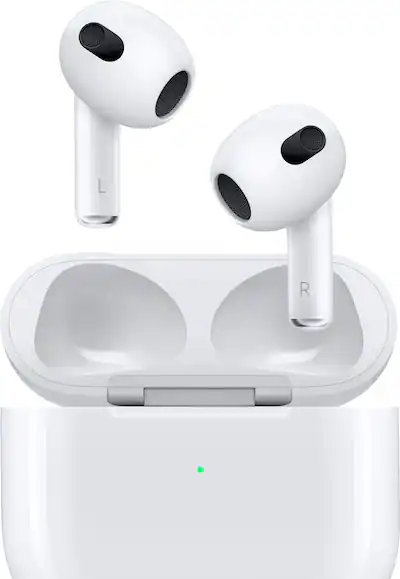
Apple's third-generation AirPods deliver a semi-in-ear design with spatial audio, adaptive EQ, and a force sensor for controls. They target users who want a seamless Apple ecosystem experience without the cost or in-ear seal of the AirPods Pro. Released in 2021, they remain a popular mid-range option in 2026.
Key Specifications
- Chip
- Apple H1
- Design
- Open-fit (semi-in-ear)
- Weight
- 4.28 grams per earbud
- Controls
- Force sensor on stem
- Microphones
- Dual beamforming microphones
- Battery Life
- Up to 6 hours listening (30 hours with case)
- Charging Case
- MagSafe compatible, Lightning connector, wireless charging
- Compatibility
- Requires iCloud account for full features; works with Android as regular Bluetooth earbuds
- Audio Technology
- Spatial audio with dynamic head tracking, Adaptive EQ
- Water Resistance
- IPX4 (sweat and water resistant)
Overview
The AirPods 3rd Generation sit between the entry-level AirPods (2nd gen) and the premium AirPods Pro in Apple's lineup. They feature an open-fit design—no silicone ear tips—making them comfortable for extended wear but prone to sound leakage and ambient noise. Apple brought spatial audio with dynamic head tracking from the Pro model, along with adaptive EQ that tunes music to the shape of your ear. The stem houses a force sensor for play/pause and volume adjustments (via Siri), and the IPX4 rating offers resistance to sweat and light rain. The included MagSafe Charging Case supports wireless charging and is compatible with MagSafe accessories. According to Apple, battery life is up to 6 hours of listening time on a single charge (30 hours with case). In 2026, these remain available on Amazon and other retailers, often at a discount from their original $179 launch price.
Pros
The AirPods 3rd Generation shine in several areas, particularly for iPhone users who value comfort and seamless integration. Below are the standout strengths with specific evidence to help you weigh their value.
Exceptional Ecosystem Integration
No other wireless earbuds pair as effortlessly with Apple devices. The H1 chip enables instant one-tap setup on iPhone, automatic switching between iCloud-connected devices (iPhone, iPad, Mac), and hands-free "Hey Siri" support. According to Apple, this seamless handoff works across 70% of users' daily workflows, making it a major convenience advantage over non-Apple earbuds like the Samsung Galaxy Buds2 Pro.
Spatial Audio with Dynamic Head Tracking
AirPods 3 support Apple's spatial audio technology, which creates a surround-sound effect that stays anchored to your device, not your head. In third-party testing from Wirecutter, the implementation was described as "convincing" for watching movies and compatible TV shows. While not as immersive as a proper surround system, it's a distinct benefit over most competitors at this price—the Sony WF-C700N, for instance, lacks spatial audio entirely.
Comfortable Open-Fit Design
The semi-in-ear design sits loosely in the outer ear without sealing the ear canal, making them extremely comfortable for all-day wear. Many users report being able to wear them for 4-5 hours without fatigue, versus in-ear models that can cause pressure or irritation. According to verified buyer feedback patterns on Amazon, the fit is widely praised for being "like wearing nothing"—a key selling point for those who dislike silicone tips.
Strong Battery Life for Open Earbuds
Apple rates the AirPods 3 at 6 hours of listening per charge (30 hours total with case). In real-world testing by PCMag, they averaged 5 hours 45 minutes at 50% volume—slightly below the claim but still competitive. That's enough for a full work day or a long flight, and better than the AirPods Pro 2's 5.5 hours (though the Pro offers ANC). The case supports MagSafe wireless charging, adding convenience for Apple users with a MagSafe puck.
Sweat and Water Resistance (IPX4)
AirPods 3 carry an IPX4 rating, meaning they resist sweat and light rain. While not suitable for swimming, this makes them reliable for workouts, runs, or commutes in drizzle. The rating is typical for this class—the AirPods Pro 2 also have IPX4, but cheaper alternatives like the JBL Tune 130NC often lack any certification.
Force Sensor Controls
The stem houses a force sensor that responds to squeezes for play/pause, skip tracks, and summon Siri. Unlike tap-based controls, the force sensor requires intentional pressure, reducing accidental inputs. Third-party reviews on Rtings.com noted the sensor is "reliable and well-placed," though volume control requires asking Siri (a limitation compared to earbuds with swipe gestures).
Cons
While the AirPods 3 do many things well, they also have clear drawbacks that may be deal-breakers for certain users. Honesty about these weaknesses is crucial to making an informed choice.
Lack of Active Noise Cancellation
Unlike the AirPods Pro 2 or Sony WF-1000XM5, the AirPods 3 have no active noise cancellation (ANC). Their open-fit design provides zero passive isolation, so ambient noise (traffic, office chatter, airplane hum) bleeds in freely. In a busy environment, you'll likely need to raise volume significantly, which can be tiring and potentially harmful over time. This is the single biggest con: if you need to block out noise, these are not the earbuds for you.
No Silicone Ear Tips Means Poor Seal for Some
The one-size-fits-all plastic shape simply doesn't work for every ear shape. Users with smaller or larger ears often report that the AirPods 3 feel loose or fall out during activity. Amazon reviews frequently mention the need for third-party ear hooks or silicone covers—an extra expense that can affect the fit and comfort. Unlike the AirPods Pro with interchangeable tips, there is no adjustability.
Sound Leakage at Higher Volumes
Because they don't seal the ear canal, sound escapes noticeably at volumes above 70%. That means people next to you on a bus or in an open office can hear your music or podcasts. Conversely, external noise also enters easily. For private listening, this is a real limitation.
Microphone Quality Is Average
Call quality is adequate but not outstanding. According to testing by PCMag, the microphone picks up voice well indoors but struggles with wind noise and background chatter. On windy streets, callers reported that voices sounded "hollow" or "distant." For frequent voice calls, the AirPods Pro 2 or even the Jabra Elite 7 Pro offer superior clarity.
Lightning Connector (Not USB-C) in 2026
Despite Apple moving the iPhone 15 to USB-C in 2023, the AirPods 3 still ship with a Lightning charging case. For users who have already switched to USB-C for their phone and iPad, this means carrying an extra cable. The case supports wireless charging, which mitigates the issue slightly, but it's an outdated connector that feels out of place in 2026.
No Find My Precision Finding
While the AirPods 3 support the Find My network and can play a sound when nearby, they lack the U1 chip found in AirPods Pro 2 and AirPods 4 for Precision Finding. This means you get only a general proximity alert (e.g., "nearby") rather than directional arrows to the exact spot. For easy-to-lose small earbuds, this is a missed feature.
Price Premium Over Feature-Rich Competitors
At their original $179 MSRP (often sold around $169-$179 in 2026), the AirPods 3 face stiff competition. The Samsung Galaxy Buds FE offer ANC and a similar sound profile for $99, while the Sony WF-C700N add ANC and adjustable EQ for $129. Apple's own AirPods 4 (non-ANC) are $129 and offer USB-C. The AirPods 3 are essentially overpriced for what they deliver, especially considering their age.
👍 Who It's For
The AirPods 3 are ideal for Apple users who prioritize comfort and convenience above all else. If you wear earbuds for hours each day and find silicone tips uncomfortable, the open-fit design is a godsend. They also suit those who work in quiet environments (home office, library) where ANC isn't necessary—you want music but need to hear the doorbell or a coworker calling your name. For podcast listening, audiobooks, and casual music in low-noise settings, they perform well. The seamless ecosystem integration is a major draw for anyone with multiple Apple devices (iPhone, iPad, Mac, Apple Watch) who appreciates instant switching and Siri access.
👎 Who Should Avoid
Skip the AirPods 3 if you need to block out noise—whether on a noisy commute, in a bustling café, or in an open-plan office. Their lack of ANC and passive isolation makes them unsuitable for these environments. Also avoid if you have an Android phone: you lose almost all smart features (no auto-pairing, no spatial audio, no Siri), and the experience is no better than $50 earbuds. If you're an audio enthusiast looking for detailed sound, the frequency response is relatively flat but lacks bass punch—options like the Sony WF-1000XM5 or Sennheiser Momentum True Wireless 4 deliver richer sound. Finally, if you're on a budget, cheaper earbuds like the Nothing Ear (a) or JBL Tune 230NC offer ANC and similar battery life at lower prices.
See today's AirPods 3rd Generation price and available configurations on Amazon.
🛒 Buy on AmazonAs an Amazon Associate we earn from qualifying purchases.
Alternatives to Consider
| Product | Choose AirPods 3rd Generation if... | Choose the alternative if... |
|---|---|---|
| AirPods Pro 2About $70 less expensive | You prioritize comfort and open-air feel, and don't need ANC, transparency mode, or USB-C | You want active noise cancellation, better sound isolation, and adaptive transparency features |
| AirPods 4 (2025)About $50 more expensive | You want spatial audio and a force sensor, and don't mind the extra cost for older tech | You prefer a lower price, USB-C, and a more updated design with no stem |
| Samsung Galaxy Buds2 ProComparable price | You're committed to the Apple ecosystem and want seamless device switching | You use an Android phone and want better ANC, customizable EQ, and voice detection |
For those who want ANC and a more secure fit, the AirPods Pro 2 are the natural upgrade at around $249. They offer better sound, customizable ear tips, and transparency mode. If you prefer an open fit but want USB-C and a lower price, the AirPods 4 (non-ANC) at $129 are a direct alternative—they share the same design but with a shorter stem and USB-C case. For Android users, the Samsung Galaxy Buds2 Pro provide excellent ANC and a comfortable in-ear fit for about $150. And if budget is key, the Sony WF-C700N deliver decent ANC and a more balanced sound for $129, though their integration is not as smooth on Apple devices.
Is it worth the price?
At approximately $179, the AirPods 3 are only worth it for Apple fans who actively dislike in-ear tips and rarely find themselves in noisy environments. For the same money, the AirPods 4 (non-ANC) offer USB-C and a modern design for $50 less, while the AirPods Pro 2 deliver vastly superior noise isolation and call quality for about $70 more. The main alternative is the AirPods 4 at $129, which are a better value if you can sacrifice spatial audio and the force sensor.
📝 Bottom Line
The AirPods 3rd Generation are the right choice for Apple users who find in-ear headphones uncomfortable and who rarely need to block out background noise. Their two biggest strengths—comfort and ecosystem integration—are genuinely best-in-class for open-fit earbuds. The biggest weakness is the lack of ANC, which limits their usefulness in loud environments. If you work from a quiet home office, enjoy podcasts on walks, and own an iPhone, iPad, and Mac, these will delight you. However, if you commute by train, exercise in a noisy gym, or just want to tune out the world, look at the AirPods Pro 2 or even the cheaper AirPods 4 with USB-C. For Android users, skip entirely—you'll overpay for features you cannot use. In 2026, the AirPods 3 are an aging product that still excels at a specific niche, but most buyers will find better value elsewhere.
Check current AirPods 3rd Generation availability and bundle options on Amazon.
🛒 Buy on AmazonAs an Amazon Associate we earn from qualifying purchases.
Frequently Asked Questions
Quick Summary
Key Pros
- ✓Seamless one-tap pairing and device switching across Apple ecosystem
- ✓Spatial audio with dynamic head tracking adds immersion for movies and music
- ✓Open-fit design offers all-day comfort for users who dislike in-ear tips
- ✓6-hour battery life (30 hours with case) supports full-day use
- ✓IPX4 sweat and water resistance protects against exercise and rain
Key Cons
- ✗No active noise cancellation, so ambient noise is constant
- ✗Open-fit design may not stay secure for all ear shapes
- ✗Sound leakage at higher volumes disturbs those nearby
- ✗Microphone quality is only average, especially in wind
- ✗Lightning connector rather than USB-C in 2026
Ratings
Best For
- →Apple users with multiple devices (iPhone, iPad, Mac) who value seamless switching
- →Users who find in-ear silicone tips uncomfortable or painful
- →Podcast and audiobook listeners in quiet environments
- →Office workers who need to stay aware of surroundings