Designing battery-powered devices with 3V lithium batteries like CR2032 coin cells or small LiPo packs? One wrong choice in voltage regulation can slash runtime from months to days due to high quiescent current or poor efficiency. Advanced makers often struggle with instability, heat, or short life in IoT sensors, wearables, or Bluetooth beacons.
In this guide, you'll master selecting regulators for 3V inputs (typically 2.0-3.6V range), prioritizing ultra-low Iq (<5µA), low dropout, and PSRR. We'll break down concepts from battery quirks to advanced metrics, with real-world examples and tests. Expect 30-45 minutes to read, understand, and apply—perfect for electronics pros tweaking prototypes.
By the end, you'll confidently pick regulators that extend battery life 10x, avoiding common pitfalls like oscillation or wasted power.
▸What You'll Need
- •Prerequisite: Understanding of Ohm's Law, datasheets, and basic analog electronics
- •Multimeter for voltage/current measurements (required)
- •Breadboard and jumper wires for prototyping (required)
- •Oscilloscope or logic analyzer for noise testing (optional but recommended for advanced)
- •3V lithium battery (CR2032 or equivalent) and load resistor (required)
- •Soldering iron for final implementation (optional)
Estimated Time: 30-45 minutes
Difficulty: advanced
▸Step-by-Step Instructions
Step 1: Grasp 3V Lithium Battery Characteristics
3V lithium batteries (e.g., CR2032, BR2330) have a flat discharge curve from ~3.3V to 2.0V, with capacity 200-250mAh. Unlike NiMH, voltage sags minimally under load but self-discharge is low (~1%/year). Expect 2.7V average over life.
Why it matters: Regulators must handle 2.0-3.6V input without dropout until battery end-of-life. Analogy: Think of it as a steady drip vs. a gushing tap—needs fine control.
Expect: Review datasheet for your battery's curve; aim for regulator Vin min <2.2V.
💡 Tips:
- •Plot discharge curve with 10kΩ load to simulate your app.
⚠️ Warnings:
- •Avoid deep discharge below 2.0V—damages cell.
Step 2: Understand Why Voltage Regulation is Essential
Raw 3V varies with load/temp, harming MCUs (need stable 1.8V/2.5V/3.3V) or sensors. Regulators provide clean, fixed Vout despite fluctuations.
Pain point: Unregulated = resets, noise, data errors. For 3V input to 3.3V output? Use boost; usually step-down or LDO buffering.
Expect: 50-100mV ripple reduction, protection from reverse polarity.
💡 Tips:
- •Use simulation tools like LTSpice to model before building.
Step 3: Linear (LDO) vs Switching Regulators
LDOs: Simple, low-noise, cheap. Drop excess Vin as heat. Best for low ΔV (e.g., 3V→2.8V), <100mA loads. Efficiency = Vout/Vin (~90%).
Switching (buck/boost): High efficiency (85-95%) via inductors. Complex, noisy (needs filters). Use for >10mA or Vin-Vout >0.5V.
For 3V batteries: LDOs win for ultra-low power (Iq<2µA); switching for mA-scale drains.
💡 Tips:
- •LDO for audio/sensors; buck for motors.
⚠️ Warnings:
- •Switching EMI can interfere with BLE antennas.
Step 4: Master Key LDO Specs for 3V Batteries
Iq (quiescent current): No-load draw—critical! Target <5µA for 1-year life on 200mAh.
Dropout voltage (Vdo): Min headroom (Vin-Vout). Need <200mV for end-of-battery.
PSRR: Ripple rejection (>60dB @100Hz). Line reg: Vin change tolerance.
Example: At 2.5Vout, Iq=1.6µA saves 1mAh/day vs 100µA (kills battery in weeks).
💡 Tips:
- •Sort by Iq in DigiKey; read 'no load' spec.
Step 5: Dive into Switching Regulator Advantages
Bucks/boosts shine when (Vin-Vout)*Iout >50mW (heat waste in LDO). E.g., 3V→1.8V @50mA: LDO 55% eff, buck 90%.
Challenges: Inductor selection (1-4.7µH), EMI. Low-Vin bucks need 2.5V+ min.
For 3V Li: Ultra-low Iq bucks like TPS62240 (Iq 25µA, 2-6V in, eff 95%).
⚠️ Warnings:
- •Skip cheap modules—poor EMI shielding drains battery via radiation losses.
Step 6: Calculate Efficiency and Battery Life
Life (hours) = Capacity (mAh) / [(Iq * 24) + Iload_avg]. Factor 80% for Peukert.
Example: CR2032 220mAh, Iq=2µA, 1mA 1% duty: ~18 months.
Test: Measure total I with ammeter in series.
💡 Tips:
- •Use Excel solver for duty cycle scenarios.
Step 7: Evaluate Heat and Stability
Power loss = (Vin-Vout)*Iout. At 3V→1.8V 100mA: 120mW—needs thermal calc (θJA<100°C/W).
Stability: Bypass caps (1µF ceramic in/out), layout (short traces). Oscillation = ripple spikes.
Expect: <50mVpp output noise.
⚠️ Warnings:
- •No caps = oscillation; wrong ESR = instability.
Step 8: Implement and Test Your Regulator
Solder prototype: Vin to batt+, GND shared, Cout 1-10µF. Load test 10µA-100mA.
Measure: Iq (no load), Vout sag, ripple. Scope transients.
Advanced: PCB with ground plane, Kelvin sense for accuracy.
💡 Tips:
- •Dummy load with MOSFET for pulsed tests.
▸Pro Tips
- •Prioritize Iq over cost—saves redesigns.
- •Add 100nF bypass near IC for high-freq noise.
- •Use fixed Vout versions—trim pots drift.
- •Simulate thermal with PD= (Vin avg - Vout)*Iavg.
- •Batch test Iq across temp (-40°C to 85°C).
- •Kelvin 4-wire for µA accuracy.
- •Stack cells in parallel for capacity, series risky for regulation.
▸Common Mistakes to Avoid
- •Overlooking Iq >10µA—drains 90% capacity idly; spec no-load Iq.
- •Ignoring dropout at low Vin—Vout crashes early; pick Vdo <150mV.
- •Wrong caps (ceramic ESR too low/high)—oscillates; follow datasheet.
- •No reverse protection—puffs battery; add PMOS or diode.
- •Assuming high PSRR—line noise corrupts ADCs; verify 1kHz+.
▸Troubleshooting
Problem: Output oscillation (100mV+ ripple)
Solution: Add/replace Cout with 1-4.7µF X7R ceramic; check layout loops.
Problem: High no-load current (>10µA)
Solution: Confirm enable pin high; thermal shutdown? Cool IC.
Problem: Vout drops under load
Solution: Vdo exceeded—lower Iout or pick lower Vdo part.
Problem: Overheating
Solution: Calc Pd; add heatsink or switch to buck.
Problem: Startup failure
Solution: Vin below UVLO; soft-start cap if available.
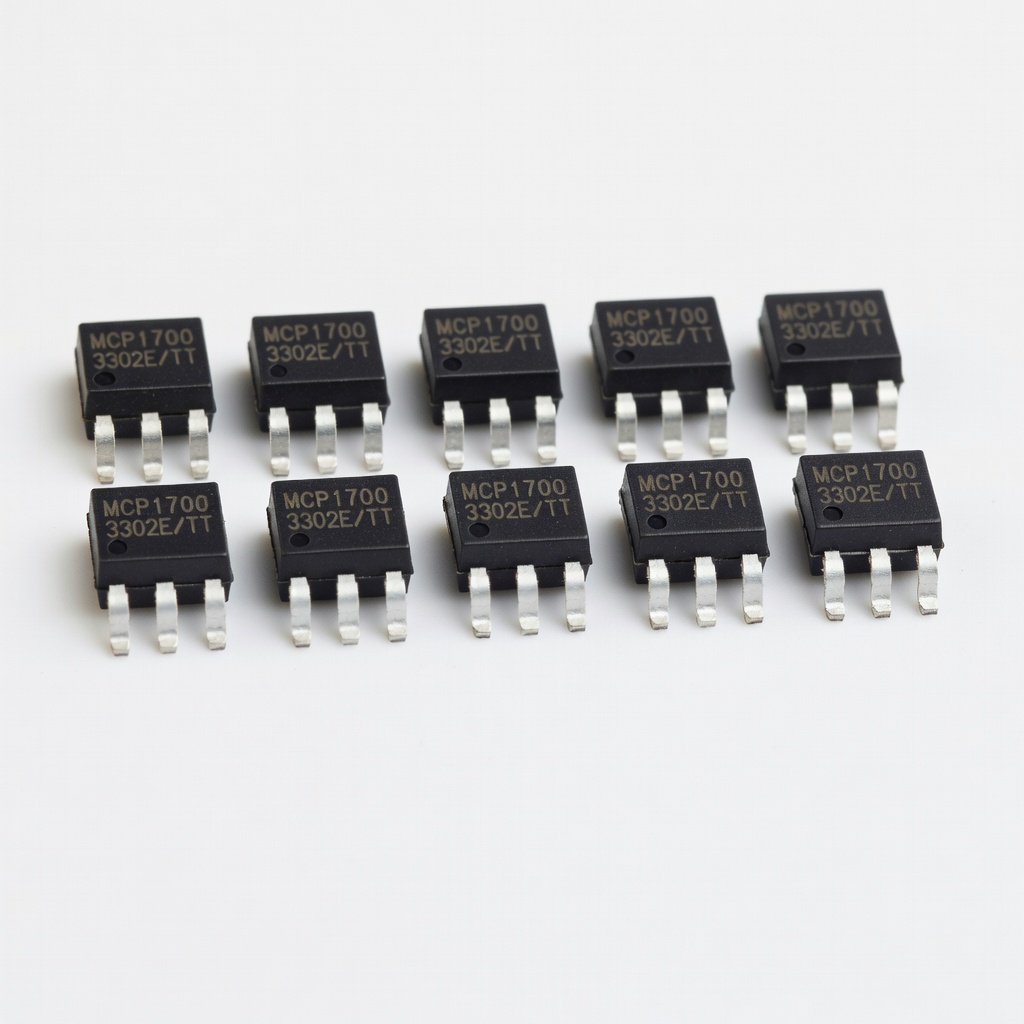
HiLetgo 10pcs MCP1700-3302E/TT 3.3V LDO Voltage Regulator
Ultra-low Iq 1.6µA, 178mV dropout @250mA—perfect for CR2032 step-down to 3.3V MCU.
Best for: Always-on sensors, BLE beacons; max battery life.
Price Range: $6.99-$8.99
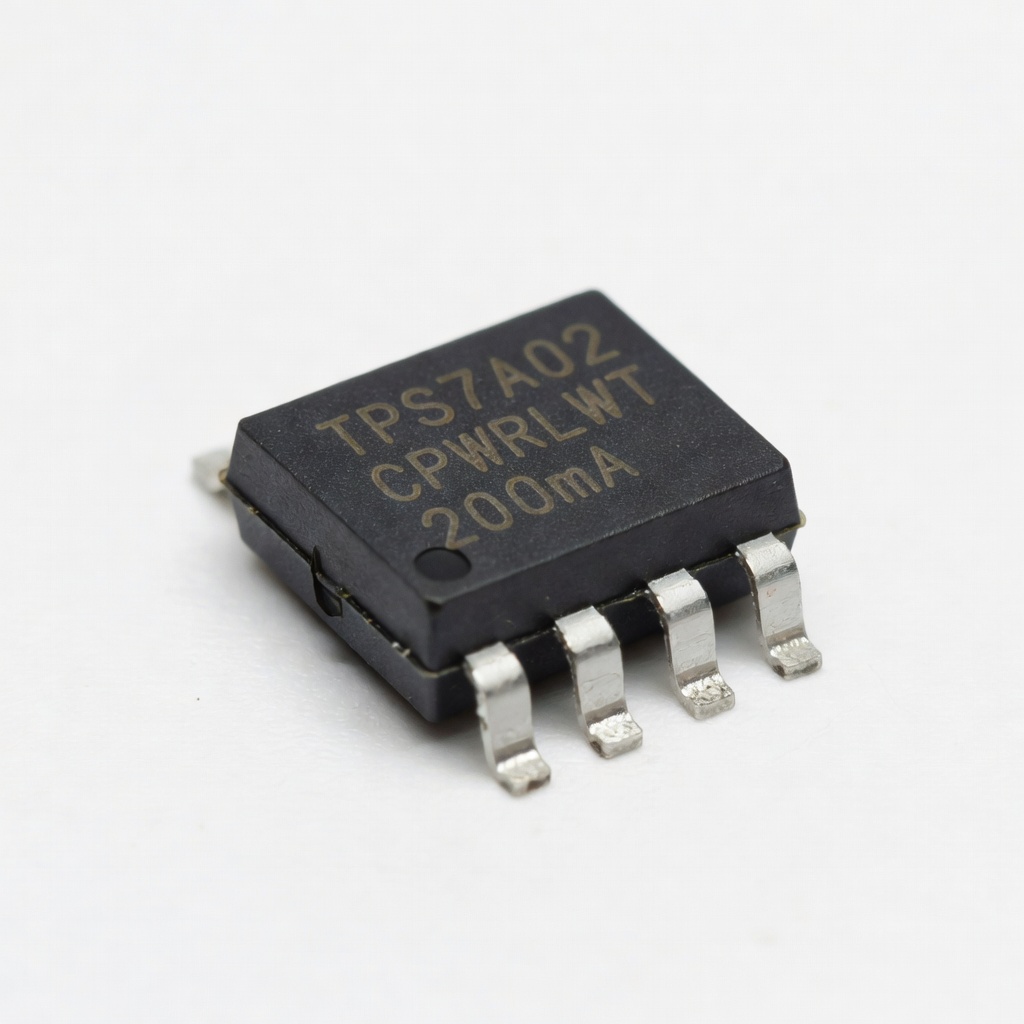
Texas Instruments TPS7A02CPWRLWT 200mA Ultra-Low Iq LDO
Iq 25nA (!), programmable Vout, excellent PSRR—state-of-the-art for year+ runtime.
Best for: Solar/IoT nodes needing <1µA sleep.
Price Range: $15-$20 (per unit in pack)
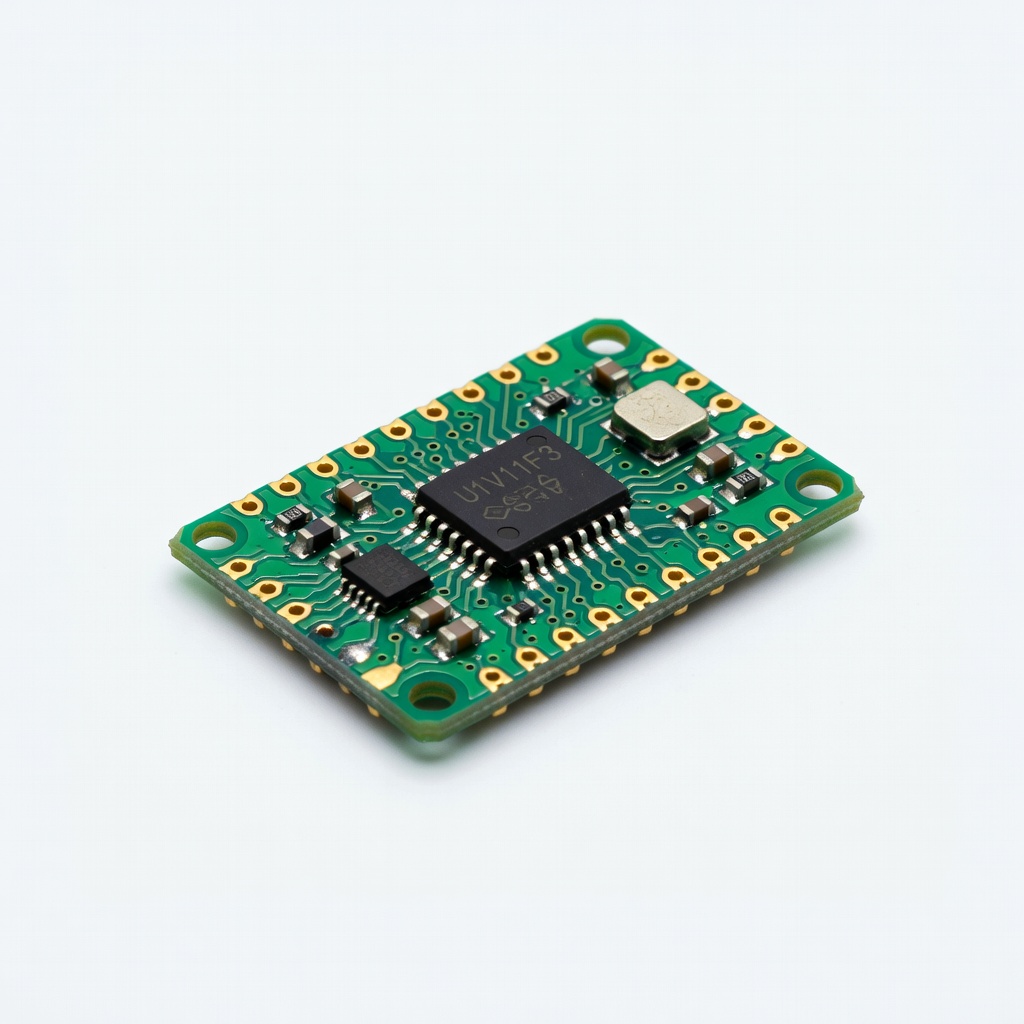
Pololu 3.3V Step-Up Voltage Regulator U1V11F3
Boost from <1V input, 90%+ eff, 100mA—handles battery sag to 3.3V stable.
Best for: When 3V→3.3V needed or multi-cell parallel.
Price Range: $5.95
Texas Instruments TPS62240DRCR 2MHz Buck Converter
Iq 25µA, 2-6V in, 95% eff to 1.8-3.3V—efficient for 10-50mA average loads.
Best for: Pulsed TX in wearables, where LDO heats.
Price Range: $10-$15 (pack)
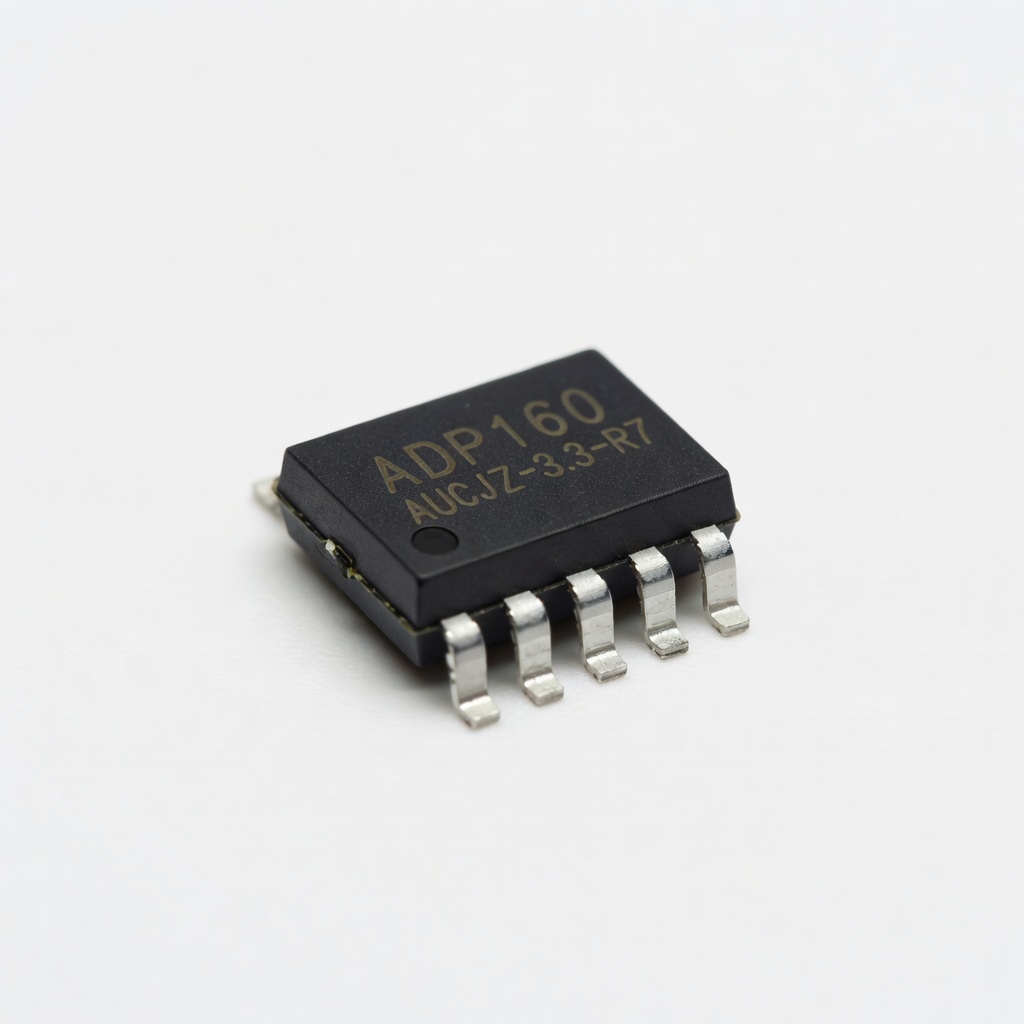
Analog Devices ADP160AUCJZ-3.3-R7 150mA LDO
Iq 1.1µA, low noise 9µVrms—superior for precision analog.
Best for: Audio preamps or ADCs from 3V batt.
Price Range: $12.99 (10pcs)