
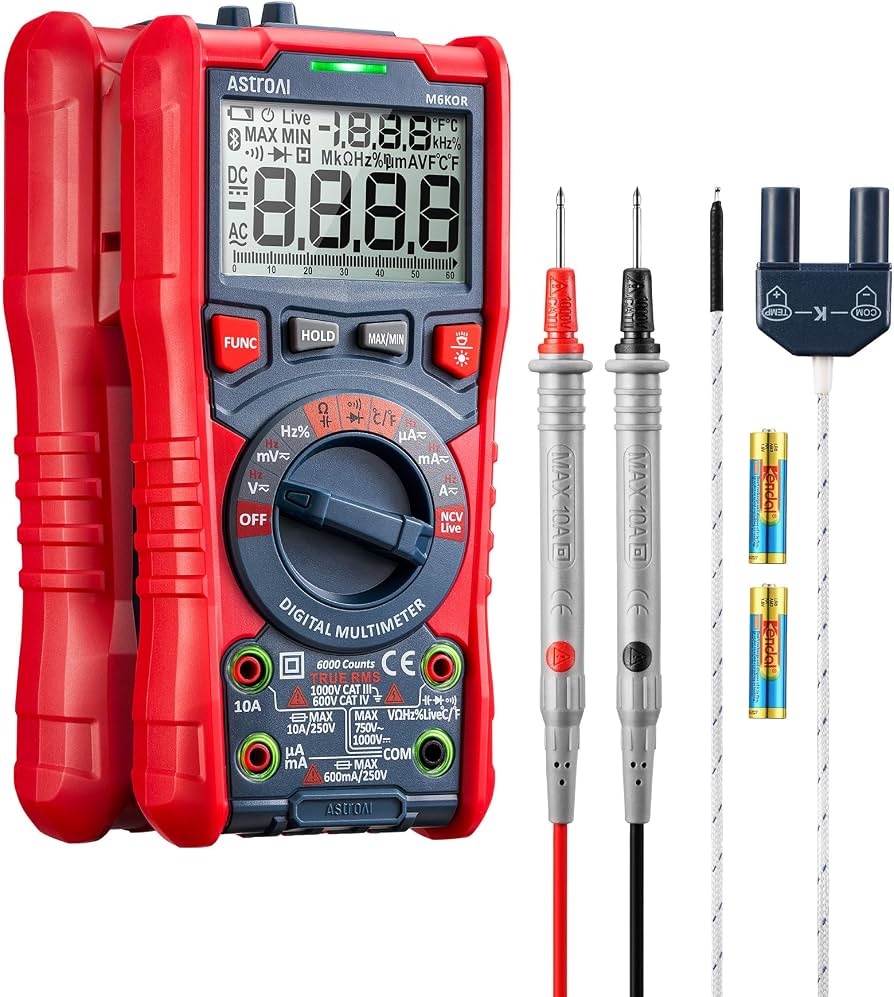
AstroAI Digital Multimeter TRMS 6000
Precise AAA voltage/IR under 10-500mA loads.
$35-40
AstroAI Digital Multimeter TRMS 6000 Accurate true RMS for low-voltage DC, auto-ranging, measures V/I/R essential for load tests.
Get the App
Better experience on mobile
Learn exact voltage drops for AAA batteries under real loads, measurement techniques, and factors affecting performance for advanced electronics projects.
Ever wondered why your AAA-powered gadget dims or fails prematurely despite 'fresh' batteries? Voltage under load reveals the true performance of AAA batteries, crucial for hobbyists designing circuits, RC models, or IoT devices where sustained power matters.
In this guide, you'll master no-load vs. loaded voltage, chemistry differences (alkaline, NiMH, lithium), internal resistance effects, and precise measurement methods. Expect data tables, curves, and pro tips to optimize battery selection.
Advanced concepts like Ohm's law applications and discharge curves are explained simply. Reading takes 15-20 minutes; hands-on testing adds 30-60 minutes with basic tools.
Estimated Time: 15-20 minutes reading; 30-60 minutes for hands-on testing Difficulty: advanced
AAA batteries have a nominal voltage—the labeled or standard value. Alkaline and zinc-carbon: 1.5V; NiMH and NiCd: 1.2V; Lithium (primary): 1.5V. This is an average during discharge, not open-circuit voltage (OCV).
OCV for fresh alkalines hits 1.6-1.65V, dropping immediately under load due to internal resistance (IR, typically 150-300mΩ fresh). Why matters: Circuits designed for 1.5V may brown-out at 1.2V under high draw.
Expect: Fresh alkaline OCV ~1.59V; fully charged NiMH ~1.4V.
💡 Tips:
No-load (OCV) measures battery potential without current draw. Under load, voltage sags per V = E - I*R (E=OCV, I=current, R=IR).
Example: Alkaline AAA at 50mA load (10Ω resistor) with 200mΩ IR: Sag = 0.05A * 0.2Ω = 0.01V; loaded V=1.59V-0.01V=1.58V. At 500mA (high draw), sag=0.1V, V=1.49V.
Real-world: Low-drain (clocks, remotes) stays near 1.5V; high-drain (flashlights, toys) drops to 1.2-1.0V quickly.
⚠️ Warnings:
| Chemistry | Nominal V | Fresh OCV | 100mA Load (Fresh) | End V (0.8-1.0V) |
|---|---|---|---|---|
| Alkaline | 1.5V | 1.59-1.65V | 1.35-1.45V | 1.0V |
| NiMH | 1.2V | 1.35-1.45V | 1.15-1.25V | 1.0V |
| Lithium | 1.5V | 1.7-1.8V | 1.55-1.65V | 1.2V |
Lithium excels in cold/high-drain (less sag); NiMH flatter curve for rechargeables. Alkaline sags most due to higher IR (~250mΩ fresh, 1Ω used).
💡 Tips:
IR causes primary sag: Fresh alkaline AAA IR=150-250mΩ; used=500mΩ-2Ω. Measure IR via V_load / I - OCV / I or dedicated testers.
Analogy: Battery as ideal voltage source in series with resistor. High-draw devices (e.g., 300mA motor) amplify sag: 300mA * 0.3Ω=0.09V drop.
Factors raising IR: Age, temperature (<0°C doubles IR), discharge depth.
Setup: Insert AAA in holder, connect multimeter in parallel, series resistor for load (e.g., 47Ω for ~30mA at 1.5V).
Steps: 1) Measure OCV. 2) Attach load, note V and I (multimeter amps). 3) Calculate IR=(OCV-V)/I. Repeat at 10mA, 50mA, 100mA.
Expect: Alkaline at 100mA fresh ~1.4V, 50% capacity ~1.2V. Log data for curves.
💡 Tips:
⚠️ Warnings:
Plot V vs. capacity at constant current. Alkaline: Sharp drop after 50%; NiMH: Flat to 80% capacity.
Under 200mA load: Alkaline holds >1.3V for first 20% discharge, then cascades. Use for device matching—e.g., 3xAAA (4.5V nom) under load=3.6-4.2V.
Test your gadget: Measure pack voltage under operation. Flashlight at full: Fresh alkalines 4.2V (3x1.4V); peripherals cause more sag.
Optimize: Parallel cells reduce sag; choose low-IR chemistry.
💡 Tips:
Problem: Inconsistent readings
Solution: Clean terminals; use gold-plated holders; verify multimeter calibration.
Problem: Excessive sag (>0.5V at 50mA)
Solution: Battery defective/old; replace. Check for internal short.
Problem: Multimeter shows 0V under load
Solution: Open circuit or dead fuse; test on known source.
Problem: NiMH voltage >1.45V
Solution: Overcharge—rest 1hr, retest; use smart charger.
Accurate true RMS for low-voltage DC, auto-ranging, measures V/I/R essential for load tests.
Best for: Precise AAA voltage/IR under 10-500mA loads.
Price Range: $35-40
Lowest IR (~100mΩ), minimal sag even at 1A pulses, benchmark for high-drain.
Best for: Testing extreme loads or cold environments.
Price Range: $12-15
Consistent 1.2V under load, low self-discharge, ideal for repeatable tests.
Best for: Rechargeable baseline for capacity/curve analysis.
Price Range: $10-12
Built-in tester shows V/capacity/IR; charges NiMH for endless tests.
Best for: Quick health checks without external multimeter.
Price Range: $20-25
Precise loads for controlled current (e.g., 100Ω=15mA at 1.5V).
Best for: Custom load setups.
Price Range: $8-12
Precise AAA voltage/IR under 10-500mA loads.
AstroAI Digital Multimeter TRMS 6000 Accurate true RMS for low-voltage DC, auto-ranging, measures V/I/R essential for load tests.

Testing extreme loads or cold environments.
Energizer Ultimate Lithium AAA Batteries (8-Pack) Lowest IR (~100mΩ), minimal sag even at 1A pulses, benchmark for high-drain.

Rechargeable baseline for capacity/curve analysis.
Panasonic Eneloop AAA NiMH Rechargeable (4-Pack) Consistent 1.2V under load, low self-discharge, ideal for repeatable tests.
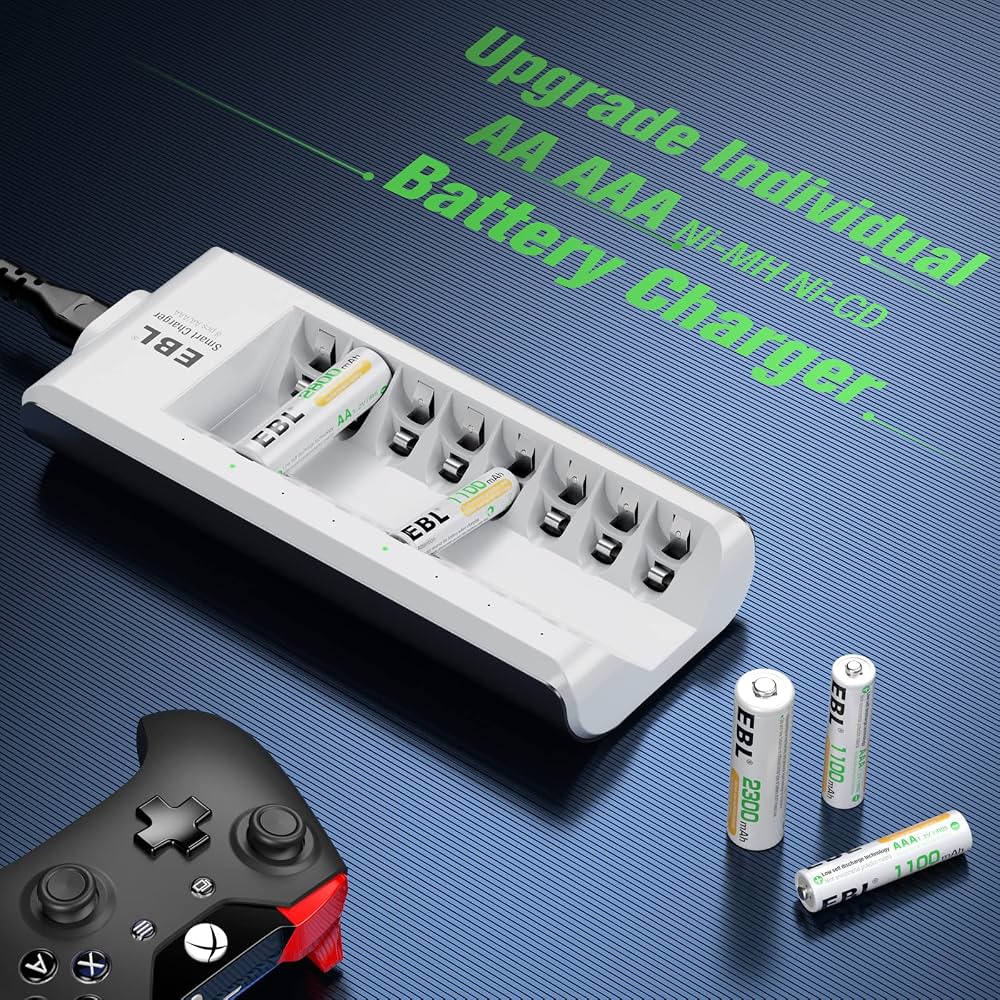
Quick health checks without external multimeter.
EBL 825R AAA Battery Charger with Tester Built-in tester shows V/capacity/IR; charges NiMH for endless tests.
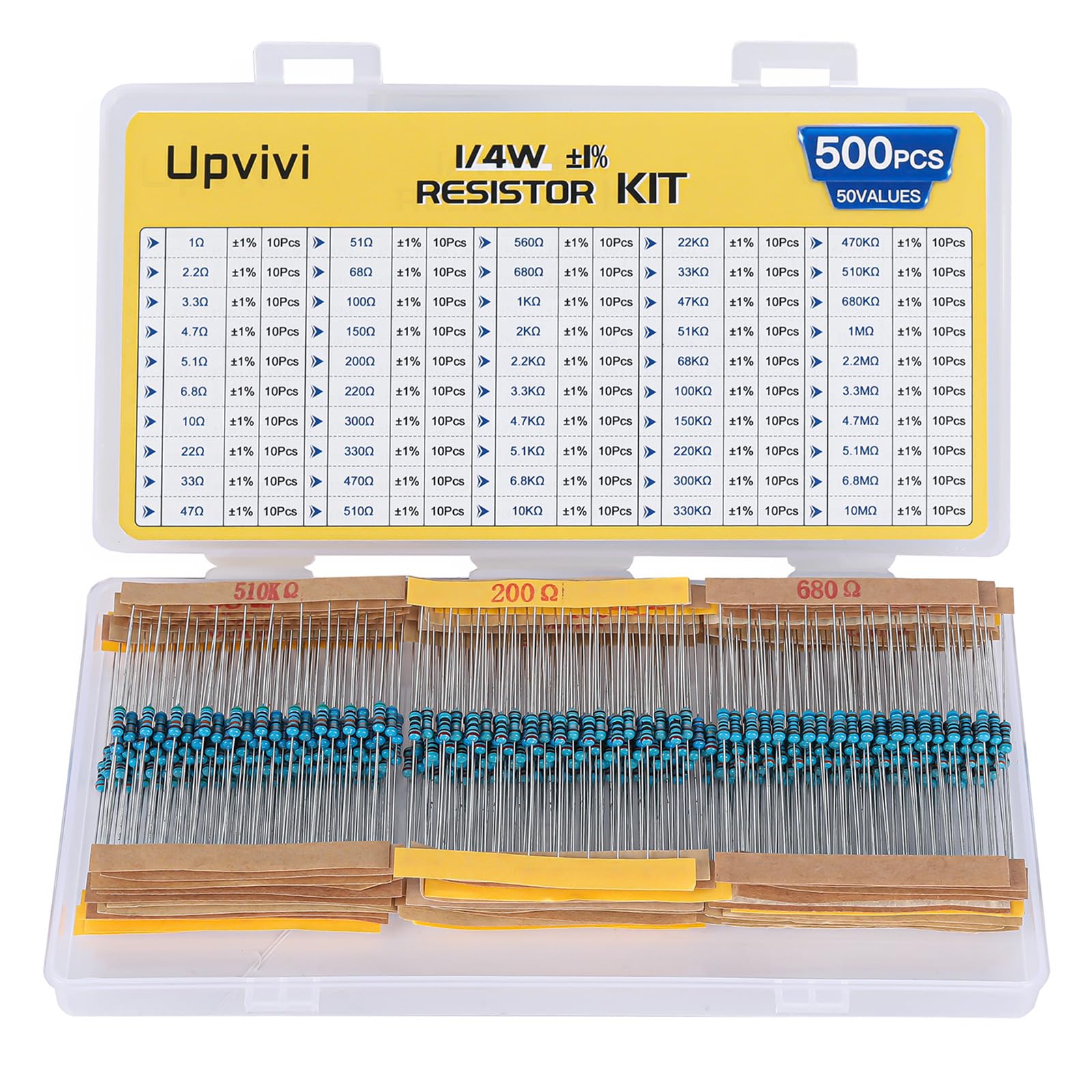
Custom load setups.
Resistor Kit 1/4W (10Ω-1kΩ) Precise loads for controlled current (e.g., 100Ω=15mA at 1.5V).