
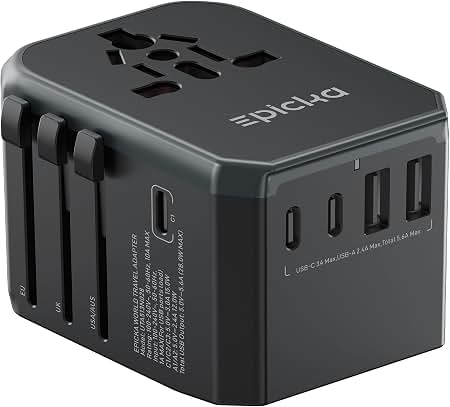
EPICKA Universal Travel Adapter
Phones, laptops in Europe/Asia/Australia; dual voltage devices.
$12.99
EPICKA Universal Travel Adapter Covers 150+ countries with 4 USB ports, surge protection—ideal for multi-stop trips.
Get the App
Better experience on mobile
Discover how to pick the right adapters and converters to safely charge your devices in any country without damage or hassle.
Traveling internationally only to find your phone charger won't plug in or worse, fries your gadget? You're not alone—mismatched plugs and voltages catch millions of travelers off guard each year, leading to dead batteries or expensive replacements. This guide breaks it down simply so you can stay powered up.
You'll learn the key differences between plug adapters and voltage converters, how to check your devices and destinations, and what to buy. No tech jargon overload—just clear steps to prepare confidently. Expect to spend 10-15 minutes reading and checking your gear; it's beginner-friendly with no tools needed beyond your devices' manuals or labels.
Estimated Time: 10-15 minutes Difficulty: beginner
Plug adapters change the shape of your plug to fit foreign outlets (e.g., US flat pins to Europe's round ones). They don't alter electricity flow. Voltage converters (or transformers) change the actual voltage, like from 220V Europe to 110V US devices.
Why it matters: Most modern phones/laptops handle 100-240V (dual voltage), so you often just need an adapter. Hair dryers or irons? They need converters. Expect confusion here—many call everything 'adapters,' but mixing them up risks damage.
Image description: Side-by-side diagram: US plug in European adapter (same voltage), vs. a bulky converter box changing voltage.
💡 Tips:
⚠️ Warnings:
Look on the charger, power brick, or device label for 'Input: 100-240V ~ 50/60Hz.' If it says 100-240V, it's dual voltage—safe worldwide with just a plug adapter.
Single voltage? Like '110V' means US/Japan only; needs a converter abroad. Why check: 80% of chargers are dual, saving you money on unnecessary converters. Test by plugging into a known outlet first.
Print or note ratings for all gear.
💡 Tips:
Use sites like worldstandards.eu or worldplug.com. Note two things: voltage (110V vs 220V) and plug type (A/B for US, C/E for Europe, G for UK, I for Australia).
Examples: Europe (220V, Type C/F), Japan (100V, A/B), Brazil (127V, N). Why: One country can have multiple types—e.g., South Africa uses 230V with M, N, or D plugs. Download a cheat sheet app.
💡 Tips:
Dual voltage device + matching voltage country? Adapter only. Mismatch (e.g., US 110V hairdryer to Europe 220V)? Get a step-down converter (220V to 110V).
Power rating matters: Converters have watt limits (e.g., 200W for chargers, 1600W for irons). Check device watts (volts x amps on label). Expect bulkier bags with converters.
⚠️ Warnings:
For 1-2 countries: Country-specific adapter ($5). Multi-country: Universal with sliding pins (covers 150+ countries). USB ports bonus for direct charging.
Safety: Look for surge protection, fuses. Why: Universals save space but check compatibility (e.g., no grounding for some high-power). Test before travel.
💡 Tips:
Pack adapters in carry-on. Test full chain: Device → charger → adapter → wall (borrow friend's foreign plug if possible).
Why: Catches defects early. Label by country for sharing.
Problem: Device won't charge or sparks
Solution: Wrong voltage—unplug immediately, use converter. Check polarity.
Problem: Adapter doesn't fit snugly
Solution: Try different prong position on universal; buy country-specific.
Problem: Converter gets hot/smells
Solution: Underpowered—upgrade to higher wattage; don't use continuously.
Problem: USB ports not working
Solution: Some adapters pass AC only—use dedicated USB ones.
Covers 150+ countries with 4 USB ports, surge protection—ideal for multi-stop trips.
Best for: Phones, laptops in Europe/Asia/Australia; dual voltage devices.
Price Range: $12.99
Affordable kit with multiple plug types, compact—great starter for beginners.
Best for: Backpackers hitting 3-4 countries; includes voltage checker.
Price Range: $14.99
Reliable step-down for non-dual devices, 4 USB ports, stable output.
Best for: Hair tools, cameras in 220V countries from US.
Price Range: $39.99
Higher wattage for small appliances, with universal outlet.
Best for: CPAP machines or irons abroad.
Price Range: $29.99
3 outlets + 3 USB, grounded—powers whole hotel room setup.
Best for: Families or remote workers needing multiple plugs.
Price Range: $19.99
Phones, laptops in Europe/Asia/Australia; dual voltage devices.
EPICKA Universal Travel Adapter Covers 150+ countries with 4 USB ports, surge protection—ideal for multi-stop trips.
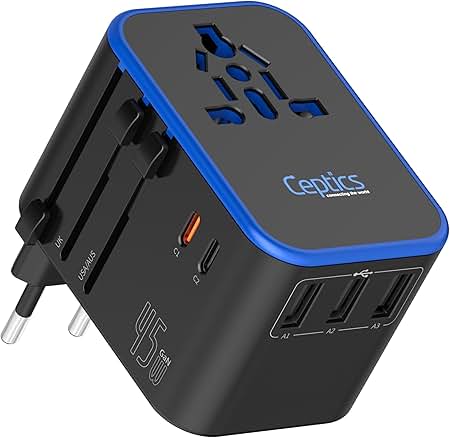
Backpackers hitting 3-4 countries; includes voltage checker.
Ceptics World Travel Adapter Kit Affordable kit with multiple plug types, compact—great starter for beginners.
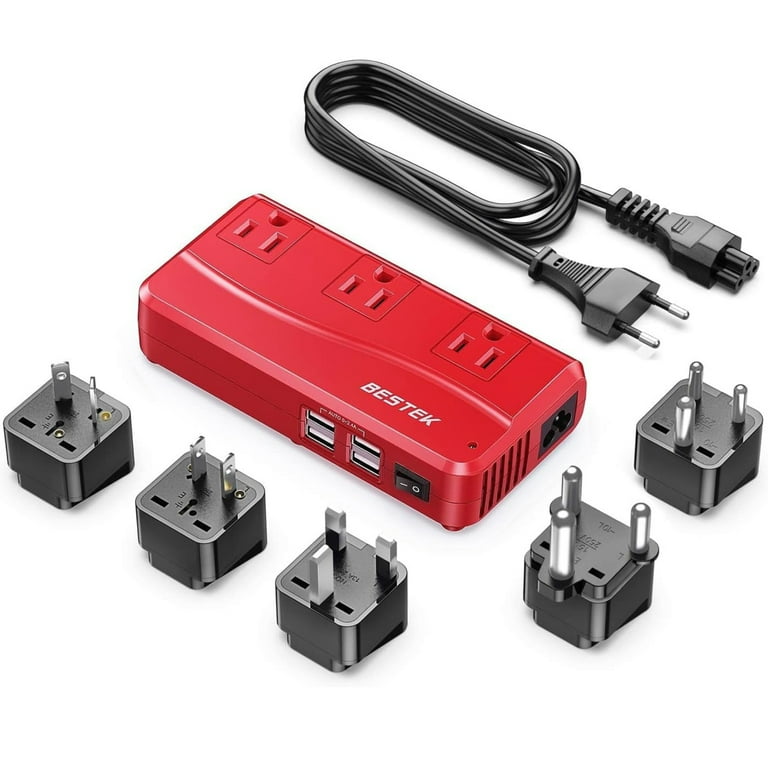
Hair tools, cameras in 220V countries from US.
BESTEK 250W Travel Voltage Converter Reliable step-down for non-dual devices, 4 USB ports, stable output.
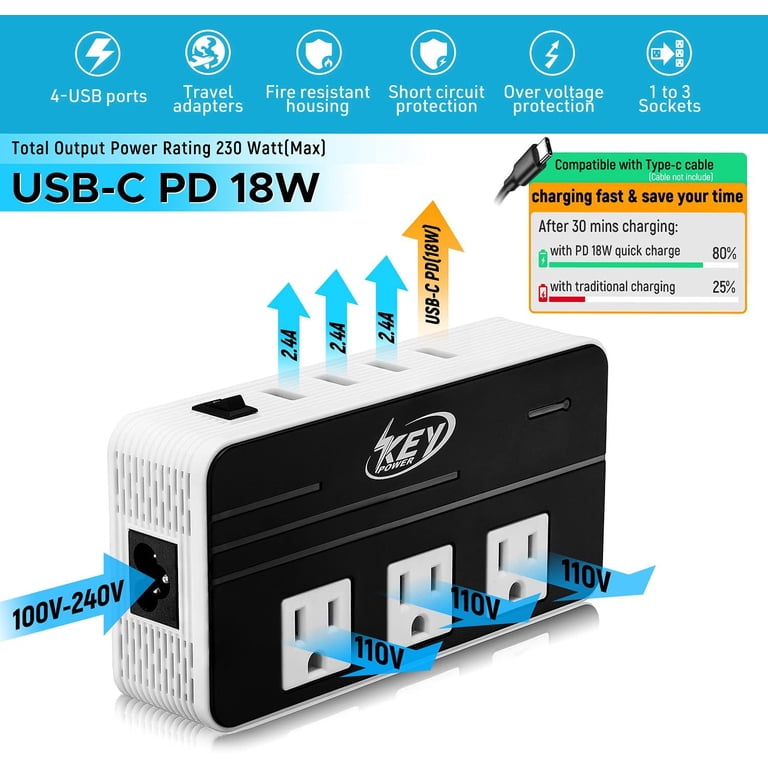
CPAP machines or irons abroad.
Key Power 230W Step Down Converter Higher wattage for small appliances, with universal outlet.
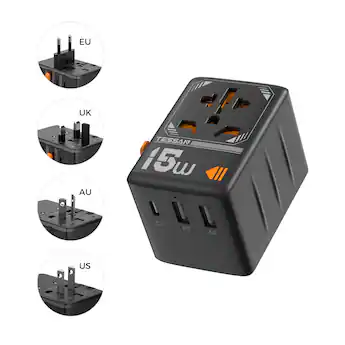
Families or remote workers needing multiple plugs.
Tessan Universal Power Strip Adapter 3 outlets + 3 USB, grounded—powers whole hotel room setup.