
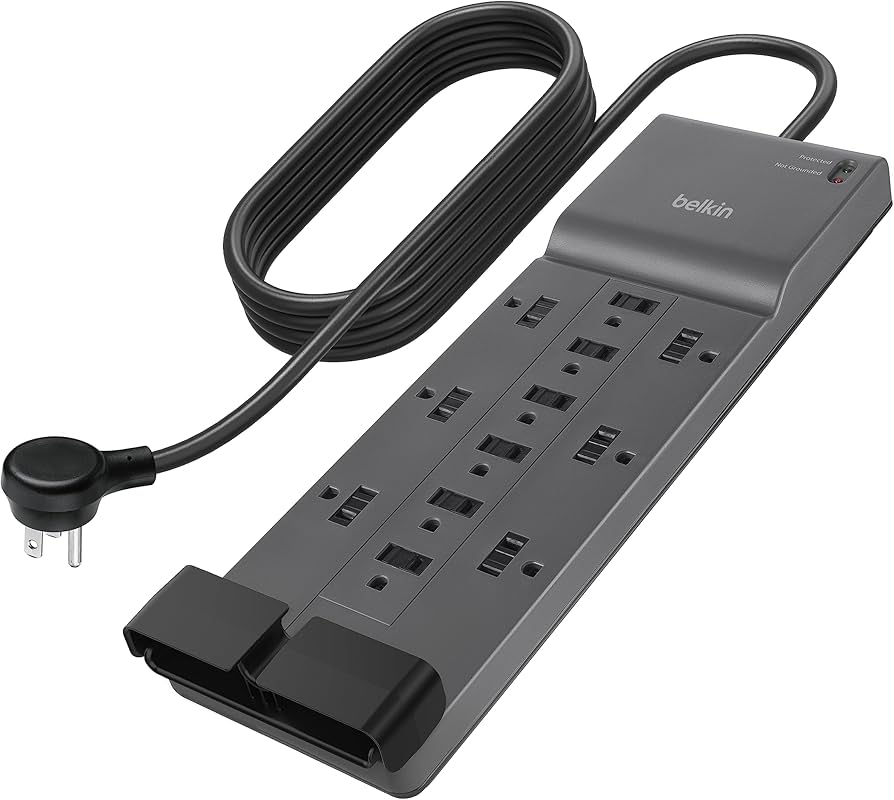
Belkin 12-Outlet Surge Protector (2550J)
Multi-device setups like PCs, TVs, consoles.
$25-$30
Belkin 12-Outlet Surge Protector (2550J) High 2550 joule rating and 330V clamping handle heavy home/office loads reliably.
Get the App
Better experience on mobile
Discover essential surge protection levels for adapters and multi-outlets to protect your electronics from costly damage.
Power surges from lightning, grid fluctuations, or heavy appliances can fry your devices in seconds, costing hundreds in repairs. Yet many adapters and multi-outlets offer minimal protection—or none at all—leaving gadgets vulnerable. This guide breaks down what surge protection truly means and what levels your adapters need.
You'll learn key specs like joule ratings and clamping voltage, how to evaluate products, and real-world recommendations. No math required—just practical insights for safer power setups. Expect to finish understanding in 15 minutes, with actionable advice for intermediate users familiar with basic electronics.
Estimated Time: 15-20 minutes Difficulty: intermediate
Power surges are brief spikes in voltage—often 100-1000 volts above normal 120V household levels. They come from lightning (up to 100 million volts), utility issues, or internal sources like fridges cycling on.
Why it matters: Surges damage sensitive chips in TVs, computers, and chargers instantly. Adapters without protection pass surges straight through.
Expect everyday multi-outlets to face 50-100 surges yearly; unprotected ones fail fast.
💡 Tips:
Surge protectors use Metal Oxide Varistors (MOVs) to divert excess voltage to ground, like a pressure relief valve on a boiler.
Adapters with protection clamp voltage to safe levels before it hits devices. Basic ones absorb energy; advanced add EMI/RFI filtering.
Without this, your multi-outlet is just a splitter—zero defense.
⚠️ Warnings:
Joules measure how much surge energy the protector absorbs before failing (e.g., 1000 joules handles moderate surges).
Analogy: Like a sponge soaking up water—bigger sponge (higher joules) lasts longer. Adapters need 600+ joules for home use; multi-outlets 1000-2000+.
Check specs: Lifetime rating drops as it absorbs hits.
💡 Tips:
Clamping voltage (e.g., 330V) is the max voltage allowed to pass to devices. Lower is better (under 400V ideal).
Why crucial: Even absorbed surges leave residue—330V clamping keeps it safe for 120V devices. Cheap adapters often exceed 500V.
UL-listed? Ensures tested performance.
Response time (<1 nanosecond) is how fast it reacts. Modern ones are 1ns or less—fast enough for all surges.
Older adapters lag at 25ns, missing fast spikes. For multi-outlets, pair with <1ns for full coverage.
💡 Tips:
Basic adapters: 600-1000 joules, 400V clamp for chargers/laptops.
Multi-outlets/power strips: 1500+ joules, 330V clamp, 8+ outlets for home offices. High-risk areas (storms)? 3000+ joules.
Expect: Replace every 2-3 years or after big surge indicators light up.
⚠️ Warnings:
Plug in, check indicator lights (protected/grounded). Use surge tester or multimeter for voltage stability.
Label joules/clamp on units. Whole-home? Add point-of-entry protector.
Problem: Protector light off after storm
Solution: Replace immediately—MOTs sacrificed themselves. Test devices.
Problem: Frequent tripping or buzzing
Solution: Check grounding with outlet tester; upgrade to higher joule rating.
Problem: Devices still damaged
Solution: Clamping too high or response slow—switch to 330V/1ns model. Seek electrician for wiring.
High 2550 joule rating and 330V clamping handle heavy home/office loads reliably.
Best for: Multi-device setups like PCs, TVs, consoles.
Price Range: $25-$30
Excellent 3020J absorption, lifetime warranty, EMI filtering for clean power.
Best for: High-value electronics in storm-prone areas.
Price Range: $40-$50
Compact 2100J with 12 AC + USB ports, fast 1ns response for desks.
Best for: Laptops, phones, chargers in small spaces.
Price Range: $35-$45
Top-tier 3840J for pro use, diagnostic LEDs, rugged build.
Best for: Servers, workshops with power tools.
Price Range: $30-$40
Multi-device setups like PCs, TVs, consoles.
Belkin 12-Outlet Surge Protector (2550J) High 2550 joule rating and 330V clamping handle heavy home/office loads reliably.
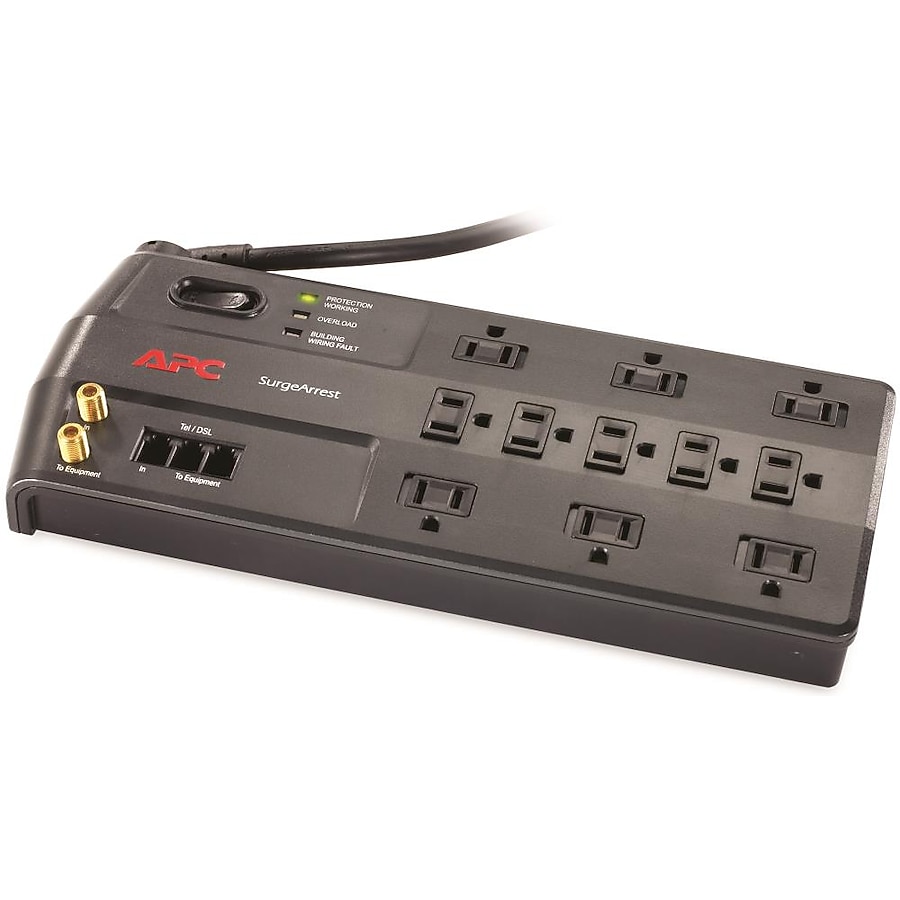
High-value electronics in storm-prone areas.
APC SurgeArrest Performance (3020J) Excellent 3020J absorption, lifetime warranty, EMI filtering for clean power.
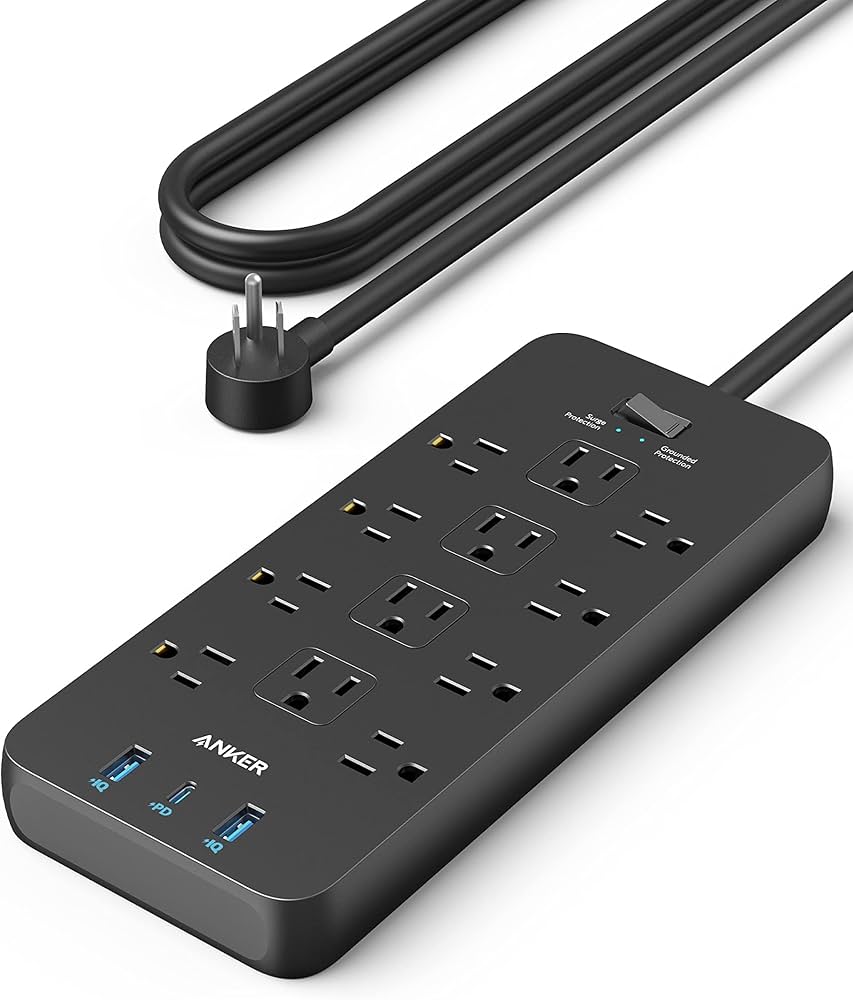
Laptops, phones, chargers in small spaces.
Anker Power Strip Surge Protector (2100J) Compact 2100J with 12 AC + USB ports, fast 1ns response for desks.
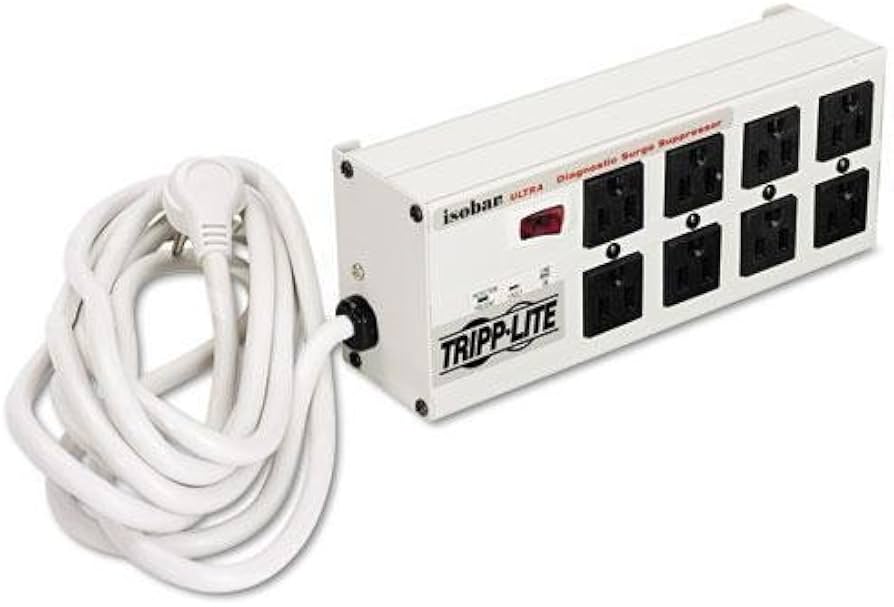
Servers, workshops with power tools.
Tripp Lite Protect It! 8-Outlet (3840J) Top-tier 3840J for pro use, diagnostic LEDs, rugged build.