▸Why Sustainability Matters in 3D Printing
3D printing is revolutionizing manufacturing, but its rapid growth raises environmental concerns: plastic waste from failed prints, energy-intensive processes, and non-recyclable filaments. With global plastic production hitting 400 million tons annually, hobbyists and pros alike seek ways to print greener without sacrificing quality.
In this guide, you'll discover sustainable supplies—from bio-based and recycled filaments to waste-minimizing accessories—that make 3D printing earth-friendly. Expect to understand concepts like material lifecycle and low-impact choices, perfect for intermediate users ready to upgrade their setup. No hands-on building required; just 25-35 minutes to read and apply insights to your next project.
We'll break it down from basics to advanced options, with real-world examples and product picks to get you started.
▸What You'll Need
- •Basic knowledge of FDM or SLA 3D printing (filament types, printer calibration)
- •Access to online filament suppliers (e.g., Amazon, MatterHackers, PrintedSolid)
- •Optional: Spreadsheet for tracking material usage and recyclability
Estimated Time: 25-35 minutes
Difficulty: intermediate
▸Step-by-Step Instructions
Step 1: Understand Sustainability Metrics in 3D Printing
Sustainability in 3D printing boils down to four pillars: material renewability, recyclability, energy efficiency, and waste reduction. Renewable materials come from plants (e.g., corn starch for PLA), while recyclability means the filament can be reprocessed post-print. Energy efficiency favors low-temp prints, and waste reduction cuts failed prints via better supplies.
Why it matters: Traditional ABS or PETG often ends up in landfills. Sustainable choices lower your carbon footprint by 50-80%, per studies from the Ellen MacArthur Foundation. Expect metrics like 'cradle-to-gate' emissions on supplier spec sheets.
Example: PLA has a lower embodied energy (50 MJ/kg) vs. nylon (200 MJ/kg).
💡 Tips:
- •Check supplier LCA (Life Cycle Assessment) reports for true impact.
Step 2: Prioritize Bio-Based Filaments
Bio-based filaments derive from plants like corn, sugarcane, or hemp, making them renewable and often compostable. PLA (Polylactic Acid) is the star here—90% bio-derived and breaks down in industrial composters.
Analogy: Think of it like choosing bamboo over plastic for utensils; both work, but one regrows. These filaments print at standard temps (190-220°C) with minimal warping.
Expect 20-30% less plastic use long-term as they encourage responsible disposal.
💡 Tips:
- •Store in airtight bags to prevent moisture absorption.
⚠️ Warnings:
- •Not all 'bio-PLA' is equal—verify >70% bio-content.
Step 3: Choose Recycled and Upcycled Filaments
Recycled filaments repurpose post-consumer plastics like bottles (rPET) or manufacturing waste into 1.75mm spools. Brands pelletize and extrude them, closing the loop.
Why crucial: Diverts 1kg of filament from landfills per spool. Strength matches virgin material (tensile ~50 MPa). Example: rPETG from ocean plastic prints durable parts like brackets.
Drawbacks are minor: slight color variation, but ideal for non-cosmetic prints.
💡 Tips:
- •Sort by color for uniform batches.
Step 4: Select Low-Impact Resins for SLA Printing
For resin printers, water-washable, low-VOC formulas reduce solvent use and emissions. Plant-based resins (e.g., soy-derived) cut petroleum reliance by 40%.
Analogy: Like switching to natural cleaners—same clean, less harm. Cure times similar (5-10 min/ layer), but dispose via curing waste for safety.
Expect compatibility with Elegoo or Anycubic printers.
⚠️ Warnings:
- •Always wear PPE; even 'green' resins aren't edible.
Step 5: Incorporate Waste-Reducing Accessories
Enclosures stabilize temps to slash failed prints by 70%, dryers remove moisture for reliable extrusion, and scrap recyclers shred failures into new filament.
Why it matters: Failed prints = 20-50% waste in open-frame setups. Real-world: A $50 enclosure pays off in 5 spools saved.
These extend hardware life too.
💡 Tips:
- •Print brims sparingly to minimize trim waste.
Step 6: Opt for Repairable and Modular Printer Parts
Sustainable printing needs durable supplies: modular hotends (e.g., E3D V6), brass nozzles for longevity, and belts/gears from recycled composites.
Benefit: Reduces e-waste; a $20 nozzle lasts 500+ hours vs. cheap clones at 50.
Track via apps like PrusaSlicer for maintenance.
Step 7: Source Ethically and Track Your Impact
Buy from suppliers with carbon-neutral shipping or local makerspaces. Use tools like PrintWatch to log filament use and CO2 savings.
Outcome: Quantify progress—aim for <1kg waste/month. Analogy: Like a fitness tracker for your printer.
Future-proof with emerging algae-based filaments.
💡 Tips:
- •Join r/3Dprinting for supplier recs.
▸Pro Tips
- •Dry filament 4-6 hours before use to prevent clogs and waste.
- •Use slicer settings for 100% infill only when needed—sparse reduces material 30%.
- •Recycle supports separately if using dual-extruder.
- •Print in batches to optimize bed heating energy.
- •Choose matte finishes to hide recycled filament inconsistencies.
- •Invest in a filament scale for precise usage tracking.
- •Pair with solar-powered printers for ultimate green.
▸Common Mistakes to Avoid
- •Assuming all PLA is biodegradable—only industrially compostable grades break down.
- •Ignoring moisture in 'eco' filaments—leads to 50% failure rate.
- •Overlooking energy: Printing at 250°C+ spikes power use unnecessarily.
- •Buying cheap non-recyclable supports—increases total waste.
- •Not verifying supplier claims—greenwashing is common without LCA data.
▸Troubleshooting
Problem: Brittle prints from recycled filament
Solution: Increase print temp by 5-10°C and slow speed to 40mm/s for better layer adhesion.
Problem: Stringing with bio-based materials
Solution: Enable retraction (5mm at 40mm/s) and dry filament overnight.
Problem: Warping in enclosures
Solution: Add corner fans or brim; ensure <50% humidity.
Problem: Resin waste buildup
Solution: Use curing station for solids; filter and reuse uncured resin 3-5 times.
Polymaker PolyTerra PLA Filament
Plant-based with 30% lower carbon footprint than standard PLA; excellent strength and no warping.
Best for: Everyday prototypes and functional parts where sustainability meets reliability.
Price Range: $25-$32 per 1kg spool
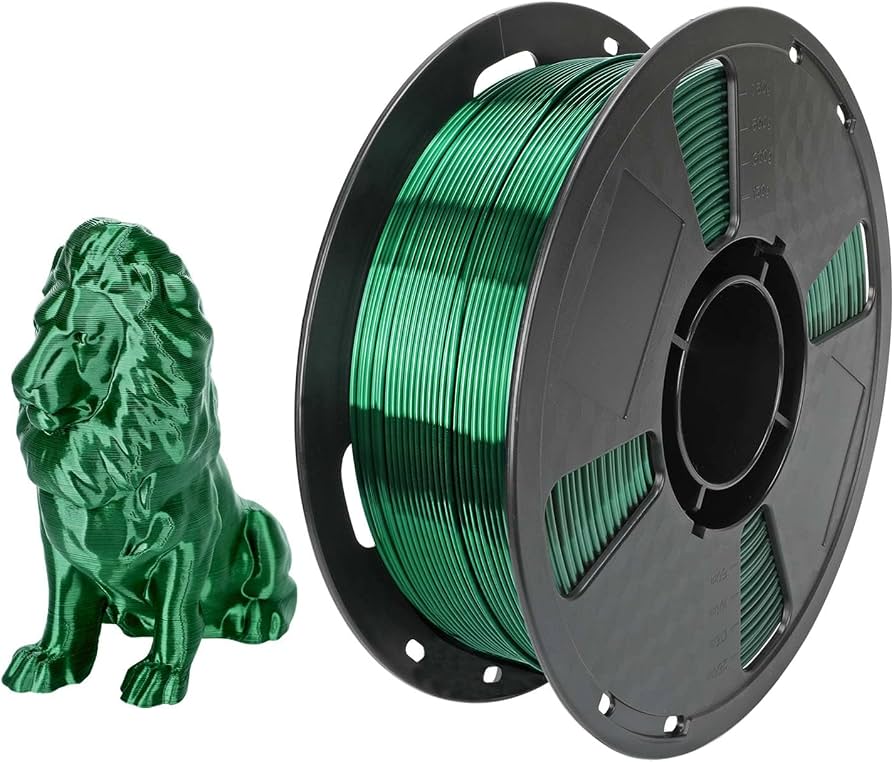
ColorFabb rPET Forest Green Filament
Made from 100% recycled plastic bottles; matches virgin PETG strength with zero compromise on printability.
Best for: Outdoor/durable parts like enclosures or tools from waste plastic.
Price Range: $35-$45 per 1kg spool
Fillamentum Extrafill Recycled PLA
High recyclability (up to 100% regrindable); consistent diameter for reliable extrusion.
Best for: Prototyping and low-waste hobby projects.
Price Range: $28-$35 per 1kg spool
Sunlu FilaDryer S2 Filament Dryer
Reduces moisture-related failures by 90%, saving filament waste; compact for any setup.
Best for: Pre-print drying for all hygroscopic sustainable filaments.
Price Range: $40-$50
Creality Ender 3 Enclosure
Stabilizes temps to cut failed prints and waste; easy upgrade for open printers.
Best for: Any FDM printer to boost sustainability through reliability.
Price Range: $60-$80