Struggling to keep your business finances in order? Professional account books are the backbone of manual bookkeeping, providing structured pages for tracking every transaction with precision. Without understanding their layout, you risk disorganized records, errors in balancing, and compliance issues.
In this guide, you'll discover the standard pages found in high-quality professional account books, from journals to ledgers. We'll break it down step-by-step, explaining each section's purpose, how to use it, and why it matters for intermediate bookkeepers. Expect a clear overview in 15-20 minutes—no prior ledger experience needed beyond basic debits and credits.
By the end, you'll confidently navigate any account book, spot quality features, and choose the right one for your needs.
▸What You'll Need
- •Basic knowledge of double-entry bookkeeping (debits and credits)
- •A professional account book (physical or printable template)
- •Pen or pencil for practice entries
- •Optional: Calculator for trial balances
Estimated Time: 15-20 minutes
Difficulty: intermediate
▸Step-by-Step Instructions
Step 1: Index or Table of Contents
The index is the roadmap of your account book, listing page numbers for each account or section. In professional books, it's typically at the front with alphabetical tabs or numbered references for quick lookups.
This page matters because it prevents flipping endlessly during busy periods. Expect columns for account names (e.g., 'Cash', 'Sales') and corresponding page starts. High-end books have thumb-indexed edges for faster access.
Image Description: Open account book showing a detailed index page with columns for Account Name, Debit Folio, Credit Folio, and Page Number.
💡 Tips:
- •Customize the index as you add accounts for personalization.
⚠️ Warnings:
- •Don't skip updating the index—outdated ones lead to lost entries.
Step 2: Chart of Accounts
This reference page outlines all account categories like assets, liabilities, equity, revenue, and expenses. Professional books pre-print standard codes (e.g., 1000 for Cash, 4000 for Sales).
Why it matters: It standardizes your numbering system, ensuring consistency in double-entry recording. You'll see numbered lists grouped by type, making audits easier.
Use it to assign numbers before entering transactions elsewhere.
💡 Tips:
- •Print your own if the book lacks one, matching GAAP standards.
Step 3: General Journal
The heart of chronological entries, with columns for Date, Account, Debit, Credit, and Explanation. Every non-cash transaction starts here before posting to ledgers.
It captures adjusting entries, accruals, and corrections. Expect wide ruling for details and folio columns for ledger cross-references. This chronological record is crucial for reconstructing history if ledgers fail.
💡 Tips:
- •Enter explanations fully—'Paid supplier XYZ' beats vague notes.
⚠️ Warnings:
- •Avoid posting routine cash here; use specialized books instead.
Step 4: Cash Book (Receipts and Payments)
Dual-sided for cash receipts (left) and payments (right), with columns for Date, Particulars, Folio, Receipts, Payments, and Balance.
Tracks petty cash and bank columns separately. Vital for daily liquidity monitoring—balances must reconcile monthly.
Step 5: Sales Journal (or Day Book)
Records credit sales by customer, with Date, Invoice #, Customer, Folio, and columnar totals for accounts receivable, sales tax, inventory, etc.
Streamlines posting by totaling monthly to ledgers. Professional versions have carbonless duplicates for records.
💡 Tips:
- •Total columns monthly to catch errors early.
Step 6: Purchases Journal
Mirrors sales but for credit purchases: Date, Supplier, Invoice, Folio, Purchases, Tax, Accounts Payable.
Essential for tracking vendor debts and inventory costs. Use for bulk posting to reduce general journal clutter.
⚠️ Warnings:
- •Distinguish returns—use separate columns to avoid inflating costs.
Step 7: General Ledger Sheets
Individual pages per account (e.g., one for each customer/supplier), with Date, Particulars, Journal Folio, Debit, Credit, Balance.
Posts from journals here for running balances. T-accounts or columnar format common in pro books.
💡 Tips:
- •Balance monthly—discrepancies signal errors.
Step 8: Trial Balance and Financial Summary Pages
At the back, blank sheets for listing all ledger balances (Debit/Credit totals must equal). Some include P&L and balance sheet templates.
Closes the loop, verifying accuracy before statements. Expect space for adjustments.
▸Pro Tips
- •Use colored pens for debits/credits to spot imbalances visually.
- •Cross-reference folios religiously for audit trails.
- •Laminate summary pages for reusable planning.
- •Scan pages digitally for backups—apps like CamScanner work great.
- •Start with monthly closes to build discipline.
- •Thumb through pro books before buying to check page quality.
- •Pair with accounting software exports for hybrid tracking.
▸Common Mistakes to Avoid
- •Skipping the index update, leading to lost transactions and hours of searching.
- •Confusing sales/purchases journals, inflating revenue or costs.
- •Not reconciling cash book to bank statements monthly, causing overdrafts.
- •Poor explanations in journals, complicating tax prep or audits.
- •Overcrowding ledger pages—start new ones for high-volume accounts.
▸Troubleshooting
Problem: Trial balance doesn't equal
Solution: Check math errors, omitted postings, or wrong debits/credits. Recalculate journals first.
Problem: Running balances off in cash book
Solution: Verify every addition/subtraction; compare to bank deposits/withdrawals.
Problem: Pages filling too fast
Solution: Switch to a larger book or post summaries quarterly to ledgers.
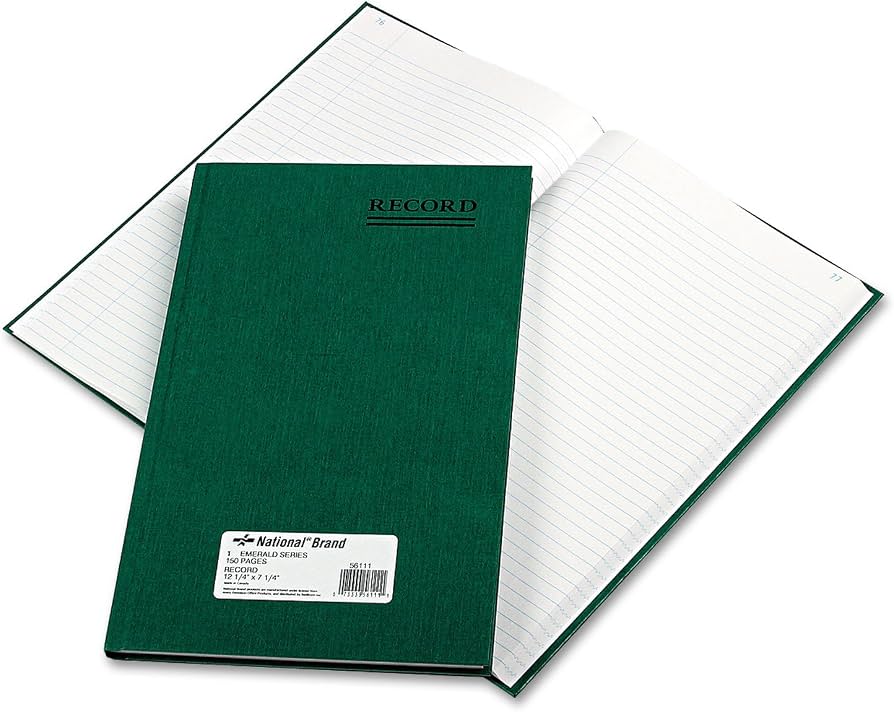
Rediform Office National Account Book, 9-Column, 150 Pages
Features all standard sections like cash book, journals, and ledgers with durable cover and quality paper.
Best for: Ideal for small businesses needing comprehensive manual tracking.
Price Range: $12-$15
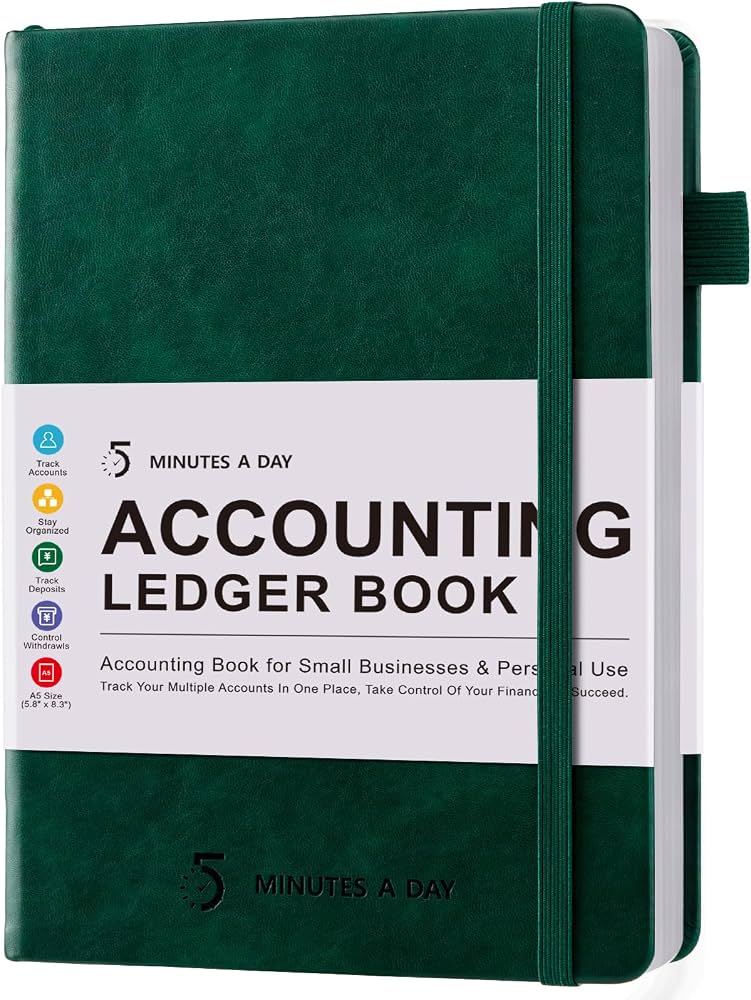
Better Office Products Account Ledger Book, 5 Minute Sheets
Pre-formatted for quick entries with sales, purchases, and trial balance pages—saves time for intermediates.
Best for: Freelancers or side hustles with moderate transaction volume.
Price Range: $8-$12
Blue Summit Supplies Accounting Ledger Notebook, Undated
Flexible pages including general journal, ledgers, and summaries; acid-free paper for longevity.
Best for: Professionals wanting customizable, long-term books.
Price Range: $15-$20
Tripponta Hard Cover Account Book, 9 Columns
Thread-sewn binding prevents pages from falling out; includes index and all key sections.
Best for: High-volume users needing durability.
Price Range: $20-$25