
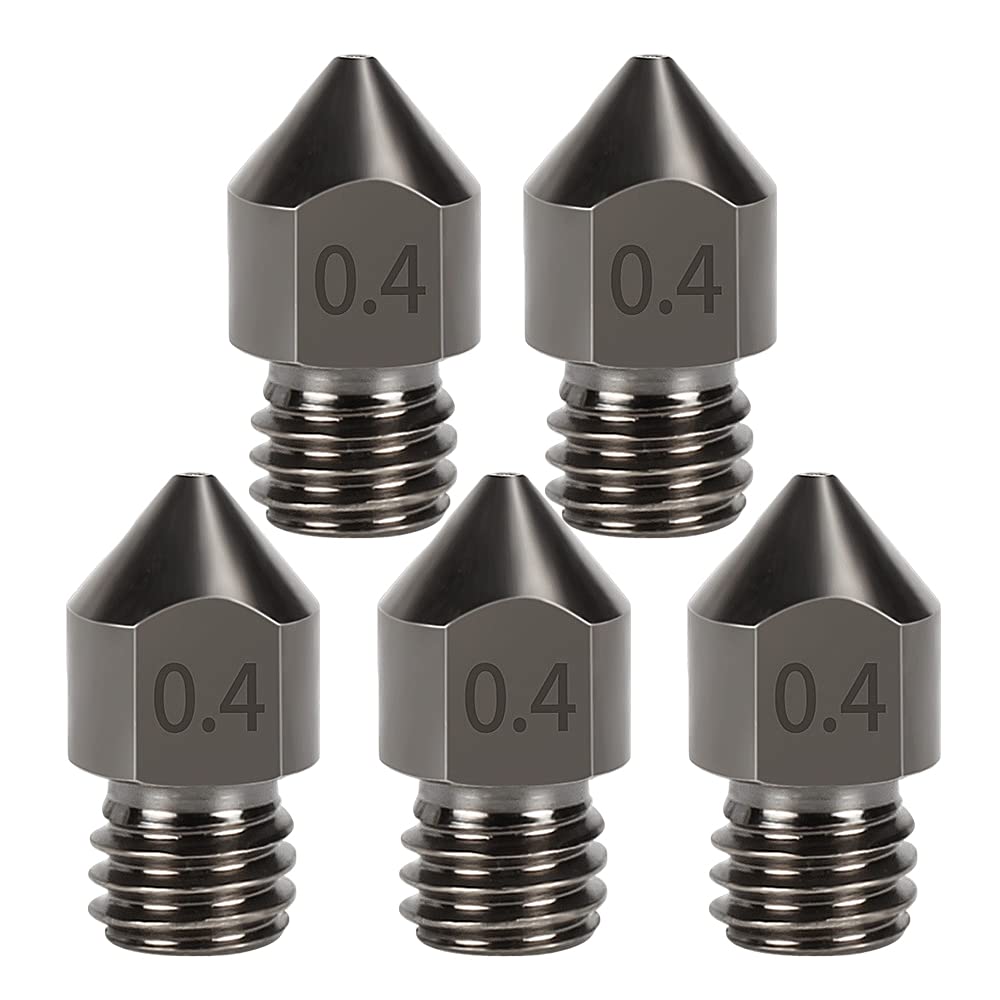
Creality Hardened Steel Nozzle 0.4mm MK8
Daily abrasive printing under $20/kg volume.
$12.99
Creality Hardened Steel Nozzle 0.4mm MK8 Affordable, high wear resistance for carbon fiber and glow filaments; perfect Ender 3/CR-10 upgrade.
Get the App
Better experience on mobile
Learn which nozzle materials excel with carbon fiber, metal-filled, and glow-in-the-dark filaments to avoid clogs, wear, and failed prints.
Printing with abrasive 3D filaments like carbon fiber, glow-in-the-dark, wood-filled, or metal composites can transform your projects, but they quickly destroy standard brass nozzles. You'll end up with clogged prints, inconsistent extrusion, and frequent replacements—costing time and money. This guide explains why and reveals the best nozzle materials to handle these tough filaments reliably.
By the end, you'll understand abrasive filament challenges, compare top nozzle materials (brass vs. hardened steel vs. ruby), and know how to choose and maintain the right one for your printer. No more guessing—get durable, high-quality prints every time. This explainer is designed for intermediate users familiar with basic nozzle swaps; expect 15 minutes to read and apply the knowledge.
Estimated Time: 15-20 minutes Difficulty: intermediate
Abrasive filaments contain particles like carbon fibers, metal powders, glow pigments, or wood fibers that act like sandpaper inside your nozzle. These grind away soft materials over time, causing enlarged bore diameters, poor extrusion, and brittle prints.
Examples: PETG with carbon fiber (e.g., Prusament PC Blend Carbon Fiber) or PLA with glow-in-the-dark additives. Always check filament specs—abrasives have Mohs hardness >3.
💡 Tips:
Brass is the default nozzle material (copper-zinc alloy) prized for excellent thermal conductivity and low cost. But its Mohs hardness of ~3.5 means abrasives wear it out in 1-5 kg of printing.
Expect: Bore diameter doubles, leading to blobs, under-extrusion, and stringing. Analogy: Filing metal with soft butter—messy and ineffective.
⚠️ Warnings:
Hardened/tool steel (Mohs 60-65 HRC) is the sweet spot for most users. Heat-treated for wear resistance, it handles 50-200+ kg of abrasives while maintaining good thermal properties.
Best for: Everyday abrasive printing on Ender 3, Prusa, or Bambu Labs. Brands like E3D or BIQU offer MK8/V6 compatibility.
💡 Tips:
Stainless steel (316L grade, Mohs ~5.5) resists corrosion and mild abrasives better than brass. It's affordable but wears faster than hardened steel on carbon/metal fills (10-50 kg lifespan).
Use case: Glow-in-the-dark or light wood fills. Avoid for heavy metals.
⚠️ Warnings:
Ruby (synthetic sapphire orifice in steel body, Mohs 9) is nearly indestructible—lasts 1000+ kg even with metal-filled filaments. Precision bore ensures consistent flow.
Downside: $80-150 price, mainly for V6 hotends. Ideal for production or exotic filaments.
💡 Tips:
Titanium offers great thermal conductivity and lightness (Mohs ~6), good for 20-100 kg. PCBN (cubic boron nitride) is ultra-hard but rare/expensive.
Key factors: Printer compatibility, nozzle length (volcano for fast prints), bore size (0.4-0.8mm). Match to filament particle size.
Match nozzle to hotend (e.g., MK8 for Ender). Heat to 250°C, use wrench to swap. Clean weekly with cold pull (nylon filament).
Monitor wear: Calibrate E-steps if flow changes. Replace every 50-100 kg for abrasives.
💡 Tips:
⚠️ Warnings:
Problem: Nozzle clogs mid-print
Solution: Increase temp 10°C, use 0.6mm bore, perform cold pull. Check filament dryness.
Problem: Inconsistent layer lines after 20kg
Solution: Measure bore with calipers; replace if >10% enlarged. Recalibrate E-steps.
Problem: Poor layer adhesion
Solution: Switch to stainless/hardened for better heat; slow speed to 40mm/s.
Problem: Nozzle won't heat properly
Solution: Titanium/stainless has lower conductivity—upgrade heater block or insulate.
Affordable, high wear resistance for carbon fiber and glow filaments; perfect Ender 3/CR-10 upgrade.
Best for: Daily abrasive printing under $20/kg volume.
Price Range: $12.99
Precision CNC-machined for smooth flow; lasts 100kg+ on metal fills.
Best for: Prusa or Voron users needing larger bore for chunky abrasives.
Price Range: $14.99
Ultimate durability with sapphire orifice; zero wear even on bronze fills.
Best for: High-volume production or exotic filaments.
Price Range: $99.00
Bimetal (brass + steel tip) for best heat + wear balance.
Best for: Bambu X1 or fast printers with abrasives.
Price Range: $19.99
Corrosion-resistant budget pick for mild abrasives like wood PLA.
Best for: Entry-level upgrade from brass.
Price Range: $9.99
Daily abrasive printing under $20/kg volume.
Creality Hardened Steel Nozzle 0.4mm MK8 Affordable, high wear resistance for carbon fiber and glow filaments; perfect Ender 3/CR-10 upgrade.
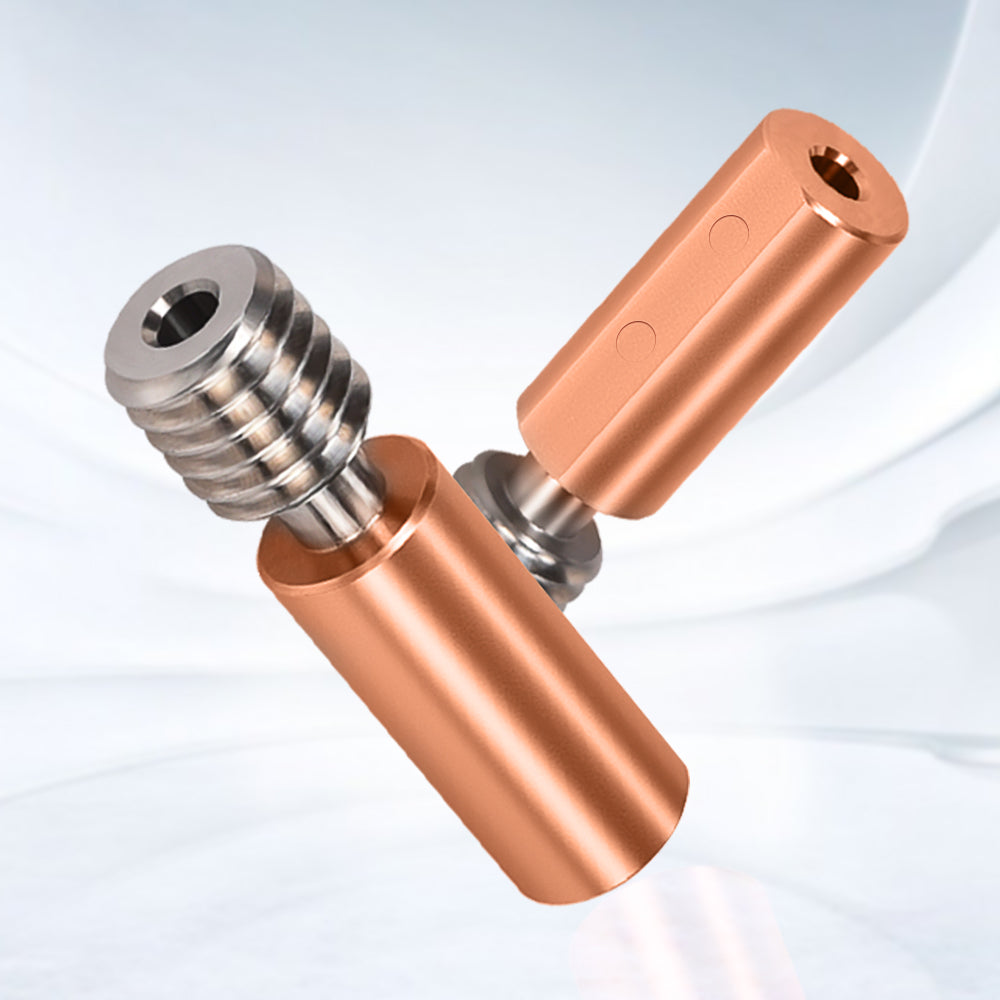
Prusa or Voron users needing larger bore for chunky abrasives.
BIQU H2 Hardened Steel Nozzle 0.6mm V6 Precision CNC-machined for smooth flow; lasts 100kg+ on metal fills.
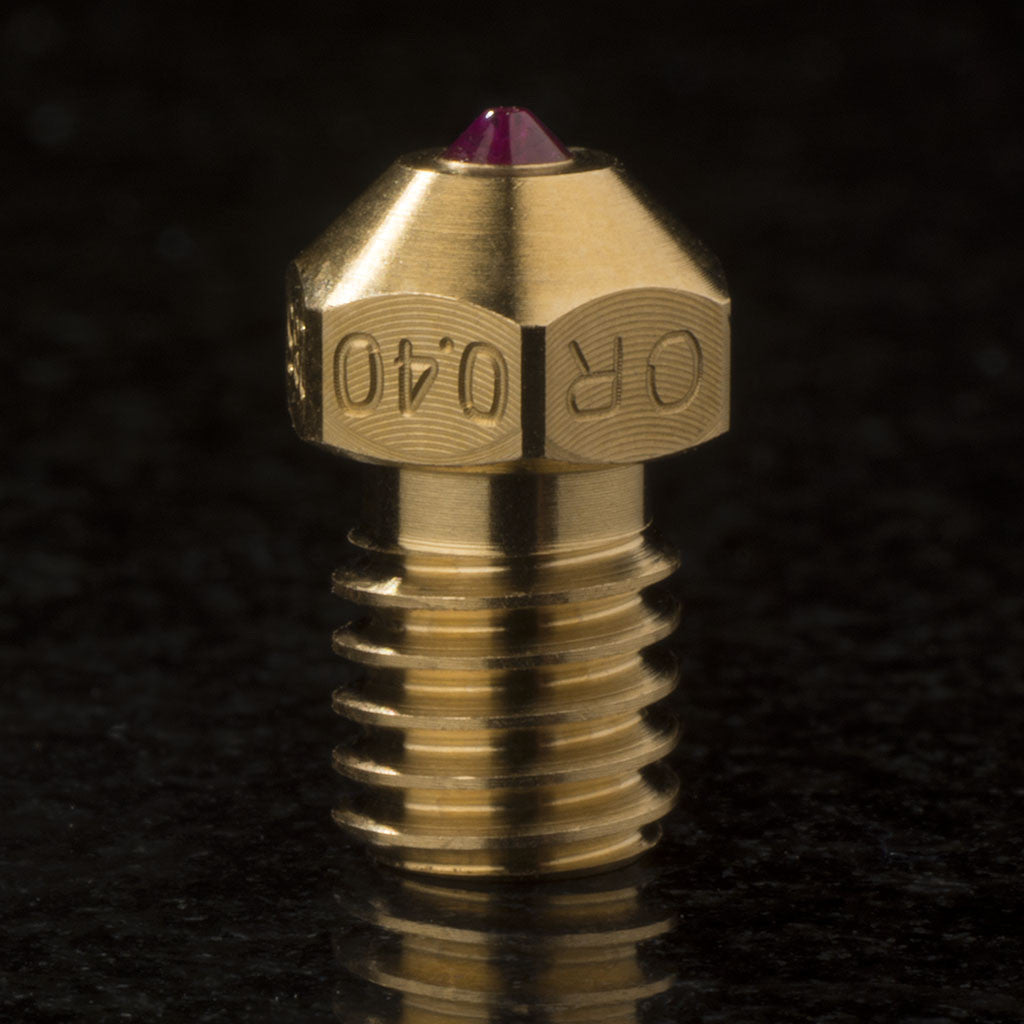
High-volume production or exotic filaments.
Olsson Ruby Nozzle 0.4mm for E3D V6 Ultimate durability with sapphire orifice; zero wear even on bronze fills.
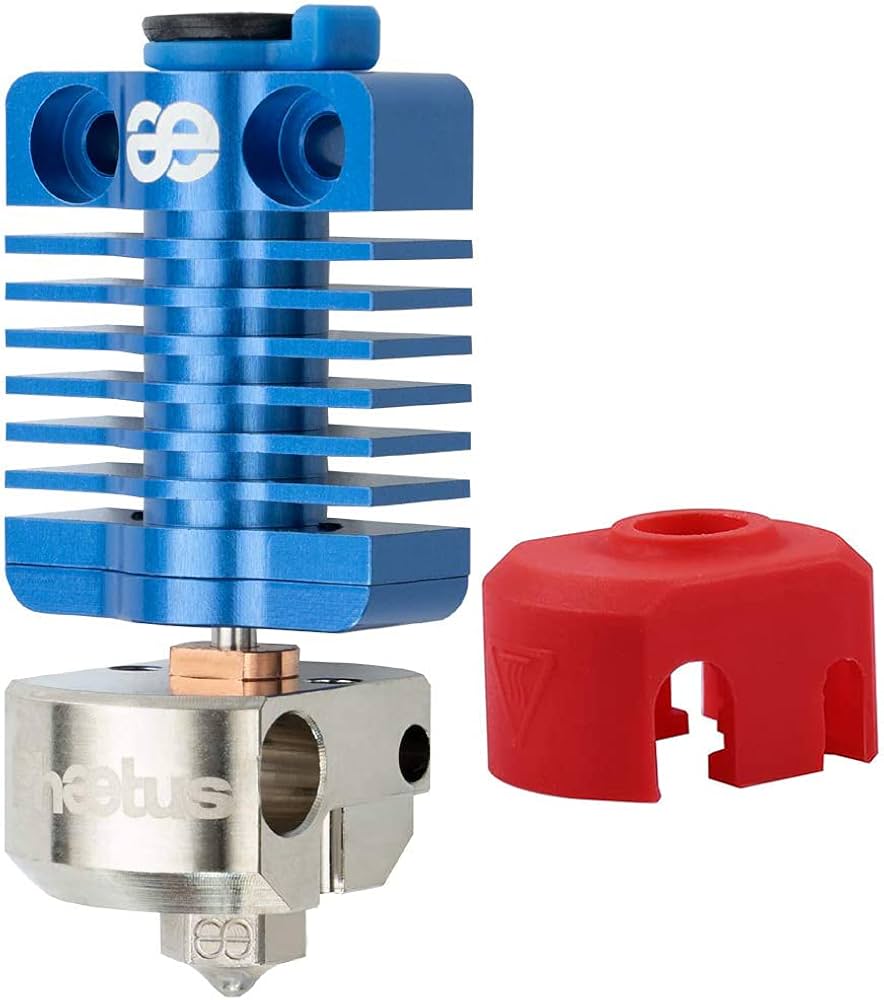
Bambu X1 or fast printers with abrasives.
Phaetus Dragonfly BMS Nozzle 0.4mm Bimetal (brass + steel tip) for best heat + wear balance.
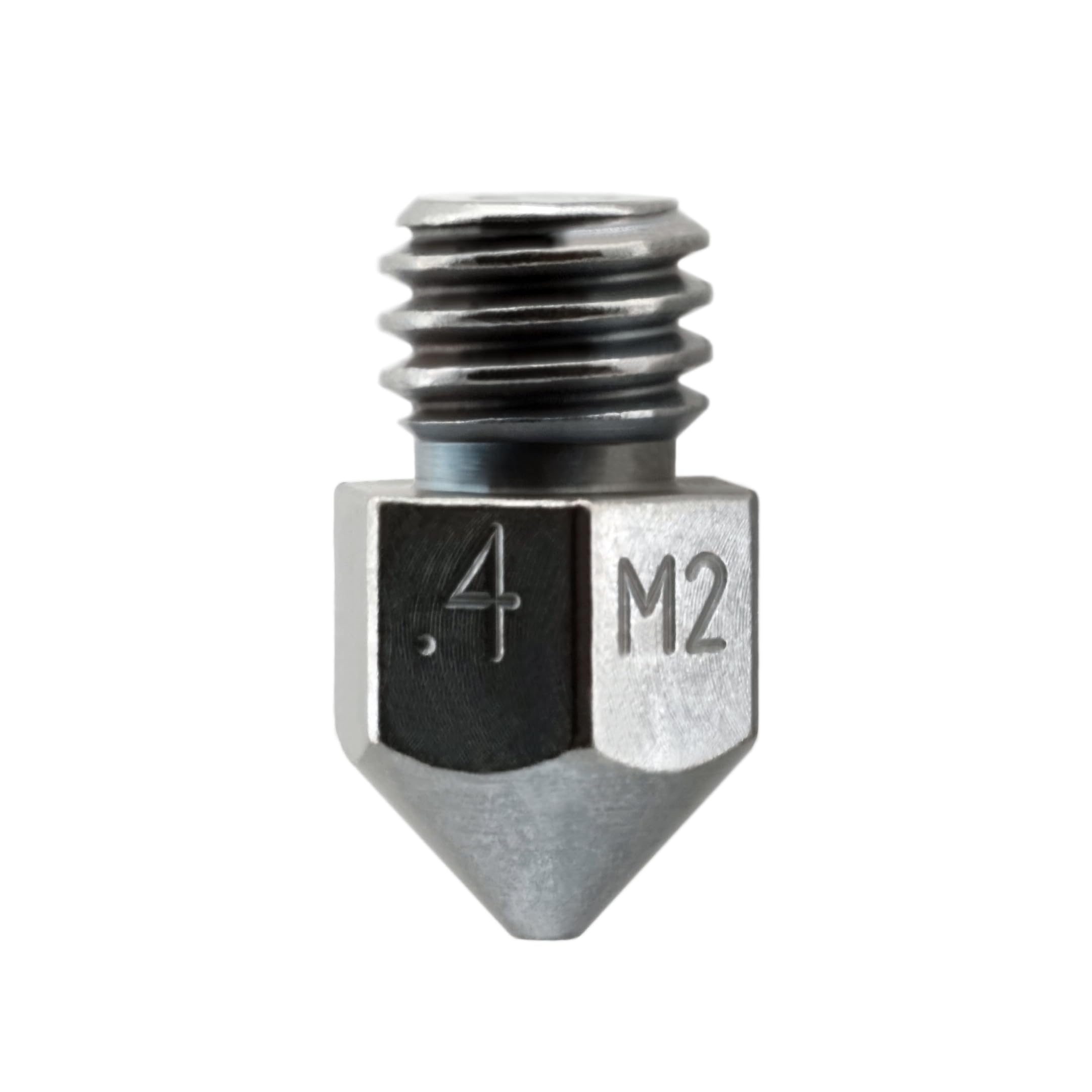
Entry-level upgrade from brass.
Micro Swiss Stainless Steel Nozzle 0.5mm Corrosion-resistant budget pick for mild abrasives like wood PLA.