Choosing an activity center for your toddler can feel overwhelming with endless options promising fun and development. But picking the wrong one might lead to safety risks, quick boredom, or wasted money. The good news? Focusing on proven metrics ensures you get a center that supports motor skills, sensory growth, and hours of independent play.
In this guide, you'll learn the essential metrics—from safety ratings to durability—that matter most when shopping for toddler activity centers (typically for 6-24 months). We'll break them down simply with examples and why they count. Expect a quick read (10-15 minutes) to gain confidence in spotting winners.
By the end, you'll know how to compare products like a pro and avoid common pitfalls.
▸What You'll Need
- •Your toddler's age and weight (e.g., 6-12 months, under 25 lbs)
- •Home space measurements (e.g., 3x3 ft clear area)
- •Budget range ($50-$150)
- •Basic knowledge of toddler milestones (optional: motor skills, sitting up)
Estimated Time: 10-15 minutes
Difficulty: beginner
▸Step-by-Step Instructions
Step 1: Check Age and Weight Limits
Start with the basics: every activity center lists supported ages (usually 6-24 months) and max weight (often 18-30 lbs). This ensures the frame supports your child without collapse risks.
Why it matters: Exceeding limits causes instability or injury. For example, a 6-month-old (15 lbs) thrives in a jumperoo, but a 2-year-old (28 lbs) needs a sturdier saucer.
Expect labels like 'Max 25 lbs'—measure your toddler and match precisely.
💡 Tips:
- •Weigh your child weekly as they grow fast.
- •Look for adjustable height settings for longer use.
⚠️ Warnings:
- •Never exceed weight limits, even briefly—risks tipping.
Step 2: Evaluate Safety Certifications and Features
Prioritize ASTM or JPMA certification—independent tests for stability, no choke hazards, and secure seats. Check for 360° harnesses, non-slip bases, and toy-free zones.
Why it matters: Toddlers explore wildly; certified centers prevent falls or pinches. Analogy: Like a car seat's crash rating, this is non-negotiable.
Inspect for rounded edges and machine-washable seats.
💡 Tips:
- •Search 'product recalls' on CPSC.gov before buying.
- •Test stability by pushing sides gently in-store.
⚠️ Warnings:
- •Avoid cheap imports without US certifications.
Step 3: Assess Developmental Benefits
Look for centers promoting gross motor (bouncing, spinning), fine motor (grasping toys), and sensory skills (lights, music). Multi-stage designs evolve from gym to walker.
Why it matters: Bored toddlers cry; engaging ones build confidence. Example: Piano kickers aid cause-effect learning.
Count activity zones: Aim for 6+ toys.
💡 Tips:
- •Match to milestones—e.g., lights for 6 months, walkers for 12+.
Step 4: Inspect Durability and Materials
Steel frames with BPA-free plastic last 6+ months of daily use. Check seams, fabric thickness, and warranty (1+ year).
Why it matters: Flimsy plastic cracks under 20 lbs bouncing. Real-world: High-end models survive siblings.
Feel for sturdy joints.
💡 Tips:
- •Read reviews for 'broke after 2 months' flags.
⚠️ Warnings:
- •Skip thin fabric seats that sag.
Step 5: Measure Size, Portability, and Storage
Footprint: 24-30 inches wide; height adjustable 20-40 inches. Foldable models store easily.
Why it matters: Fits apartments; portability for travel. Example: Door jumpers save space.
Measure your spot first.
💡 Tips:
- •Opt for 360° rotation for full access.
Step 6: Gauge Ease of Cleaning and Maintenance
Wipeable trays, machine-washable seats, removable toys. No crevices for crumbs.
Why it matters: Messy play = bacteria risks. Quick cleans keep it sanitary.
Test: Spill water, see wipe speed.
💡 Tips:
- •Choose dishwasher-safe parts.
⚠️ Warnings:
- •Avoid glued-on toys that trap gunk.
Step 7: Review Entertainment and Battery Life
Volume control, 20+ songs, auto-shutoff. Batteries: AA or rechargeable.
Why it matters: Overstimulating noise annoys parents. Long play = happy baby.
Demo sounds in-store.
💡 Tips:
- •Battery test: 8+ hours per set.
Step 8: Compare Price, Ratings, and Value
4.5+ stars from 1,000+ reviews. $80-150 sweet spot for features.
Why it matters: Balances cost with longevity. High ratings flag real use.
Calculate $/month of use.
💡 Tips:
- •Amazon 'top reviewed' filter.
▸Pro Tips
- •Prioritize multi-stage centers for 12+ months value.
- •Watch YouTube unboxings for real stability demos.
- •Buy during Black Friday for 20-30% off premium models.
- •Involve toddler in store—see if they engage.
- •Track usage hours to justify cost.
- •Pair with floor mats for extra safety.
- •Update toys seasonally for freshness.
▸Common Mistakes to Avoid
- •Ignoring weight limits—leads to collapses and injury.
- •Overlooking space needs—blocks rooms or tips over.
- •Chasing cheapest option—breaks fast, poor development.
- •Skipping certifications—risks recalls or hazards.
- •Not checking reviews—misses battery or noise issues.
▸Troubleshooting
Problem: Center tips or wobbles
Solution: Ensure even floor, within weight limit, add non-slip mat. Check assembly.
Problem: Toys not engaging baby
Solution: Rotate toys or match to age; add personal toys if slots allow.
Problem: Hard to clean messes
Solution: Use baby-safe wipes daily; disassemble weekly for deep clean.
Problem: Battery drains fast
Solution: Replace with rechargeables; use volume low.
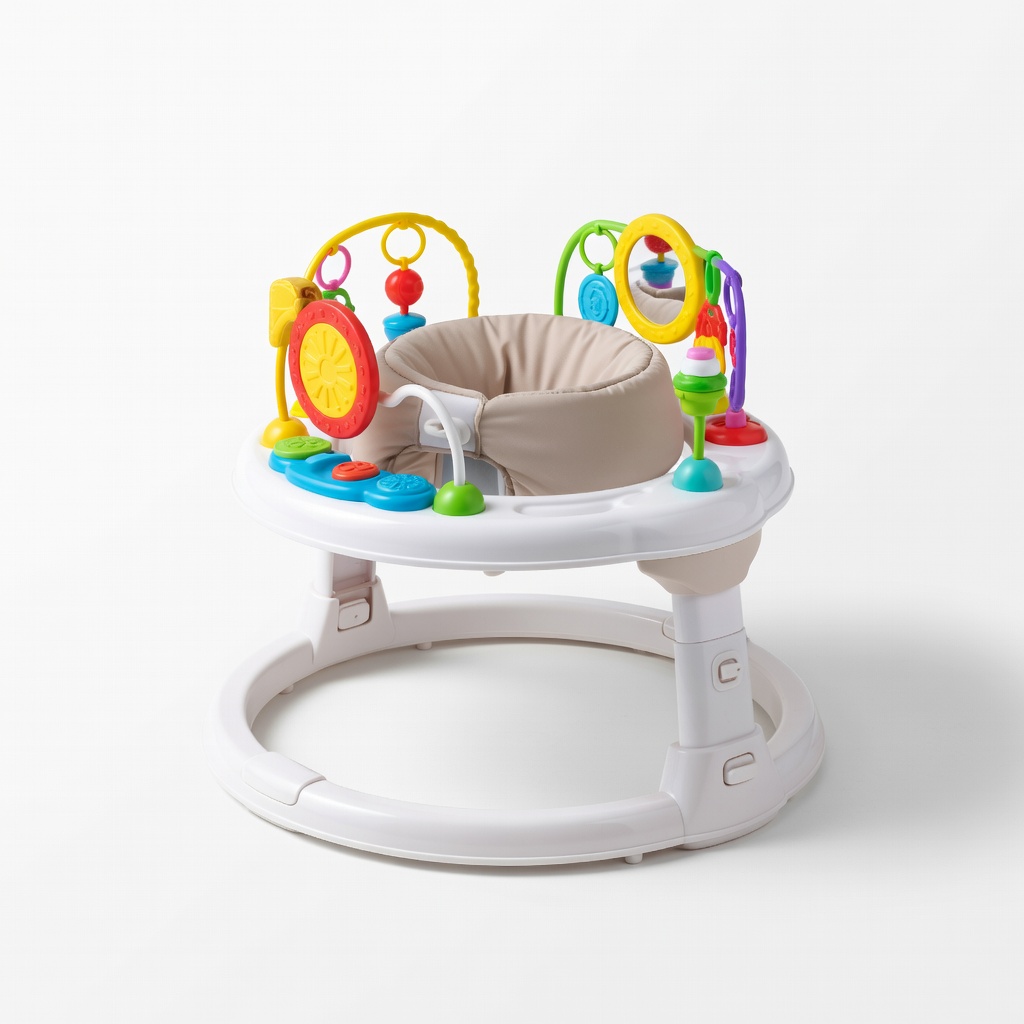
Fisher-Price Laugh & Learn Smart Stages Jumperoo
Excels in developmental metrics with 3 stages, 30+ songs, ASTM certified, durable frame.
Best for: Active 6-24 month olds needing sensory/motor stimulation.
Price Range: $120-$140
Evenflo ExerSaucer Jump & Learn Activity Center
Top safety (JPMA certified), easy clean, 6 toys for growth, stable for 18-30 lbs.
Best for: Small spaces; high-energy bouncers.
Price Range: $110-$130
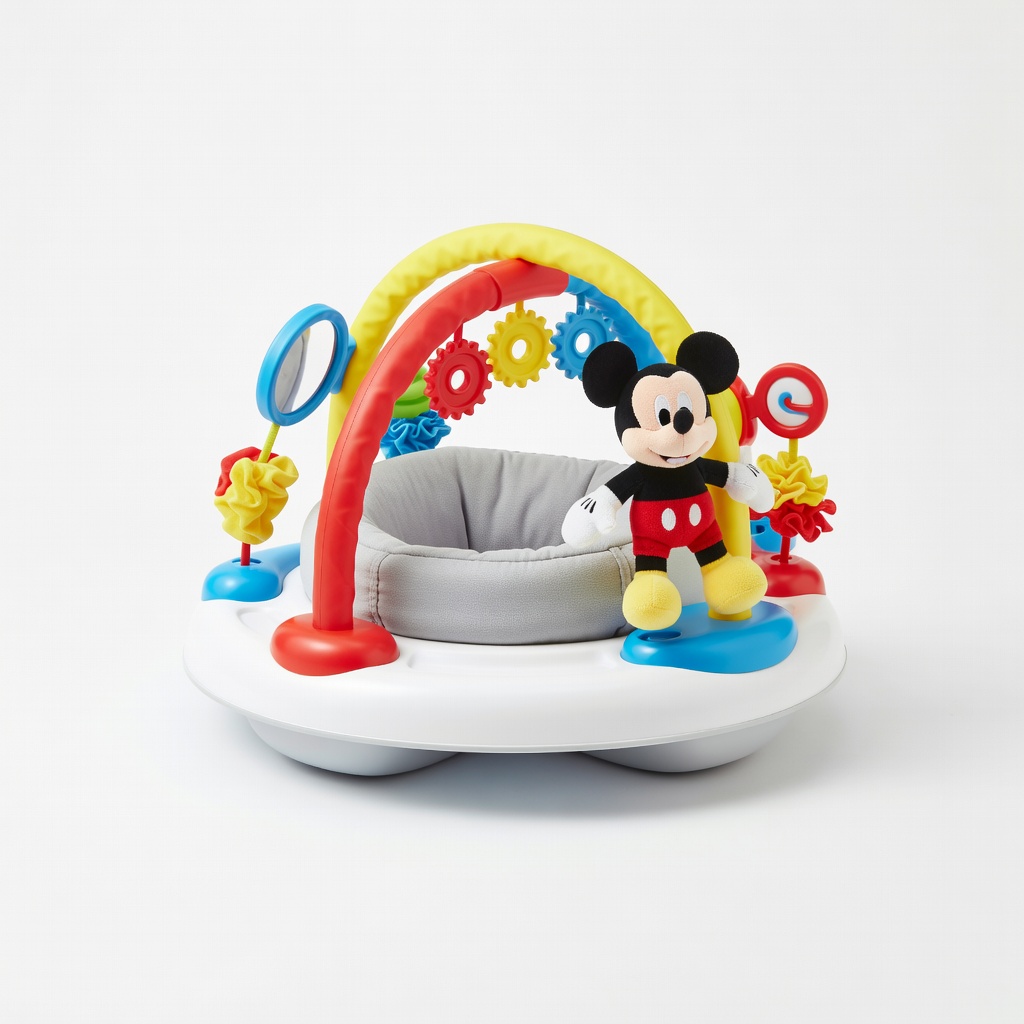
Bright Starts Disney Baby Mickey Mouse Activity Saucer
Budget-friendly durability, entertainment (lights/music), grows from seat to walker.
Best for: Disney fans on tight budget; 4-12 months.
Price Range: $90-$110
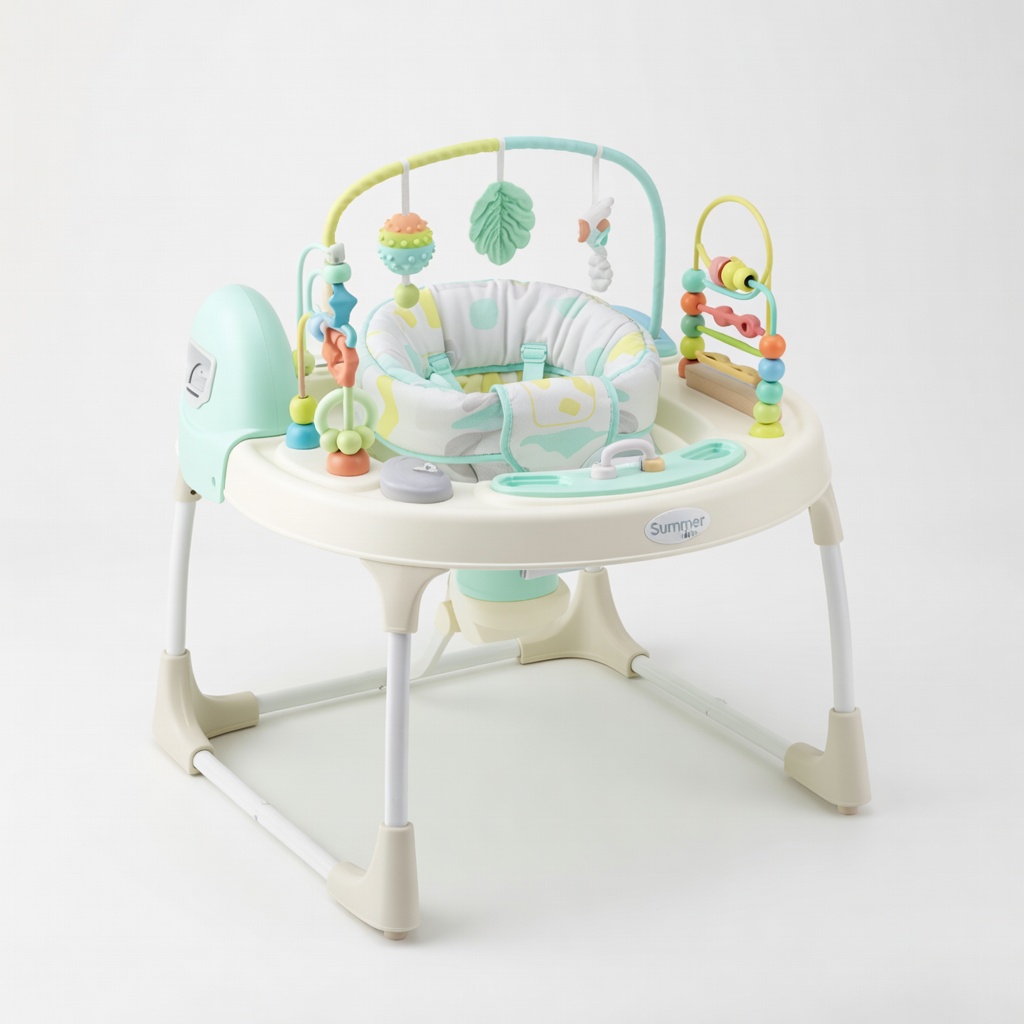
Summer Infant 5-in-1 Convertible Activity Center
Versatile stages extend use, compact storage, high ratings for value.
Best for: Multi-child families needing longevity.
Price Range: $100-$120