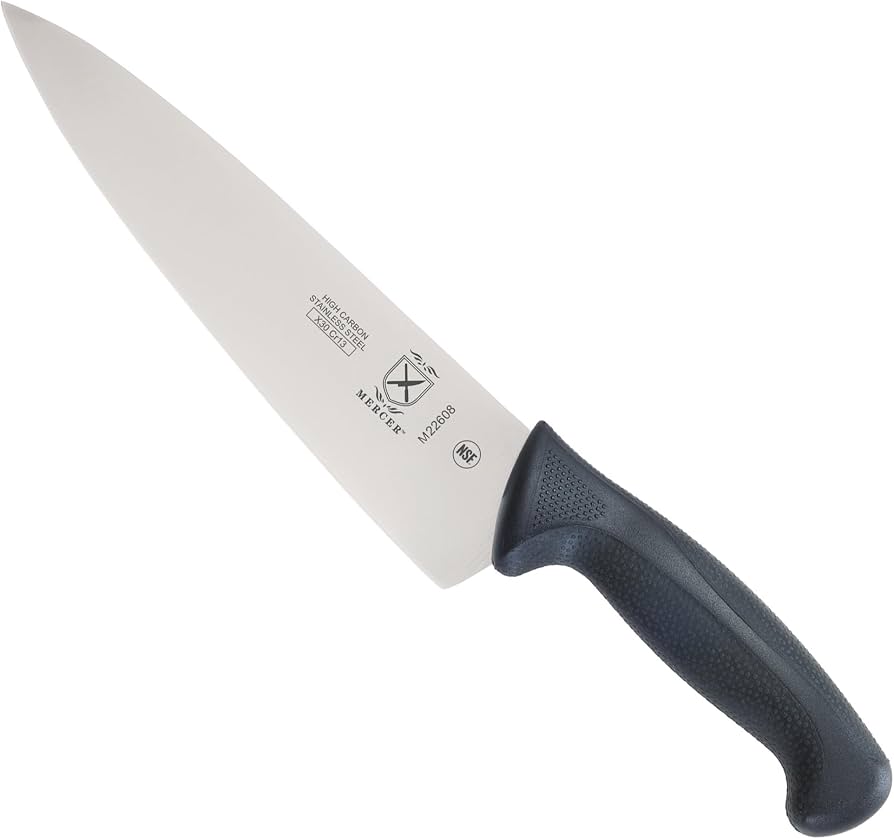
Walking into a kitchen store or browsing online for a knife set can be overwhelming. Rows of shiny blocks promise everything from carving to cleavers, but many beginners end up with a $100 set that feels great at first, only to struggle with dull blades and awkward designs six months later. The secret to a good knife set isn't the number of knives – it's the quality of the chef's knife. This workhorse handles 80-90% of daily chopping, slicing, and dicing, so a set that skimps on it is a waste of money.
In this guide, you'll learn why the chef's knife is king, which other knives truly matter, and how to evaluate blade steel, handle construction, and balance. We'll also cover common pitfalls like buying useless specialty knives and ignoring maintenance. By the end, you'll be able to confidently pick a set – or build your own – that will last for years.
Expect to spend about 15 minutes reading, but the knowledge will save you hours of frustration and hundreds of dollars.
▸What You'll Need
- •Understanding of basic knife types (chef's, paring, serrated)
- •Knowledge of common blade materials (stainless steel, carbon steel, high-carbon stainless)
- •Awareness of handle materials (plastic, wood, composite) and construction (full tang vs. partial)
- •Budget range (entry-level under $100, mid-range $100-$300, premium $300+)
- •Willingness to consider buying individual knives instead of a set
Estimated Time: 15-20 minutes
Difficulty: beginner
▸Step-by-Step Instructions
Step 1: Embrace the Chef's Knife Priority
The chef's knife (usually 8 inches or 20 cm) is the most versatile blade in the kitchen. It handles chopping vegetables, slicing meat, and even mincing garlic. A good chef's knife should feel like an extension of your hand. When evaluating a set, first check the chef's knife: is it full tang (steel runs through the handle)? Is the blade edge thin enough for precision? Does the handle balance with the blade? If the chef's knife is subpar, the rest of the set likely is too. Many experienced cooks recommend buying a single high-quality chef's knife and pairing it with a budget paring and serrated knife, rather than buying a low-end set just to get a 'complete' block.
💡 Tips:
- •Look for a chef's knife with a blade length of 8 inches – it's the all-purpose size.
- •Test the weight distribution: the balance point should be at the bolster or just forward of the handle.
- •A full tang (metal extending through the entire handle) provides better durability and balance.
⚠️ Warnings:
- •Avoid sets that include many specialty knives (e.g., tomato knife, boning knife) unless you actually use them.
Step 2: Identify the Essential Knives
Beyond the chef's knife, a home cook really needs only two or three additional knives: a paring knife (3-4 inches) for small tasks like peeling and coring, and a serrated knife (8-10 inches) for bread and tomatoes. Some cooks also like a utility knife (5-6 inches) as a middle ground. Most sets include these as well as a honing rod, which is more important than extra blades. When comparing sets, count the number of highly useful knives versus filler. A good set might have just 5-6 items: chef's, paring, serrated, utility, shears, and a honing steel.
💡 Tips:
- •A good honing steel (ceramic or diamond) is worth its weight in gold for maintaining the edge between sharpenings.
- •Consider whether you'll actually use a bread knife - if you rarely bake, a cheaper standalone serrated works fine.
⚠️ Warnings:
- •Don't be swayed by a 15-piece set with five steak knives if you already have steak knives.
- •Serrated knives should be full-length (not half-serrated) for bread; half-serrated are less useful.
Step 3: Understand Blade Material Basics
Blade material determines how sharp the knife stays, how easy it is to sharpen, and its resistance to rust. Most knives are stainless steel – affordable and rust-resistant, but may not hold an edge as long as higher-carbon options. High-carbon stainless steel (e.g., X50 CrMoV15, VG-10) balances toughness, edge retention, and corrosion resistance, found in mid-range to premium knives. Carbon steel gets extremely sharp and holds an edge well, but requires more care (wipes dry immediately, can rust). For beginners, high-carbon stainless is the safest bet. Avoid cheap 'stainless' that is soft and dulls quickly. Also consider hardness (HRC): 54-56 is common; 58-62 holds edge longer but is harder to sharpen and more brittle.
💡 Tips:
- •For home use, aim for hardness around 58-60 HRC.
- •VG-10 and SG2 (R2) are excellent high-end stainless steels with good edge retention.
- •Ceramic knives are very hard and stay sharp long, but are brittle and difficult to sharpen.
⚠️ Warnings:
- •Avoid knives labeled only as 'stainless steel' with no specific grade – they are likely low quality.
Step 4: Evaluate Handle Construction and Materials
The handle is as important as the blade. A full tang (steel extending through the handle, often secured with rivets) provides strength and balance. Partial tangs are lighter but can wobble over time. Handle materials range from plastic to wood to synthetic composites. For beginners, a textured synthetic handle (e.g., fibrox, polypropylene) is slip-resistant and dishwasher-safe (though not recommended for longevity). Wood handles are classic and warm but require maintenance and can crack. Hollow handles (common in very cheap sets) are often unbalanced and short-lived. When picking a set, check that the chef's knife has a full tang and a comfortable, non-slip grip.
💡 Tips:
- •Run your hand along the handle – it should have no sharp edges or gaps where food can get trapped.
- •A riveted full tang is a hallmark of quality; avoid molded handles that don't show metal in the center.
⚠️ Warnings:
- •Dishwashers dull edges and can damage handles – always hand-wash knives.
Step 5: Check Weight, Balance, and Feel
A well-balanced knife feels nearly weightless in action. The balance point should be at the bolster (where blade meets handle). You can test by balancing the knife on your finger: if it tips toward the blade, it's blade-heavy (good for chopping); if it tips toward the handle, it's handle-heavy (less precise). Most home cooks prefer a neutral or slight blade-heavy balance. Weight is personal: lighter knives (6-8 oz) offer agility; heavier ones (10-12 oz) provide momentum for cutting through dense vegetables. Try holding the chef's knife in a pinch grip (thumb and index finger on the blade, other fingers wrapping the handle). If the set doesn't feel right in hand, don't buy it.
💡 Tips:
- •If you can, visit a store to hold knives. Even a minute in hand tells you more than reading specs.
- •Look for a full bolster that sits flush with the handle – some cooks prefer a half bolster for easier sharpening.
⚠️ Warnings:
- •Avoid knives with a very thick spine – they wedge into food rather than slicing cleanly.
Step 6: Decide: Set vs. Build-Your-Own
Knife sets are convenient and often cheaper per piece, but they almost always include unnecessary knives. For the same price as a mid-range set, you could buy a brilliant chef's knife and a decent paring knife. Many experienced cooks recommend buying individual knives: spend 70-80% of your budget on a top-tier chef's knife, then fill in with a $15 paring knife and $20 bread knife. However, quality starter sets (like Victorinox's 3-piece or Wusthof's cook's set) focus on essentials and can be a great value. Your choice should hinge on whether you like the chef's knife in the set. If the set has a chef's knife you love, buy it; otherwise, build your own.
💡 Tips:
- •Look for 'cook's set' or 'starter set' that includes only 3-5 knives.
- •Check if the set comes with a honing rod – a good one adds $20-30 value.
⚠️ Warnings:
- •Beware of 'space-saving' blocks that store knives horizontally – they often limit blade length to 7 inches.
- •Avoid sets that include a steak knife set unless you actually need them.
Step 7: Set a Realistic Budget
Knife prices range from $20 for a single chef's knife to $200+ for premium. For beginners, a solid chef's knife costs $50-100. A decent set can be found for $100-200, but expect to compromise on steel or construction. Mid-range sets ($200-400) from brands like Wusthof, Zwilling, or Global offer excellent value. Premium sets ($400+) give you better steel (e.g., VG-10, SG2) and superior fit and finish. Remember that you'll also need a sharpening system ($20-50) and a cutting board. A $50 chef's knife with a $20 sharpener outperforms a $200 set that goes dull. Prioritize the chef's knife budget first.
💡 Tips:
- •The Victorinox Fibrox chef's knife ($40-50) is often called the best value in the world – start there.
- •If you buy a set, consider that the chef's knife alone should cost about 30-40% of the total set price.
⚠️ Warnings:
- •Don't overspend on a set right away – you can always upgrade later.
- •Avoid no-name brands on Amazon with fake reviews; stick to established brands.
Step 8: Plan for Maintenance and Storage
A sharp knife is safe; a dull knife is dangerous. Every knife needs regular honing (using a steel) and occasional sharpening (stones, electric sharpener, or professional service). The set should come with a honing rod, or you should buy one. For storage, avoid throwing knives in a drawer. A knife block (part of many sets) is okay but can dull edges if the slots are too tight. Magnetic strips or blade guards inside a drawer are better. Check that the set's block has wide, easy-to-clean slots. Also, consider edge retention: high-hardness steel (58-62 HRC) holds an edge longer, meaning less frequent sharpening.
💡 Tips:
- •Hone your chef's knife every few uses (before each cooking session) to realign the edge.
- •Schedule a professional sharpening once a year, or learn to use a whetstone yourself.
⚠️ Warnings:
- •Dishwasher use is the fastest way to ruin a knife – always hand wash and dry immediately.
- •Never use a glass cutting board; it will rapidly dull any knife.
Step 9: Test Drive (If Possible)
Before buying a set, try to test the chef's knife in a store. Many kitchen shops have demo units. Mimic a few basic cuts: slice a tomato (should pierce skin easily without pressure), chop a carrot (should not rock excessively), and mince an herb (should allow a smooth rocking motion). If buying online, read verified reviews that mention the chef's knife specifically. Look for comments on balance, edge retention, and handle comfort. Video reviews on YouTube can also show how the knife handles real ingredients.
💡 Tips:
- •Search for 'chef's knife review [brand]' and watch for handling demos.
- •Pay attention to the edge out of the box – some brands ship sharp, others require initial honing.
⚠️ Warnings:
- •Don't rely solely on average star ratings – filter for recent reviews and look for detailed comments.
Step 10: Make Your Choice - Prioritize the Chef's Knife
After considering all factors, narrow down your options. Write down the top 2-3 sets or individual knives. The deciding factor should always be the chef's knife: if you love it, the set is likely good. If the chef's knife is compromised, pass on the set. Remember that you can always augment a good chef's knife with a cheap paring knife later. The goal is a knife that cuts well, feels good, and will last. Trust your hands more than a marketing brochure.
💡 Tips:
- •If you're torn, buy a single excellent chef's knife first and use it for a month. Then decide what else you need.
- •Many knife stores allow returns if you're not satisfied – check the policy.
⚠️ Warnings:
- •Beware of 'impulse buy' sets with dramatic discounts – the chef's knife is often the weakest part.
▸Pro Tips
- •Focus your budget on the chef's knife; it's the only knife you use daily.
- •A honing steel (ceramic or diamond) is more important than a third knife.
- •Look for a knife set with a 'starter' or 'cook's' collection instead of full 15-piece sets.
- •Hand-wash knives immediately after use and dry them to prevent corrosion.
- •Use a wooden or plastic cutting board – never glass or stone.
- •If left-handed, check for sets with a left-handed bevel (double-bevel is fine for both).
- •Consider buying a magnetic strip for storage to avoid bulky blocks.
▸Common Mistakes to Avoid
- •Buying a huge set with many knives you'll never use – stick to 3-5 essential blades.
- •Ignoring the blade steel – cheap stainless steel loses its edge quickly.
- •Choosing a set based on looks alone – a beautiful knife that doesn't feel good won't get used.
- •Forgetting that the knife block takes up counter space and can trap moisture.
- •Assuming a high price means quality – some premium sets have poor balance.
▸Troubleshooting
Problem: My chef's knife doesn't stay sharp even after honing.
Solution: The steel might be too soft. Consider upgrading to a high-carbon stainless knife (58+ HRC). Alternatively, you may need a more thorough sharpening with a whetstone or electric sharpener.
Problem: The handle feels loose or wobbly after a few months.
Solution: If the knife has a partial tang or plastic handle, it may not be repairable. Look for a full tang with rivets next time. For now, you can try tightening any visible screws or use epoxy sparingly, but often replacement is better.
Problem: My knife block has narrow slots that are hard to clean.
Solution: Clean the block with a bottle brush and let it dry completely. To prevent mold, store knives with blade guards or switch to a magnetic strip.
Problem: I accidentally put my knife in the dishwasher – now it has spots.
Solution: Wash by hand immediately with mild soap. For rust spots on carbon steel, use a fine abrasive pad. For stainless, a paste of baking soda and water can remove spots.
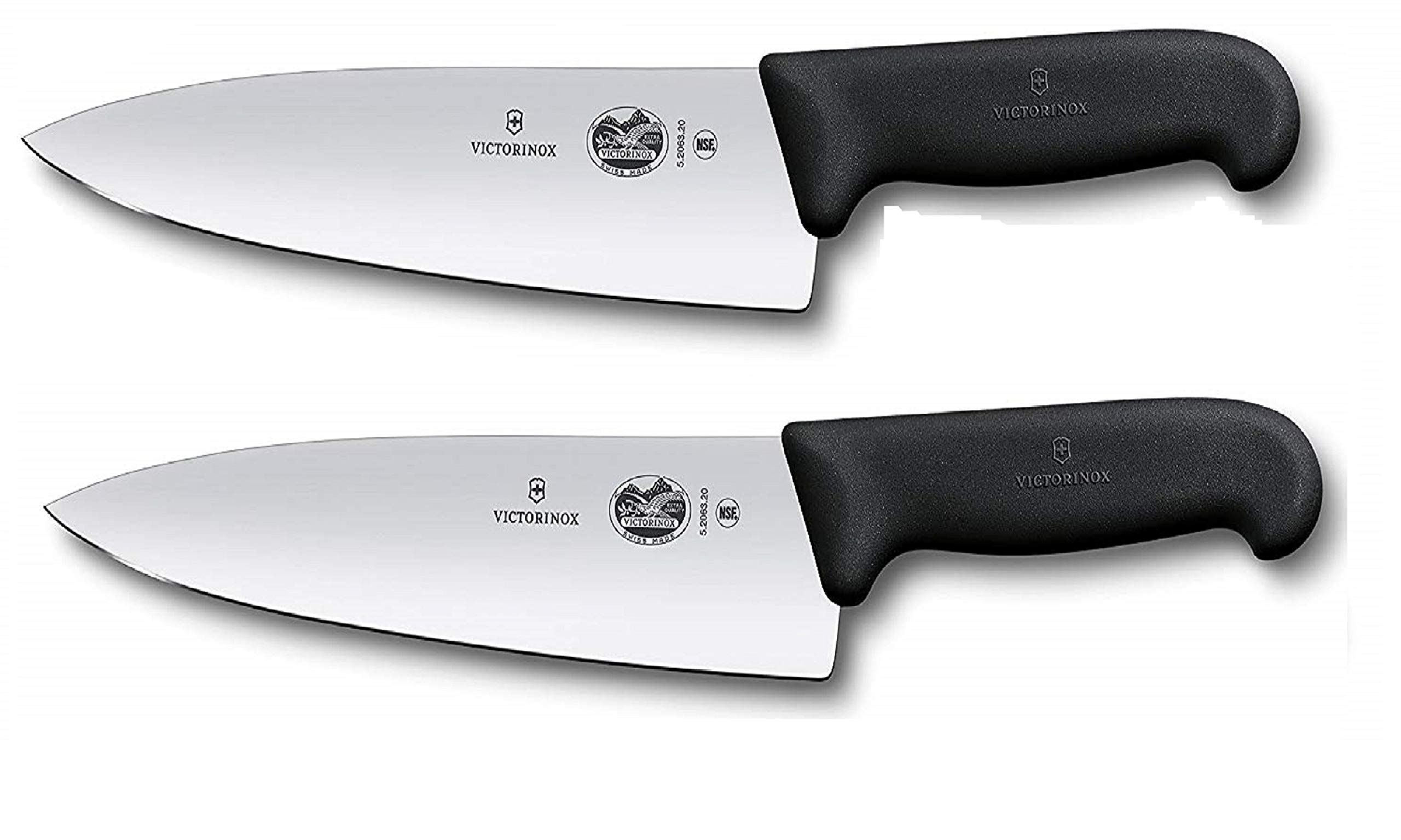
Victorinox Fibrox 8-Inch Chef’s Knife
Unbeatable value for beginners: sharp, light, and durable with a slip-resistant handle. Often called the best $40 knife.
Best for: Ideal as a standalone chef's knife or as part of a custom starter set. Pair with a paring knife and serrated.
Price Range: $40-$50
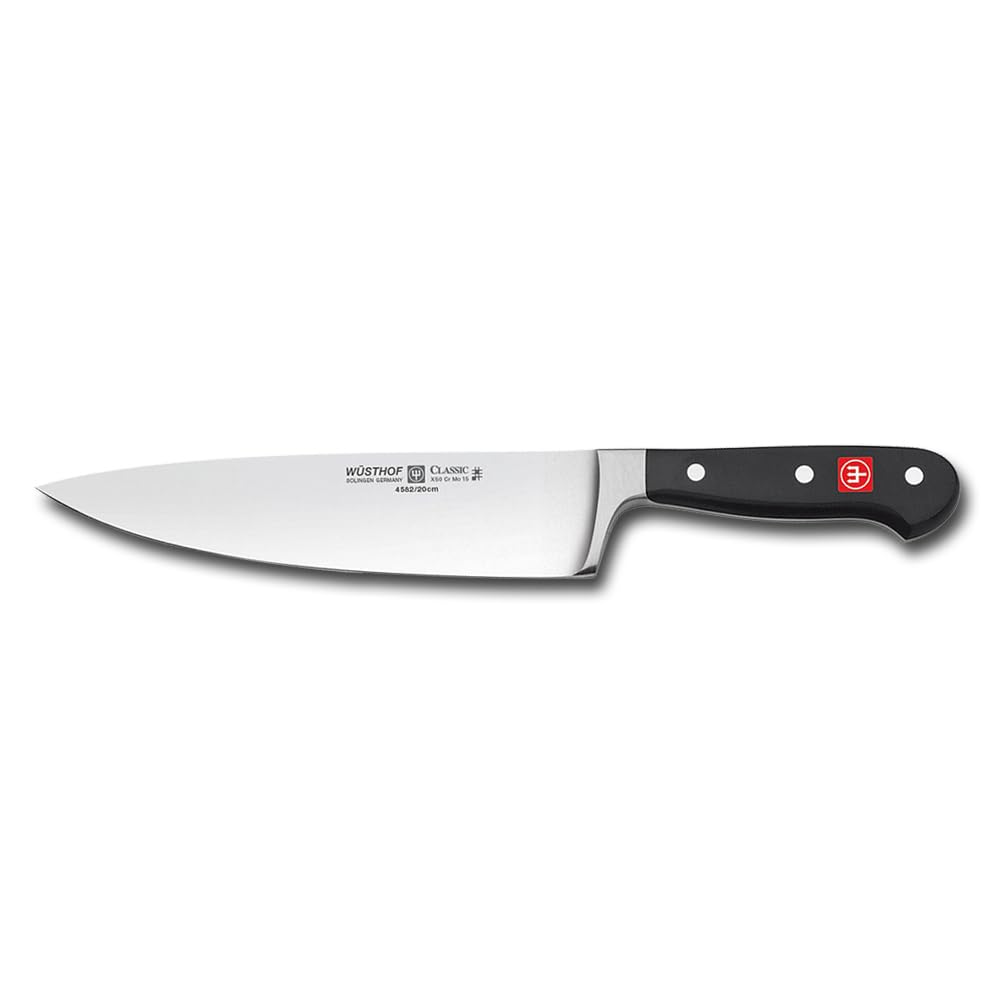
Wusthof Classic 8-Inch Cook’s Knife
A workhorse from a trusted German brand. Precision-stamped blade (actually forged), full tang, and excellent balance. Great mid-range choice.
Best for: Perfect for the cook who wants a single premium chef’s knife and doesn’t need a full set. Also available in sets.
Price Range: $150-$200
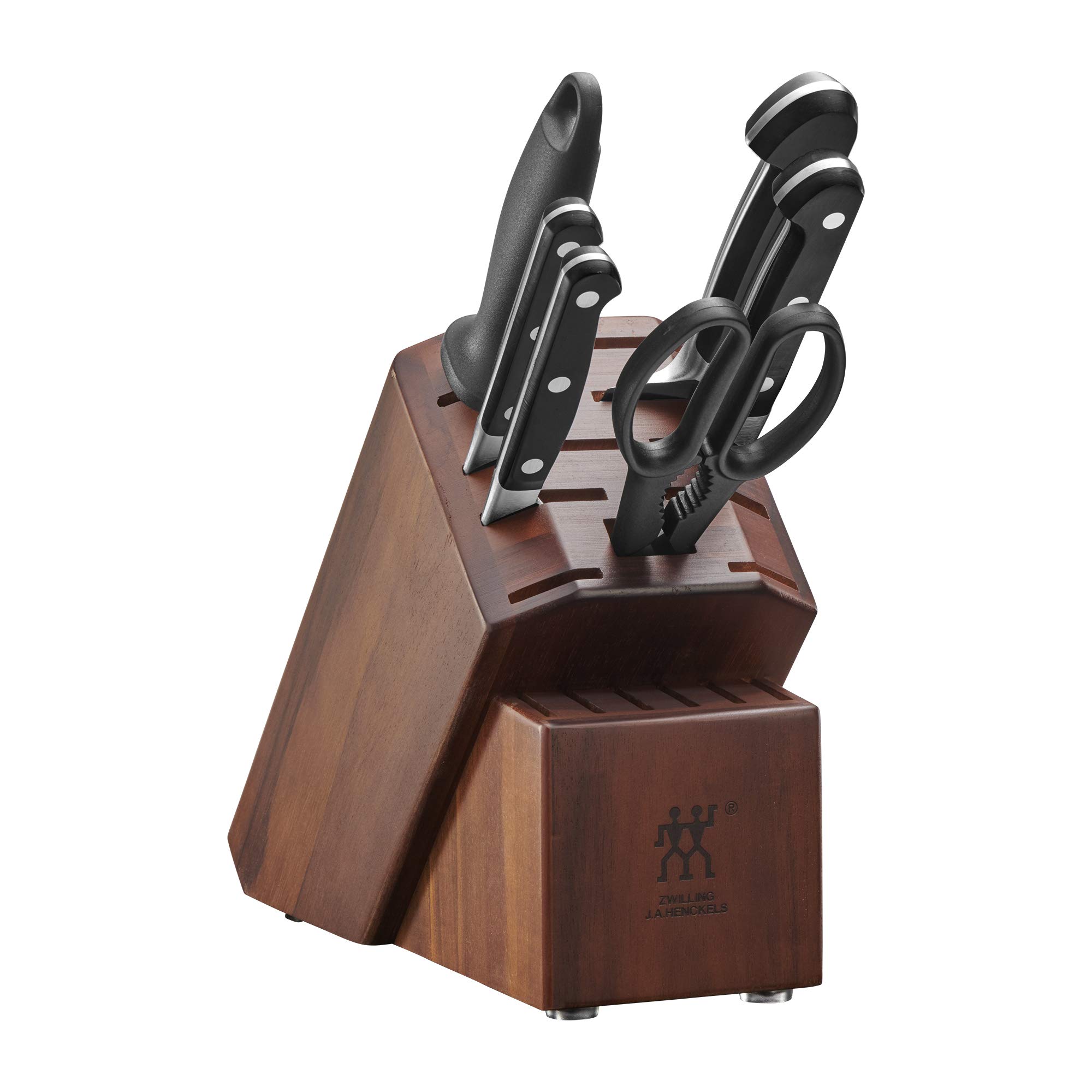
Zwilling J.A. Henckels Pro 7-Piece Knife Block Set
A well-curated set (chef’s, paring, serrated, utility, shears, honing steel) with full tang and high-carbon stainless. Good balance of quality and value.
Best for: Best for beginners who want a complete set without filler. The chef's knife is the star.
Price Range: $250-$350
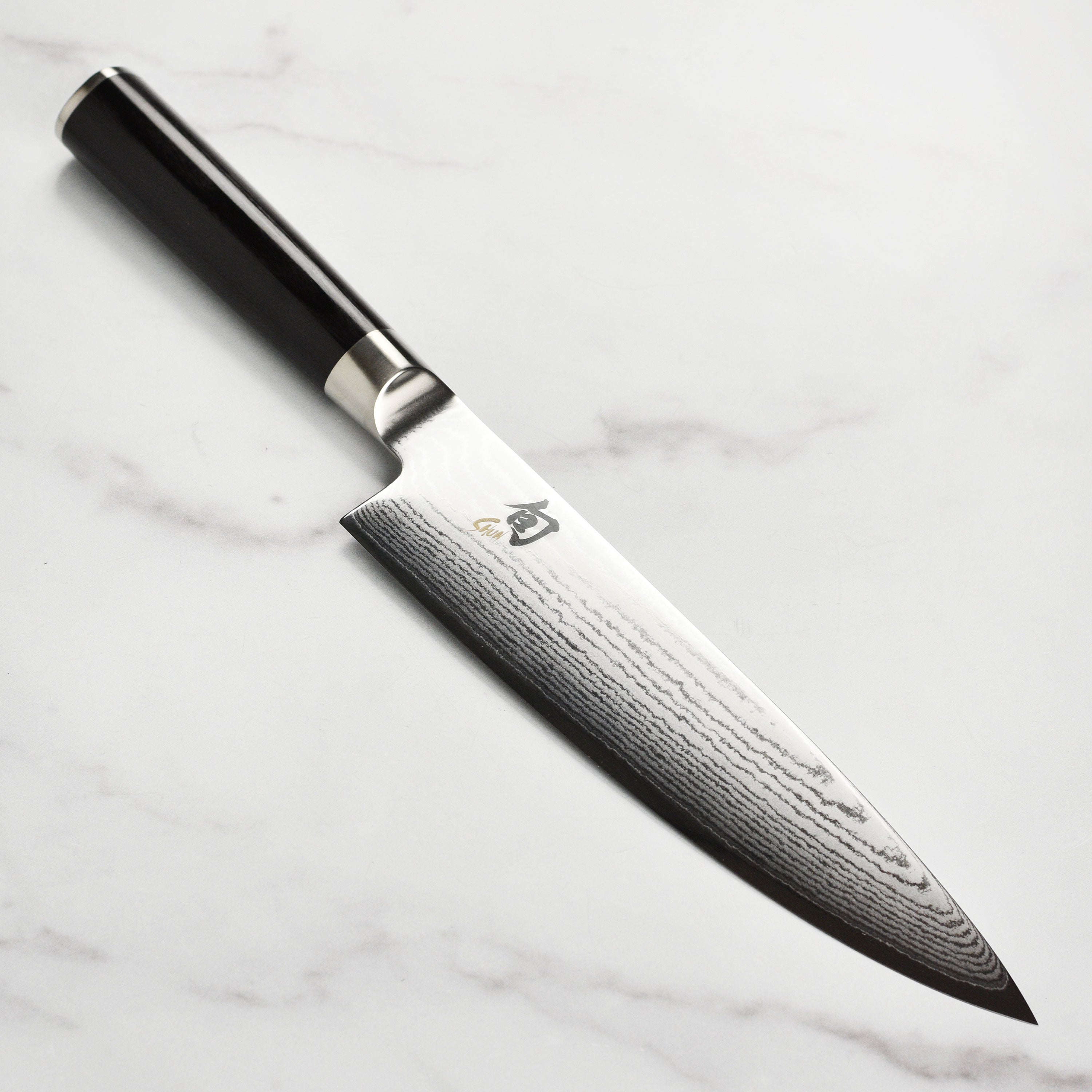
Shun Classic 8-Inch Chef’s Knife
Japanese VG-10 steel with 61 HRC hardness. Extremely sharp, beautiful Damascus pattern, and excellent edge retention.
Best for: For the home cook ready to invest in a premium knife. Requires careful hand-washing and occasional sharpening.
Price Range: $150-$200
Mercer Culinary Millennia 8-Inch Chef’s Knife
Another budget-friendly option often used in culinary schools. Lightweight, slip-resistant handle, and decent blade for the price.
Best for: Good for beginners on a tight budget or as a backup knife. May need more frequent honing.
Price Range: $20-$30