RVing with solar power is a game-changer for off-grid freedom, but nothing kills the vibe like a dead battery draining your lights, fridge, or fans mid-adventure. Many RVers struggle with undersized or mismatched batteries that can't handle solar charging cycles, leading to short lifespans and frequent replacements. This guide breaks down what makes the best 12V battery for RV solar setups.
You'll learn battery types, critical specs like capacity and cycle life, how to size for your needs, and why lithium often wins. We'll use simple analogies (like comparing batteries to fuel tanks) and real-world examples. Expect 20-30 minutes to read and apply—intermediate knowledge of basic electrical terms (volts, amps) helps, but we explain everything.
By the end, you'll confidently choose, install, and maintain a battery that powers your RV solar system for years, maximizing your investment in panels and controllers.
▸What You'll Need
- •Basic knowledge of RV solar basics (solar panels, charge controller, inverter)
- •RV power audit: List of appliances and daily watt-hours usage
- •Multimeter (optional, for testing voltage)
- •Solar charge controller specs (to match battery type)
- •Budget range (e.g., $200-$1000 per battery)
Estimated Time: 20-30 minutes to read and calculate your needs
Difficulty: intermediate
▸Step-by-Step Instructions
Step 1: Assess Your RV Power Needs
Start by calculating your daily energy consumption. List appliances (fridge: 50W x 12hrs = 600Wh; lights: 10W x 5hrs = 50Wh). Add up watt-hours (Wh), then divide by 12V for amp-hours (Ah) needed. Example: 2000Wh/day ÷ 12V = 167Ah raw.
Why it matters: Oversized batteries waste money; undersized ones discharge too deeply, killing lifespan. Expect 1.5-2x buffer for cloudy days. Analogy: Like sizing a gas tank for your road trip mileage.
Use a spreadsheet or app for accuracy.
💡 Tips:
- •Audit during real use for precise numbers.
- •Factor in inverter efficiency (85-90%).
⚠️ Warnings:
- •Don't guess—underrated batteries lead to blackouts.
Step 2: Understand 12V Battery Types
12V batteries come in flooded lead-acid (FLA), AGM (Absorbed Glass Mat), and lithium (LiFePO4). FLA are cheap but need venting and maintenance. AGM are sealed, vibration-resistant for RVs. Lithium is premium: lightweight, fast-charging.
For solar: Lithium excels with deep discharges (80-100% usable) vs. lead-acid's 50%. Example: 100Ah lithium gives 80-100Ah usable; AGM only 50Ah.
Solar setups favor lithium for 3000+ cycles vs. 500 for AGM.
💡 Tips:
- •Match to your charge controller (MPPT best for lithium).
Step 3: Evaluate Key Specifications
Focus on: Capacity (Ah)—total stored energy. Reserve Capacity (RC)—minutes at 25A load. Cycle Life—charges before 80% fade. DOD (Depth of Discharge)—usable capacity.
For RV solar: Prioritize high cycle life (2000+), low self-discharge (<3%/month), BMS (Battery Management System) for protection. Analogy: Specs like a car's MPG, horsepower, and warranty.
Check cold cranking amps (CCA) if starting engines.
⚠️ Warnings:
- •Ignore 'marine' labels—focus on deep-cycle ratings.
Step 4: Compare Lithium vs. Lead-Acid
Lithium (LiFePO4): Pros—light (1/3 weight), 5x cycles, charges 5x faster from solar. Cons—upfront cost ($7-10/Ah). Lead-acid/AGM: Pros—cheap ($1-2/Ah), widely available. Cons—heavy, shallow DOD, maintenance.
Real-world: Lithium pays back in 2-3 years via longevity. Example: 400W solar fills 100Ah lithium in 3 sunny hours.
Best for RV solar: Lithium if budget allows.
💡 Tips:
- •Parallel/series for more capacity (keep identical models).
Step 5: Size Battery Bank for Solar Input
Match to solar: 400W panels produce ~20A at 12V. Size bank at 2-3x daily draw. Example: 100Ah bank for 50Ah/day use.
Formula: Ah needed = (Daily Wh / 12V) / DOD% x Safety factor (1.2). Why? Prevents over-discharge.
Test: Monitor with shunt or app.
Step 6: Prioritize Safety and Features
Look for built-in BMS (overcharge/under-voltage protection), low-temp cutoff, Bluetooth monitoring. IP65+ rating for RV bumps.
Solar must: Compatible with LiFePO4 profiles in controllers. Analogy: BMS like a smart fuse box.
Expect app integration for state-of-charge (SOC).
⚠️ Warnings:
- •Cheap no-name batteries risk fires—buy UL-listed.
Step 7: Factor Budget and ROI
Lead-acid: $200-400/100Ah, 3-5yr life. Lithium: $700-1000/100Ah, 10+yr. ROI: Lithium saves $ via fewer replacements, less waste.
2025 pick: Lithium under $8/Ah with warranty >5yrs.
Total cost: Divide by usable Ah/lifecycle.
💡 Tips:
- •Buy bundles with cables/busbars.
Step 8: Installation and Maintenance Basics
Mount secure, ventilated (lithium no vent needed). Fuse near battery. Charge fully first.
Maintenance: Lithium—monitor SOC; lead-acid—check water monthly. Why? Extends life 20-50%.
Pro tip: Parallel up to 4x for 400Ah.
▸Pro Tips
- •Use MPPT controller for 30% more solar harvest.
- •Add low-voltage disconnect to protect DOD.
- •Monitor with Victron BMV-712 shunt for real SOC.
- •Store at 50% charge for longest shelf life.
- •Buy from reputable sellers with returns.
- •Test panels' output first to avoid mismatch.
- •Insulate terminals to prevent shorts.
▸Common Mistakes to Avoid
- •Undersizing bank—leads to constant recharges and wear. Avoid by calculating 2x needs.
- •Mixing battery types/ages—causes imbalance. Use identical.
- •Ignoring BMS—risks damage/fire. Always verify.
- •Over-discharging lead-acid >50%—halves life. Set alarms.
- •Cheap imports without certification—fail early.
▸Troubleshooting
Problem: Battery won't charge from solar
Solution: Check controller settings (Li profile), fuses, polarity. Clean connections.
Problem: Short runtime despite full charge
Solution: Verify SOC with multimeter (lithium ~13.2V full). Parasitic drain? Add cutoff.
Problem: Overheating during charge
Solution: Ensure ventilation; check for BMS fault. Reduce solar input if mismatched.
Problem: Sulfation on lead-acid (bulging/white powder)
Solution: Equalize charge or replace. Switch to lithium to prevent.
Battle Born BB10012 100Ah 12V LiFePO4 Battery
Top-rated for RV solar: 3000+ cycles, built-in BMS, lightweight (31lbs), 100% DOD safe.
Best for: Daily off-grid use with 300-600W solar; Bluetooth monitoring.
Price Range: $849-$899
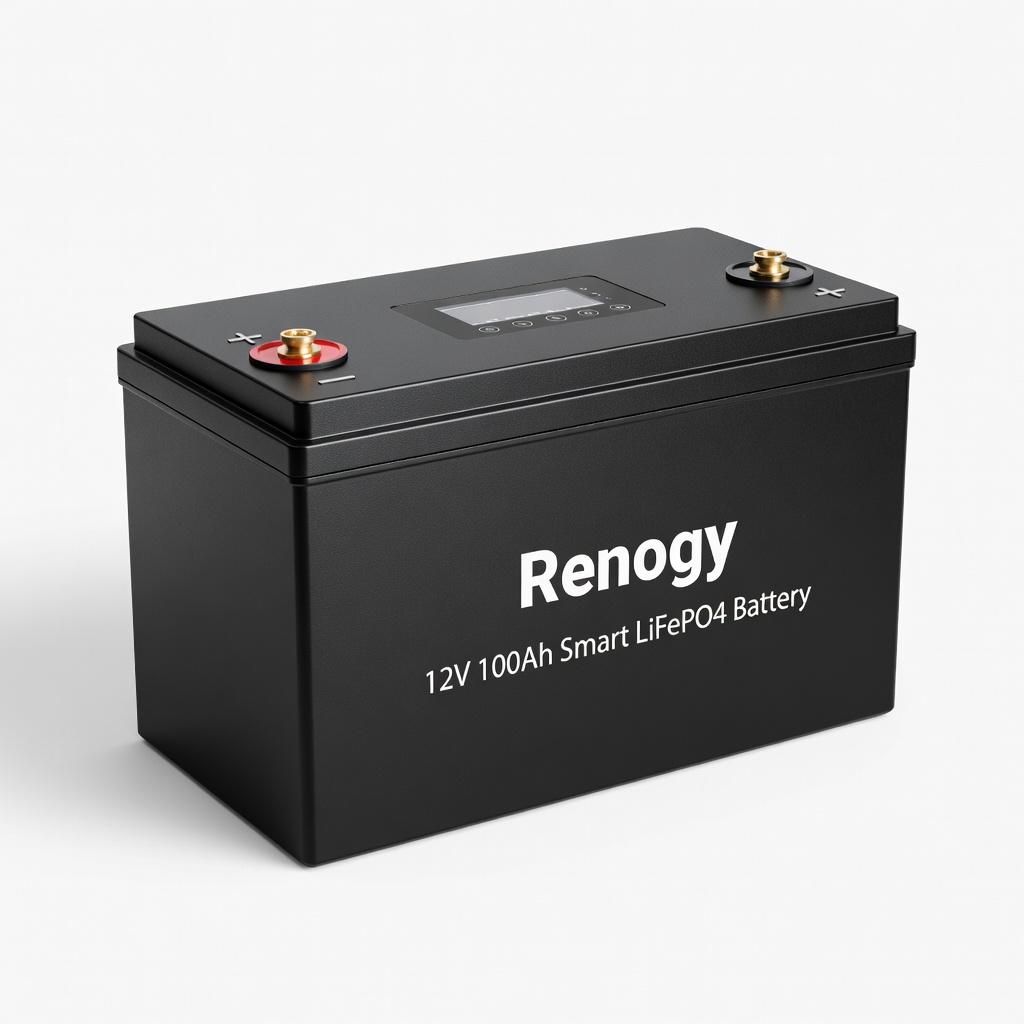
Renogy 12V 100Ah Smart LiFePO4 Battery
Affordable lithium with app monitoring, 4000 cycles, self-heating for cold weather.
Best for: Budget-conscious RVers with variable climates; pairs with Renogy solar.
Price Range: $500-$600
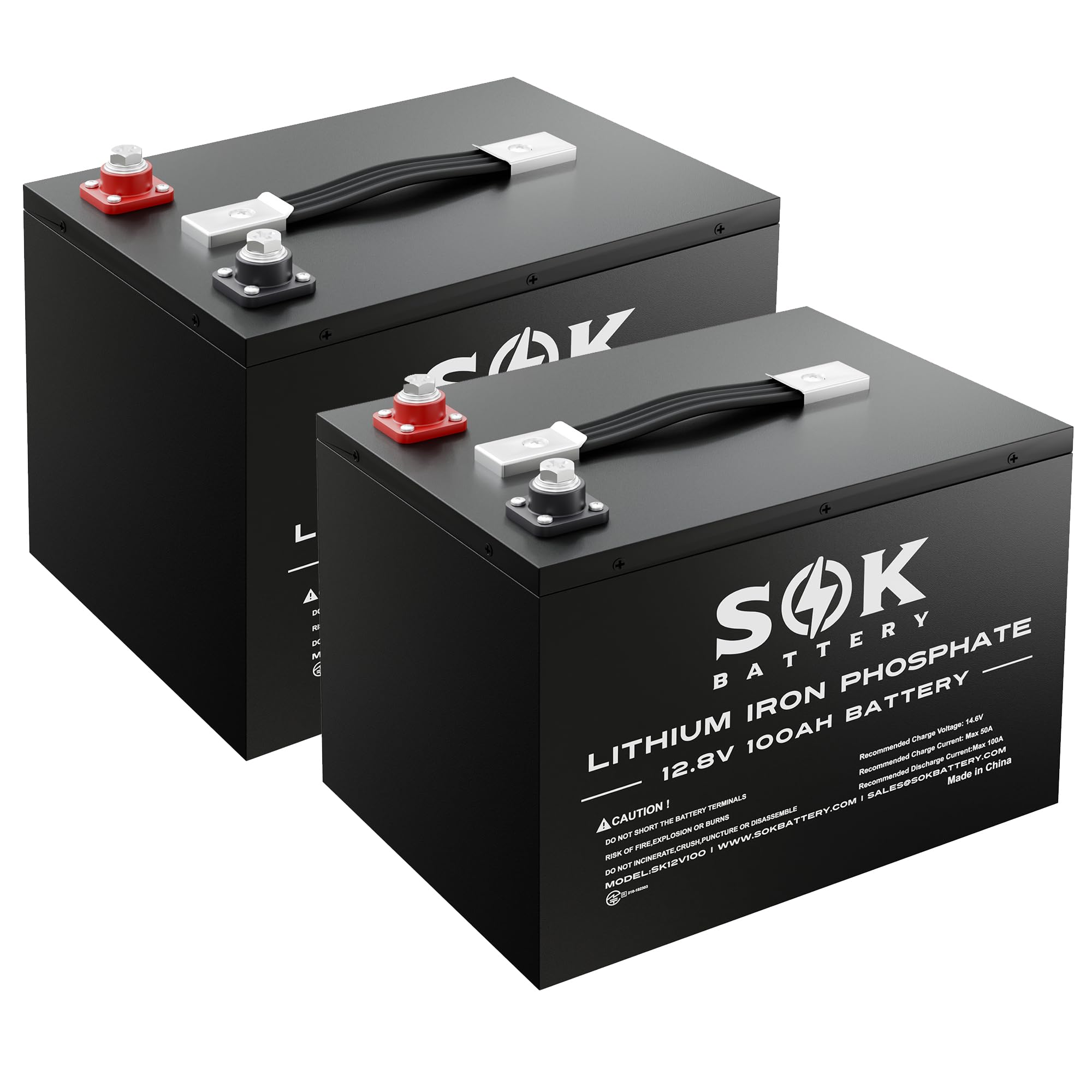
SOK SK12V100 100Ah 12V LiFePO4 Battery
Value king: High capacity, robust BMS, 4000+ cycles at low price.
Best for: Expanding banks (parallel 4x); boondocking heavy users.
Price Range: $400-$500
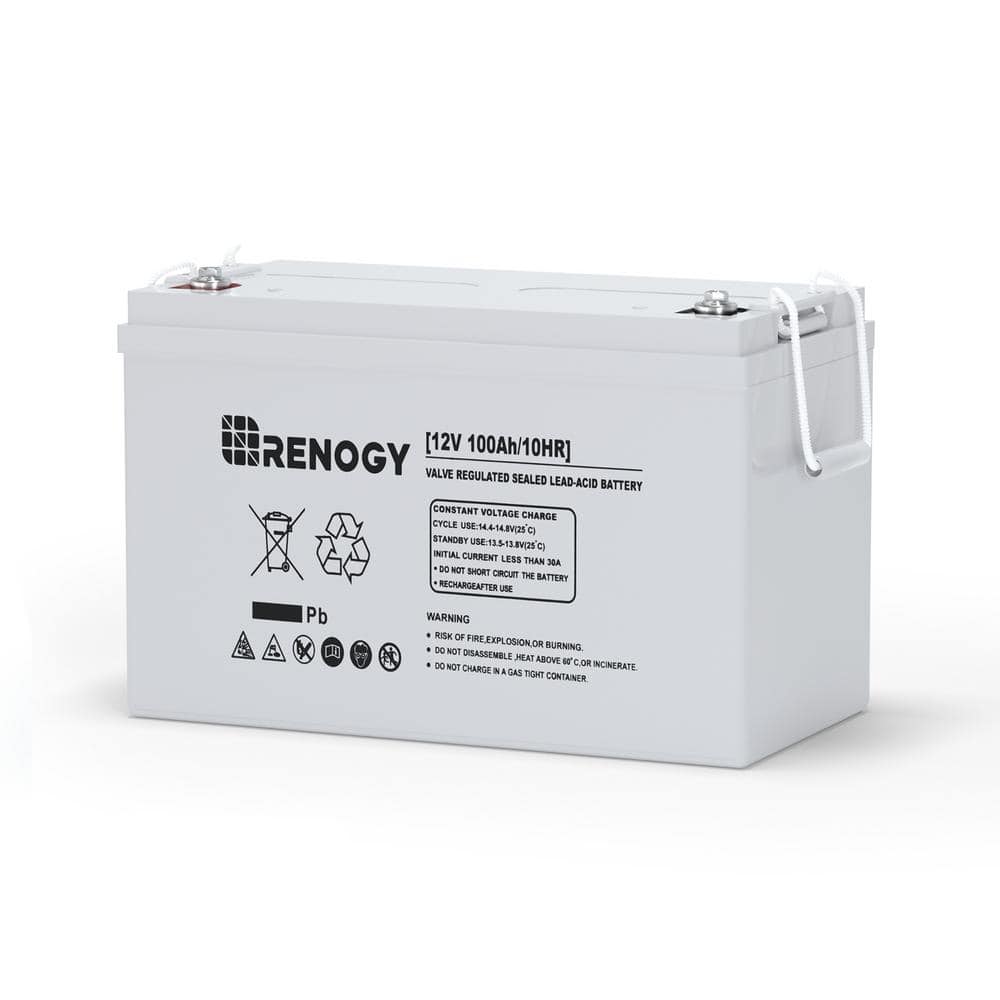
Renogy 12V 100Ah AGM Deep Cycle Battery
Reliable lead-acid alternative: Spill-proof, 700 cycles, vibration-resistant.
Best for: Tight budgets or hybrids; starter solar setups.
Price Range: $200-$250
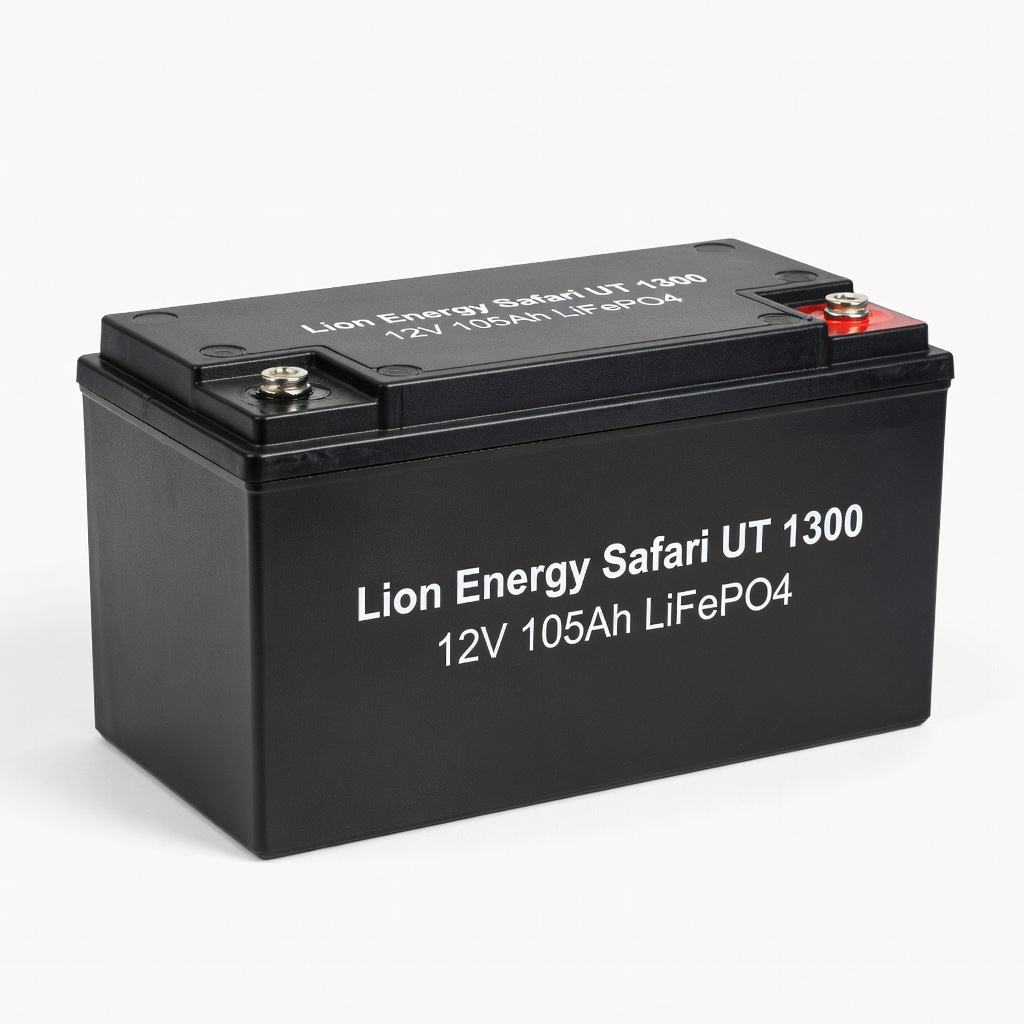
Lion Energy Safari UT 1300 12V 105Ah LiFePO4
Rugged with heater/BMS, 5000 cycles; trusted for extreme RV use.
Best for: Winter camping or high-draw inverters.
Price Range: $900-$1000