
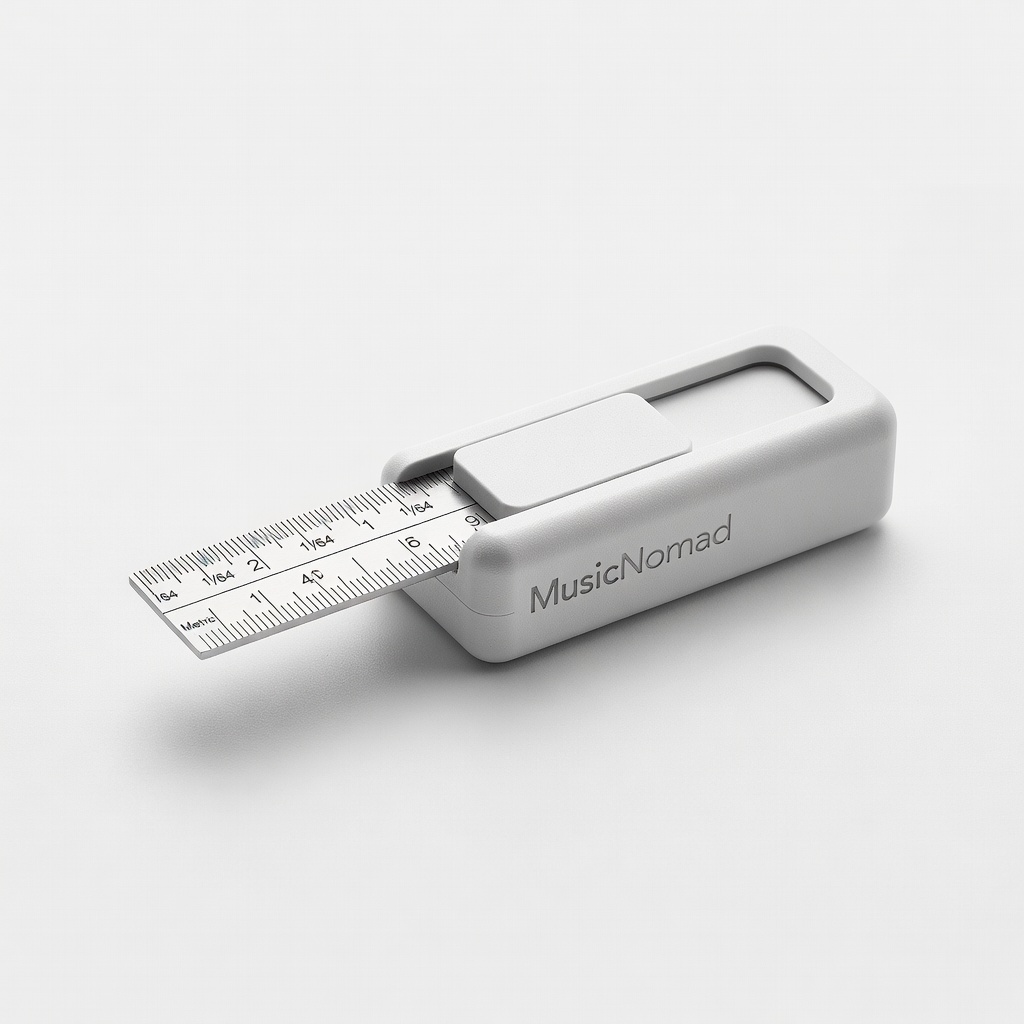
MusicNomad MN220 Setup Gauge (Imperial/Metric)
Quick 12th-fret and nut checks without guessing mm.
$19.99
MusicNomad MN220 Setup Gauge (Imperial/Metric) Precision-cut slots for exact action specs make measuring foolproof for beginners.
Get the App
Better experience on mobile
Master guitar action basics and measure your acoustic guitar's setup accurately to play comfortably without buzz or fatigue.
If your acoustic guitar feels hard to play, strings buzz, or your fingers ache after short sessions, the issue might be guitar action. High action makes fretting notes tough, while low action causes buzzing. Understanding and measuring action helps you diagnose playability issues and decide if a setup is needed.
In this beginner-friendly guide, you'll learn what guitar action is, why it matters, ideal specs for acoustic guitars, and step-by-step measurement techniques. No prior experience required—just your guitar and basic tools. You'll achieve pro-level insights in 15-20 minutes.
Expect simple explanations with analogies (like car suspension), real-world tips, and actionable next steps to optimize your guitar's feel.
Estimated Time: 15-20 minutes Difficulty: beginner
Guitar action is the distance between the bottom of each string and the top of the fret directly underneath it. Think of it like the suspension height on a car: too high (high action) makes it bumpy and hard to control; too low (low action) causes scraping and rattles.
On acoustic guitars, action affects playability, tone, and sustain. Higher action gives a bolder tone but requires more finger pressure. Lower action is easier for beginners but risks fret buzz if not balanced.
What to expect: This is purely educational—no tools needed yet. Master this to interpret measurements confidently.
💡 Tips:
Acoustic guitars have thicker tops and higher string tension than electrics, so action impacts volume and resonance. Ideal action ensures effortless chord changes and strumming without hand cramps.
Poor action leads to: finger pain (high), buzzing (low), or intonation issues. Measuring helps track changes from humidity, string age, or truss rod tweaks.
Pro insight: Factory setups often have higher action for shipping durability—measuring reveals quick wins.
⚠️ Warnings:
Standard specs (at 12th fret): Bass side (low E) 2.4-3mm (3/32"-4/32"), treble side (high E) 1.6-2.4mm (2/32"-3/32"). Nut action (1st fret): 0.5mm or less per string.
These vary by style—fingerstyle prefers lower, strumming higher. Use as benchmarks; personal feel trumps numbers.
Why it matters: Matching specs prevents costly pro setups if DIY adjustable.
💡 Tips:
Tune your guitar to standard EADGBE. Place it on a stable surface, neck elevated. Ensure strings are clean and at room temperature (humidity affects action).
Visual check first: Press string at 1st and 12th frets—gap at middle fret should be tiny (0.25-0.5mm). This previews action.
Expect: 2-3 minutes setup time.
Locate 12th fret. Press low E string at fret—measure gap to fret top with ruler or slip feeler gauge underneath.
Slide thinnest gauge that fits snugly without pushing string up. Record mm/inches.
Why here? 12th fret reveals neck relief and bridge saddle height—key for acoustics.
💡 Tips:
⚠️ Warnings:
Repeat for high E string. Acoustics often have uneven action—treble lower to ease high-fret bends.
Compare to ideals: If bass >3mm or treble >2.4mm, consider truss rod or saddle adjustment.
What to expect: Slightly lower reading than bass side.
💡 Tips:
Capo 1st fret (or press with finger). Press string at 3rd fret—measure 1st fret gap. Should be <0.5-0.75mm.
High nut action causes dead open notes. Easy DIY file if needed.
Pro tip: Capo simulates nut pressure accurately.
⚠️ Warnings:
Log measurements. High overall? Check neck relief (string gap at 8th fret). Low/buzzy? Raise saddle.
If outside specs by 0.5mm+, seek luthier. Track over time for seasonal changes.
Achievement: Now you know your guitar's setup health!
💡 Tips:
Problem: Strings buzz when measured low action
Solution: Fret wear or uneven neck—measure relief (gap at 8th fret should be 0.25-0.5mm). Adjust truss rod clockwise slightly if bowed.
Problem: Can't get feeler gauge under string
Solution: Use thinner blade or ruler edge. If truly zero gap, action is dangerously low—raise bridge saddle.
Problem: Action changes daily
Solution: Humidity issue—use hygrometer, store in case with 49% packet. Seek pro if >0.5mm variance.
Problem: High action only on certain frets
Solution: Fretout or twist—use fret rocker tool. Pro leveling needed.
Precision-cut slots for exact action specs make measuring foolproof for beginners.
Best for: Quick 12th-fret and nut checks without guessing mm.
Price Range: $19.99
Affordable, dual-marked (metric/imperial) blades from 0.03-1.00mm cover all guitar needs.
Best for: Snug-fit measurements for accurate bass/treble action.
Price Range: $9.99
Secure, even pressure simulates nut action perfectly without slipping.
Best for: 1st-fret measurements and quick key changes during playtests.
Price Range: $19.95
Digital readout for ultra-precise mm readings, better than visual rulers.
Best for: Pro-level verification of feeler gauges or direct measurements.
Price Range: $25.99
Quick 12th-fret and nut checks without guessing mm.
MusicNomad MN220 Setup Gauge (Imperial/Metric) Precision-cut slots for exact action specs make measuring foolproof for beginners.
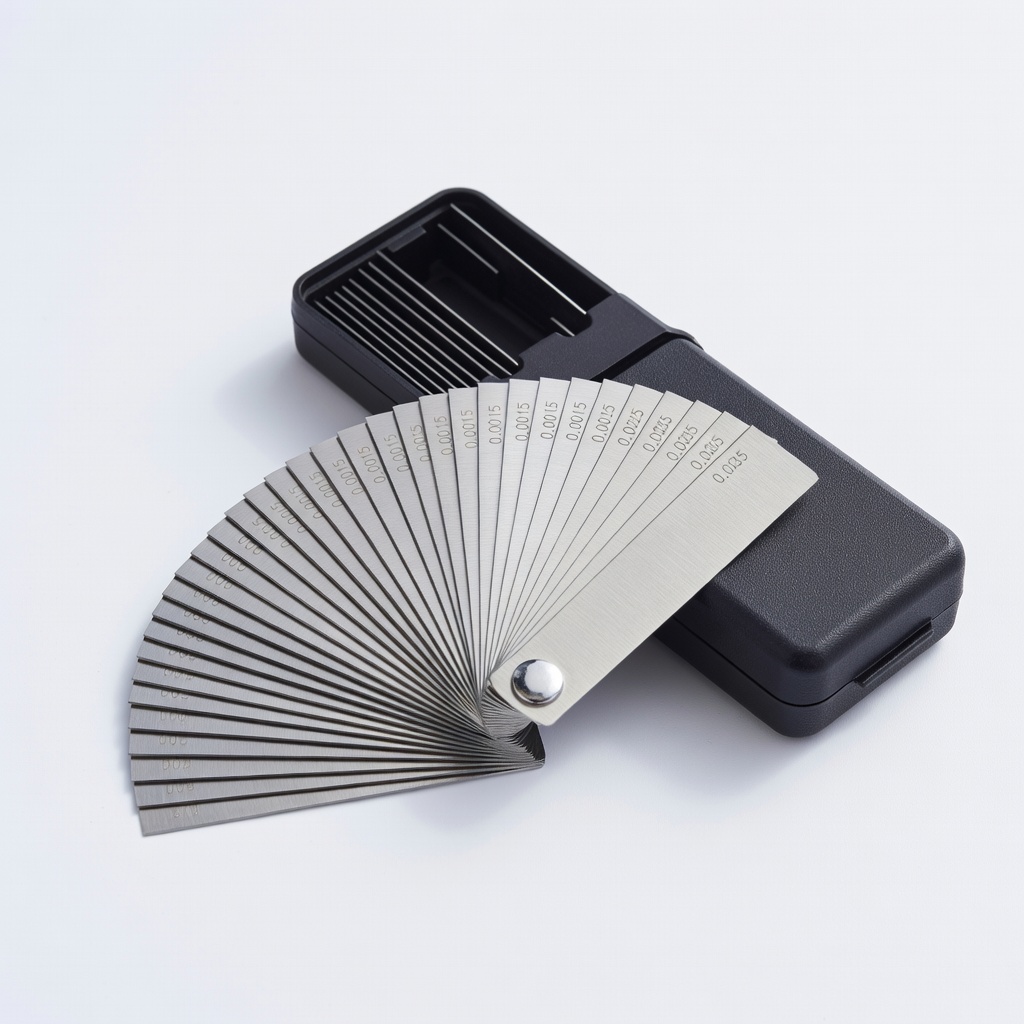
Snug-fit measurements for accurate bass/treble action.
INTBUYING Guitar Feeler Gauge Set (32 Blades) Affordable, dual-marked (metric/imperial) blades from 0.03-1.00mm cover all guitar needs.
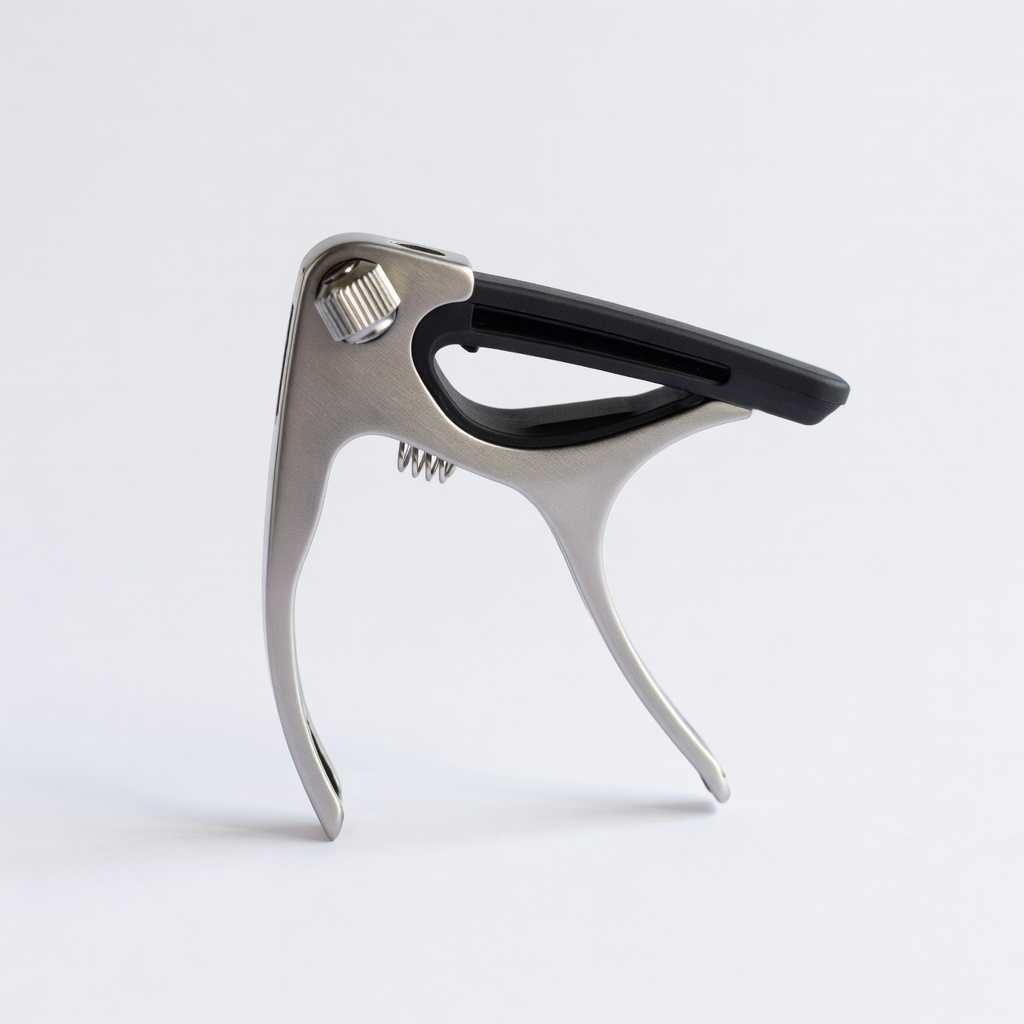
1st-fret measurements and quick key changes during playtests.
Shubb C1 Steel String Acoustic Capo Secure, even pressure simulates nut action perfectly without slipping.
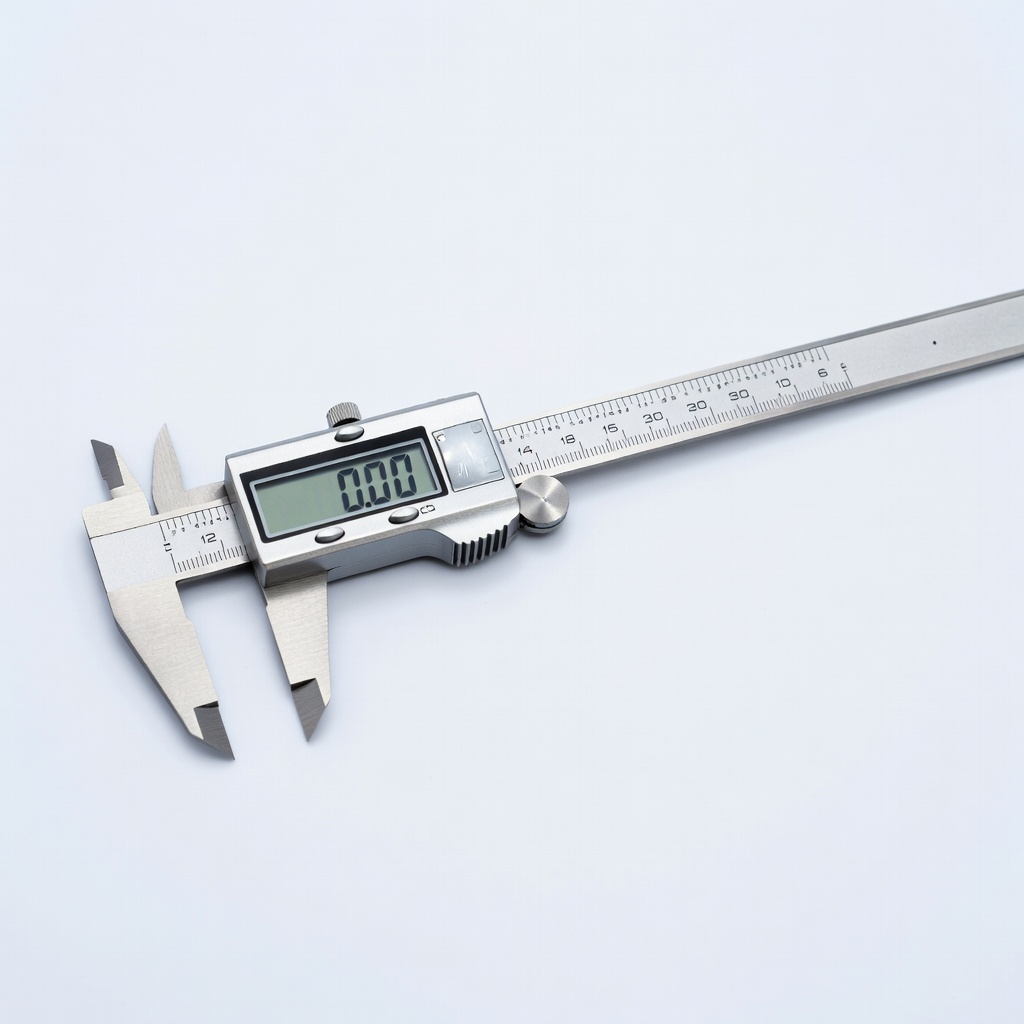
Pro-level verification of feeler gauges or direct measurements.
Neiko 01407A 6" Digital Caliper Digital readout for ultra-precise mm readings, better than visual rulers.