Struggling with melting plants, stunted growth, or algae overgrowth in your planted aquarium? The culprit is often insufficient CO2, which plants crave for photosynthesis just like sunlight and nutrients. Without enough CO2, your greens suffer, but CO2 injection changes everything.
In this guide, you'll learn what CO2 injection is, why it's essential for intermediate aquarists, how it works step-by-step, and practical tips to implement it safely. We'll break down the science simply, cover components, benefits, and maintenance—no prior expertise required beyond basic tank knowledge. Expect to grasp the concept in 20-30 minutes and be ready to boost your tank's health.
CO2 injection mimics natural river levels (around 20-30 ppm), fueling explosive growth while balancing fish safety. It's a game-changer for high-light planted setups, but requires monitoring to avoid pH swings.
▸What You'll Need
- •Planted aquarium (20+ gallons recommended)
- •pH test kit or digital pH meter
- •KH (carbonate hardness) test kit
- •Drop checker for CO2 levels (optional but highly recommended)
- •CO2 injection system (tank, regulator, solenoid, diffuser, tubing)
- •Basic tools: adjustable wrench, check valve
Estimated Time: 20-30 minutes to read and understand; 1-2 hours for initial setup
Difficulty: intermediate
▸Step-by-Step Instructions
Step 1: Understand Plant Photosynthesis Basics
Plants in your aquarium perform photosynthesis: they use light, water, CO2, and nutrients to produce energy and oxygen. CO2 is the key gas absorbed through leaves for sugar production.
In nature, rivers have 5-10 ppm CO2, but closed aquariums drop to 2-3 ppm due to plant uptake and surface exchange limits. Without supplementation, growth stalls—leaves yellow, algae thrives.
Why it matters: Low CO2 limits light use, causing imbalances. Injection raises levels to 20-30 ppm, matching high-tech setups.
💡 Tips:
- •Think of CO2 as plant 'food'—deficient tanks look hungry.
Step 2: Recognize CO2 Deficiency Signs
Spot symptoms like stunted growth, small/new leaves staying tiny, older leaves melting, or pearling (bubbles on leaves) only under high light.
Algae blooms signal imbalance: excess light/nutrients without CO2. Fish gasping at surface? Possible low O2 from plants competing.
What to expect: Testing pH drop (1 unit from morning to evening) indicates ~30 ppm CO2 via Pearling Indicator analogy.
⚠️ Warnings:
- •Don't confuse with nutrient deficiency—CO2 limits first.
Step 3: Learn What CO2 Injection Means
CO2 injection is dissolving pressurized CO2 gas into tank water via a regulator-controlled system, raising dissolved CO2 (dKH) safely.
Types: Pressurized (tanks), DIY yeast (short-term), liquid carbon (Excel, partial substitute). Pressurized is precise for intermediates.
Analogy: Like aerating soda—bubbles dissolve under pressure for 'fizz' (plant fuel).
💡 Tips:
- •Start with liquid carbon if budget-tight before full injection.
Step 4: Break Down System Components
A full system includes:
- •CO2 cylinder (aluminum, refillable 2-5 lbs).
- •Regulator (controls pressure to 20-30 PSI).
- •Solenoid (timer for light-cycle dosing).
- •Bubble counter/needle valve (fine-tunes flow).
- •Diffuser (ceramic/glass for micro-bubbles).
- •Tubing/check valve (prevents backflow).
Why each? Prevents waste, ensures even distribution.
Step 5: How CO2 Dissolves and Circulates
Process: Gas flows from tank → regulator → solenoid (on 8-10 hrs/day) → bubbler → diffuser near pump intake. Micro-bubbles dissolve via water flow.
Physics: Henry's Law—higher pressure = more dissolution. Expect 1-2 bubbles/sec per 50 gallons.
Circulation key: Powerhead ensures even ppm.
💡 Tips:
- •Place diffuser low, opposite return nozzle.
Step 6: Monitor Optimal Levels Safely
Target 25-30 ppm CO2, checked via drop checker (green = good; yellow = high; blue = low). Correlate with pH: Stable KH allows pH drop calculation.
Formula: CO2 ppm ≈ 3 * (morning pH - evening pH).
Test daily first week.
⚠️ Warnings:
- •
40 ppm toxic to fish—watch gasping.
Step 7: Experience the Benefits
Results: Faster growth (2x), vibrant colors, less algae, healthier fish (from O2 boost). Tanks go from 'ok' to show-quality in weeks.
Real-world: Vallisneria pearls vigorously; swords thicken.
💡 Tips:
- •Pair with balanced ferts/lighting for max effect.
Step 8: Basic Setup and Maintenance
- •Assemble securely. 2. Leak-test (soapy water). 3. Start low (1 bubble/5 sec). 4. Ramp over days. Daily: Check levels, refill monthly.
Maintenance: Empty regulator yearly, replace diffuser if clogged.
⚠️ Warnings:
- •Secure tank away from heat; ventilate room.
▸Pro Tips
- •Ramp CO2 gradually over 1-2 weeks to avoid pH shock.
- •Sync injection with lights using solenoid timer.
- •Use inline atomizer diffuser for better dissolution.
- •Test KH weekly—low KH amplifies pH swings.
- •Position drop checker mid-tank height.
- •Combine with root tabs for heavy feeders.
- •Log daily pH/CO2 for patterns.
▸Common Mistakes to Avoid
- •Over-injecting CO2 without monitoring—causes fish stress/death; avoid by using drop checker.
- •Ignoring KH testing—unstable buffers lead to crashes; test and adjust with baking soda.
- •Poor diffuser placement—no circulation wastes CO2; place in high-flow area.
- •No check valve—back siphoning explodes cylinder; always install.
- •Skipping leak tests—CO2 leaks kill plants fast; soap test connections.
▸Troubleshooting
Problem: Fish gasping at surface
Solution: Reduce CO2 immediately (close valve), increase surface agitation for O2. Check drop checker—aim <30 ppm.
Problem: No bubbles or low dissolution
Solution: Check regulator pressure (20 PSI), clean diffuser, ensure check valve not clogged.
Problem: pH crash overnight
Solution: Lower CO2 dose, test/add KH buffer. Shorten injection time.
Problem: Algae surge post-injection
Solution: Balance with ferts; reduce light if >8 hrs. CO2 alone isn't enough.
Problem: Empty CO2 tank too fast
Solution: Tighten needle valve; check for leaks. Typical: 1 lb lasts 1-2 months.
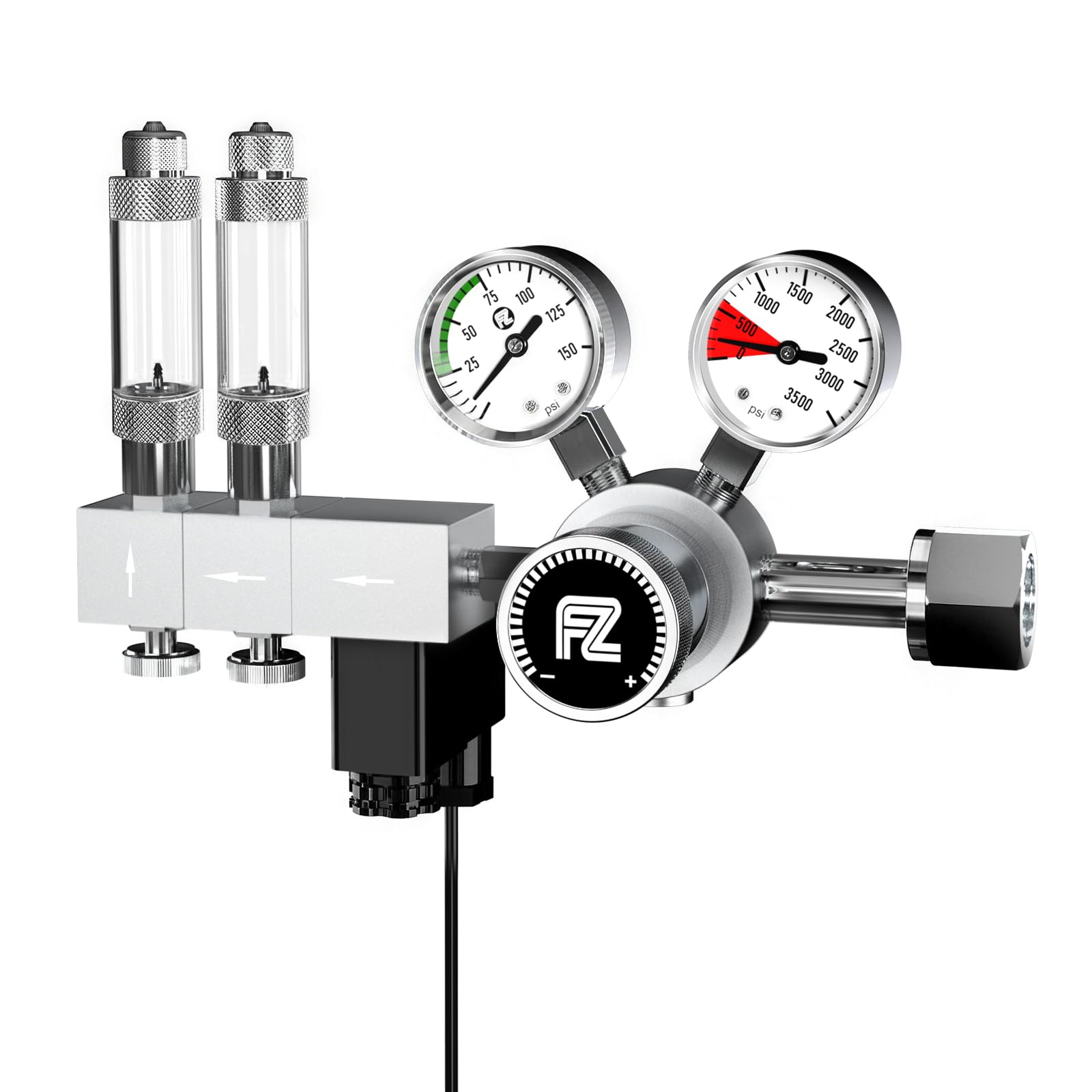
KH CO2 Regulator for Aquarium
Precise pressure control with integrated solenoid prevents over-dosing; durable brass build for long-term use.
Best for: Core component for any pressurized CO2 setup; ideal for 20-100 gallon tanks.
Price Range: $29.99
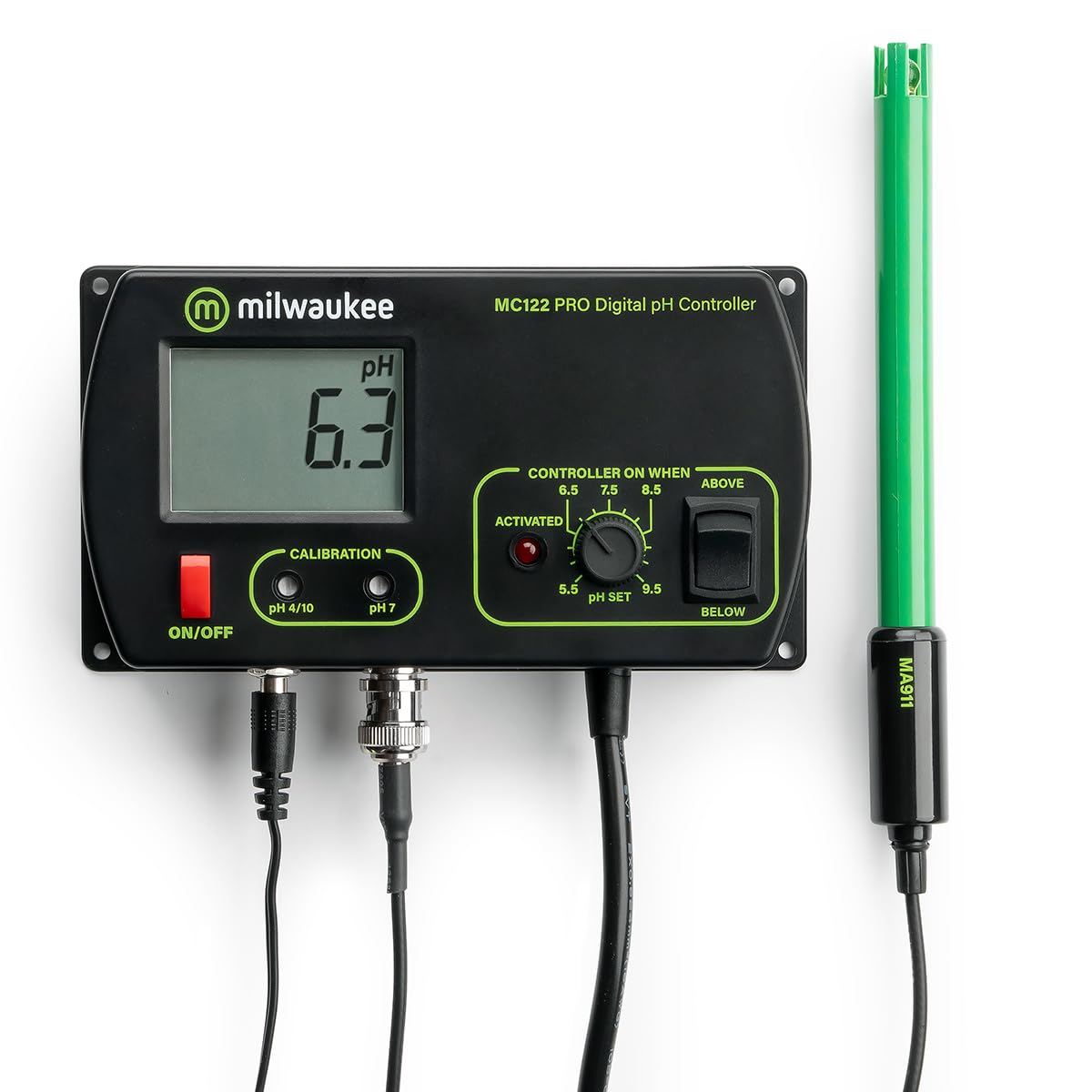
Milwaukee MC122 pH Controller
Automates solenoid on/off based on pH/CO2 correlation; eliminates manual tweaks for stable levels.
Best for: Advanced monitoring in high-tech tanks; pairs perfectly with regulators.
Price Range: $139.99
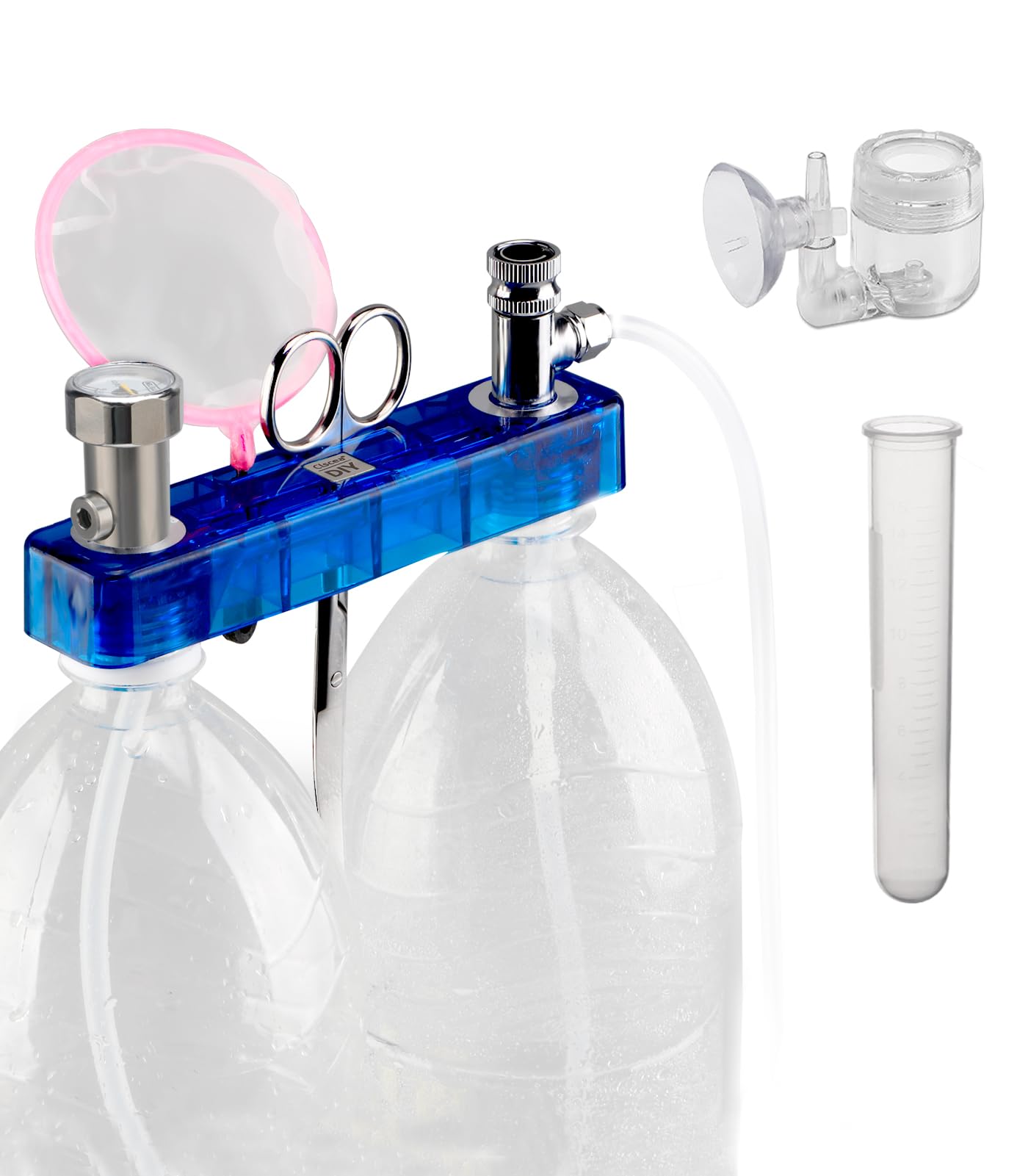
CO2 Art Pro-SE Diffuser Kit
High-efficiency ceramic diffuser creates tiny bubbles for 99% dissolution; includes counter.
Best for: Optimal for even CO2 spread in medium-large tanks.
Price Range: $49.99-$79.99
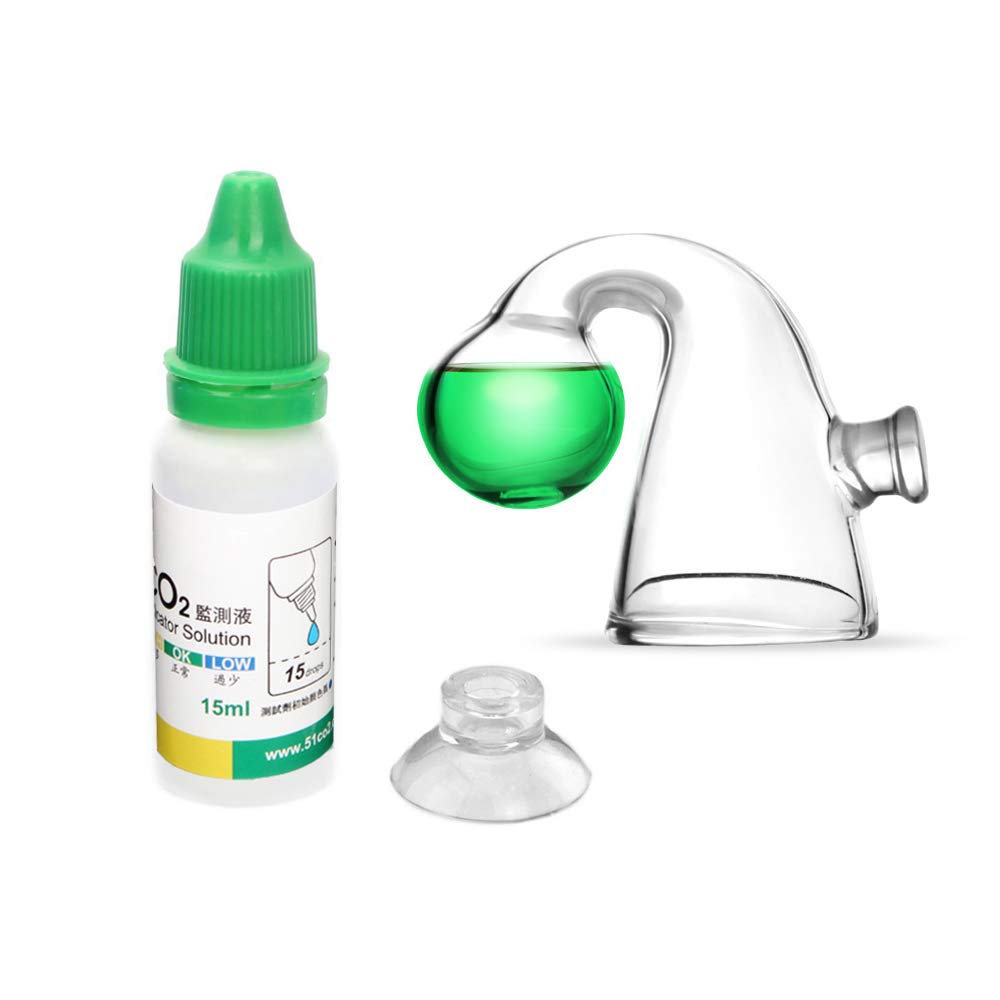
48mm CO2 Drop Checker
Visual ppm indicator (blue/green/yellow) with 4dkH reagent; essential safety tool.
Best for: Daily monitoring without probes.
Price Range: $14.99
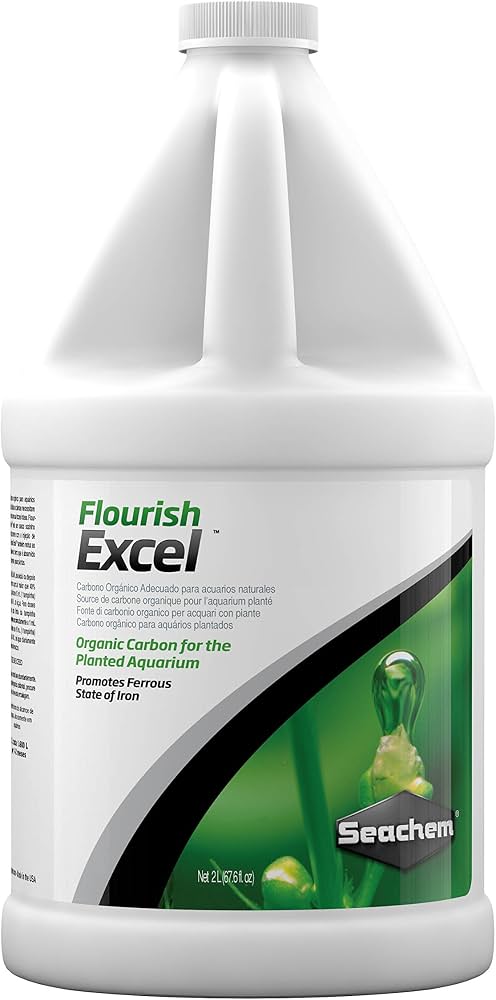
Seachem Flourish Excel
Liquid carbon alternative for beginners transitioning to gas; easy daily dosing.
Best for: Test-run before full injection.
Price Range: $7.49