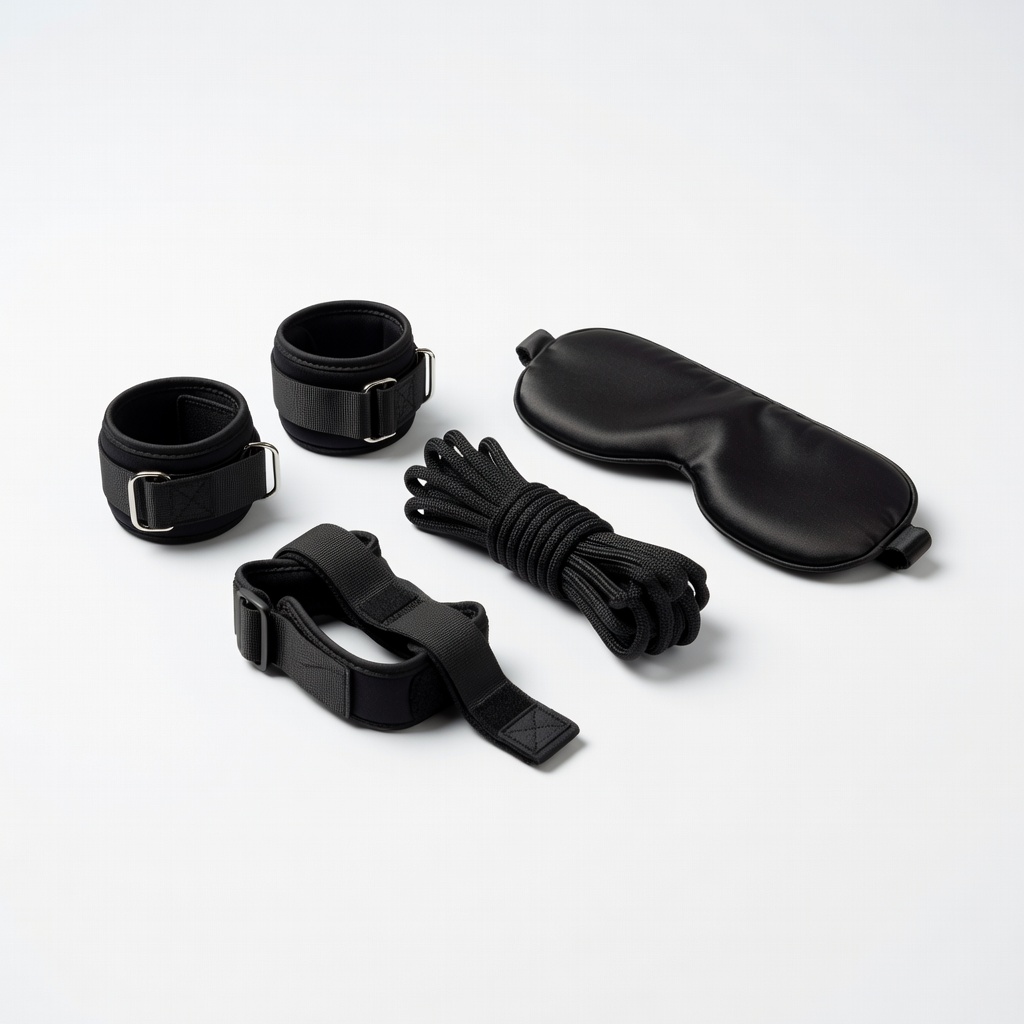
Curiosity about BDSM often sparks from movies, books, or personal fantasies, but misconceptions can make it seem intimidating or dangerous. In reality, BDSM is a consensual practice centered on trust, communication, and mutual pleasure. If you're a beginner wondering where to start, this guide demystifies it without the overwhelm.
You'll gain a clear understanding of what BDSM entails, key principles like SSC (Safe, Sane, Consensual), and practical steps for safe exploration. We'll break it down into digestible concepts, using analogies like comparing it to a dance where everyone leads and follows by agreement. Expect to spend 15-20 minutes reading, with no prior experience needed—just an open mind.
By the end, you'll know how to discuss boundaries, choose beginner-friendly tools, and prioritize aftercare, setting you up for positive, informed experiences.
▸What You'll Need
- •Open communication with partner(s)
- •Basic knowledge of personal boundaries (self-reflection time)
- •Access to safe, beginner-friendly resources (books or online guides)
- •Optional: Soft restraints or blindfolds for practice (required for hands-on steps)
Estimated Time: 15-20 minutes to read and reflect
Difficulty: beginner
▸Step-by-Step Instructions
Step 1: Understand the Basics of BDSM
BDSM stands for Bondage and Discipline, Dominance and Submission, Sadism and Masochism. It's not about abuse but a structured way to explore power dynamics, sensory play, and role-playing in a consensual adult context. Think of it like role-playing in a game: one person might take the 'dominant' role (leading the scene), while the other is 'submissive' (following cues), but roles can switch or be fluid.
At its core, BDSM emphasizes trust and excitement. For beginners, start with light elements like blindfolds for sensory deprivation rather than intense pain play. This step matters because grasping the acronym prevents myths—like assuming it's always violent—from clouding your view. Expect to feel a mix of intrigue and caution as you learn.
Why it matters: Proper understanding builds a foundation for safe fun, reducing risks of misunderstanding.
💡 Tips:
- •Read beginner books like 'The New Bottoming Book' for relatable stories.
- •Watch educational videos from reputable sources like Kink Academy.
⚠️ Warnings:
- •Avoid porn as your sole source—it's often dramatized and not realistic.
Step 2: Master Consent and Communication
Consent is the cornerstone of BDSM—it's enthusiastic, ongoing, and revocable at any time. Use the FRIES model: Freely given, Reversible, Informed, Enthusiastic, Specific. Before any play, discuss desires, limits (hard no's like 'no blood'), and soft limits (maybe's with check-ins). Analogy: It's like planning a road trip; everyone agrees on the route and has a map to reroute if needed.
Why it matters: Without clear talk, even well-intentioned play can harm trust or safety. Expect initial awkwardness in conversations, but it deepens intimacy. Practice with non-sexual scenarios first, like negotiating a movie night.
Set up safewords: Green (go), Yellow (slow down), Red (stop). This empowers everyone to pause without guilt.
💡 Tips:
- •Use a checklist like the BDSM negotiation form available online.
- •Schedule a 'kink date' just for talking, no pressure to act.
⚠️ Warnings:
- •Never pressure someone into play; true consent can't be coerced.
Step 3: Learn the SSC and RACK Principles
SSC means Safe, Sane, Consensual—ensuring activities are physically/mentally low-risk, rational, and agreed upon. RACK (Risk-Aware Consensual Kink) acknowledges some inherent risks but stresses awareness. For beginners, stick to SSC: Avoid anything that could cause lasting injury, like improper rope tying leading to circulation issues.
Why it matters: These guidelines protect everyone, turning potential danger into controlled thrill. Expect to research risks for each activity—e.g., impact play (spanking) can bruise, so start light. Analogy: Like wearing a seatbelt; it doesn't eliminate risk but minimizes it.
Apply by assessing: Is this sane (not under influence)? Safe (tools clean and checked)? Consensual (all yes)?
💡 Tips:
- •Join online communities like FetLife for SSC tips from experienced folks.
- •Start with 'vanilla' enhancements, like light spanking over clothes.
⚠️ Warnings:
- •Alcohol or drugs impair judgment—play sober always.
Step 4: Explore Beginner Activities Safely
Start simple: Bondage with soft cuffs, sensory play like feathers or ice, or role-play commands. Avoid complex setups like suspension until experienced. Why it matters: Gradual exposure builds confidence without overwhelm. Expect sensations to heighten arousal but monitor for discomfort.
For bondage, use quick-release ties; for impact, target fleshy areas like thighs. Analogy: Like learning to swim—start in shallow water. Always have safety shears nearby to cut materials instantly.
Test solo first: Try a blindfold alone to gauge comfort.
💡 Tips:
- •Set a timer for scenes (10-15 mins) to keep it light.
- •Incorporate humor to ease nerves.
⚠️ Warnings:
- •Never leave a bound person unattended, even for seconds.
Step 5: Prioritize Aftercare and Debrief
Aftercare is post-scene nurturing—cuddling, hydration, emotional check-ins—to process feelings. Debrief later: What worked? What to adjust? Why it matters: BDSM can trigger endorphin drops (subspace crash), so aftercare prevents emotional whiplash. Expect vulnerability; it's normal.
Tailor it: Subs might need reassurance, Doms validation. Analogy: Like cooldown after a workout—essential for recovery.
Always end with thanks and affection to reinforce positivity.
💡 Tips:
- •Prepare a aftercare kit with water, blankets, and snacks.
- •Journal experiences for personal growth.
⚠️ Warnings:
- •Ignore aftercare at your peril—it can lead to 'drop' (mood crashes).
Step 6: Educate on Hygiene and Safety Tools
Clean all toys with appropriate sanitizers; inspect for damage. Use barriers like condoms on shared toys. Why it matters: Prevents infections or accidents. Expect routine checks to become habit.
Key tools: Safety scissors, pulse oximeters for breath play (avoid for beginners). Analogy: Like kitchen hygiene—prevents food poisoning.
Store items discreetly and safely.
💡 Tips:
- •Label limits and tools for quick reference.
- •Renew consent daily if ongoing.
⚠️ Warnings:
- •Skip medical advice—consult pros for health concerns.
▸Pro Tips
- •Start slow: Incorporate one new element per session to build comfort.
- •Use mirrors or recordings (with consent) to visualize and reflect on play.
- •Build a 'kink library' of free resources like podcasts for ongoing learning.
- •Practice breathing techniques to manage intensity during scenes.
- •Celebrate small wins, like a successful first safeword use, to stay motivated.
- •Involve a trusted friend for external advice if solo exploring.
- •Customize scenes to personal fantasies for authentic enjoyment.
▸Common Mistakes to Avoid
- •Skipping negotiation: Leads to mismatched expectations; avoid by always discussing upfront.
- •Ignoring physical limits: Causes injury; check in frequently and learn anatomy basics.
- •Neglecting aftercare: Results in emotional distress; plan it as part of every scene.
- •Rushing into advanced play: Overwhelms beginners; progress gradually with research.
- •Assuming porn is instructional: It's performative; rely on educational sources instead.
▸Troubleshooting
Problem: Feeling overwhelmed or anxious during play
Solution: Use your safeword immediately and debrief; start with shorter, lighter sessions next time. If persistent, pause BDSM exploration and talk to a kink-aware therapist.
Problem: Subdrop or Dom drop after scenes
Solution: Enhance aftercare with rest, nutrition, and connection; track patterns in a journal. Seek community support if it lingers beyond 48 hours.
Problem: Tool-related issues like chafing from restraints
Solution: Switch to softer materials and apply lotion; inspect skin post-play. When to seek help: If marks persist or worsen, consult a doctor.
Problem: Communication breakdowns mid-scene
Solution: Practice non-verbal signals as backups to safewords; review and refine negotiations. Professional help if trust issues arise repeatedly.
Sportsheets Beginner's Bondage Kit
This kit includes soft cuffs, blindfold, and feather tickler—perfect for novices to explore restraint and sensation without complexity or risk.
Best for: Ideal for first-time bondage play to test dynamics safely at home.
Price Range: $25-$35
Bondage Boutique Safety Scissors
Essential for quick release in any restraint scenario, with rounded tips to prevent accidental cuts—promotes safety in line with SSC principles.
Best for: Keep nearby during all bondage activities to cut ties instantly if needed.
Price Range: $8-$12
Liberator Black Label Wedge
A supportive positioning pillow that enhances comfort in various plays, reducing strain—great for beginners incorporating light dominance or sensory elements.
Best for: Use under hips or knees for easier access and less physical stress in scenes.
Price Range: $100-$120
Satisfyer Bondage Tape
Non-sticky, skin-safe tape that removes easily without residue—safer than rope for beginners learning ties.
Best for: For temporary, painless restraints in intro sessions.
Price Range: $10-$15
Under the Bed Restraint System by Sportsheets
Discreet straps that attach to any bed frame for full-body restraint—versatile and adjustable for growing confidence.
Best for: Secure four-point ties for immersive but escapable play.
Price Range: $40-$50