Have you ever marveled at the grand columns of the U.S. Capitol or the soaring dome of the Pantheon-inspired structures and wondered where they came from? Ancient history isn't just dusty ruins—it's the blueprint for modern architecture, influencing everything from public buildings to everyday homes. Understanding this connection reveals why timeless designs endure and how they solve contemporary challenges like sustainability and urban density.
In this guide, you'll learn the key ancient innovations, trace their evolution into modern styles, and spot examples in your world. We'll break it down from basic elements like columns to complex systems like urban planning—no prior expertise needed, just curiosity. Expect a 20-30 minute read that transforms how you see buildings around you.
By the end, you'll confidently identify ancient influences and appreciate architecture's living legacy.
▸What You'll Need
- •Basic knowledge of world history (high school level)
- •Access to images or a quick Google search for visuals (recommended)
- •Notebook or digital note app for jotting examples (optional)
Estimated Time: 20-30 minutes
Difficulty: intermediate
▸Step-by-Step Instructions
Step 1: Grasp the Classical Orders from Ancient Greece
Start with Greece (c. 900-100 BCE), birthplace of the Classical Orders: Doric (simple, sturdy), Ionic (scroll-like capitals), and Corinthian (leafy, ornate). These column styles defined proportion and harmony, based on the golden ratio—a mathematical beauty standard still used today.
Why it matters: They symbolize strength and elegance, influencing Western aesthetics. Modern banks and courthouses mimic them for authority.
Expect to see Doric in minimalist designs, Ionic in graceful entrances.
💡 Tips:
- •Visualize with photos: Search 'Parthenon columns' for reference.
Step 2: Explore Roman Engineering Marvels: Arches and Vaults
Romans (c. 509 BCE-476 CE) perfected the arch, vault, and dome, distributing weight efficiently without thick walls. The aqueducts and Colosseum showcased this, allowing vast interiors.
Why it matters: Before arches, buildings were post-and-lintel (like Greek temples)—limited in span. Romans enabled stadiums and bridges, echoed in modern train stations and gateways.
You'll notice rounded arches in Europe's Gothic cathedrals and NYC's archways.
⚠️ Warnings:
- •Don't confuse Roman arches with Islamic pointed arches, which evolved later.
Step 3: Understand Egyptian Monumentality and Geometry
Ancient Egyptians (c. 3100-30 BCE) mastered pyramids and massive columns, using precise geometry for eternity. The Great Pyramid's alignment and stepped designs influenced scale and symbolism.
Why it matters: They taught permanence and axial symmetry—straight lines to focal points. Modern memorials like the Louvre Pyramid nod to this.
Anticipate seeing obelisks (tapered pillars) in cities like Paris and D.C.
💡 Tips:
- •Measure a local building's proportions to spot pyramid-like ratios.
Step 4: Dive into Symmetry and Proportion Principles
Greeks and Romans obsessed over symmetry (balanced sides) and Vitruvian ideals (strength, utility, beauty from Vitruvius' treatise). The Parthenon embodies perfect ratios.
Why it matters: These create visual harmony, used in Renaissance and today’s Brutalism tweaks.
Expect subconscious appeal in balanced facades worldwide.
Step 5: Examine Domes from Byzantium and Beyond
Byzantines (c. 330-1453 CE) refined Roman domes, as in Hagia Sophia, blending light and space via pendentives.
Why it matters: Domes cap capitols (U.S. Capitol) and stadiums (Pantheon influence on Superdome).
You'll recognize them crowning mosques, parliaments, and malls.
Step 6: Trace Urban Planning Legacies
Greek agoras and Roman forums laid grids and public spaces. Pompeii's streets inspire zoning.
Why it matters: Manhattan's grid and Brasília echo this ordered planning.
Spot piazzas and forums in modern plazas.
💡 Tips:
- •Walk your city grid—noting ancient orthogonal roots.
Step 7: See Revivals: Neoclassicism to Modernism
18th-19th century Neoclassicism revived ancients (White House, British Museum). 20th century adapted for skyscrapers (Empire State’s setbacks from ziggurats).
Why it matters: Bridges past to present, solving height via ancient stacking.
Step 8: Spot Influences in Contemporary Designs
Today, sustainability revives Roman hypocausts (underfloor heating) and Egyptian passive cooling. Zaha Hadid twists classical curves.
Why it matters: Ancients teach resilience—modern eco-buildings use their passive strategies.
End with examples like Beijing Airport's terminal echoing Roman vaults.
💡 Tips:
- •Use apps like ArchDaily to hunt local examples.
▸Pro Tips
- •Take architecture walking tours in your city to spot influences live.
- •Sketch buildings to internalize proportions—trains the eye.
- •Read Vitruvius' 'Ten Books' for primary source insights (free online).
- •Compare via Google Earth: Zoom ancient sites to modern analogs.
- •Join Reddit's r/architecture for discussions and photos.
- •Visit museums with casts (e.g., casts of Parthenon marbles).
- •Use VR apps like 'Rome Reborn' for immersive exploration.
▸Common Mistakes to Avoid
- •Assuming only columns matter—ignore engineering like concrete (Roman opus caementicium). Solution: Study structures beyond aesthetics.
- •Overlooking non-Western influences (e.g., Mayan stepped pyramids in Art Deco). Solution: Broaden to global ancients.
- •Thinking influences stopped in 19th century—modernism adapts them. Solution: Look at parametric designs.
- •Confusing Greek and Roman (Greeks idealized, Romans engineered). Solution: Note innovations per step.
- •Missing everyday examples (your bank's pediment). Solution: Audit surroundings daily.
▸Troubleshooting
Problem: Can't visualize ancient vs. modern?
Solution: Use side-by-side image searches or tools like Photoshop overlays; apps like Sketchfab offer 3D models.
Problem: Overwhelmed by terms like 'entablature'?
Solution: Break them down: Glossary hunt or watch YouTube breakdowns (e.g., 'Crash Course Architecture').
Problem: No local examples?
Solution: Virtual tours via Google Arts & Culture or books with photos; travel apps pinpoint neoclassical spots.
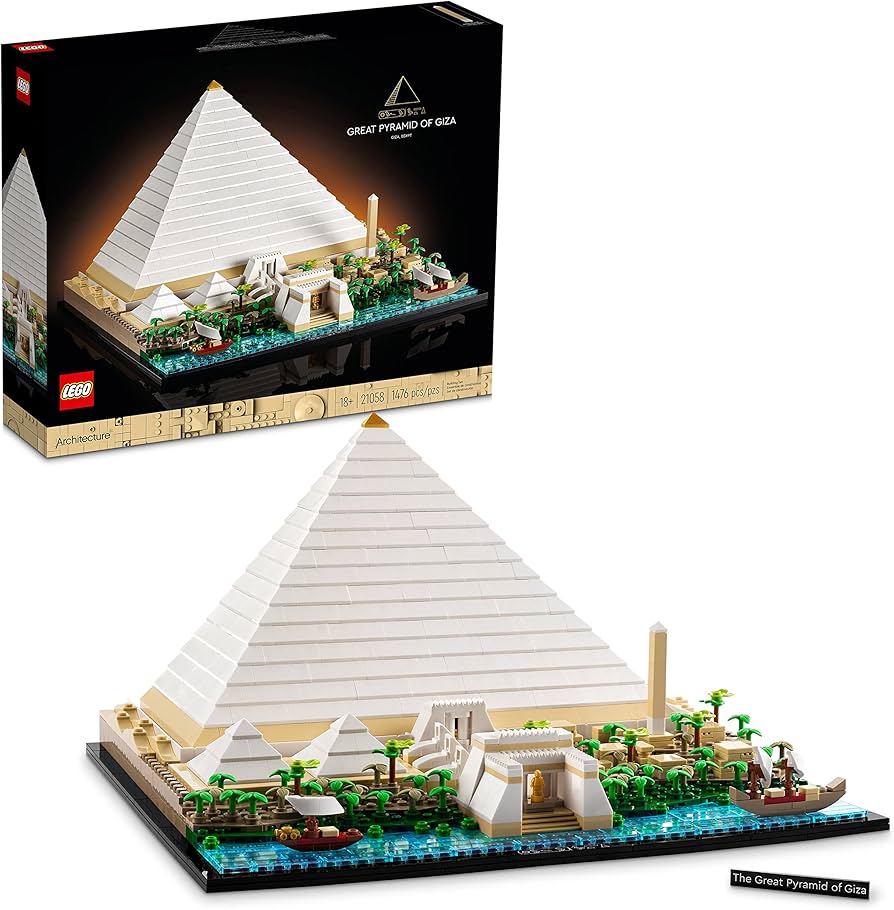
LEGO Architecture Great Pyramid of Giza 21058
Hands-on model teaches Egyptian geometry and scale interactively—perfect for visualizing monumentality.
Best for: Build while reading to grasp proportions; great for intermediate learners.
Price Range: $99.99
Architecture: Form, Space, and Order by Francis D.K. Ching (4th Edition)
Illustrated bible explaining ancient principles like orders and symmetry with diagrams—essential reference.
Best for: Deepen understanding of Greek/Roman basics before modern applications.
Price Range: $50-$60
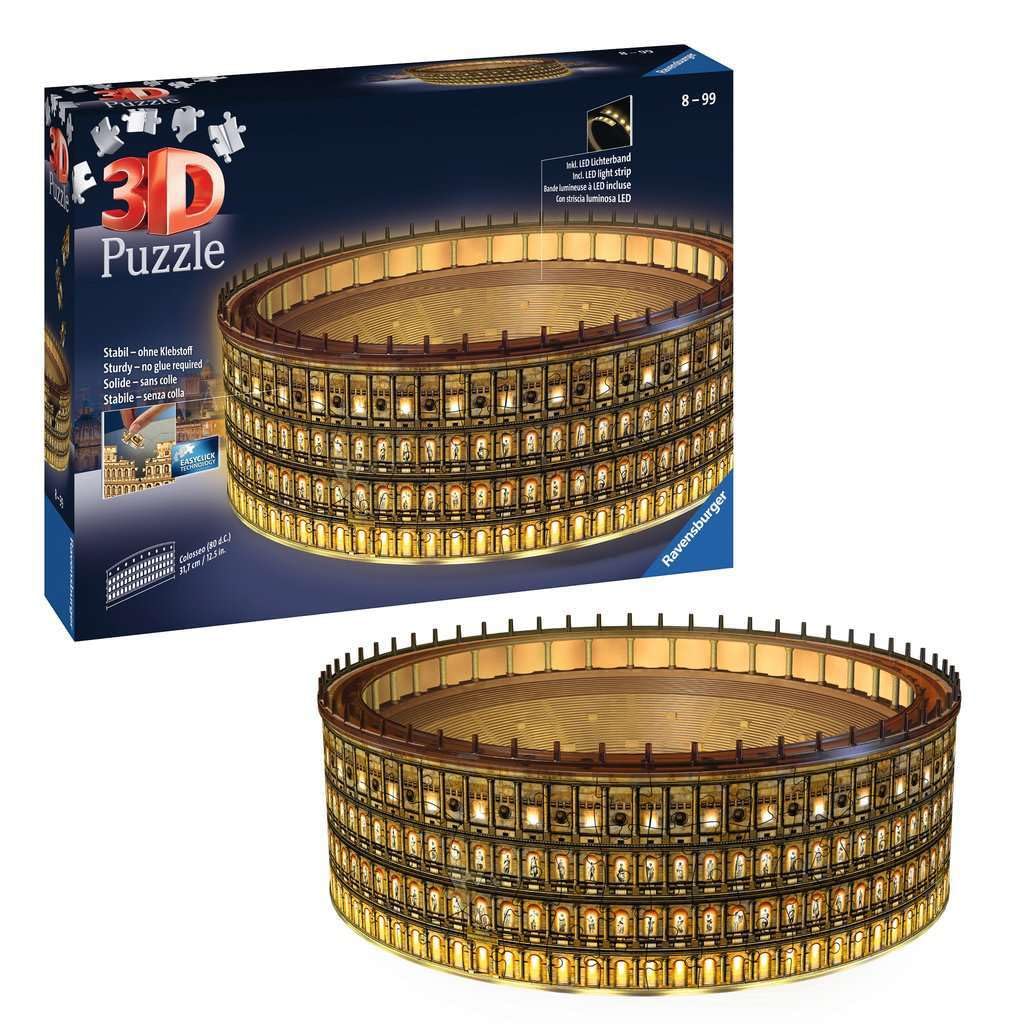
Ravensburger 3D Puzzle Colosseum (216 Pieces)
Assemble to experience Roman arches and vaults in 3D—bridges theory to tactile learning.
Best for: Family activity or desk model for ongoing reference.
Price Range: $25-$35
A History of Western Architecture by David Watkin
Comprehensive timeline from ancients to modern, with photos tracing influences clearly.
Best for: Reference for revivals like Neoclassicism.
Price Range: $20-$30
Engineering an Empire: Rome (History Channel DVD)
Visual documentary on Roman innovations—makes arches/domes exciting.
Best for: Watch for quick immersion before steps.
Price Range: $10-$15