Ever wondered why the FDA approves your food or the EPA regulates pollution? That's administrative law at work—governing the vast bureaucracy of government agencies that impact daily life without direct legislation.
In this guide, you'll learn what administrative law is, its core principles, the role of agencies, and pivotal case studies like Chevron and its recent overruling. Perfect for law students, paralegals, or anyone navigating regulations. Expect a straightforward breakdown—no legalese overload—with real-world examples.
Reading time: 25-35 minutes. Intermediate level assumes basic civics knowledge.
▸What You'll Need
- •Basic understanding of U.S. government branches (prerequisite)
- •Notebook and pen for jotting case notes
- •Internet access for case texts (free on Google Scholar or Oyez.org)
- •Optional: Legal dictionary app
Estimated Time: 25-35 minutes
Difficulty: intermediate
▸Step-by-Step Instructions
Step 1: Define Administrative Law
Administrative law is the body of law governing the activities of executive branch agencies, like the FCC, IRS, or SEC. It covers how these agencies create rules, enforce them, and resolve disputes.
Think of it as the 'rules for the rule-makers.' Congress passes broad statutes (e.g., Clean Air Act), but agencies fill in details through regulations. This field ensures agencies act fairly, transparently, and within legal bounds.
Why it matters: Agencies issue 90%+ of new federal rules annually, affecting businesses, environment, and health.
💡 Tips:
- •Use analogies: Agencies are like referees interpreting game rules set by Congress.
Step 2: Understand the Role of Administrative Agencies
Agencies are created by Congress via enabling statutes and wield 'delegated power' to make rules, investigate, and adjudicate.
Rulemaking: Agencies issue regulations (e.g., FDA food labels) after public notice-and-comment periods under the Administrative Procedure Act (APA).
Adjudication: Agencies hold hearings like mini-trials (e.g., NLRB labor disputes). Expect quasi-judicial processes with evidence and decisions.
⚠️ Warnings:
- •Don't confuse agencies with Congress—they can't make law, only implement it.
Step 3: Explore Sources of Administrative Law
Primary sources: APA (1946), enabling statutes, agency rules (Code of Federal Regulations), and judicial precedents.
Secondary: Treatises, agency manuals. Courts review under 'arbitrary and capricious' standard.
Key: APA codifies procedures for fairness, preventing agency overreach.
💡 Tips:
- •Bookmark Cornell LII for free APA text.
Step 4: Grasp Key Principles: Rulemaking and Judicial Review
Rulemaking: Informal (notice-comment) vs. formal (trial-like). Agencies must explain decisions.
Judicial Review: Courts defer to agencies on facts/expertise but check legality. Standards: substantial evidence, rational basis.
Analogy: Court is umpire—won't second-guess expertise but calls foul on bias.
Step 5: Dive into Deference Doctrines
Courts give agencies leeway: Chevron deference (interpret ambiguous statutes), Auer (agency's rule interpretation), Skidmore (persuasive weight).
Recent shift: 2024's Loper Bright overruled Chevron, demanding courts independently interpret statutes.
Why pivotal: Balances expertise vs. judicial oversight.
💡 Tips:
- •Memorize: Chevron two-step—ambiguity? Defer if reasonable.
Step 6: Case Study: Chevron U.S.A. v. NRDC (1984)
EPA redefined 'stationary source' of pollution broadly under Clean Air Act. Court upheld, creating Chevron deference: Step 1—statute clear? No. Step 2—reasonable? Yes.
Impact: Agencies got wide latitude for 40 years. Affected thousands of regs.
Overruled in 2024, but still foundational.
Step 7: Case Study: Motor Vehicle Mfrs. Assn. v. State Farm (1983)
NHTSA revoked passive restraint mandate without reasoned explanation. Supreme Court struck it down as 'arbitrary and capricious' under APA.
Key: Agencies must consider alternatives, respond to comments, provide data.
Lesson: Even valid policy needs process.
⚠️ Warnings:
- •Ignoring public comments is a red flag.
Step 8: Case Study: Citizens to Preserve Overton Park v. Volpe (1971)
Challenge to highway through park. Court set 'searching review' for non-rulemaking actions—agency must show no reasonable alternatives.
Establishes hard-look review: Courts probe closely for abuse.
💡 Tips:
- •Great for environmental law crossovers.
Step 9: Modern Developments and Applications
Loper Bright v. Raimondo (2024): Overrules Chevron—judges interpret law, agencies advise.
Today: Challenges to Biden-era rules (e.g., student loans). States sue agencies routinely.
Apply: Check regs on regulations.gov.
▸Pro Tips
- •Read cases on Oyez.org for audio arguments—makes them memorable.
- •Use IRAC method (Issue, Rule, Analysis, Conclusion) to brief cases.
- •Follow SCOTUSblog for admin law updates.
- •Cross-reference with constitutional law for delegation doctrine.
- •Practice: Spot APA violations in news agency actions.
- •Join law school study groups for case discussions.
- •Use flashcards for deference doctrines.
▸Common Mistakes to Avoid
- •Confusing admin law with statutory law—admin fills gaps, doesn't create.
- •Overlooking APA procedures—most challenges fail on process grounds.
- •Ignoring post-Chevron world—assume no deference now.
- •Skipping case facts—focus on holdings for real understanding.
- •Thinking agencies are infallible—they're checked rigorously.
▸Troubleshooting
Problem: Struggling to understand case holdings
Solution: Read majority + dissent summaries on SCOTUSblog; watch YouTube explainers.
Problem: Confused on deference post-Loper
Solution: Persuasion via Skidmore; check DOJ briefs for agency views.
Problem: Finding full case texts
Solution: Use free sites like supremecourt.gov or Caselaw Access Project; seek prof help for paywalls.
Problem: Applying to state law
Solution: Most states mirror federal APA; check state codes.
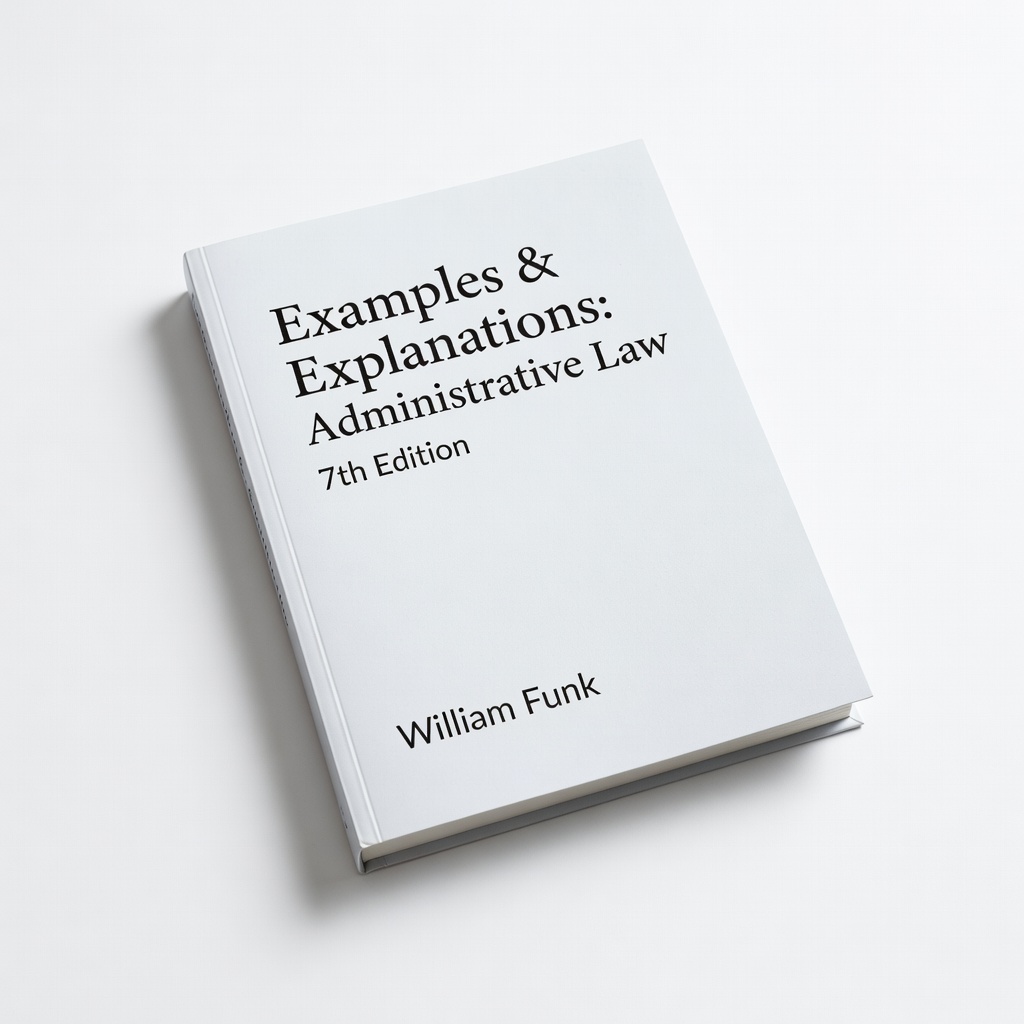
Examples & Explanations: Administrative Law, 7th Edition by William Funk
Breaks down concepts and cases with hypotheticals—perfect for intermediate learners prepping exams.
Best for: Self-study or bar review; includes practice questions.
Price Range: $50-$60
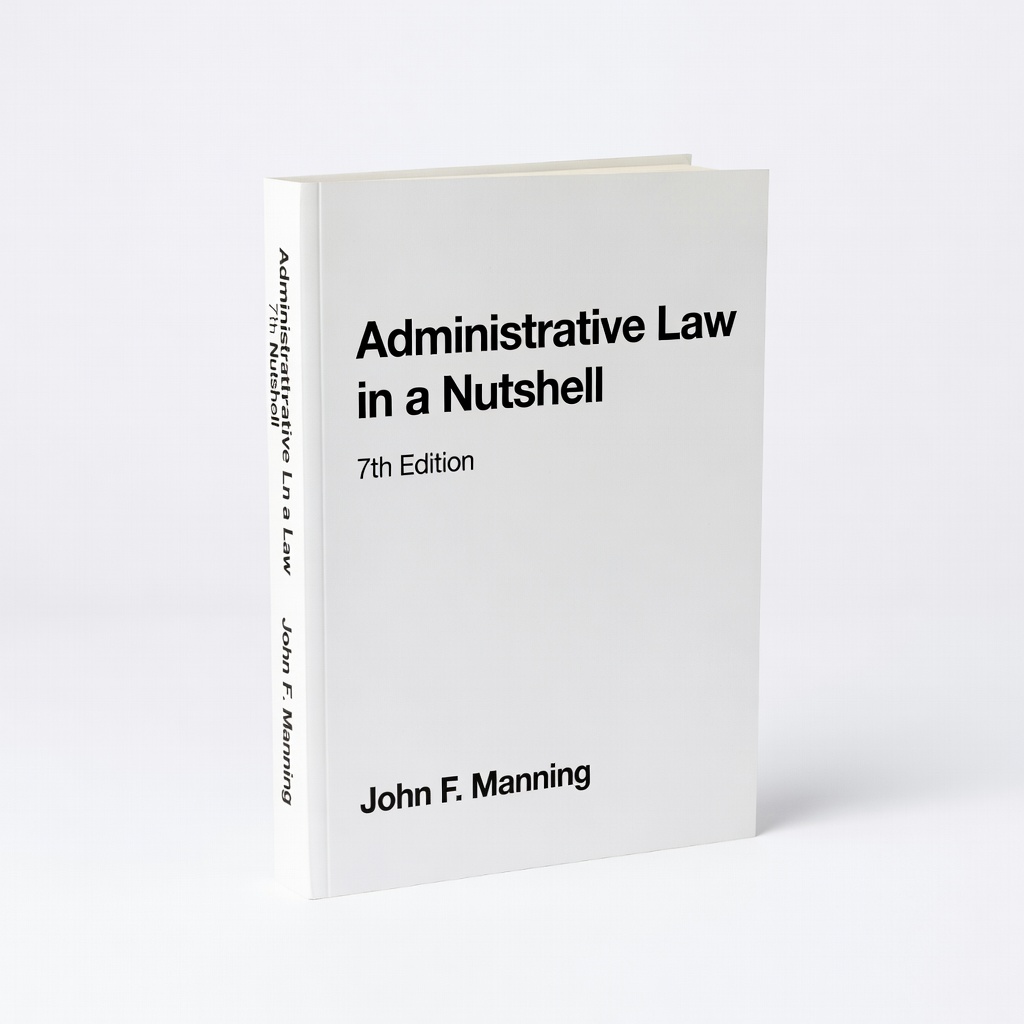
Administrative Law in a Nutshell, 7th Edition by John F. Manning
Concise overview of doctrines and cases—quick reference without fluff.
Best for: Daily desk companion for paralegals or quick refreshers.
Price Range: $45-$55
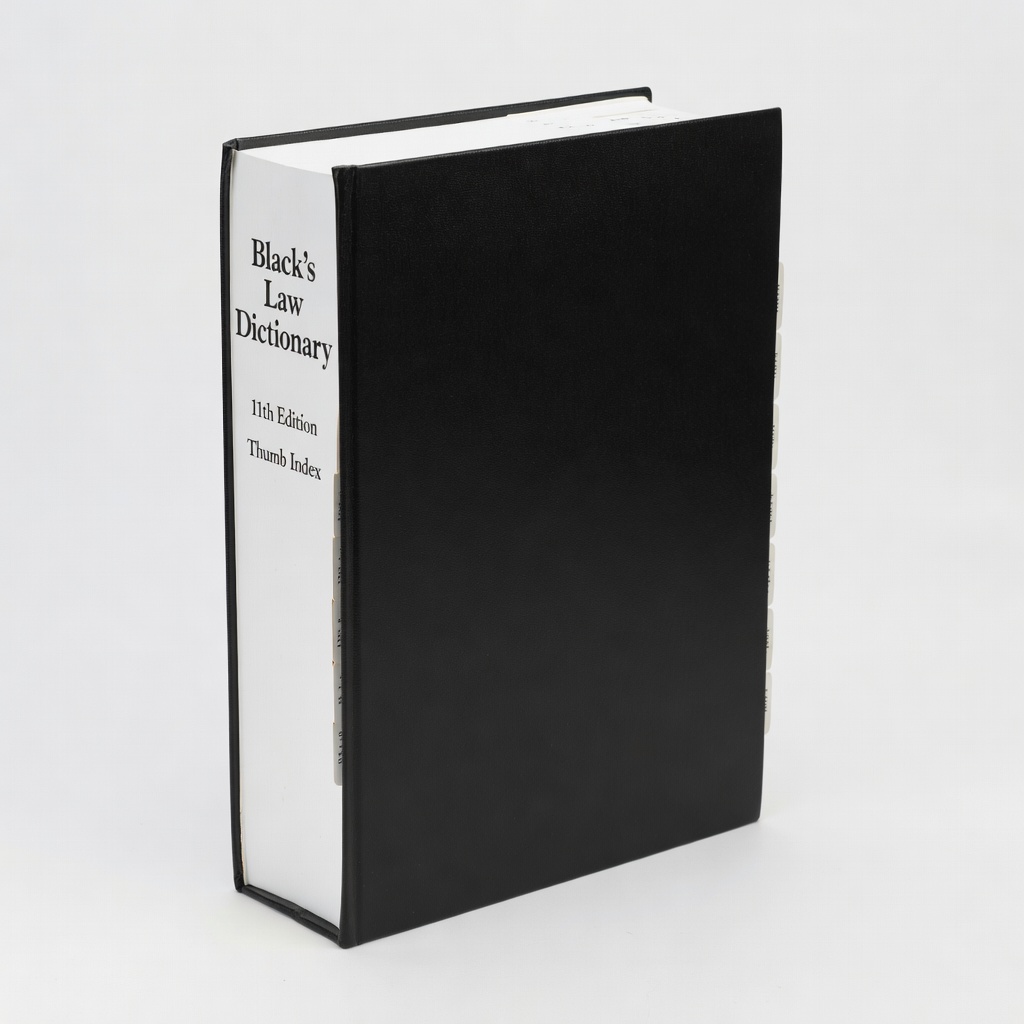
Black's Law Dictionary, 11th Edition (Thumb Index)
Defines 50,000+ terms including admin law jargon like 'arbitrary and capricious.'
Best for: Essential for reading cases or regs accurately.
Price Range: $60-$70
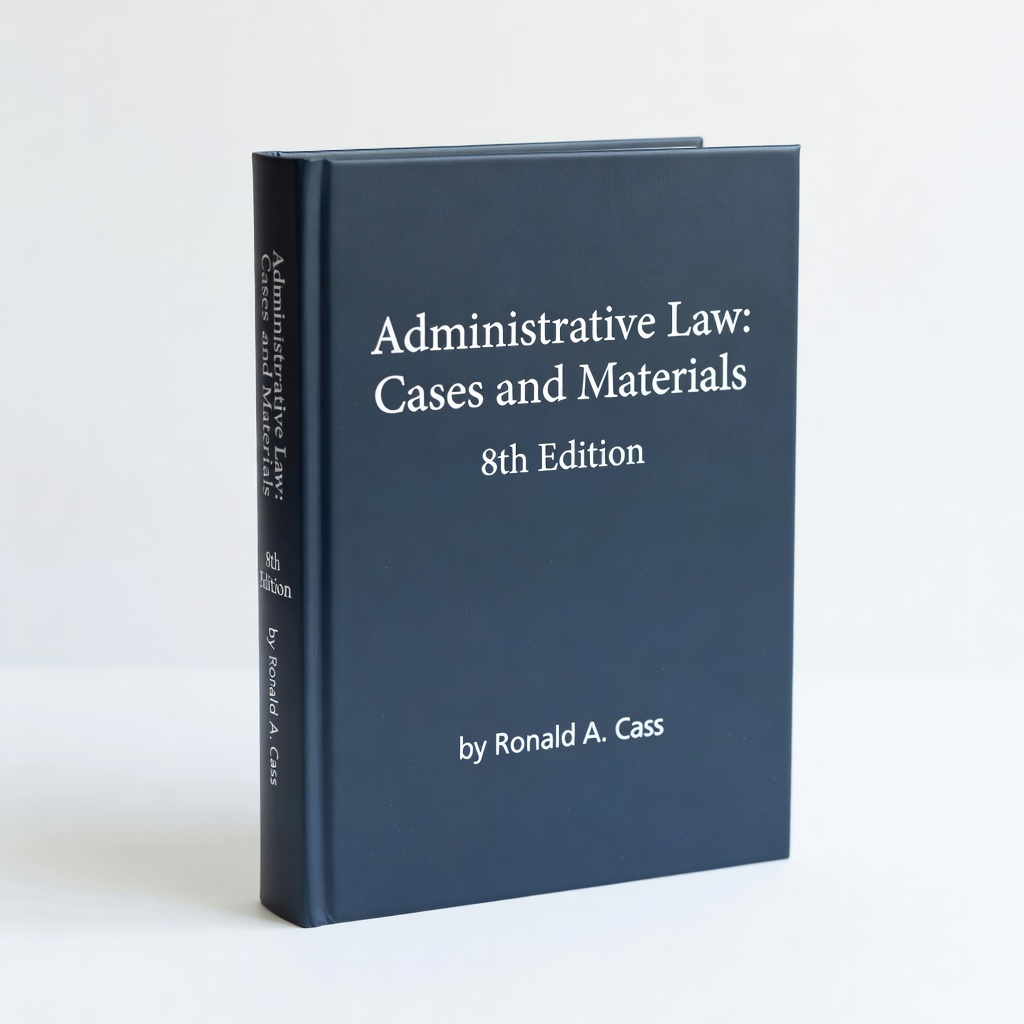
Administrative Law: Cases and Materials, 8th Edition by Ronald A. Cass
Comprehensive casebook with notes—mirrors law school texts.
Best for: Deep dives for advanced study or teaching.
Price Range: $200-$250
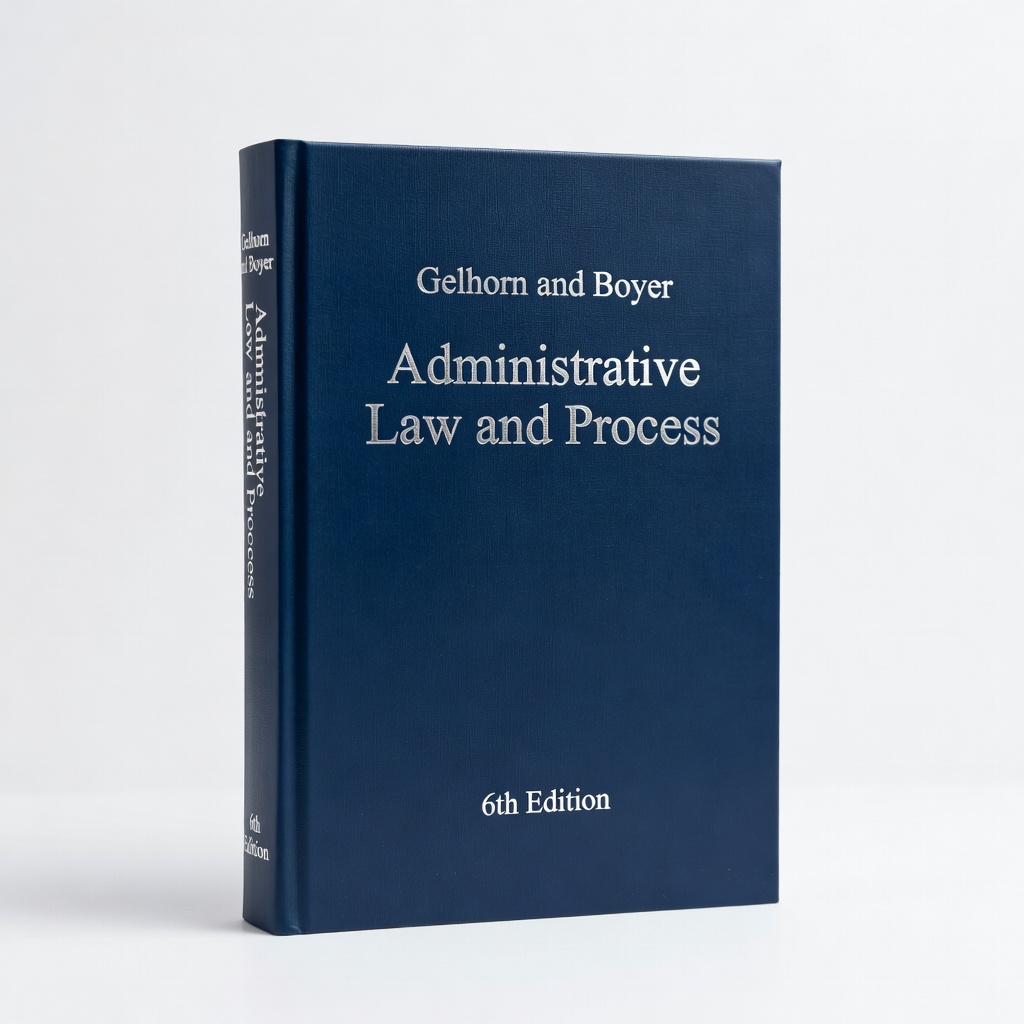
Gelhorn and Boyer's Administrative Law and Process, 6th Edition
Classic with historical context and process focus.
Best for: Policy wonks analyzing rulemaking.
Price Range: $150-$200