Nothing kills a perfect day on the water like a dead battery. Whether you're running a trolling motor for hours, powering fish finders, or keeping lights on overnight, marine deep cycle batteries are your lifeline. Choosing the wrong one means frequent replacements, poor performance, or getting stranded.
In this guide, you'll learn what makes a great 12V deep cycle battery for boats, how to compare specs like amp-hours (Ah) and reserve capacity, the pros/cons of AGM vs. lithium types, and our top recommendations. Expect to spend 30 minutes reading and comparing options to make an informed buy.
We'll break it down step-by-step from basics to advanced selection tips, so even intermediate boaters can pick a battery that lasts seasons.
▸What You'll Need
- •Basic knowledge of boating electrics (voltage, Ah basics)
- •Access to online retailer sites for specs (Amazon, West Marine)
- •Battery size chart for your boat (Group 24, 27, 31)
- •Optional: Multimeter for testing existing setup
Estimated Time: 30-45 minutes
Difficulty: intermediate
▸Step-by-Step Instructions
Step 1: Understand Deep Cycle vs. Starting Batteries
Deep cycle batteries are designed for sustained power draw, unlike cranking batteries that deliver short bursts for engine starts. Think of deep cycle like a marathon runner (steady energy over hours) vs. a sprinter (quick explosion).
For marine use, they handle repeated deep discharges (50-80% capacity) from trolling motors or bilge pumps without damage. Expect 200-500+ cycles depending on type.
Why it matters: Wrong battery type leads to quick failure on boats.
💡 Tips:
- •Check labels: CCA for starting, RC/Ah for deep cycle.
⚠️ Warnings:
- •Never use car starting batteries for deep cycle—they sulfate fast.
Step 2: Key Specs to Evaluate
Focus on Amp-Hours (Ah): Measures capacity (e.g., 100Ah = 100 amps for 1 hour or 5 amps for 20 hours). Reserve Capacity (RC): Minutes at 25A draw before 10.5V.
Marine capacity needs: 50-100Ah for small boats, 100-200Ah for larger setups. Weight matters—lithium is lighter.
What to expect: Higher Ah = longer runtime, but bigger/ pricier.
💡 Tips:
- •Use 50% depth of discharge rule for lead-acid to maximize life.
Step 3: Explore Battery Types for Marine
Flooded (wet cell): Cheap, but need venting/watering; spill risk.
AGM (Absorbed Glass Mat): Sealed, vibration-resistant, no maintenance—ideal for bumpy boats.
Lithium (LiFePO4): Lightweight (1/3 weight), 2000+ cycles, fast charge, but premium price. Gel: Similar to AGM but less common now.
Marine fit: AGM/lithium for rough waters; avoid flooded if no battery box.
💡 Tips:
- •Lithium for weight savings on kayaks/multiple batteries.
⚠️ Warnings:
- •Lithium needs BMS (built-in protection)—verify it.
Step 4: Marine-Specific Considerations
Vibration/shock resistance (marine-rated), corrosion-proof terminals, BCI Group size (24/27/31 fit trays), cold cranking amps (CCA) if dual-purpose.
Warranty: 1-3 years typical; lithium 5-10. Cycle life: Lead-acid 300-500, lithium 3000+.
Why crucial: Saltwater accelerates corrosion; pick marine-grade.
💡 Tips:
- •Match voltage (12V) and polarity (+/- terminals).
Step 5: Compare Top Performers
Review user ratings (Amazon 4.5+ stars), real-world tests (e.g., Bassmaster reports), price per Ah.
Budget: $150-300 AGM. Premium: $500+ lithium. Test runtime with your load (trolling motor watts / 12V = amps needed).
Expect: 20-50% more life from top brands.
💡 Tips:
- •Search 'battery runtime calculator marine' online.
Step 6: Installation and Maintenance Basics
Secure in vented box, clean terminals yearly, charge fully after use. Lithium: Minimal maint., solar compatible.
Monitor voltage: 12.6V+ full, 12.0V 50%. Use smart charger.
Prolongs life 2x.
⚠️ Warnings:
- •Disconnect negative first; wear gloves.
▸Pro Tips
- •Pair with solar charger for unlimited runtime.
- •Buy extra capacity—better to have too much Ah than too little.
- •Weigh trade-offs: Lithium upfront cost vs. 10-year savings.
- •Check boat manual for max battery size/weight.
- •Use battery monitor app (e.g., Victron) for real-time Ah tracking.
- •Store at 50% charge off-season.
- •Test monthly with load tester.
▸Common Mistakes to Avoid
- •Ignoring group size—won't fit tray, vibration damage.
- •Over-discharging lead-acid below 50%—kills in months.
- •Cheap no-name brands—poor cycle life, safety risks.
- •Skipping maintenance on flooded—dry out fast.
- •Mixing battery types in bank—voltage mismatch fails system.
▸Troubleshooting
Problem: Battery won't hold charge
Solution: Check connections/corrosion; load test. Replace if <80% capacity. Use desulfator for lead-acid.
Problem: Swells or leaks
Solution: Overcharge issue—get smart charger. Ventilate flooded types.
Problem: Short runtime
Solution: Verify Ah rating; reduce loads. Clean terminals.
Problem: Lithium won't charge
Solution: Confirm LiFePO4 charger (14.4-14.6V). Check BMS.
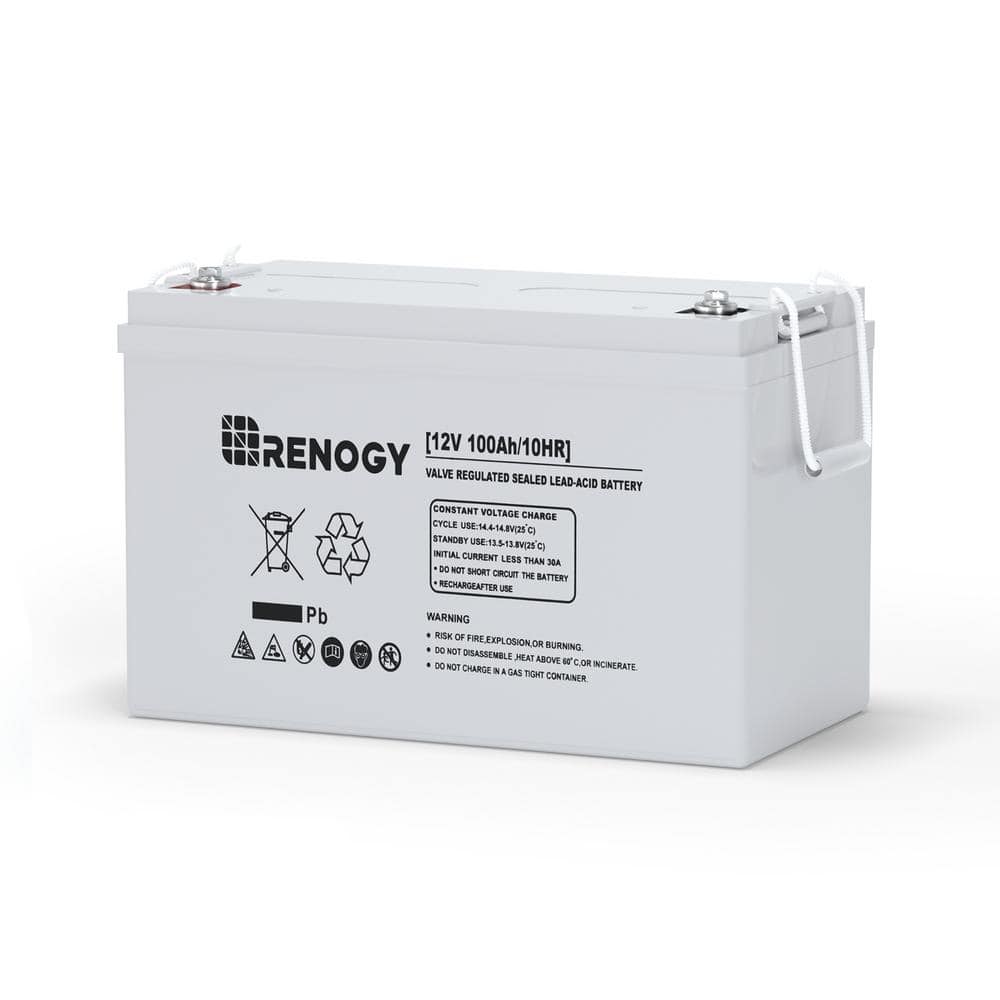
Renogy 12V 100Ah AGM Deep Cycle Battery
Excellent vibration resistance, maintenance-free, Group 31 size fits most boats; 4.6 stars from 5k+ reviews.
Best for: Budget-friendly for trolling motors under 55lb thrust.
Price Range: $190-$220
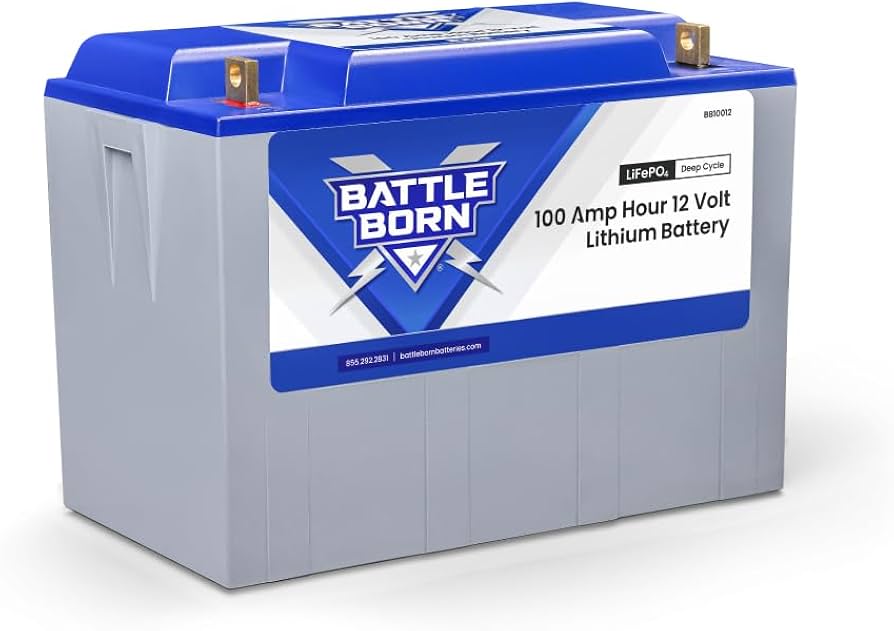
Battle Born BB10012 12V 100Ah LiFePO4
Ultra-light (31lbs), 3500+ cycles, built-in BMS; top for serious anglers.
Best for: Multiple batteries or weight-sensitive boats like bass boats.
Price Range: $850-$950
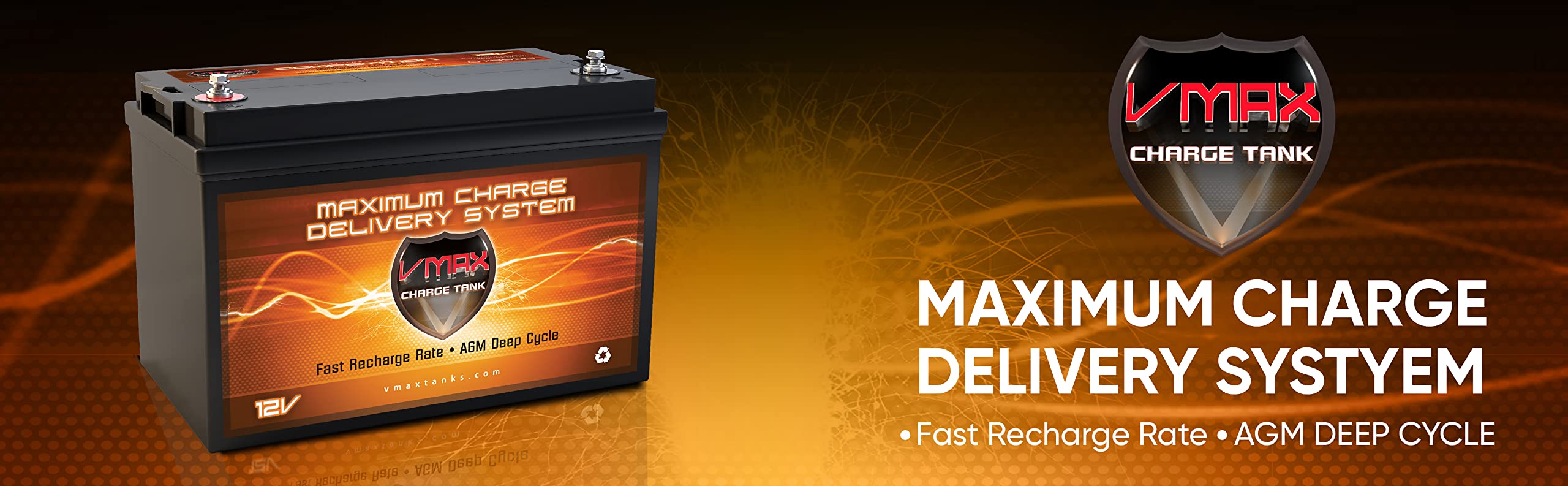
VMAXTANKS SLR125 12V 125Ah AGM
High capacity/value, spill-proof, 5-year warranty; great for larger setups.
Best for: Extended trips with electronics/fish finders.
Price Range: $250-$300
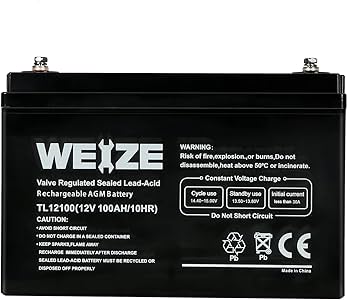
Weize 12V 100Ah AGM Battery
Affordable entry-level with solid RC (170min), marine-rated terminals.
Best for: Small boats/kayaks on tight budget.
Price Range: $160-$190
Dakota Lithium 12V 100Ah Deep Cycle
Rugged for saltwater, 11-year warranty, half the weight of AGM.
Best for: Offshore or harsh marine environments.
Price Range: $700-$800