Flashlights are essential for emergencies, camping, or everyday tasks, but nothing's worse than dead batteries when you need light most. Many users struggle with choosing between rechargeable NiMH AAA batteries and disposable Lithium AAA ones, leading to short runtime, leakage, or poor cold-weather performance.
In this guide, you'll understand the chemistry, pros, cons, and real-world performance of each for flashlights. We'll compare voltage, capacity, lifespan, and more to help you decide based on your needs. No jargon overload—just clear explanations with examples.
Expect to spend 10-15 minutes reading; intermediate knowledge of basic electronics helps but isn't required.
▸What You'll Need
- •A flashlight that uses AAA batteries (for hands-on testing)
- •Multimeter (optional, for voltage checks)
- •Basic knowledge of battery terms like voltage and mAh
Estimated Time: 10-15 minutes
Difficulty: intermediate
▸Step-by-Step Instructions
Step 1: Grasp Battery Basics
Batteries power your flashlight by converting chemical energy to electricity. AAA size is standard (10.5mm diameter, 44.5mm length), but chemistries differ.
NiMH (Nickel-Metal Hydride) are rechargeable; Lithium AAA are usually primary (non-rechargeable). Voltage: NiMH ~1.2V nominal, Lithium 1.5V. Why it matters: Flashlights often expect 1.5V; lower voltage can dim output.
Expect NiMH to feel lighter; Lithium denser for longer life.
💡 Tips:
- •Label batteries by type to avoid mix-ups.
Step 2: Explore NiMH Chemistry
NiMH uses nickel oxide hydroxide and metal hydride. Analogy: Like a reusable water bottle—refill (charge) hundreds of times.
Capacity: 800-1100mAh. Great for frequent use; low self-discharge in premium models (e.g., 10% per month). But they lose charge over storage and perform poorly below freezing.
For flashlights: Ideal for daily carry if you recharge regularly.
⚠️ Warnings:
- •Avoid overcharging; use smart charger.
Step 3: Understand Lithium AAA Chemistry
Lithium primary batteries use lithium-iron disulfide. Analogy: High-performance fuel tank—burns efficiently but one-time use.
Capacity: ~1200mAh at 1.5V. Excellent shelf life (20 years), operates in -40°F to 140°F. Higher energy density means longer runtime per battery.
For flashlights: Perfect for emergencies or storage; consistent brightness.
💡 Tips:
- •Store in cool, dry place for max shelf life.
Step 4: Compare Voltage and Brightness
Flashlights (especially LEDs) draw high current. NiMH's 1.2V starts dimmer; Lithium's 1.5V gives full brightness longer.
Example: In a 200-lumen flashlight, Lithium lasts 2x longer before dimming. Test with multimeter: Fresh NiMH ~1.3V, Lithium ~1.6V.
Why matters: Brighter light when needed.
Step 5: Evaluate Runtime and Capacity
NiMH: 800mAh at 1.2V = ~1Wh energy. Lithium: 1200mAh at 1.5V = ~1.8Wh. Lithium wins for single use.
Rechargeable NiMH shines over 500 cycles. Flashlight test: Lithium 10-15 hours high mode; NiMH 6-8 hours (but recharge saves money).
Cold weather: Lithium unbeatable.
💡 Tips:
- •Match battery type to flashlight specs.
Step 6: Assess Charging, Lifespan, and Cost
NiMH: 300-1000 cycles, $0.10/use after charger. Lithium: 1 use, $0.50-1 each.
Self-discharge: NiMH 20%/year (low-self like Eneloop 10%); Lithium <1%/year. Long-term: NiMH cheaper for heavy use.
Flashlight tip: Pre-charge NiMH pack.
⚠️ Warnings:
- •Never recharge standard Lithium AAA—fire risk!
Step 7: Review Safety and Environmental Impact
NiMH: Leak-prone if over-discharged; recyclable. Lithium: Safer, no leak, but harder to recycle.
Both safe in flashlights if quality brands. Avoid mixing types.
Step 8: Choose Based on Your Flashlight Use
NiMH for: Daily/rechargeable needs, budget. Lithium for: Emergency, cold/extreme, storage.
Hybrid: Keep Lithium for backup, NiMH for EDC. Test in your light for best fit.
💡 Tips:
- •Buy matched sets for even drain.
▸Pro Tips
- •Always use a smart charger for NiMH to prevent memory effect.
- •Store Lithium batteries at room temp for 20-year shelf life.
- •Test runtime in your specific flashlight model.
- •Buy low-self-discharge NiMH like Eneloop for readiness.
- •Label batteries with install date.
- •For high-drain flashlights, prefer Lithium.
- •Recycle properly—NiMH at battery centers.
▸Common Mistakes to Avoid
- •Mixing NiMH and Lithium: Causes uneven drain and damage.
- •Recharging primary Lithium: Explosion/fire risk.
- •Ignoring temperature: NiMH fails in cold; use Lithium.
- •Cheap NiMH: High self-discharge, short life.
- •Over-discharging NiMH: Leads to leakage.
▸Troubleshooting
Problem: Flashlight dims quickly with NiMH
Solution: Check voltage; recharge fully or switch to Lithium for high-drain.
Problem: Batteries leaking
Solution: NiMH issue—clean contacts, avoid deep discharge; use quality brands.
Problem: Poor cold performance
Solution: Switch to Lithium AAA; keep spares warm.
Problem: NiMH not holding charge
Solution: Refresh cycles on charger; replace after 500 uses.
Panasonic Eneloop AAA NiMH Rechargeable Batteries (8-Pack)
Low self-discharge (85% after 1 year), 2100 cycles; ideal for frequent flashlight use.
Best for: Everyday carry flashlights needing rechargeability.
Price Range: $15-20
Energizer Ultimate Lithium AAA Batteries (8-Pack)
20-year shelf life, -40°F performance, leak-proof; top for runtime.
Best for: Emergency kits, outdoor flashlights in extreme conditions.
Price Range: $12-18
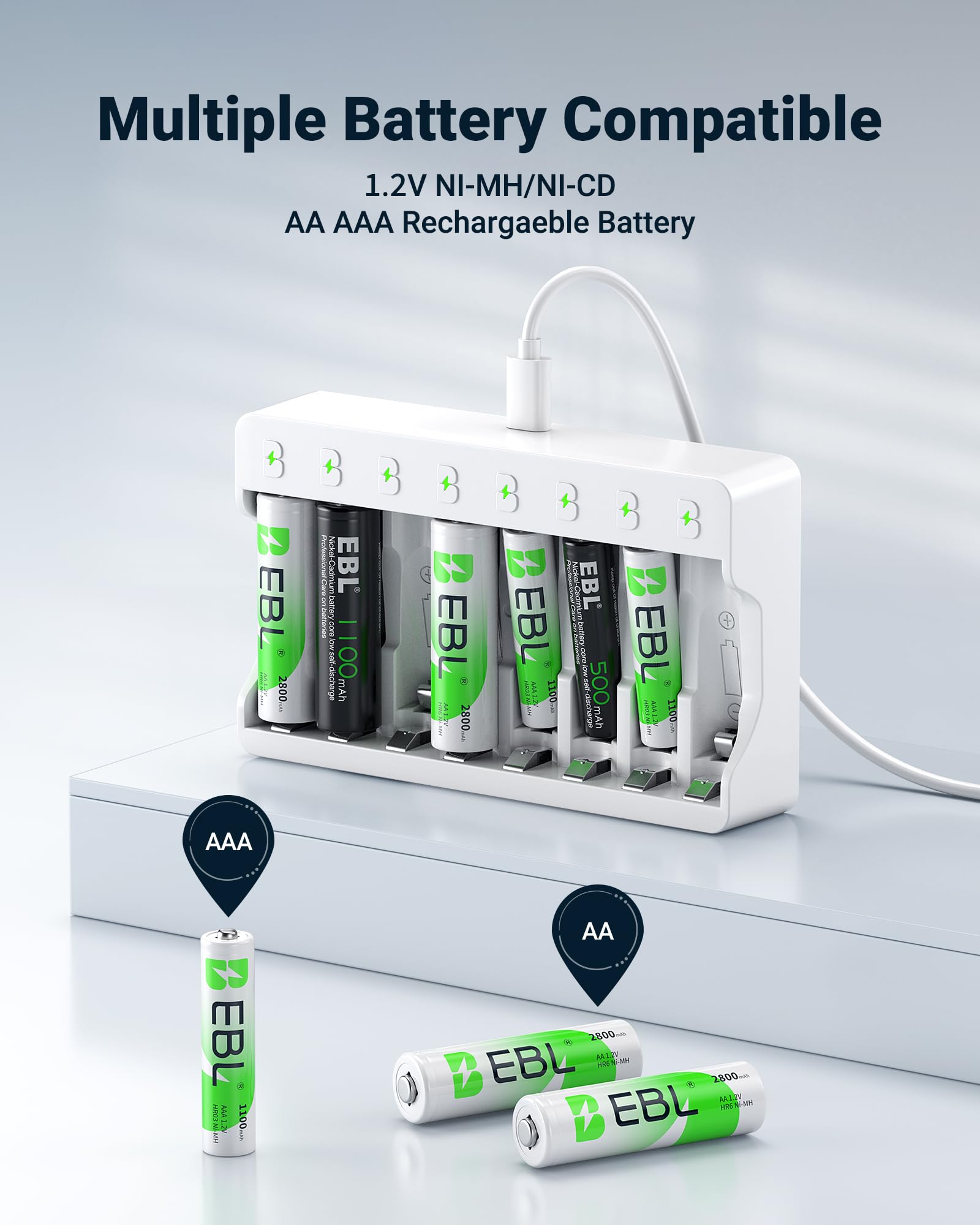
EBL AAA NiMH Batteries with Smart Charger
High 1100mAh capacity, includes charger; great value for beginners.
Best for: Budget rechargeable setup for multiple flashlights.
Price Range: $20-25
Duracell Optimum AAA Lithium Batteries (6-Pack)
Consistent 1.5V power, longer brighter light; reliable brand.
Best for: High-performance tactical flashlights.
Price Range: $10-15