
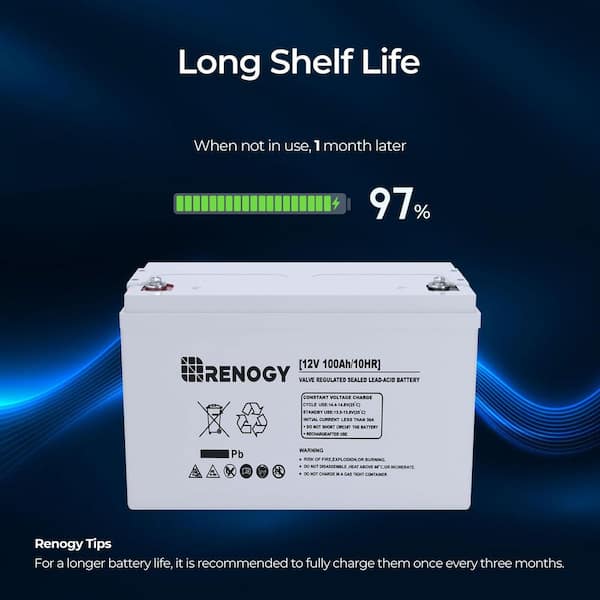
Renogy 12V 100Ah AGM Deep Cycle Battery
Powering trolling motors and electronics on mid-size boats.
$180-$220
Renogy 12V 100Ah AGM Deep Cycle Battery Vibration-resistant AGM design with 400+ cycles at 50% DOD, ideal for marine house banks.
Get the App
Better experience on mobile
Unlock the top marine applications for deep cycle 12V batteries to ensure reliable power for extended boating adventures without starting battery confusion.
Imagine heading out for a multi-day fishing trip on your boat, only to have your lights, fish finder, and bilge pump fail because your battery couldn't handle the deep discharge from house loads. This common pain point hits advanced boaters hard, especially with the rise of power-hungry electronics and electric trolling motors. Deep cycle 12V batteries are engineered to solve this, providing sustained power over starting batteries' short bursts.
In this guide, you'll learn the core differences, ideal marine uses, sizing tips, and integration strategies for deep cycle batteries. We'll break down technical specs like DOD (Depth of Discharge), Peukert's Law, and vibration ratings relevant to boating. Expect to gain actionable knowledge to optimize your electrical system—no prior deep electrical engineering needed, but familiarity with basic DC circuits helps.
This explainer takes 10-15 minutes to read and equips you to select, install, and maintain batteries for reliable off-grid marine power.
Estimated Time: 10-15 minutes Difficulty: advanced
Deep cycle 12V batteries are designed for repeated deep discharges (50-80% DOD) and recharges, unlike starting batteries optimized for high cranking amps (CCA) in short bursts. They use thicker lead plates and denser electrolyte to withstand cycles without sulfation damage.
Key specs: Capacity in Ah (e.g., 100Ah usable at 50% DOD = 50Ah effective), reserve capacity (RC) for runtime under load, and marine vibration ratings (e.g., ABS/USCG standards). Analogy: Starting batteries are sprinters; deep cycles are marathon runners for boats.
Expect 300-1000 cycles depending on type (AGM > Flooded > Gel).
💡 Tips:
⚠️ Warnings:
Starting batteries excel at 500-1000A surges for engines but fail under sustained loads due to thin plates buckling. Deep cycles handle 20-100A continuous for hours.
Comparison table:
| Feature | Deep Cycle | Starting |
|---|---|---|
| DOD | 50-80% | 20% max |
| Cycles | 500+ | 100-200 |
| Vibration | High resistance | Moderate |
In marine dual-battery setups, use deep cycle for 'house' bank.
💡 Tips:
Best for house banks powering fridges, VHF radios, LED lights, autopilots, and fish finders—loads drawing 5-50A over 4-24 hours. Trolling motors (e.g., Minn Kota 55lb thrust) need 40-80Ah deep cycles for 2-5 hours runtime.
Not ideal for engine starting; pair with dedicated starter. Real-world: Overnight anchoring with 100Ah bank runs fridge (2A) for 20+ hours at 50% DOD.
💡 Tips:
⚠️ Warnings:
Calculate: List loads (e.g., fridge 1.5A x 24h = 36Ah; fish finder 0.5A x 12h = 6Ah). Total daily = 100Ah. For 2 days autonomy at 50% DOD: 400Ah bank (4x 100Ah in parallel).
Factor Peukert, temp derating (80% at 0°C), and inverter efficiency (85%). Advanced: Use Coulomb counting via shunt.
💡 Tips:
Pair with alternator (60-120A marine regulator), solar (100-400W MPPT), or shore power chargers. AGM/LiFePO4 charge at 14.4-14.7V absorption.
Monitor equalization for flooded types. Best: Victron or Renogy systems for multi-source charging.
💡 Tips:
⚠️ Warnings:
AGM/Gel: Sealed, vibration-proof; check voltage monthly (12.6V=100%, 12.0V=50%). Flooded: Water levels, equalize quarterly. Expect 3-7 years marine life.
Advanced metric: Internal resistance <5mΩ new.
💡 Tips:
Problem: Battery won't hold charge (voltage drops below 12.2V rested)
Solution: Load test with 50% capacity draw for 15 min; sulfated? Equalize or replace. Check connections.
Problem: Slow cranking on house loads
Solution: Verify parallel wiring polarity; measure voltage sag—under 11.5V under load means weak cell.
Problem: Overheating during charge
Solution: Reduce amperage to 10-20% C/20 rate; faulty regulator? Seek marine electrician.
Problem: Reduced runtime despite full charge
Solution: Recalculate with temperature/Peukert; clean terminals. Pro help if IR >10mΩ.
Vibration-resistant AGM design with 400+ cycles at 50% DOD, ideal for marine house banks.
Best for: Powering trolling motors and electronics on mid-size boats.
Price Range: $180-$220
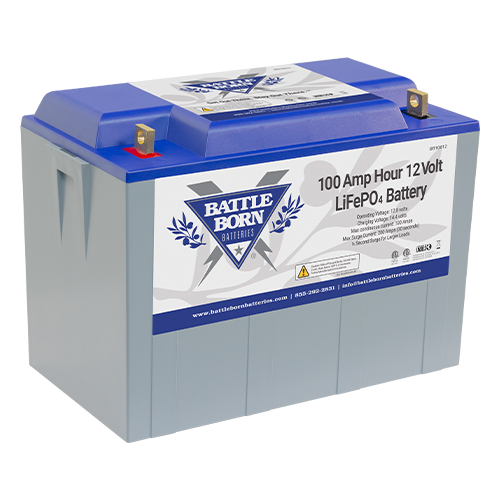
Lightweight (31lbs), 3000+ cycles, built-in BMS for safe deep discharges in harsh marine environments.
Best for: High-demand setups like liveaboard fridges and inverters.
Price Range: $800-$950
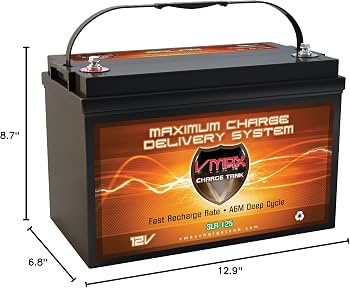
High RC (250+ min) and spill-proof for rough seas, budget-friendly deep cycle option.
Best for: Extended trolling or anchor lighting on budget boats.
Price Range: $250-$300
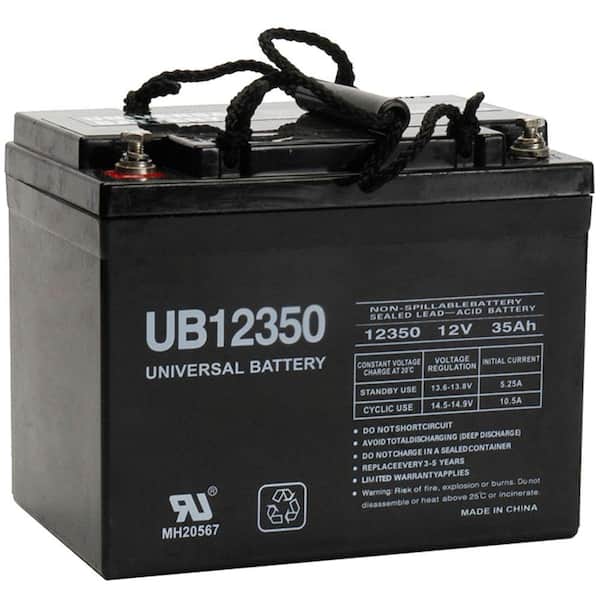
Compact, maintenance-free for smaller auxiliary marine loads with good vibration tolerance.
Best for: Backup for dinghies or small electronics banks.
Price Range: $70-$90
Powering trolling motors and electronics on mid-size boats.
Renogy 12V 100Ah AGM Deep Cycle Battery Vibration-resistant AGM design with 400+ cycles at 50% DOD, ideal for marine house banks.
High-demand setups like liveaboard fridges and inverters.
Battle Born BB10012 100Ah LiFePO4 Battery Lightweight (31lbs), 3000+ cycles, built-in BMS for safe deep discharges in harsh marine environments.
Extended trolling or anchor lighting on budget boats.
VMAXTANKS SLR125 12V 125Ah AGM Battery High RC (250+ min) and spill-proof for rough seas, budget-friendly deep cycle option.
Backup for dinghies or small electronics banks.
Universal Power Group UB12350 12V 35Ah AGM Compact, maintenance-free for smaller auxiliary marine loads with good vibration tolerance.