Engine overheating is a nightmare for any driver—warped heads, blown gaskets, and repair bills over $1,000 are common. In hot weather, traffic, or towing, your cooling system works overtime, and the wrong antifreeze mix can spell disaster. This guide breaks down antifreeze science so you can choose mixtures that raise boiling points and maintain peak performance.
You'll learn coolant types, ideal ratios, why 50/50 often wins, and pro tips for mixing. No more guessing—get actionable knowledge to protect your engine. Expect 10-15 minutes to read and apply basics; intermediate DIYers will grasp it quickly.
By the end, you'll confidently select and mix antifreeze to prevent overheating, extending engine life.
▸What You'll Need
- •Vehicle owner's manual (for OEM coolant spec)
- •Hydrometer or refractometer (to test concentration)
- •Distilled water (required for mixing)
- •Antifreeze concentrate or pre-mix (vehicle-specific)
- •Funnel and gloves (optional for safe handling)
Estimated Time: 10-15 minutes to read and understand; 30-60 minutes to test/mix
Difficulty: intermediate
▸Step-by-Step Instructions
Step 1: Understand How Engines Overheat
Engines generate massive heat from combustion—up to 4,000°F inside cylinders. The cooling system circulates coolant to absorb, transfer, and radiate this heat via radiator and fans. Overheating happens when coolant boils, loses efficiency, or circulation fails.
Pure water boils at 212°F (100°C), but engines run 195-220°F. Without antifreeze, vapor pockets (hot spots) form, causing damage. Antifreeze raises the boiling point and adds anti-corrosion agents.
Expect: Clear grasp of why mixtures matter—wrong ones lead to boil-over.
💡 Tips:
- •Think of coolant as engine 'blood'—it must flow freely without boiling.
Step 2: Know the Types of Antifreeze
Antifreeze comes in IAT (Inorganic Additive Technology, green, older vehicles), OAT (Organic Acid Technology, orange/red, newer GM/Ford), HOAT (Hybrid, gold/yellow, Asian/Euro cars), and universal (multi-vehicle).
Each has specific chemistry for metals in your engine. Mismatching causes gelling or corrosion. Check manual for silicate-free, phosphate-free, etc.
Why it matters: Wrong type accelerates wear, indirectly causing overheating via clogs.
⚠️ Warnings:
- •Never mix types—can form sludge.
Step 3: Master Mixing Ratios
Antifreeze (ethylene or propylene glycol) mixed with water: 50/50 raises boiling point to 265°F (129°C) at 15 psi (standard cap). 60/40 goes to 275°F but reduces freeze protection.
Use distilled water only—tap water minerals cause deposits. Pre-mixed 50/50 is convenient but costlier.
Expect: Protection up to -34°F freeze/-265°F boil for 50/50.
💡 Tips:
- •50/50 is gold standard for most climates and overheating prevention.
Step 4: Choose Mixtures for Overheating Prevention
Best: 50/50 OAT or HOAT for modern engines—optimal heat transfer, no overheating in 100°F+ temps. For racing/hot climates: 60/40 or waterless coolants (e.g., Evans) boiling at 375°F.
Avoid >70% antifreeze (poor heat transfer) or >30% water (low boil point).
Why: Balances boil protection, lubrication, and corrosion inhibition.
Step 5: Test Your Current Mixture
Use a coolant hydrometer: Squeeze bulb, draw sample, float shows % glycol. Refractometer is precise (glycol scale).
Aim for 45-60% antifreeze. Low? Top up. High? Dilute with distilled water.
Expect: Quick 2-minute test; repeat annually.
💡 Tips:
- •Test cold engine for accuracy.
⚠️ Warnings:
- •Hot coolant sprays—let cool first.
Step 6: Flush and Refill Properly
Drain old coolant, flush with water/distilled vinegar mix, refill 50/50. Burp air by running with cap off/heater on.
Why: Fresh mix prevents overheating from degraded coolant (loses boil protection after 2-5 years).
Step 7: Monitor and Maintain
Check levels weekly in summer, pressure cap (15-18 psi), thermostat, radiator fins. Change every 30k miles/2 years.
Expect: No overheating with routine care.
▸Pro Tips
- •Always use distilled water—saves radiator cleaning later.
- •Add Water Wetter (surfactant) to 50/50 for 10-20°F cooler temps.
- •In extreme heat, upgrade to aluminum-safe HOAT.
- •Label reservoir with mix date/type.
- •Use OEM-spec for warranties.
- •Pre-mix in bucket for even blend.
- •Run heater during burping to expel air pockets.
▸Common Mistakes to Avoid
- •Using tap water: Minerals scale up system, restricting flow and causing hot spots.
- •Mixing antifreeze types: Forms gel, clogs passages leading to overheat.
- •Overfilling antifreeze (>60%): Reduces heat transfer, hotter engine.
- •Ignoring cap pressure: Low psi drops boil point—replace yearly.
- •Skipping flush: Old coolant contaminates new, shortens life.
▸Troubleshooting
Problem: Coolant boils over despite mix
Solution: Check thermostat stuck closed or fan relay. Verify 50/50 with tester. Seek pro if head gasket suspected.
Problem: Overheating only when towing
Solution: Upgrade to 60/40 mix or larger radiator. Ensure airflow not blocked.
Problem: Cloudy coolant after mix
Solution: Incompatible types—full flush required. Use universal next time.
Problem: Low boiling point reading
Solution: Dilute with antifreeze concentrate. Retest.
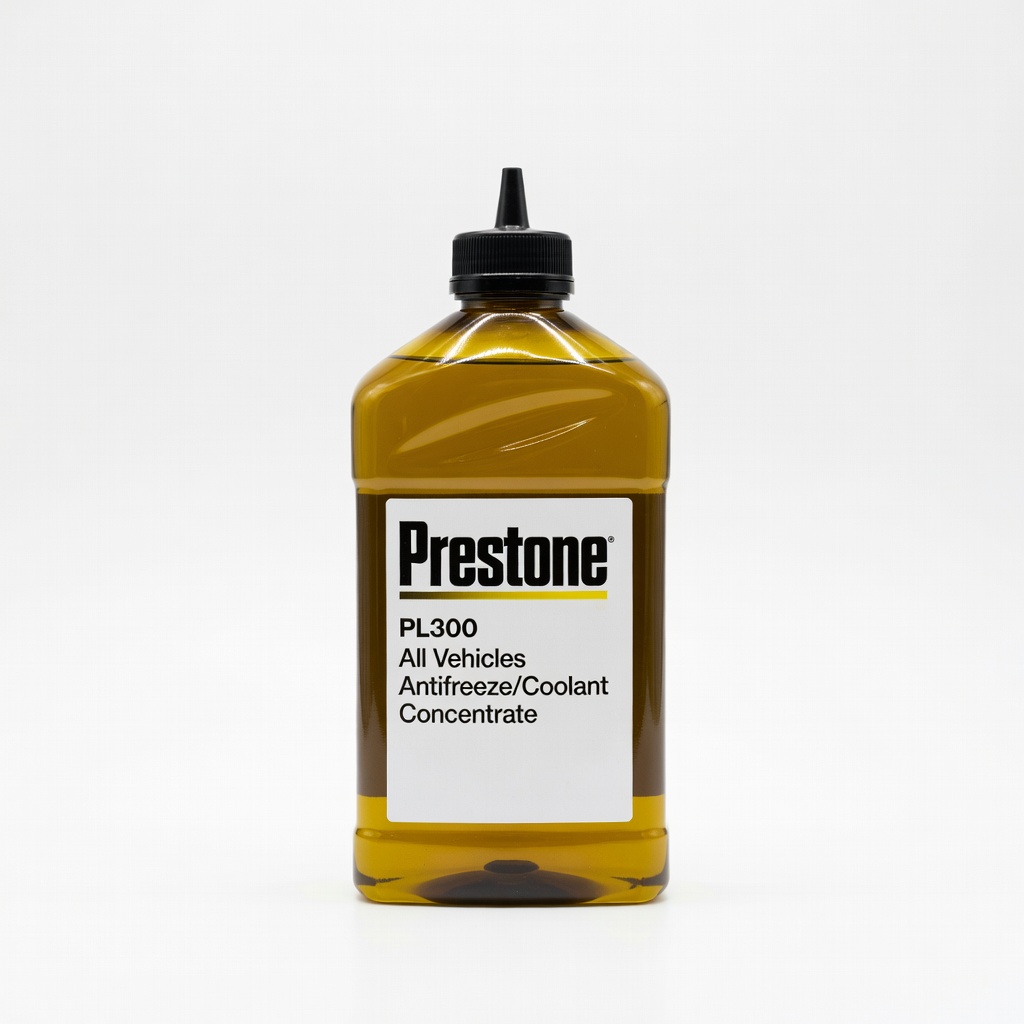
Prestone PL300 All Vehicles Antifreeze/Coolant Concentrate
Universal OAT formula compatible with all makes, excellent boil protection in 50/50 mix.
Best for: Daily drivers prone to summer overheating; mix your own ratio.
Price Range: $18-22 per gallon
Peak Global Lifetime 50/50 Prediluted Antifreeze/Coolant
Ready-to-use 50/50 with no silicate/phosphate, ideal for overheating prevention without mixing hassle.
Best for: Quick top-offs or full refills in mixed fleets.
Price Range: $14-18 per gallon
Valvoline Zerex G-05 Antifreeze/Coolant 50/50
HOAT for European/Asian vehicles, superior corrosion protection and high boil point.
Best for: Chrysler/Ford imports overheating in traffic.
Price Range: $20-25 per gallon
Evans Waterless Coolant
No-water formula boils at 375°F, ultimate overheating prevention for high-performance.
Best for: Track cars or desert towing.
Price Range: $30-40 per quart