Ever struggled to remove a rusty, stuck bolt that snaps or strips under torque? Bolt seizure is a nightmare for mechanics, DIYers, and pros alike, leading to damaged parts, wasted time, and costly repairs. Anti-seize compounds are your frontline defense, preventing this by creating a barrier against corrosion, heat, and friction.
In this guide, you'll learn what causes bolt seizure, how anti-seize works, the best compounds for different scenarios, and pro application tips. Whether you're working on engines, exhausts, or marine hardware, you'll gain the knowledge to choose and use anti-seize effectively. Expect a straightforward explainer—no hands-on work needed, just 15 minutes to master the concept.
By the end, you'll prevent seizure proactively, saving headaches on your next project.
▸What You'll Need
- •Basic knowledge of fasteners and metals (e.g., stainless steel, aluminum, titanium)
- •Familiarity with high-heat or corrosive environments (optional for deeper understanding)
- •Access to bolts/nuts for visualization (optional)
Estimated Time: 15-20 minutes
Difficulty: intermediate
▸Step-by-Step Instructions
Step 1: Understand Bolt Seizure Basics
Bolt seizure, or galling, happens when metal threads cold-weld under pressure, friction, and heat, fusing parts together. It's common in stainless steel, aluminum, and titanium fasteners due to their softness and oxide layers breaking down.
Why it matters: Seized bolts can ruin jobs—think exhaust manifolds or bike frames. Without prevention, torque can exceed 2x normal, causing stripping or breakage.
Expect to recognize signs like 'creaking' during install or impossible removal later.
💡 Tips:
- •Visualize with a photo of a snapped bolt to see real damage.
Step 2: Identify Common Causes of Seizure
Key culprits: High temperatures (over 500°F melts lubricants), corrosion (rust/oxidation in wet environments), vibration (loosens then retightens harshly), and metal incompatibility (e.g., steel on aluminum).
Analogy: Like two gears grinding without oil—surfaces bond at a microscopic level. In engines or marine apps, this hits hardest.
What to expect: Most seizures occur after 1-2 years of exposure without protection.
⚠️ Warnings:
- •Don't ignore dissimilar metals; they accelerate galling.
Step 3: Learn What Anti-Seize Compounds Are
Anti-seize is a grease-like paste with solid lubricants (graphite, copper, nickel, or synthetics) suspended in a carrier oil. It fills thread gaps, reducing metal-to-metal contact.
Core function: Provides lubrication up to 2400°F, resists washout, and prevents corrosion. Not a threadlocker—it's for disassembly ease.
Types include brush-top bottles for precision.
💡 Tips:
- •Think of it as 'Teflon for bolts'—slippery shield.
Step 4: See How Anti-Seize Prevents Seizure
It works via high-solids content (30-70%): Particles like copper flake shear under torque, maintaining a film. Inert chemistry blocks oxygen/moisture.
Mechanism breakdown:
- •Install: Coats threads, lowers friction (torque drops 20-50%).
- •Service: Shields from heat cycles, allowing easy removal.
Analogy: Like butter between bread slices—prevents sticking even when squished.
Step 5: Explore Types of Anti-Seize Compounds
| Type | Best For | Temp Range | Key Additive |
|---|
| Copper | Exhausts, brakes | -30°F to 1800°F | Copper flakes |
| Nickel | Stainless steel | -65°F to 2400°F | Nickel powder |
| Food-Grade | Food processing | -30°F to 1800°F | Synthetic/H1 |
| Marine | Boats, salt water | -30°F to 2000°F | Aluminum complex |
| Ceramic | Extreme purity | -30°F to 2300°F | Ceramics |
Choose based on material/environment to avoid reactions (e.g., no copper near titanium).
💡 Tips:
- •Nickel for SS to prevent galvanic corrosion.
⚠️ Warnings:
- •Avoid copper in O2 sensors—contaminates.
- •Check specs for electrical conductivity needs.
Step 6: Master Application Best Practices
Apply a thin film—pea-sized dab per inch of thread. Brush on male/female threads, avoiding excess (wastes product, attracts dirt).
Steps: Clean surfaces, apply sparingly, reassemble with correct torque. Wipe excess.
Why thin? Thick layers sling off under vibration.
Step 7: Know When and Where to Use It
Use on pre-assembly for studs, exhaust bolts, spark plugs, flange bolts. Skip blind holes or where contamination matters (e.g., engines with PCV).
Pro rule: Any fastener exposed to heat >300°F or corrosion.
💡 Tips:
- •Reapply every service interval.
▸Pro Tips
- •Store upright in cool, dry place—lasts 5+ years.
- •Use a dedicated brush to avoid contamination.
- •Torque 10-20% lower with anti-seize for same clamp load.
- •Mix sparingly with assembly lube for hybrid protection.
- •Label fasteners post-application for records.
- •Test on scrap bolts first for compatibility.
- •For pros: Aerosol versions for quick shop use.
▸Common Mistakes to Avoid
- •Applying too much—causes slippage and contamination.
- •Using wrong type (e.g., copper on SS)—accelerates corrosion.
- •Skipping surface prep—dirt traps moisture underneath.
- •Ignoring torque adjustment—overtightens and deforms.
- •Using WD-40 instead—evaporates, leaves no protection.
▸Troubleshooting
Problem: Bolt still seizes after anti-seize.
Solution: Check for over-torque, wrong compound, or contamination. Clean/reapply nickel-grade for SS; use heat (torch) for extraction.
Problem: Anti-seize contaminates nearby parts.
Solution: Wipe excess immediately; use pure synthetic grades in sensitive areas like engines.
Problem: Product dries out or separates.
Solution: Stir well before use; store sealed below 80°F. Discard if watery.
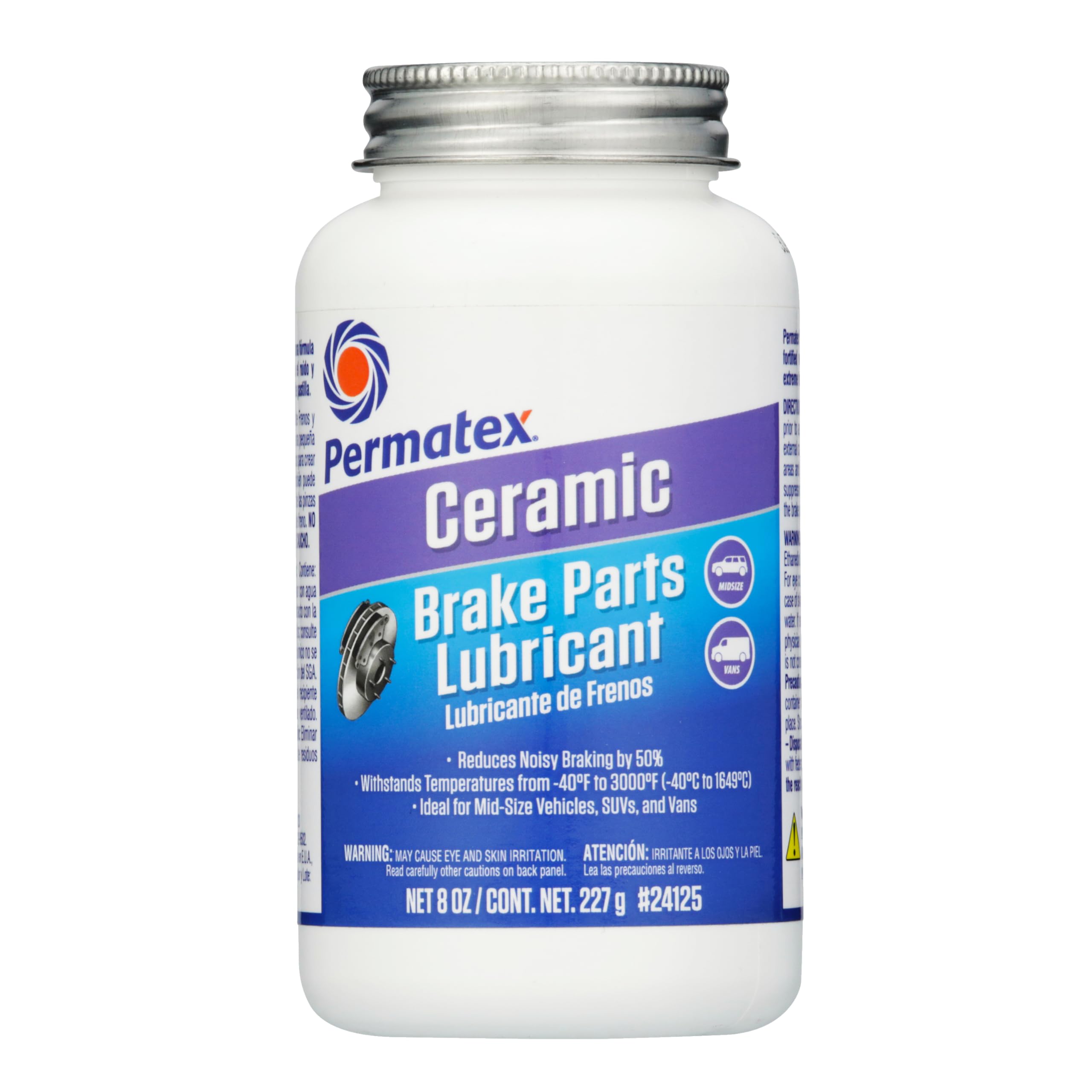
Permatex 80078 Anti-Seize Lubricant, 8 oz
Versatile copper-based formula excels in high-heat automotive apps like exhausts; brush-top for easy, mess-free application.
Best for: General purpose: brakes, manifolds, general bolts.
Price Range: $10-$12
Loctite Copper Anti-Seize Lubricant, 7 oz
Proven reliability with copper flakes for seizure prevention up to 1800°F; resists washout in vibration-heavy uses.
Best for: Exhaust systems, flange bolts, heavy equipment.
Price Range: $12-$15
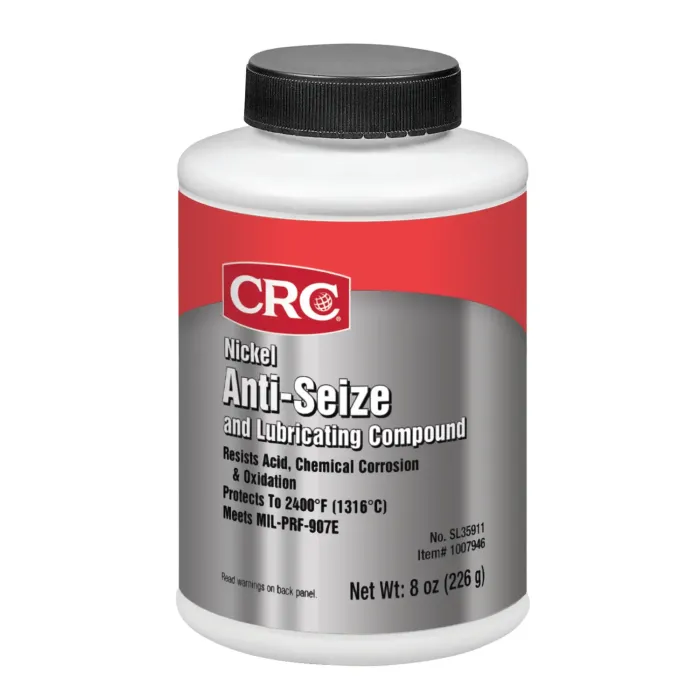
CRC Pure Nickel Anti-Seize Compound, 4 oz
Nickel-based for stainless steel and high-corrosion; non-reactive, electrical conductive for sensors.
Best for: Stainless fasteners, marine, aerospace.
Price Range: $15-$20
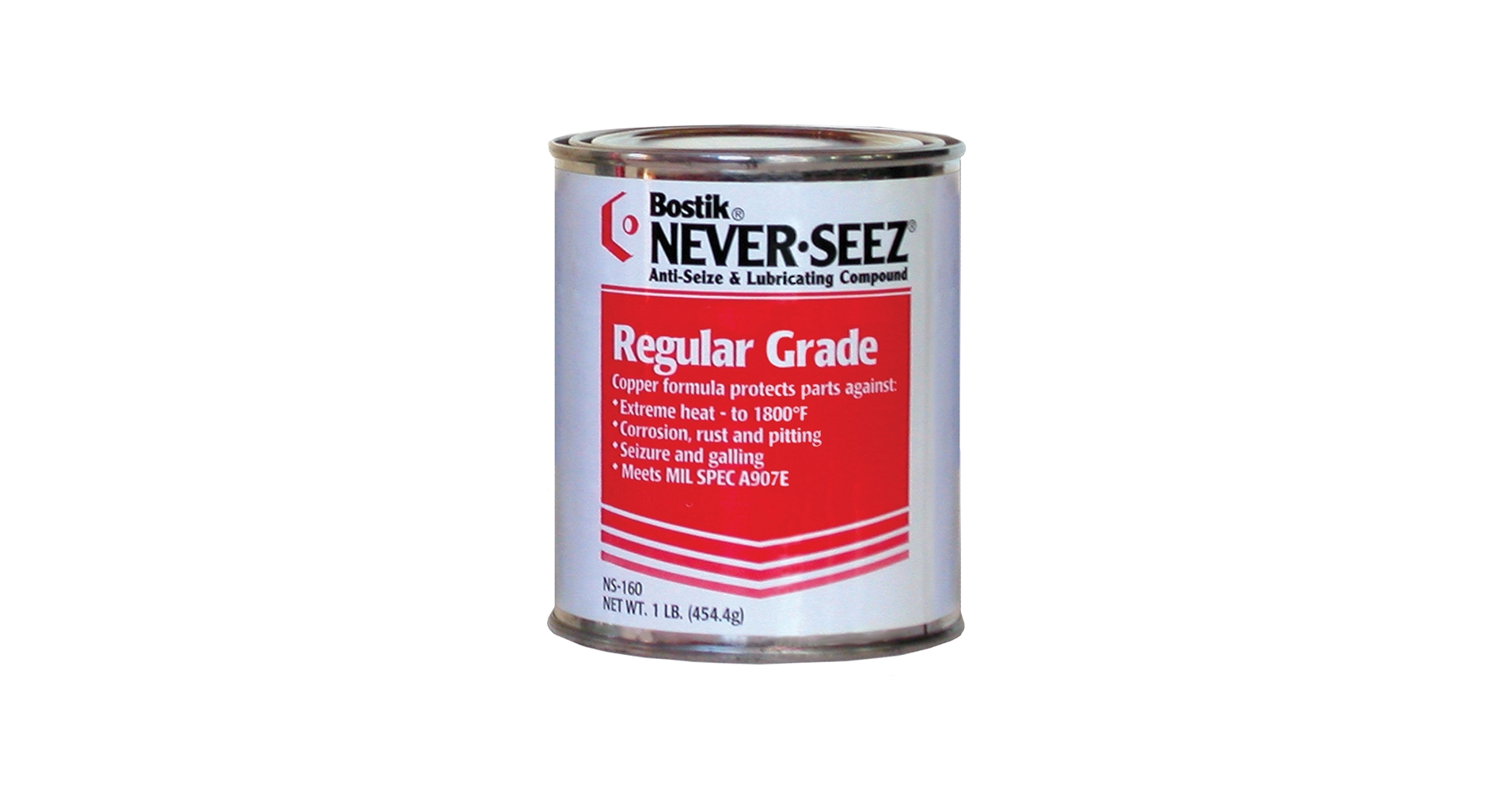
Never-Seez NNS1 Regular Grade, 1 lb
Premium synthetic with graphite; ultra-high temp (2400°F) and pressure resistance for industrial pros.
Best for: Engines, turbines, extreme conditions.
Price Range: $25-$30
Permatex 24125 Food Grade Anti-Seize, 4 oz
NSF H1-rated, synthetic for food-safe apps; clean and non-toxic.
Best for: Food processing equipment, beverage lines.
Price Range: $18-$22