
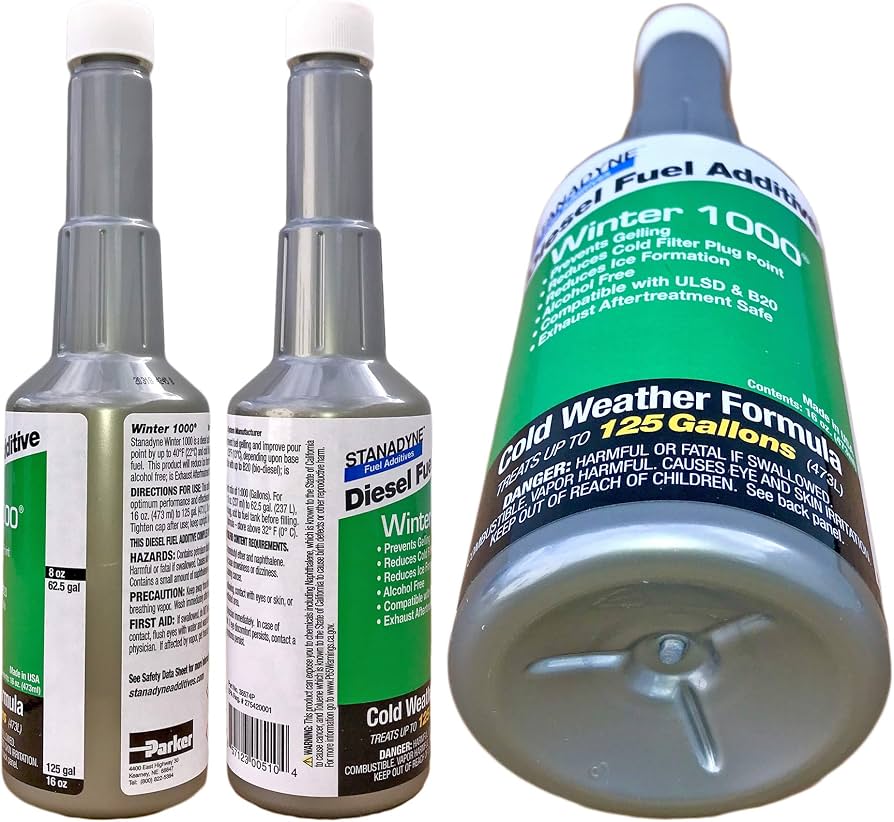
Stanadyne Winter Diesel Fuel Additive
Extreme winters (-20°F+), large tanks; preventive use.
$15.99
Stanadyne Winter Diesel Fuel Additive Lowers pour point to -28°F with proven polymeric PPDs; trusted by fleets for 50+ years.
Get the App
Better experience on mobile
Learn how anti-gel additives work, top picks, and step-by-step usage to keep your diesel fuel flowing in freezing temps.
Imagine this: It's 5 AM, snowing hard, and your diesel truck won't start because the fuel has turned to jelly. Diesel gelling is a nightmare for truckers, farmers, and anyone relying on diesel engines in cold climates, causing millions in downtime each winter.
In this guide, you'll understand what causes gelling, how additives prevent it, the best types to use, and exactly how to apply them. Whether you're prepping for sub-zero temps or dealing with an emergency, you'll get actionable knowledge to protect your fuel system—no more gelled lines or failed starts.
Expect a straightforward explainer: We'll break down the science simply, cover real-world application (under 30 minutes to implement), and recommend proven products. Perfect for intermediate diesel users familiar with basic maintenance.
Estimated Time: 10-15 minutes to read; 5-10 minutes to apply Difficulty: intermediate
Diesel gelling happens when paraffin wax in ultra-low sulfur diesel (ULSD) fuel crystallizes in cold weather, forming a slushy gel that clogs filters and lines. Think of it like honey thickening in the fridge—normal at room temp, but solid below 32°F (0°C).
This isn't just inconvenient; it stops fuel flow entirely, stranding you. Modern ULSD gels around 15-20°F (-9 to -6°C) without treatment. You'll learn to spot early signs like sluggish starts or cloudy fuel.
Why it matters: Knowing this prevents panic—gelling is predictable and preventable.
💡 Tips:
Cold temps (below 20°F) cause natural wax in diesel to precipitate. ULSD has less lubricity and lower natural cold flow properties than older fuels. Add moisture or biodiesel blends, and gelling accelerates.
Analogy: Like shaking a snow globe—the flakes (wax) clump when cold. Cloud point (wax appears) is ~15°F, pour point (stops flowing) ~10°F lower.
Expect: Regional variations; Midwest winters hit harder than coastal areas.
⚠️ Warnings:
Anti-gel additives are polymers that coat wax crystals, keeping them tiny and suspended—like antifreeze for fuel. They lower the pour point by 20-50°F, preventing clogging.
Two main mechanisms: Nucleation (creates many small crystals) and Dispersion (keeps them from sticking). Some also remove water.
Result: Fuel stays pumpable to -20°F or lower, depending on the product.
💡 Tips:
All-season: Prevent gelling + clean injectors (e.g., cetane boosters). Use year-round.
Winter-specific: Max cold protection (-40°F+), for extreme climates.
Emergency (de-gellers): Dissolve existing gel—use only if already gelled.
Choose based on your lowest expected temp; check labels for pour point depression.
Seek polymeric pour point depressants (PPDs) like ethylene-vinyl acetate (EVA). Avoid cheap fillers.
Bonus: Look for cetane improvers (boosts combustion), biocides (kill algae), and lubricity enhancers (protects pumps).
Pro tip: ASTM D975 certified products meet diesel standards.
💡 Tips:
Match to tank size, climate, and fuel type. For trucks (20-100 gal), concentrated formulas save money. Test local diesel quality first.
Factors: Temp rating, treat rate (e.g., 1 oz/10 gal), compatibility with biodiesel.
Expect: Over-treatment wastes money; under-treatment fails.
⚠️ Warnings:
Most require 1:500 to 1:1000 ratio (e.g., 16 oz treats 100 gal). Use formula: (Tank size in gal × oz per gal) from label.
Add before cold snap; re-dose every fill-up in winter.
Why: Precise dosing maximizes protection without residue.
For emergencies: Add de-geller, prime filter, crank.
Safety: Ventilate, no sparks.
💡 Tips:
Jar test: Mix sample fuel + additive, freeze overnight. If pourable, success.
Monitor: Clear filters, easy starts. Change fuel filter if clogged.
Real-world: Protection lasts 90-120 days or until ~50% fuel used.
Store additives above 32°F. Rotate stock. Combine with full tank (minimizes condensation), garage parking, and filter changes.
Seasonal switch: All-season in fall, winter formula Dec-Feb.
Problem: Fuel still gels after treatment
Solution: Use emergency de-geller like Diesel 9-1-1, replace filter, warm tank. Check dosage and temp rating.
Problem: Engine smokes or knocks post-treatment
Solution: Overdosed—dilute with fresh fuel, run cycles. Switch brands.
Problem: Additive separates in tank
Solution: Poor mixing—add to empty tank next time. Shake well.
Problem: No improvement in cold starts
Solution: Battery weak or glow plugs faulty—test electricals. Seek mechanic.
Lowers pour point to -28°F with proven polymeric PPDs; trusted by fleets for 50+ years.
Best for: Extreme winters (-20°F+), large tanks; preventive use.
Price Range: $15.99
Depresses pour point 40°F, includes anti-icing; economical for regular use.
Best for: Moderate winters (0-20°F), trucks/SUVs; every fill-up.
Price Range: $12.99
Emergency de-geller dissolves existing crystals fast; thaws in minutes.
Best for: Already gelled fuel crisis; portable tanks.
Price Range: $9.49
All-season with -30°F anti-gel, cleans + lubricates; 1 oz/10 gal ratio.
Best for: Year-round maintenance, biodiesel blends.
Price Range: $24.97
Superior lubricity + anti-gel to -20°F; independent tests show best performance.
Best for: High-mileage diesels, pumps/injectors protection.
Price Range: $34.95
Extreme winters (-20°F+), large tanks; preventive use.
Stanadyne Winter Diesel Fuel Additive Lowers pour point to -28°F with proven polymeric PPDs; trusted by fleets for 50+ years.
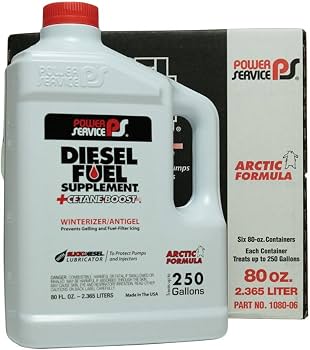
Moderate winters (0-20°F), trucks/SUVs; every fill-up.
Power Service Diesel Fuel Winterizer Depresses pour point 40°F, includes anti-icing; economical for regular use.
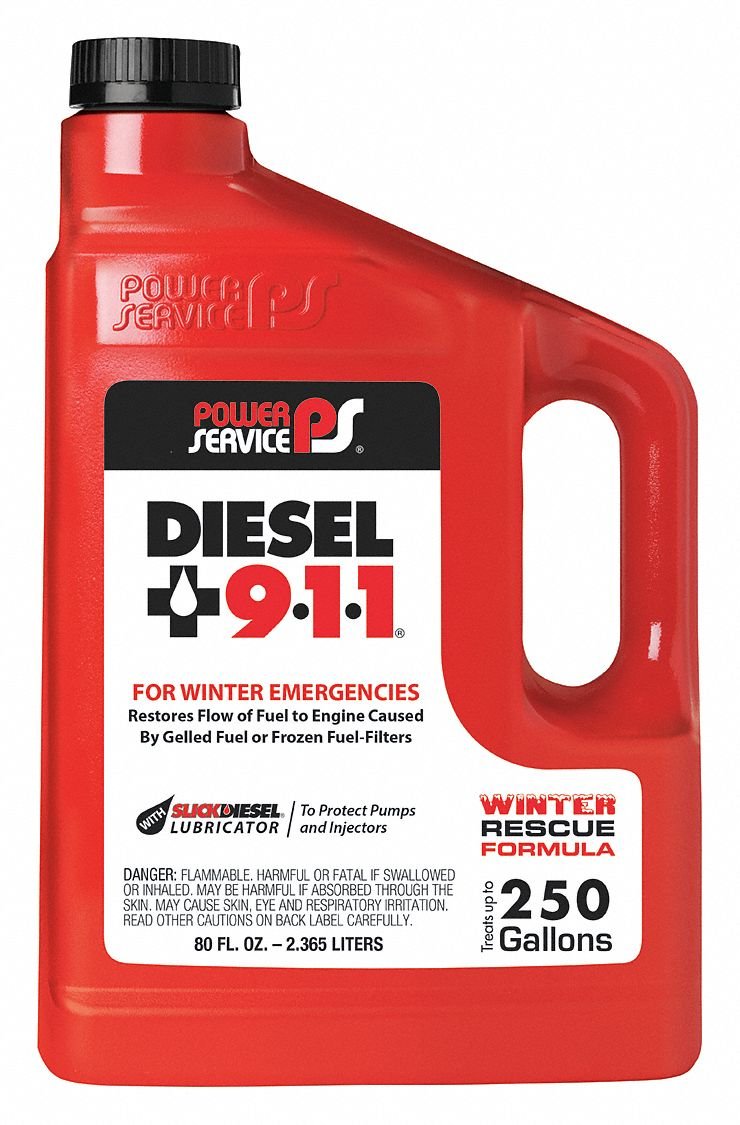
Already gelled fuel crisis; portable tanks.
Power Service Diesel 9-1-1 Emergency de-geller dissolves existing crystals fast; thaws in minutes.
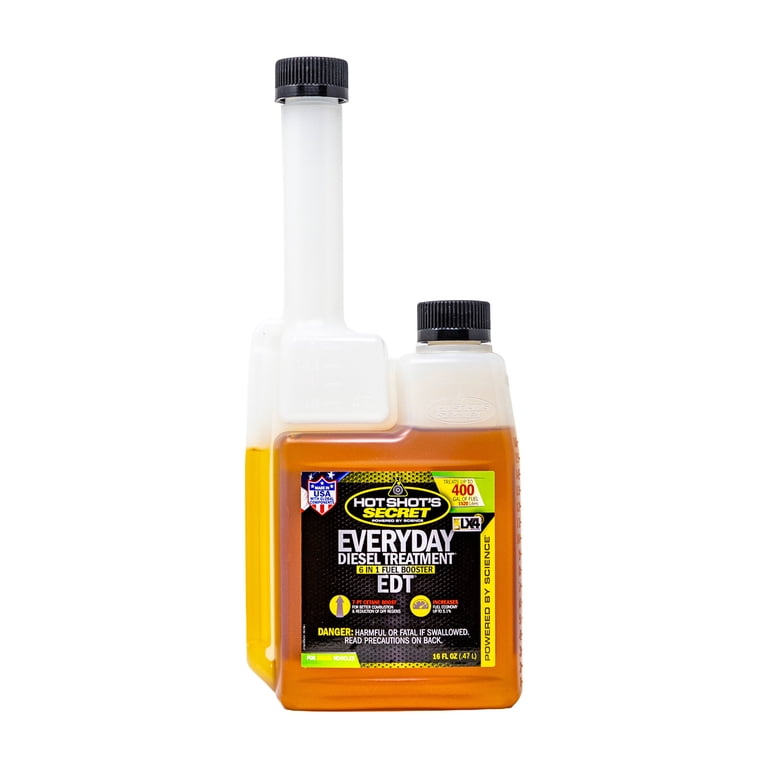
Year-round maintenance, biodiesel blends.
Hot Shot's Secret Everyday Diesel Treatment All-season with -30°F anti-gel, cleans + lubricates; 1 oz/10 gal ratio.
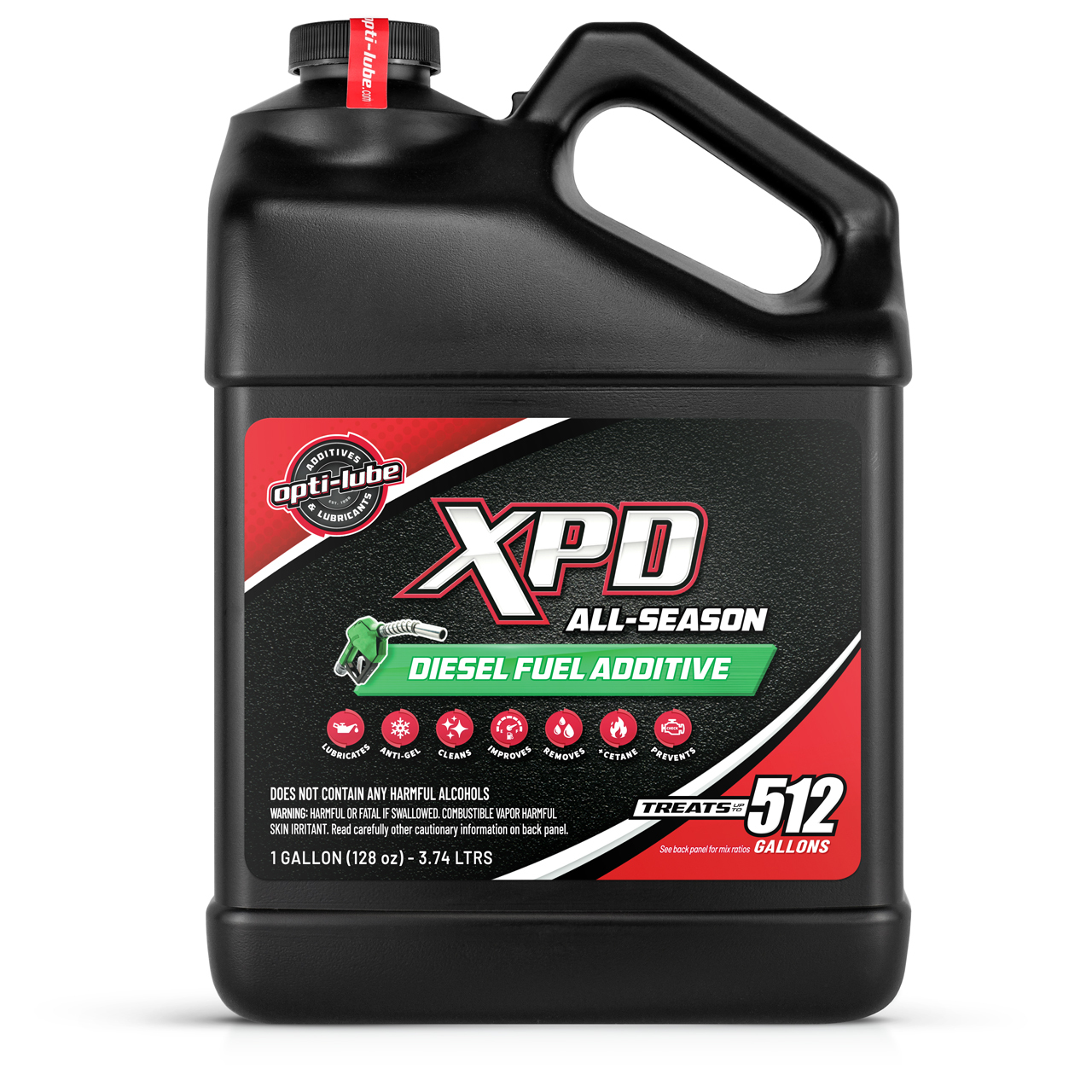
High-mileage diesels, pumps/injectors protection.
Opti-Lube XPD Diesel Additive Superior lubricity + anti-gel to -20°F; independent tests show best performance.