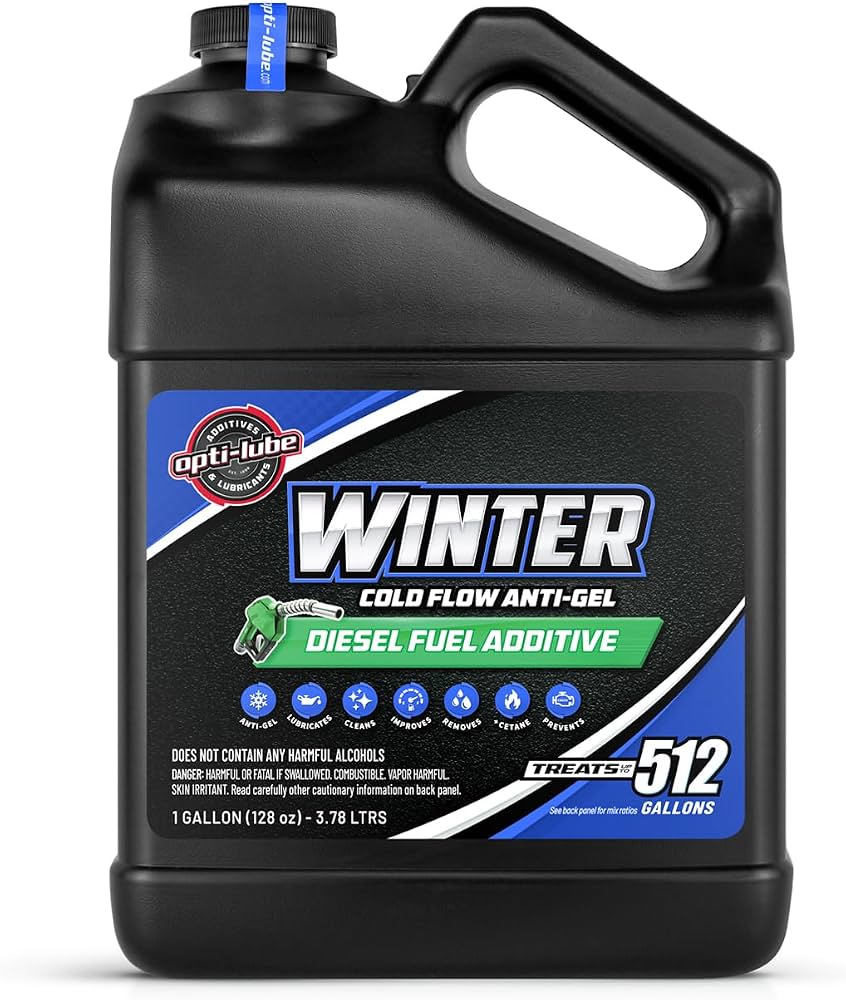
Imagine starting your diesel truck on a frigid winter morning only to find it won't crank because the fuel has turned into a slushy gel. Diesel fuel gelling is a common nightmare for truck owners, farmers, and fleet operators in cold climates, leading to breakdowns, towing costs, and lost time. This guide breaks down the science, solutions, and best practices to keep your diesel flowing smoothly.
You'll learn what causes gelling, how additives prevent it, the different types available, and step-by-step guidance on selecting and using them effectively. No more guessing—gain the knowledge to winterize your fuel system confidently. This explainer is designed for intermediate users familiar with basic vehicle maintenance, taking just 15-20 minutes to master.
By the end, you'll know exactly which additives work best and how to apply them for reliable winter performance.
▸What You'll Need
- •Basic knowledge of diesel engines and fuel systems
- •Access to your vehicle's fuel tank or filler neck
- •Measuring cup or dispenser for additives (optional but recommended)
- •Manufacturer's fuel specs (check owner's manual)
- •Gloves and eye protection for safe handling
Estimated Time: 15-20 minutes
Difficulty: intermediate
▸Step-by-Step Instructions
Step 1: Understand What Diesel Fuel Gelling Is
Diesel fuel gelling occurs when paraffin wax naturally present in diesel solidifies in cold temperatures, forming crystals that clog fuel filters and lines. The cloud point (when wax first appears, typically 20-30°F or -6 to -1°C) and pour point (when fuel stops flowing, around 0-10°F or -18 to -12°C) determine vulnerability.
This isn't just inconvenient—it's a showstopper. Fuel stops moving, starving the engine of diesel. Modern ultra-low sulfur diesel (ULSD) is more prone due to less natural lubricity and wax content.
Expect visible slush in filters first; untreated, it escalates to no-start conditions.
💡 Tips:
- •Check your fuel's cloud point rating on spec sheets from suppliers.
Step 2: Why Cold Weather Causes Gelling
Cold slows molecular movement, allowing wax to precipitate. Water contamination worsens it by freezing into ice crystals. Factors like #1 diesel (winter blend, lower cloud point) vs. #2 (summer blend) matter—many areas switch late.
Analogy: Think of diesel as vegetable oil cooling into lard. Additives act like a chemical defroster, keeping it fluid.
Without prevention, expect issues below 20°F; additives can lower pour points by 20-50°F.
⚠️ Warnings:
- •Don't confuse gelling with contamination—dirty fuel gels differently.
Step 3: How Anti-Gel Additives Work
Anti-gel additives modify wax crystals to stay small and dispersed, preventing clogs. They lower cloud and pour points chemically. De-icers (like isopropyl alcohol or glycol ethers) separate water to prevent ice.
Two modes: Preventative (year-round use) vs. Emergency (for already gelled fuel). Most are concentrated—one ounce treats 10-25 gallons.
Results: Fuel stays pumpable to -20°F or lower, restoring flow quickly.
💡 Tips:
- •Use alcohol-free formulas to avoid corrosion in modern systems.
Step 4: Types of Anti-Gel Additives
- •Pour Point Depressants (PPD): Core anti-gellers, modify wax shape.
- •De-icers: Handle water issues.
- •All-in-One: Combine anti-gel, cetane boost, lubricity (e.g., for ULSD).
- •Emergency Thaw: High-potency for frozen fuel.
Choose based on climate: Mild winters need basic PPDs; extreme (-30°F) require heavy-duty.
💡 Tips:
- •Multi-functional additives save money long-term.
Step 5: Key Ingredients to Look For
Effective formulas contain polymeric wax modifiers, ethylene-vinyl acetate copolymers, or polyalkyl methacrylates for PPD action. Avoid methanol-based (corrosive). Look for ASTM D975 compliance.
Bonus: Cetane improvers (2-EHN) for better starts; lubricity agents (fatty esters) for ULSD.
Check labels for treat rates and temp protection (e.g., protects to -40°F).
⚠️ Warnings:
- •Overdosing can cause foaming or injector issues.
Step 6: How to Choose the Right Additive
Match to your diesel type (off-road vs. on-road), tank size, and expected lows. For fleets: Bulk jugs. Reviews matter—seek 4.5+ stars.
Climate guide: Above 10°F: Light duty. Below 0°F: Full anti-gel. Test small batches first.
Pro pick: NSF-certified or OEM-approved.
💡 Tips:
- •Calculate dosage: e.g., 16 oz per 100 gallons.
Step 7: Step-by-Step Application Guide
- •Warm fuel if possible (idle engine). 2. Add to empty-ish tank per ratio. 3. Fill up to mix. 4. Drive to circulate.
Apply every tank (preventative) or at season start. For gelled: Prime system post-thaw.
Expect immediate mixing; full effect in 24 hours.
⚠️ Warnings:
- •Never add to full tank—risk overflow.
Step 8: Verify and Maintain Effectiveness
Monitor filters—no wax buildup. Use jar test: Mix sample fuel + additive, freeze overnight.
Track usage logs. Re-treat every fill-up in severe cold.
Long-term: Switch to #1 diesel blends where available.
💡 Tips:
- •Store additives above freezing.
▸Pro Tips
- •Start treatment before first freeze—prevention beats cure.
- •Combine with fuel polishing for contaminated tanks.
- •Buy in bulk for fleets to cut costs 30%.
- •Use apps like Fuelly to track additive usage and MPG.
- •Insulate tanks and lines for extra protection.
- •Test local fuel quality—rural stations gel faster.
- •Pair with cetane boosters for 5-10% better cold starts.
▸Common Mistakes to Avoid
- •Using summer diesel without additives in winter—gels immediately; switch or treat early.
- •Overdosing—causes separation or injector gunk; always follow ratios.
- •Adding to gelled fuel without thawing first—ineffective; warm tank externally.
- •Ignoring water separators—ice forms before gel; drain regularly.
- •Choosing cheap alcohol-based products—corrodes seals; opt for premium synthetics.
▸Troubleshooting
Problem: Fuel still gels after treatment
Solution: Check dosage, fuel quality, or extreme temps; use emergency formula and replace filter.
Problem: White foam in tank after adding
Solution: Overdose—add more fuel to dilute; avoid vigorous shaking.
Problem: Engine smokes or knocks post-treatment
Solution: Contaminated additive or wrong type; drain tank and flush.
Problem: No improvement in cold starts
Solution: Batteries or glow plugs faulty; test additive potency with jar test. Seek mechanic if persistent.
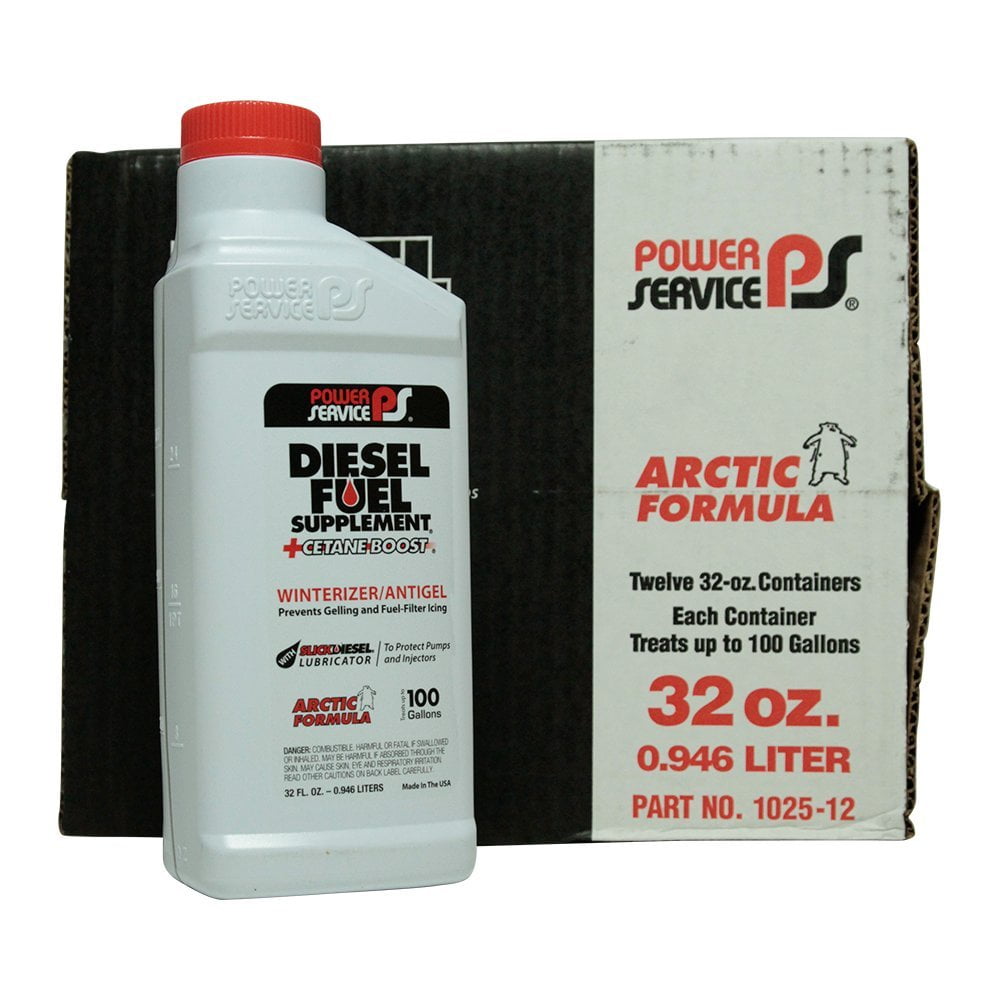
Power Service Diesel Fuel Supplement + Cetane Boost 32 oz
Top-rated all-in-one with proven anti-gel action, cetane boost, and lubricity for ULSD; protects to -10°F+.
Best for: Everyday preventative for trucks in moderate winters.
Price Range: $12-15
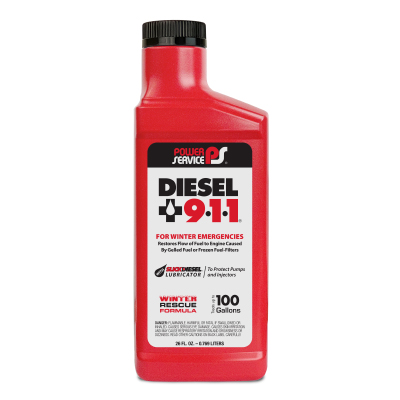
Power Service Diesel 911 Antifreeze + Anti-Gel 32 oz
Emergency-strength de-icer and anti-gel; thaws ice and prevents re-gelling to -30°F.
Best for: Sudden cold snaps or already contaminated fuel.
Price Range: $15-20
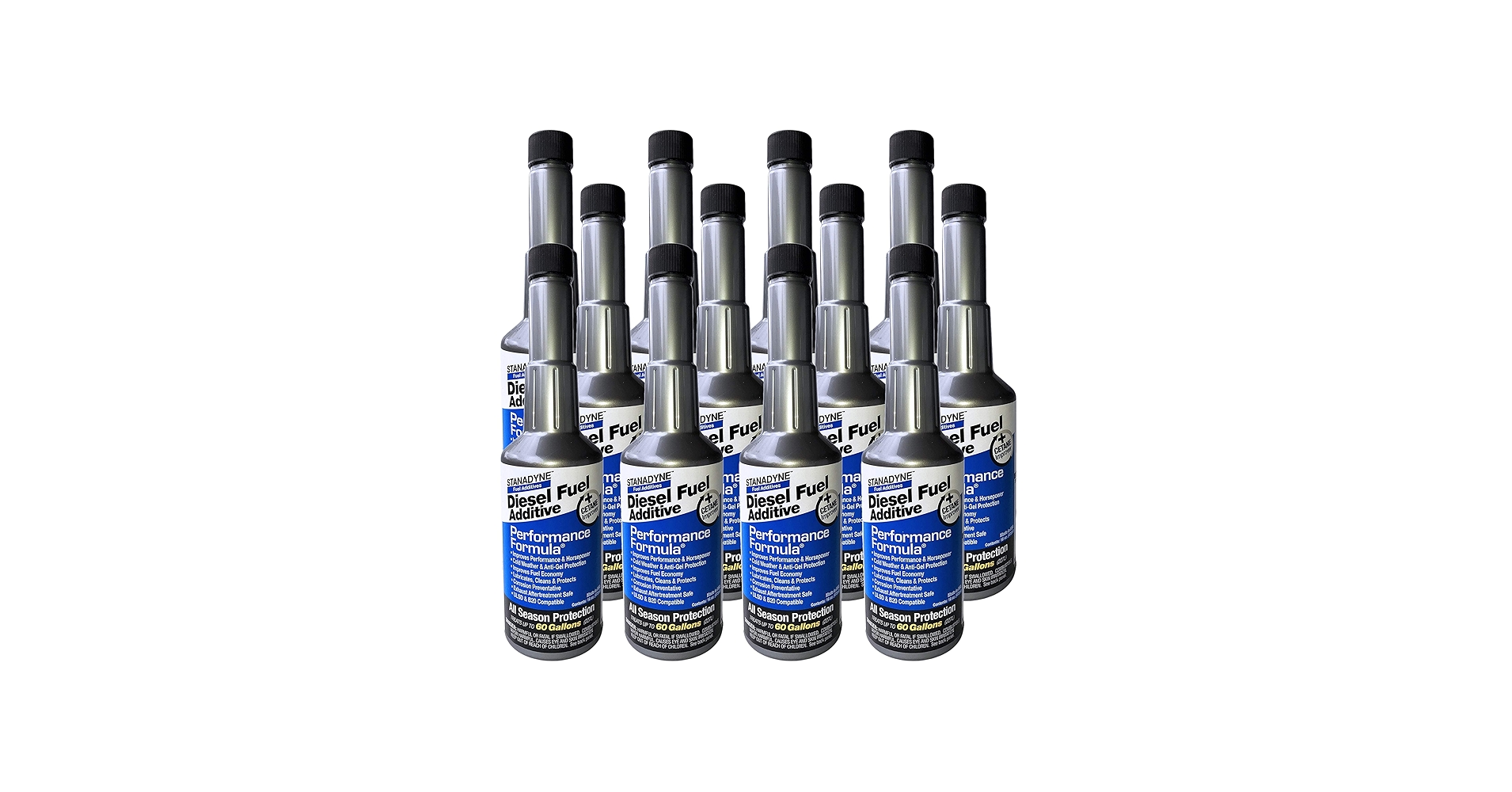
Stanadyne Performance Formula Diesel Additive 16 oz
OEM-preferred with wax modifiers and detergents; lowers pour point 25°F, cleans injectors.
Best for: Year-round maintenance for high-mileage diesels.
Price Range: $20-25
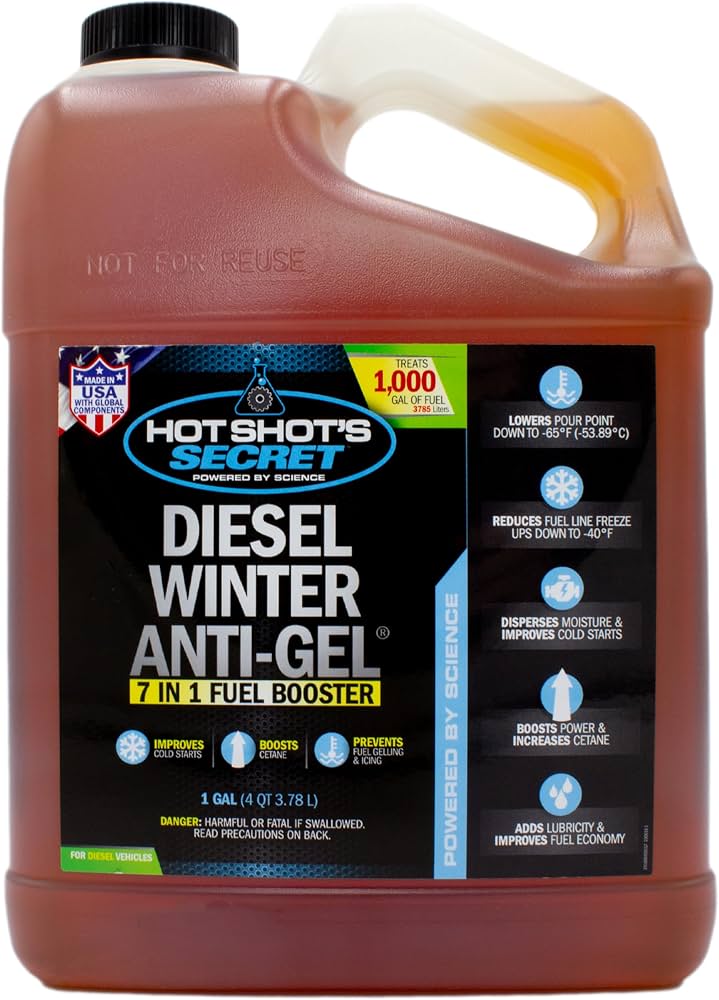
Hot Shot's Secret Diesel Winter Anti-Gel
Concentrated formula treats 100 gallons per bottle; excellent for fleets, -60°F protection.
Best for: Extreme northern climates or large tanks.
Price Range: $25-35
Opti-Lube XL Winter Diesel Fuel Additive
Alcohol-free, lubricity-focused; superior crystal modification for long-term fuel stability.
Best for: Off-road equipment in variable cold.
Price Range: $30-40