Fine motor skills are the small movements that enable babies to grasp toys, button clothes, and eventually write—yet many parents overlook toys that truly nurture them amid flashy gadgets. Without targeted play, delays in hand-eye coordination can emerge, affecting confidence and learning.
In this guide, you'll learn what fine motor skills are, how activity cubes stimulate them, and which features to prioritize. We'll break it down simply, with examples and real product picks, so you can choose confidently. Expect a quick read (10 minutes) with actionable insights for beginners—no prior knowledge needed.
▸What You'll Need
- •Curiosity about child development (no prior expertise required)
- •Access to a baby aged 6-24 months (optional, for hands-on testing)
- •Smartphone or computer to shop recommended products (optional)
Estimated Time: 10-15 minutes
Difficulty: beginner
▸Step-by-Step Instructions
Step 1: Understand Fine Motor Skills Basics
Fine motor skills involve precise movements of hands, fingers, and wrists—like pinching, grasping, or twisting. For babies, these build foundational abilities for self-feeding, dressing, and drawing.
Think of it like training tiny muscles: just as weights build biceps, manipulative toys strengthen finger dexterity. Activity cubes shine here because their multi-sided design offers varied grips and challenges in one compact toy.
Expect babies to progress from batting at objects (6 months) to intricate manipulations (18+ months).
💡 Tips:
- •Observe your baby's current stage: large grabs first, then pincer grips.
Step 2: What Makes Activity Cubes Ideal
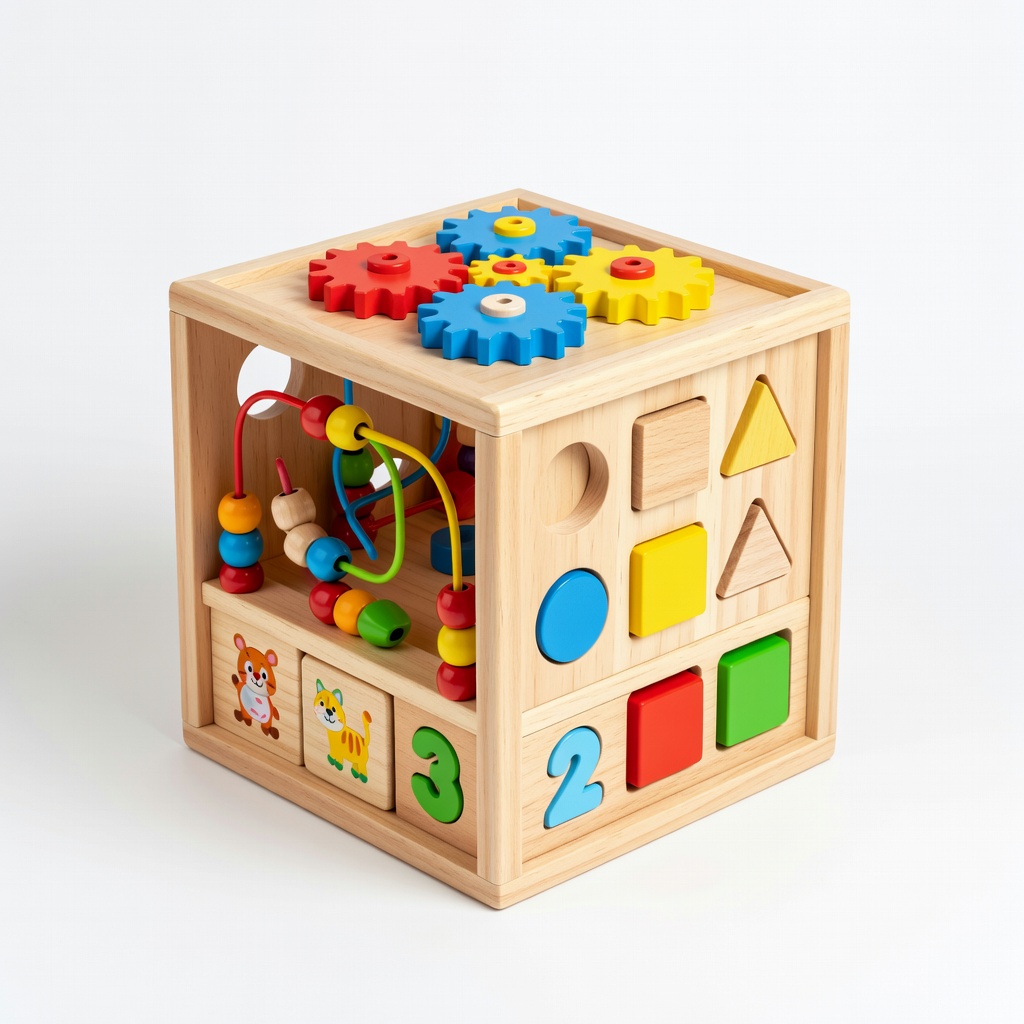
Activity cubes are 6-8 sided wooden or plastic toys, each face packed with buttons, gears, and slides. Unlike single-function toys, cubes encourage exploration from all angles, promoting sustained play.
They matter because repetition builds neural pathways—analogous to practicing piano scales for finger agility. Cubes rotate easily, keeping babies engaged without frustration.
Most suit 6-36 months, with BPA-free materials for safety.
⚠️ Warnings:
- •Avoid cubes with small loose parts for under 12 months.
Step 3: Buttons and Pushers for First Grasps
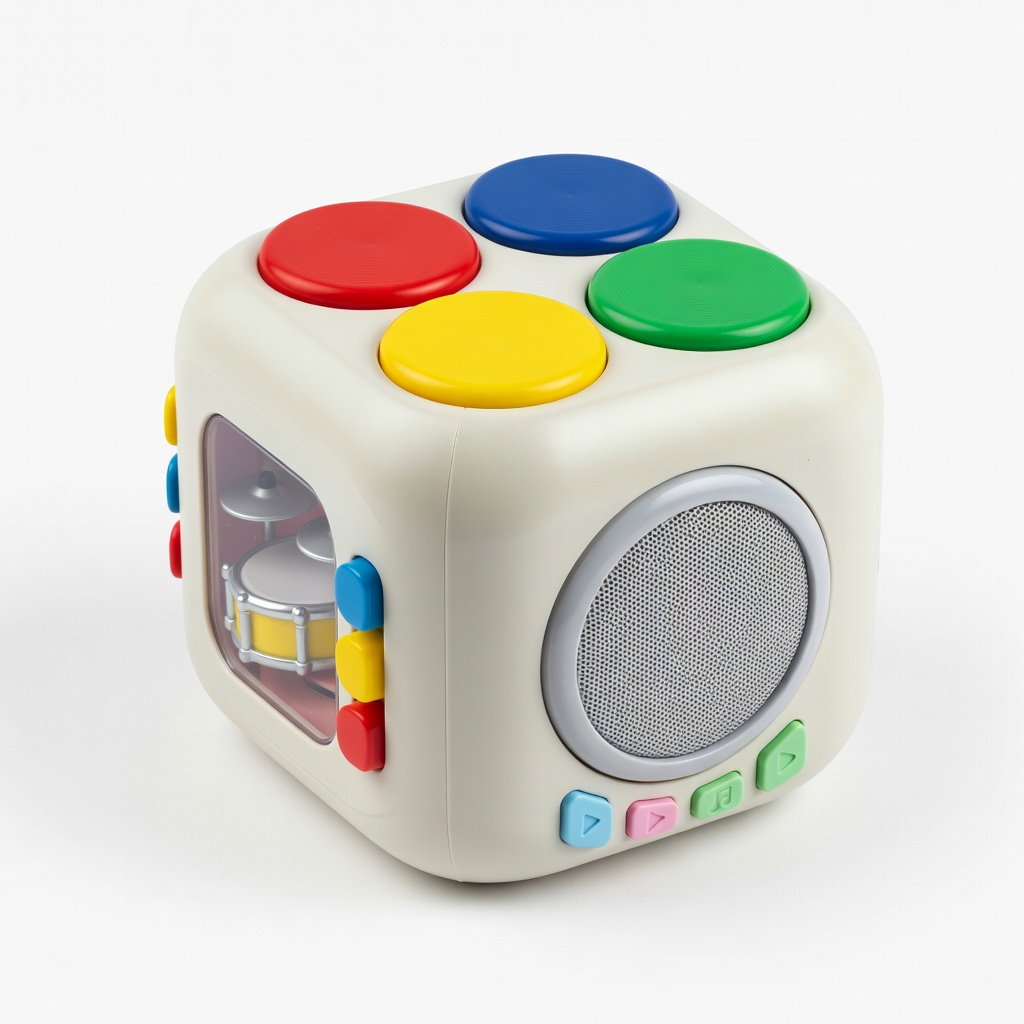
Large, colorful buttons teach cause-effect and initial pressing. Babies learn to use palms then fingers, strengthening extensors.
Why it stimulates: Mimics real-life (doorbells), building confidence. Expect squeaks, lights, or music as rewards.
Example: Pressing a cow button triggers 'moo' sounds, reinforcing precision.
💡 Tips:
- •Choose textured buttons for sensory feedback.
Step 4: Gears and Spinners for Twisting
Interlocking gears or spinners require two-handed rotation, honing wrist rotation and bilateral coordination.
Analogy: Like stirring batter—smooth turns prevent spills in life skills. Babies giggle at chain reactions, extending playtime.
Progress: From spinning one gear to linking multiples.
Step 5: Bead Mazes for Tracing Paths
Wooden beads on curved wires demand finger following, improving tracking and pinch strength.
Vital for eye-hand sync—like threading a needle later. Smooth wires prevent snags; expect 5-10 minutes of focus per session.
Tip: Position cube at tummy time level for easy reach.
⚠️ Warnings:
- •Ensure beads can't pop off—check for secure wiring.
Step 6: Sorting Shapes and Slots
Shape sorters on cubes teach matching and fitting, refining pincer grips for tiny objects.
Why key: Prepares for puzzles/zippers. Babies persist through trial-error, boosting problem-solving.
Advanced cubes add colors/numbers for multi-skill hits.
💡 Tips:
- •Start with 3-4 large shapes; add complexity gradually.
Step 7: Peek-a-Boo Doors and Flaps
Liftable doors reveal surprises, practicing open-close motions for dexterity.
Builds anticipation and memory—like hide-seek games. Magnetic closures add resistance for muscle work.
Observe joy in 'finding' toys inside.
Step 8: Track Progress and Rotate Play
Monitor improvements: faster manipulations signal growth. Swap cubes every 3-6 months as skills advance.
Why: Prevents boredom, ensures sustained development. Pair with free play for best results.
💡 Tips:
- •Video sessions weekly to spot milestones.
▸Pro Tips
- •Supervise play to model correct grips—babies mimic adults.
- •Clean cubes weekly with mild soap to maintain appeal.
- •Rotate with other toys to avoid overuse of one side.
- •Use during tummy time for posture + motor gains.
- •Choose quiet cubes for bedtime winding down.
- •Pair with rhymes/songs to link motor with language.
- •Budget pick: Wooden for durability over plastic.
▸Common Mistakes to Avoid
- •Overlooking age ratings—too advanced frustrates babies.
- •Ignoring material safety—cheap plastics may chip.
- •Forgetting variety—single-feature cubes limit growth.
- •Not supervising—leads to improper grips or ingestion risks.
- •Expecting instant results—skills build over weeks.
▸Troubleshooting
Problem: Baby ignores cube
Solution: Demonstrate enthusiastically; try new position like high chair.
Problem: Frustration with tasks
Solution: Simplify by blocking harder sides; revisit in a week.
Problem: Cube tips over easily
Solution: Choose weighted base models or secure to tray.
Fisher-Price Laugh & Learn Smart Stages Activity Cube
5 interactive sides with buttons, gears, and songs adapt to 6-36 months, targeting multiple fine motor milestones.
Best for: Daily play for auditory + tactile stimulation in homes with young toddlers.
Price Range: $19.99
Melissa & Doug Wooden Shape Sorting Cube
Classic wooden design with sorting, gears, and beads builds precise grips durably without batteries.
Best for: Eco-friendly, long-lasting option for Montessori-style play.
Price Range: $12.99
Top Bright Montessori Wooden Activity Cube
8 sides including abacus, xylophone, and maze for comprehensive fine motor workout in natural wood.
Best for: Gifting or screen-free entertainment for babies 1+ year.
Price Range: $29.99
VTech KidiGo Drum Activity Cube
Music-focused with lights, drums, and spinners encourages rhythmic hand movements.
Best for: Energetic play for music-loving families.
Price Range: $24.99