Why Activity Cubes Matter for Fine Motor Skills
Fine motor skills are crucial for your baby's early development, helping them grasp objects, pinch, and manipulate toys—skills that lay the foundation for writing, buttoning clothes, and self-feeding later on. Many parents struggle to find toys that are both fun and effective, often overlooking how simple activity cubes can target these skills without screens or frustration.
In this guide, you'll discover what fine motor skills are, key features in activity cubes that develop them, and top recommendations to get started. Expect a straightforward explainer with real examples—no prior expertise needed. You'll finish in just 10-15 minutes, ready to pick the perfect cube for playtime.
We'll break it down from basics to expert tips, so you can confidently choose and use activity cubes to support your little one's growth.
▸What You'll Need
- •A baby or toddler aged 6-24 months
- •Adult supervision during play
- •Optional: Access to online shopping for activity cubes
- •Prerequisite: Basic knowledge of child safety (no small parts for under 3s)
Estimated Time: 10-15 minutes
Difficulty: beginner
▸Step-by-Step Instructions
Step 1: Understand Fine Motor Skills Basics
Fine motor skills involve the small muscles in hands, fingers, and wrists, enabling precise movements like picking up crumbs or stacking blocks.
Why it matters: Babies develop these from 6 months onward, starting with palmar grasp (whole hand) to pincer grasp (thumb and finger) by 12 months. Activity cubes provide repetitive, safe practice.
Expect: Your child will progress from banging to twisting and inserting over time.
💡 Tips:
- •Watch milestones: Grasping by 4-6 months signals readiness.
Step 2: Learn What Activity Cubes Are
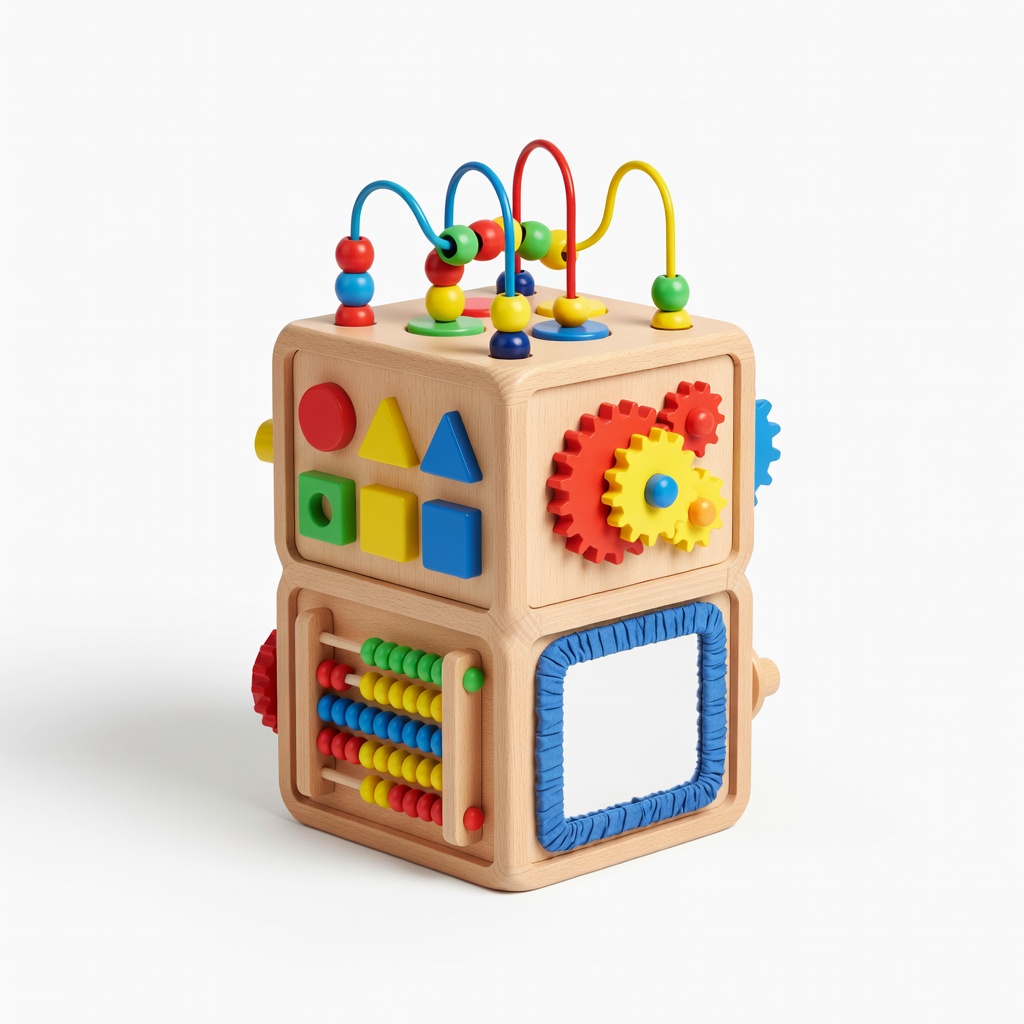
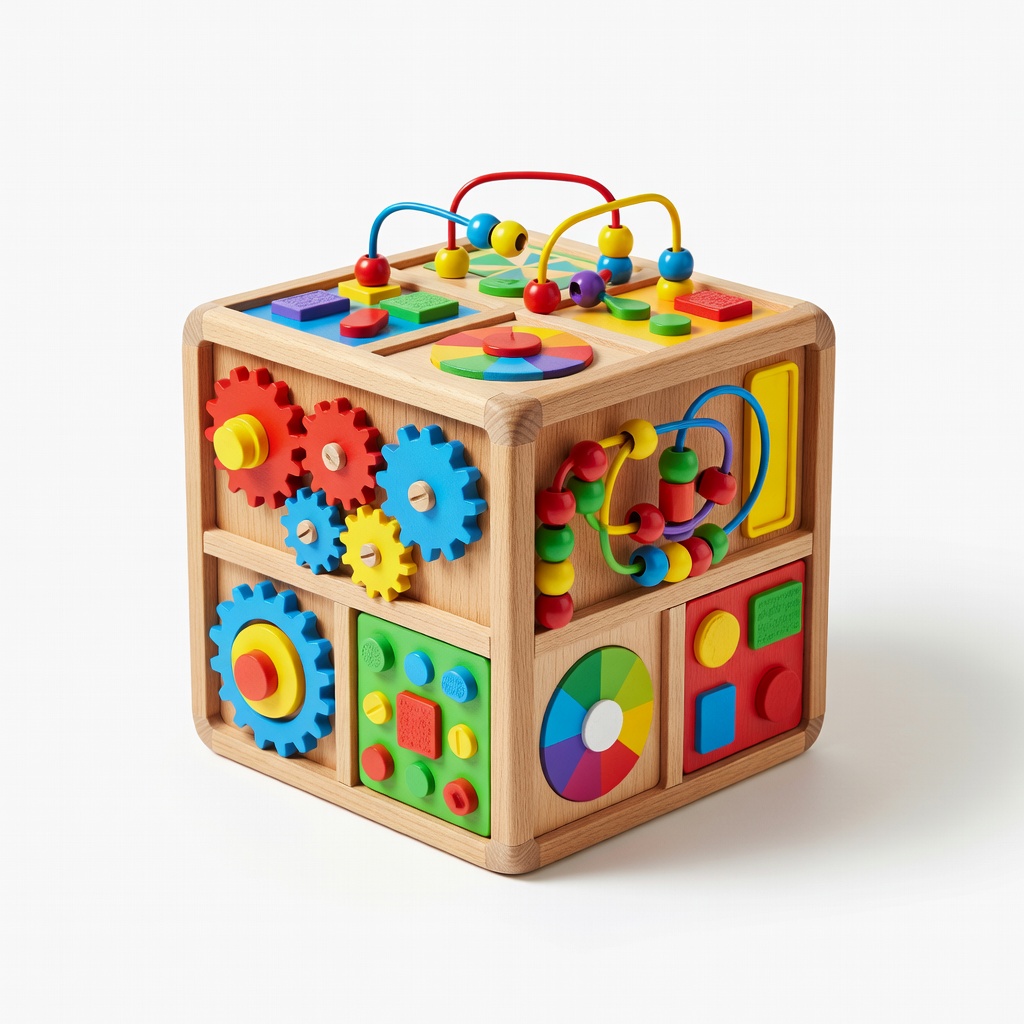
Activity cubes are multi-sided baby toys (often 6-8 faces) with buttons, sliders, gears, shape sorters, and beads—designed for seated play on high chairs or floors.
They differ from single toys by offering variety, keeping babies engaged longer. Look for BPA-free plastic or wood, sized 8-12 inches for stability.
Why key: Multi-activities target different skills without needing multiple toys.
⚠️ Warnings:
- •Avoid cubes with loose small parts for under 12 months.
Step 3: Identify Key Features for Fine Motors
Twistable gears and spinners: Build wrist rotation and dexterity.
Sliding beads or abacus: Encourage pinching and tracking.
Shape sorters and inserts: Develop pincer grasp and problem-solving.
These mimic real-life actions, strengthening hand-eye coordination.
💡 Tips:
- •Choose cubes with 4+ manipulative features.
Step 4: Explore Activity Types by Age
For 6-12 months: Large buttons, rattles, mirrors for batting and reaching.
12-18 months: Gears, flippers, simple sorters for pinching.
18-24 months: Abacus, locks, multi-step sorters for precision.
Analogy: Like a playground for fingers—start simple, add challenge as skills grow.
💡 Tips:
- •Match to your child's current grasp level.
Step 5: Evaluate Cube Quality and Safety
Check for ASTM certification, non-toxic materials, and stable base (no tipping).
Good cubes have smooth edges, audible feedback (clicks/sounds), and easy-clean surfaces.
Why matters: Safe, durable cubes last through growth spurts.
⚠️ Warnings:
- •Skip battery-free for sound motivation if your baby responds to noises.
Step 6: Incorporate Cubes into Daily Play
Place cube at eye level during tummy time or high chair meals. Guide hands initially, then let explore independently 10-15 mins daily.
Track progress: Note improved grasping weekly.
Pro tip: Rotate with other toys to prevent boredom.
💡 Tips:
- •Pair with songs for multi-sensory fun.
▸Pro Tips
- •Supervise to model correct grips and prevent mouthing.
- •Clean weekly with mild soap—wipe crevices to avoid bacteria.
- •Store upright to maintain shape; rotate sides weekly for novelty.
- •Combine with sensory play like textured fabrics nearby.
- •Use during fussy times—movement soothes while building skills.
- •Track milestones with photos of baby using new features.
- •Budget tip: Look for 6-in-1 cubes for value.
▸Common Mistakes to Avoid
- •Buying for wrong age: Too advanced frustrates; solve by checking 6-24 month labels.
- •Ignoring supervision: Leads to chewing hazards; always watch play.
- •Overlooking stability: Tippy cubes discourage use; test on carpet.
- •Forgetting variety: Single-feature toys bore quickly; prioritize multi-sided.
- •Neglecting cleaning: Germ buildup risks illness; wipe after each session.
▸Troubleshooting
Problem: Baby ignores the cube
Solution: Add excitement with sounds/music cubes or demonstrate fun first. Try during alert times.
Problem: Cube tips over easily
Solution: Place on non-slip mat or choose weighted base models. Avoid slick floors.
Problem: Child gets frustrated with sorters
Solution: Start with larger shapes; guide hand-over-hand initially, then fade support.
Problem: Battery dies quickly
Solution: Opt for mechanical cubes or stock AA batteries. Check low-power modes.
Fisher-Price Laugh & Learn Smart Stages Activity Cube
Features gears, flip books, sorter, and lights/sounds for twisting, pinching, and grasping—adjusts to 3 stages for growing skills.
Best for: Ideal for 6-36 months during high chair or floor play to build pincer grasp.
Price Range: $24.99
Toysery 6-in-1 Baby Activity Cube
Includes abacus beads, gears, sorter, and piano—excellent for repetitive fine motor practice without batteries.
Best for: Budget-friendly for 1-3 year olds focusing on bead sliding and shape matching.
Price Range: $29.99
Contex Linkplay 8-in-1 Activity Cube
8 panels with locks, spinner, beads, and sorter target advanced pinching and rotation; durable wood/plastic hybrid.
Best for: For 12+ months transitioning to complex manipulations like unlocking.
Price Range: $39.99
Bright Starts Playtime Activity Cube
Light-up buttons, rattle, teether—great entry-level for early grasping and batting.
Best for: Newborn to 12 months intro to fine motors during sensory exploration.
Price Range: $15.99