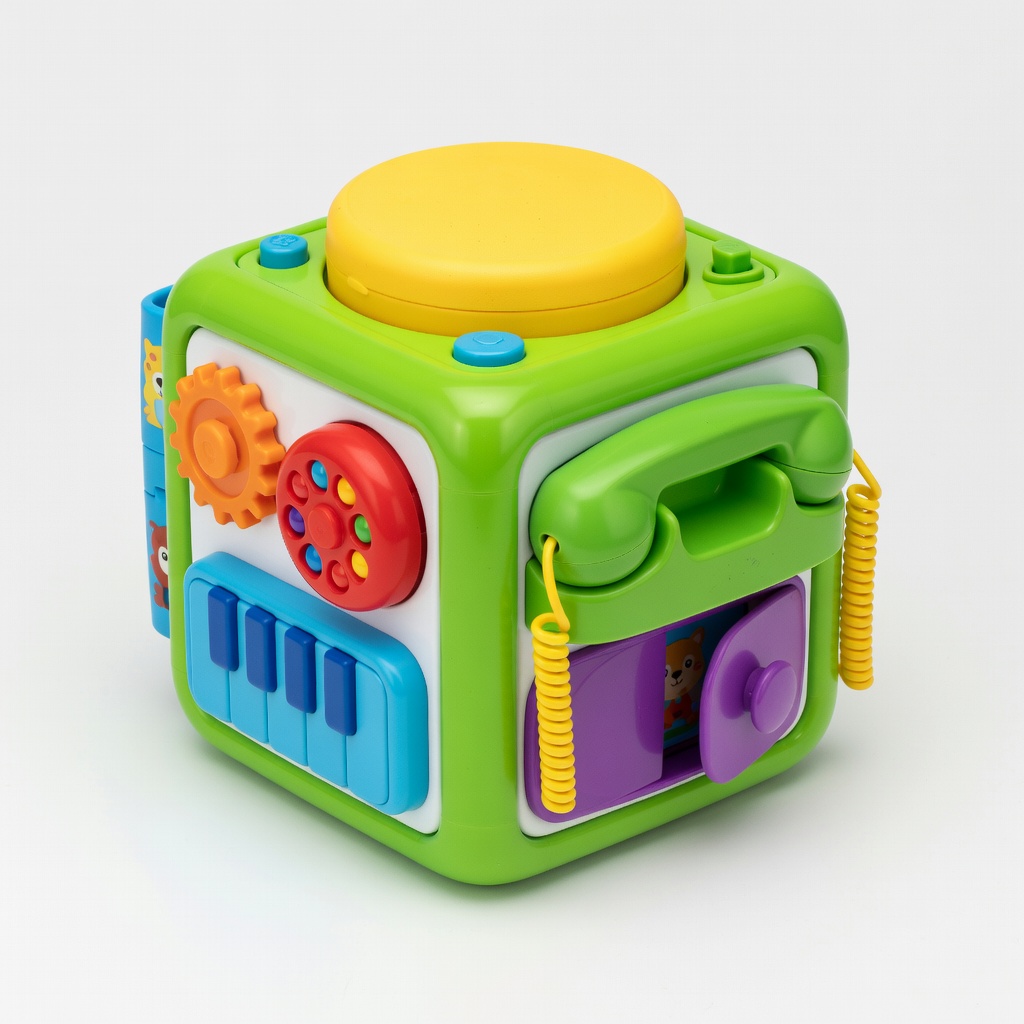
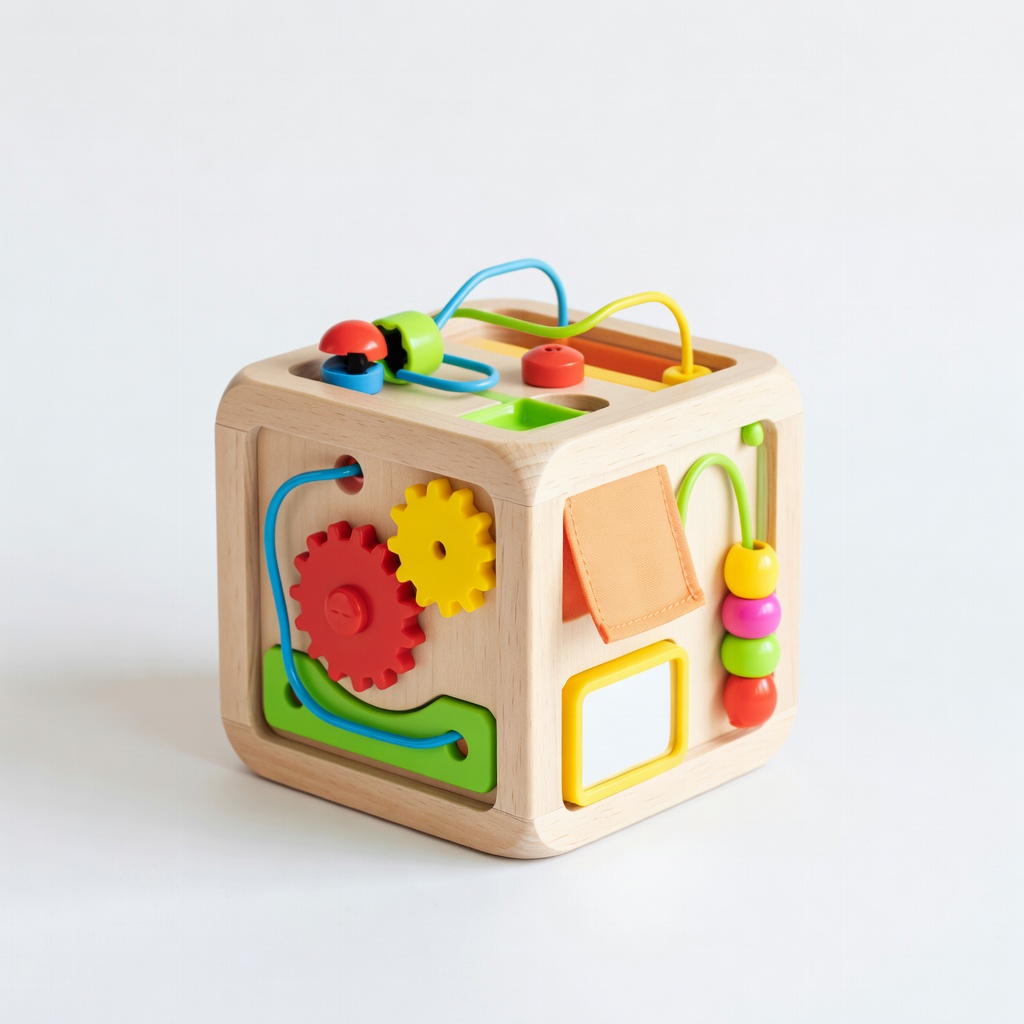
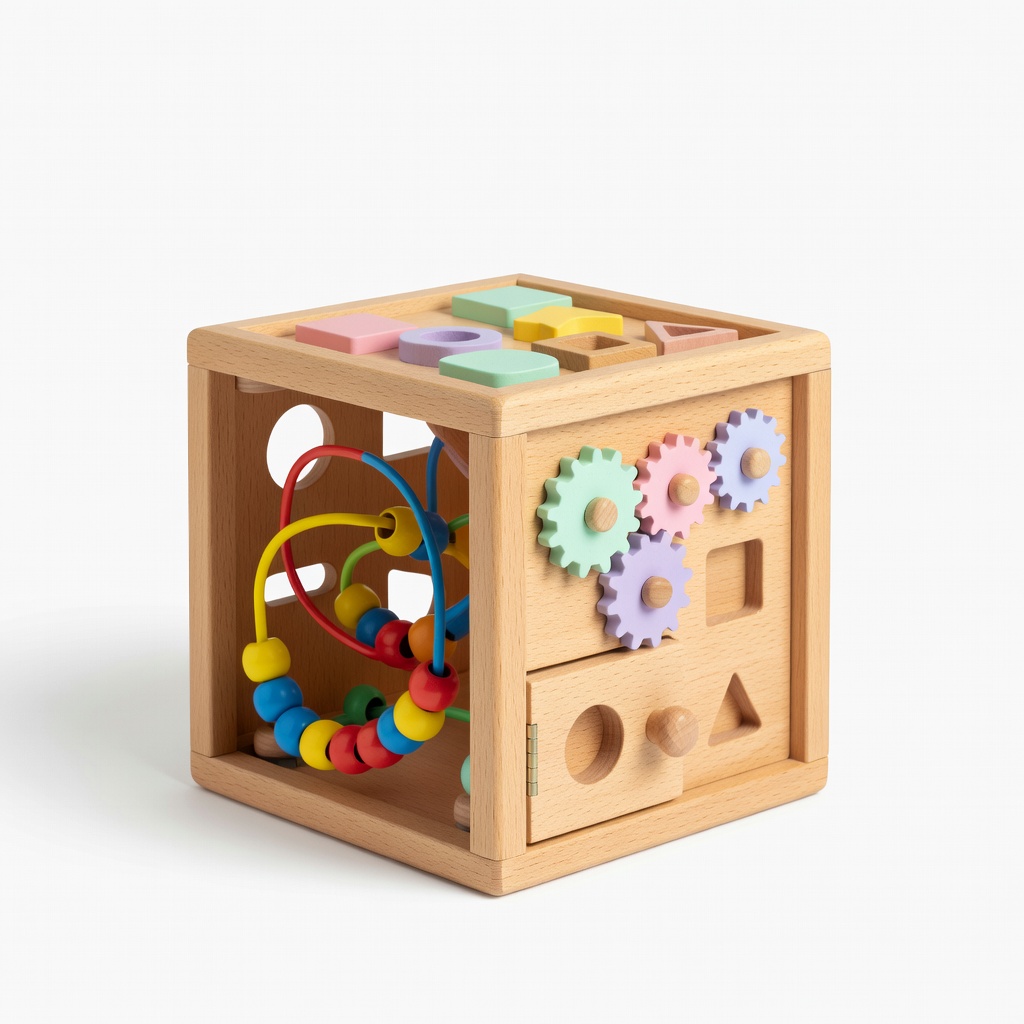
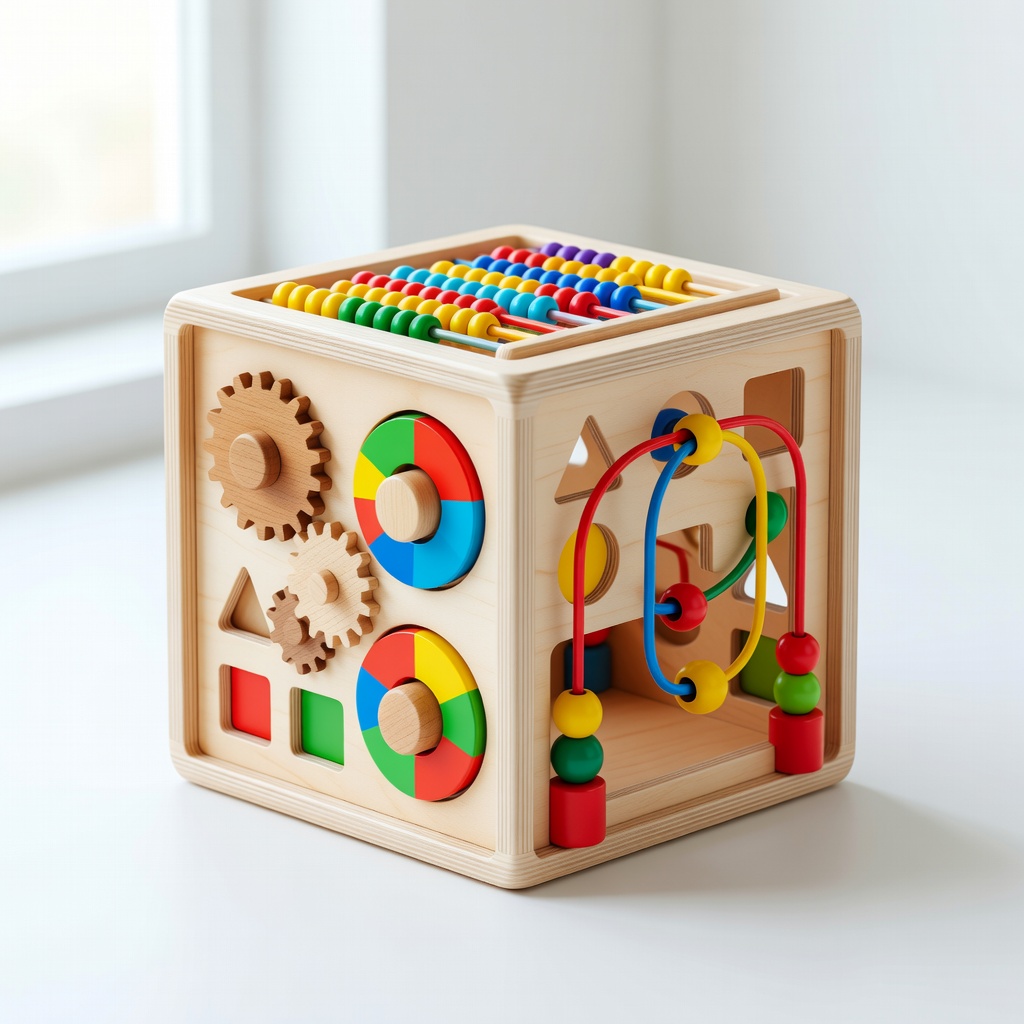
Raising a child with Autism Spectrum Disorder (ASD) often means seeking toys that engage without overwhelming, helping build essential skills like focus, coordination, and sensory tolerance. Activity cubes—multi-sided wooden or plastic toys packed with interactive panels—are a favorite among therapists and parents for their versatility.
In this guide, you'll discover the key activities in activity cubes that target common ASD challenges, from sensory sensitivities to motor delays. We'll break it down step-by-step, explaining why each works, with real-world examples. Expect a quick read (10-15 minutes) that's beginner-friendly—no prior expertise needed.
By the end, you'll know how to choose and use an activity cube to spark joy and development in your child.
▸What You'll Need
- •An activity cube toy (recommendations below)
- •Quiet space for observation
- •Optional: Timer for short play sessions
- •Basic understanding of your child's ASD traits (prerequisite knowledge)
Estimated Time: 10-15 minutes to read and understand
Difficulty: beginner
▸Step-by-Step Instructions
Step 1: Understand Activity Cubes and ASD Basics
Activity cubes are compact toys with 4-6 sides, each featuring simple activities like sorters or spinners. For ASD, they shine by offering repetitive, predictable play that calms sensory overload while building skills.
ASD often involves delays in fine motor, sensory integration, communication, and executive function. Cubes address these without screens or noise overload. Expect self-paced exploration—kids may fixate on one side, which is beneficial for focus.
Why it matters: Therapists recommend them for ABA (Applied Behavior Analysis) therapy integration.
💡 Tips:
- •Start with 5-minute sessions to build tolerance.
Step 2: Shape Sorters for Fine Motor Development
Shape sorters require pinching, rotating, and dropping pieces—perfect for pincer grasp strengthening, a common ASD motor challenge.
Children learn persistence as mismatched shapes don't fit, fostering problem-solving. Analogy: Like a puzzle that rewards trial-and-error without frustration.
Expected outcome: Improved dexterity; use for 1:1 matching therapy.
⚠️ Warnings:
- •Avoid forcing pieces—let child self-correct.
Step 3: Bead Mazes for Hand-Eye Coordination
Sliding beads along wires hones tracking and bilateral coordination, helping ASD kids who struggle with visual-motor integration.
The repetitive motion provides sensory input (smooth beads) and cause-effect (bead moves when pushed). Why it aids ASD: Reduces anxiety through rhythmical play.
Pro example: Therapists pair it with verbal cues like 'up-down' for language.
💡 Tips:
- •Model slowly: Guide hand gently at first.
Step 4: Spinning Gears for Cause-and-Effect Learning
Turn a gear, watch others spin—teaches predictable outcomes, crucial for ASD kids with rigid thinking.
Builds cognitive flexibility and joy in repetition. Analogy: Like a mini Rube Goldberg machine, but simple.
Benefits: Enhances focus; link to emotions ('happy spin!').
Step 5: Abacus or Peg Boards for Counting Skills
Numeracy basics via sliding beads or pegs support early math and sequencing, areas where ASD kids may excel or need structure.
Promotes one-to-one correspondence. Why key: Visual counters reduce abstract confusion.
Expect counting chants during play.
💡 Tips:
- •Count aloud together for language reinforcement.
Step 6: Peek-a-Boo Doors for Object Permanence
Open doors to reveal toys—reinforces objects exist when hidden, a Piagetian concept often delayed in ASD.
Encourages exploration and surprise tolerance. Sensory bonus: Soft-close doors avoid slams.
Outcome: Better memory and reduced separation anxiety.
⚠️ Warnings:
- •Supervise to prevent pinching fingers.
Step 7: Sound Panels for Auditory Sensory Input
Gentle chimes or buttons play soft sounds, aiding sensory processing without overload.
ASD kids may seek or avoid sounds; cubes offer controlled exposure. Analogy: Volume knob for auditory diet.
Why effective: Pairs with imitation for social skills.
💡 Tips:
- •Use for music therapy integration.
Step 8: Rotate Sides for Multi-Skill Sessions
Encourage switching panels to build attention shifting and executive function.
Combine activities (e.g., sort then spin) for holistic gains. Full benefit: Mimics OT/PT sessions at home.
Track progress: Note preferred activities for personalization.
▸Pro Tips
- •Follow your child's lead—let them choose sides to avoid meltdowns.
- •Use a mirror nearby for joint attention practice.
- •Pair with favorite snacks as rewards for engagement.
- •Clean weekly with mild soap for hygiene.
- •Record play sessions to share with therapists.
- •Short bursts (5-10 min) multiple times daily beat long sessions.
- •Add Velcro labels for shape names to boost literacy.
▸Common Mistakes to Avoid
- •Overloading with instructions—keep it child-led to prevent shutdowns.
- •Ignoring sensory preferences—skip noisy panels if auditory-sensitive.
- •Using on carpet only—hard surfaces aid bead sliding.
- •Expecting instant mastery—progress takes weeks; celebrate small wins.
- •Forgetting supervision—small parts pose choking risks.
▸Troubleshooting
Problem: Child ignores the cube
Solution: Introduce one side at a time; add a familiar toy nearby. Try during high-interest times like post-snack.
Problem: Frustration with non-fitting pieces
Solution: Model success first, then hand over. Remove 1-2 shapes temporarily.
Problem: Sensory overload from colors/sounds
Solution: Cover unused sides with cloth; choose muted-tone cubes. Seek OT advice if persists.
Problem: Cube tips over easily
Solution: Place on non-slip mat or weighted base. Upgrade to heavier wooden models.
Melissa & Doug Shape Sort Wooden Activity Cube
Durable wood with classic sorters, mazes, and gears—ideal for fine motor and sensory play in ASD therapy.
Best for: Daily home use for toddlers 1-3 years with motor delays.
Price Range: $14.99
LeapFrog Learn & Groove Activity Cube
Interactive lights/sounds for cause-effect, with volume control to suit sensory needs.
Best for: Auditory and cognitive stimulation for 6-36 months.
Price Range: $19.99
HABA Little Activity Cube
Compact, high-quality wood with safe edges; promotes object permanence and coordination.
Best for: Portable for therapy sessions or travel.
Price Range: $39.95
PlanToys Wooden Activity Cube
Sustainable, chemical-free; multiple panels for sustained engagement without plastics.
Best for: Eco-conscious parents seeking long-term durability.
Price Range: $29.99
Kidzlane 5-Sided Activity Cube
Budget-friendly with abacus, xylophone; great starter for beginners.
Best for: Introductory play for 1-4 years.
Price Range: $19.99