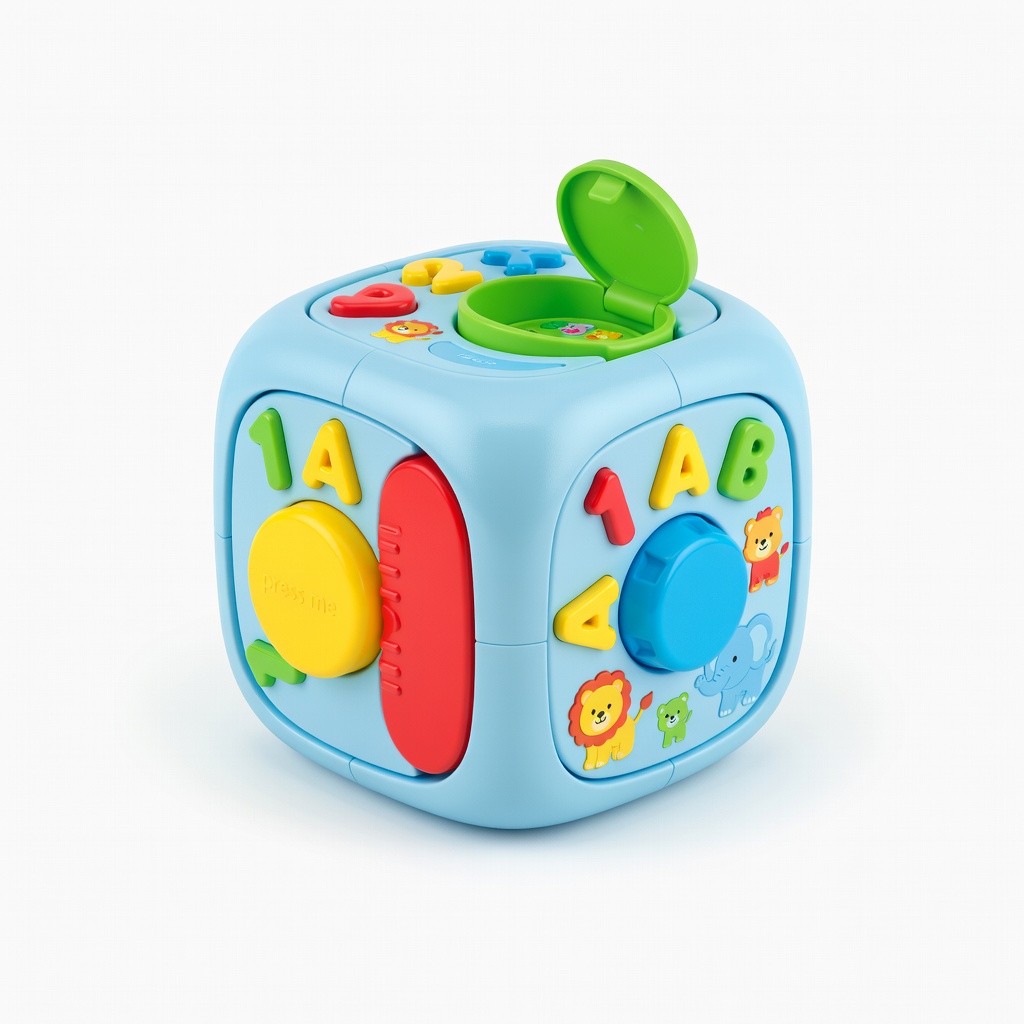
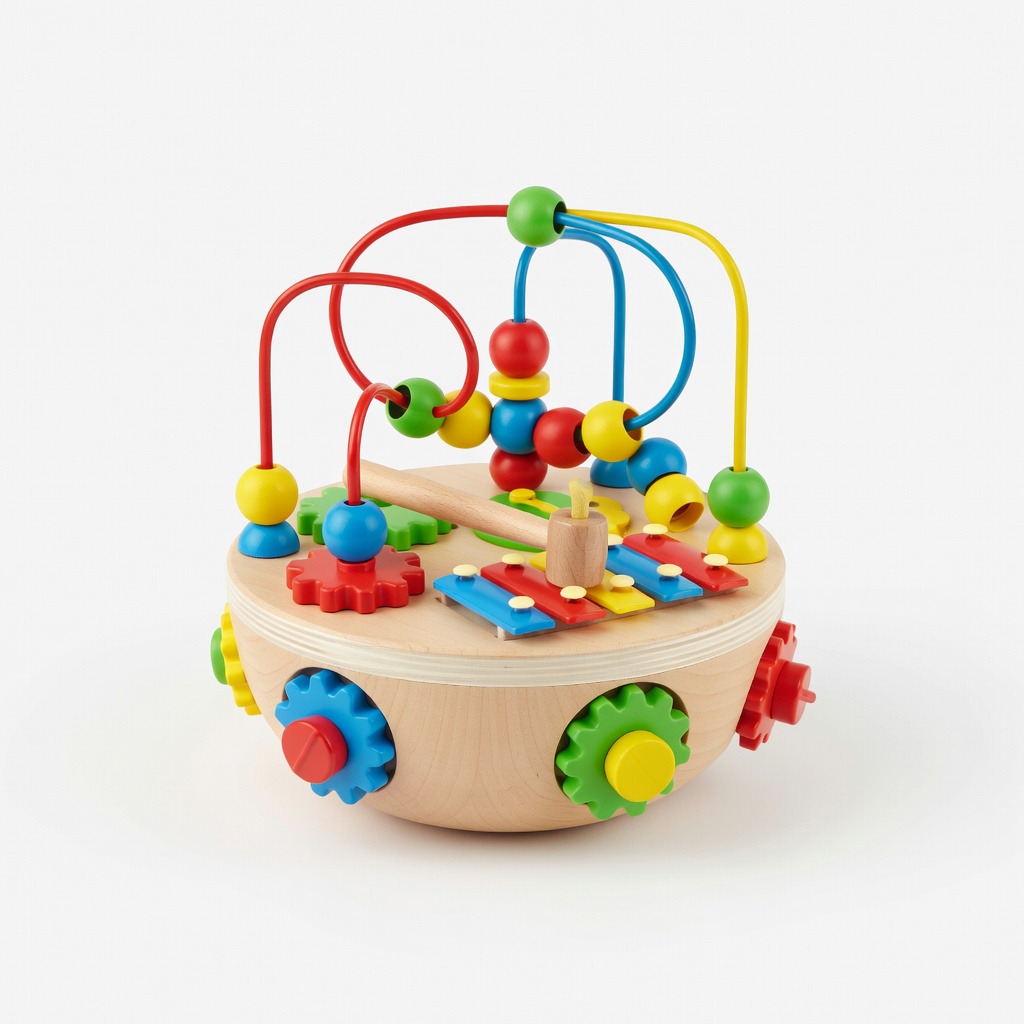
Toddlers thrive on sensory exploration, but keeping them engaged without screens can be challenging. Activity cubes—multi-sided wooden or plastic toys packed with interactive features—are a parent's secret weapon for safe, stimulating play that builds essential skills from 6-24 months.
In this guide, you'll learn the key sensory activities cubes provide, why they matter for brain development, and how to maximize playtime. We'll break it down simply, with real examples and tips, so you can choose and use the right cube confidently—no prior toy expertise needed. Expect a quick read in under 15 minutes.
▸What You'll Need
- •A toddler activity cube (wooden or electronic)
- •Safe, flat play space (floor mat recommended)
- •Curious toddler (6-24 months)
- •Adult supervision (required for safety)
Estimated Time: 10-15 minutes to read and understand
Difficulty: beginner
▸Step-by-Step Instructions
Step 1: Visual Stimulation with Colors and Mirrors
Activity cubes feature bright colors, patterns, and mirrors to captivate a toddler's developing vision. Babies under 12 months are drawn to high-contrast black-and-white or bold primaries, while older toddlers love shiny mirrors for self-discovery.
Why it matters: Visual play strengthens eye muscles, tracking skills, and visual processing, key for later reading and coordination. Expect wide-eyed fascination as your toddler stares, smiles, or reaches.
During play, rotate the cube to show different faces—mirrors often reveal funny reflections, encouraging giggles and longer attention spans.
💡 Tips:
- •Start in dim light for mirrors to shine brighter.
- •Point and name colors to add language learning.
⚠️ Warnings:
- •Avoid small detachable mirrors—choose sturdy, fixed ones.
Step 2: Tactile Exploration Through Textures
Rough sands, smooth woods, squishy fabrics, and bumpy gears invite toddlers to touch everything. These varied textures on cube sides teach 'different feels' naturally.
Why it matters: Touch is the first sense babies master; it aids sensory integration, calming nerves and sparking curiosity. You'll see poking, stroking, and mouthing as they explore safely (non-toxic materials only).
Guide their hands gently at first, then let independent discovery happen—textured paths or fuzzy patches keep tiny fingers busy for minutes.
💡 Tips:
- •Mix wet/dry hands for contrast if cube is washable.
- •Narrate: 'This is soft, this is bumpy!'
Step 3: Auditory Engagement with Sounds and Music
Press buttons, shake rattles, or spin noisemakers produce chimes, songs, or animal sounds, delighting toddler ears.
Why it matters: Sound play refines hearing, rhythm sense, and cause-effect understanding, foundational for speech. Electronic cubes add volume control; wooden ones offer gentle rattles.
Expect squeals of joy—pair with clapping to amplify fun. Songs often teach ABCs or numbers subtly.
💡 Tips:
- •Lower volume for sensitive ears.
- •Sing along to bond.
⚠️ Warnings:
- •Battery cubes: Supervise to prevent ingestion of small parts.
Step 4: Fine Motor Challenges with Beads and Gears
Sliding wooden beads along wires, turning gears, or flipping levers build dexterity. These repeatable actions are toddler magnets.
Why it matters: Repetition hones hand-eye coordination and persistence, prepping for writing. Watch frustration turn to triumph as beads 'whoosh' around.
Sit nearby, model motions slowly—progress from watching to doing.
💡 Tips:
- •Use during fussy times for calming focus.
- •Clean beads weekly to prevent grime buildup.
Step 5: Cognitive Play via Shape Sorters and Doors
Peek-a-boo doors hide surprises, while shape sorters demand matching circles to holes. Problem-solving at its simplest.
Why it matters: Sparks logic, memory, and spatial awareness—core cognitive milestones. 'Where does the star go?' builds trial-and-error resilience.
Praise efforts, not just success; rotate shapes to extend play.
💡 Tips:
- •Start with largest shapes for wins.
- •Hide toys inside doors for extra thrill.
⚠️ Warnings:
- •Check for loose pieces monthly.
Step 6: Combining Senses for Full Immersion
Cubes shine by blending senses—e.g., a textured button that spins, beeps, and lights up. This multisensory overload (in a good way) mimics real-world exploration.
Why it matters: Holistic sensory integration boosts neural connections faster than single-sense toys. Toddlers engage 20-30 minutes easily.
Observe which combos they love; customize sessions accordingly.
💡 Tips:
- •Rotate cube faces daily for novelty.
- •Film play for milestone tracking.
▸Pro Tips
- •Supervise closely to model safe play and intervene if frustrated.
- •Clean with mild soap weekly—air dry to preserve textures.
- •Pair with tummy time for younger babies (under 6 months).
- •Store upright to avoid tip-overs; use non-slip mats.
- •Track progress: Note new skills weekly in a journal.
- •Limit to 15-20 min sessions to prevent overstimulation.
- •Choose BPA-free, ASTM-certified cubes for peace of mind.
▸Common Mistakes to Avoid
- •Choosing age-inappropriate cubes: Too advanced frustrates; too simple bores—match to 6-24 months.
- •Ignoring supervision: Leads to choking risks from curious mouthing.
- •Overloading play area: Keep just the cube to focus attention.
- •Neglecting rotation: Same faces daily lose appeal—flip weekly.
- •Skipping cleaning: Builds bacteria, dulling sensory appeal.
▸Troubleshooting
Problem: Toddler ignores the cube.
Solution: Model play enthusiastically for 2-3 minutes, then step back. Try during high-energy times like post-nap.
Problem: Frustration with sorters/gears.
Solution: Assist minimally—guide hand once, then encourage tries. Switch faces for easier wins.
Problem: Cube tips over easily.
Solution: Place on grippy mat or rug; opt for weighted wooden models next time.
Problem: Sounds too loud or repetitive.
Solution: Volume-down if adjustable; cover speaker gently or choose wooden alternatives.
Fisher-Price Laugh & Learn Smart Stages Activity Cube
Offers lights, music, and 10+ activities that adapt to age stages, perfect for multi-sensory engagement.
Best for: Daily play for 6-36 months; electronic sounds keep tech-savvy toddlers hooked.
Price Range: $19.99
Melissa & Doug Wooden Shape-Sorting Cube
Durable wood with 5 sides of tactile sorters/gears—no batteries needed for pure sensory focus.
Best for: Screen-free play; ideal for Montessori homes emphasizing natural materials.
Price Range: $12.99
Hape Egg Shaped Multi Activity Center
Compact egg design with spinning, sorting, and textures; eco-friendly beech wood.
Best for: Travel or small spaces; great for on-the-go sensory stimulation.
Price Range: $24.99
Bright Starts Playful Pinball Activity Cube
Interactive pinball, lights, and sounds for high-energy toddlers craving action.
Best for: Active play sessions; builds motor skills through repetitive ball drops.
Price Range: $14.99