Why Inventory Tracking Matters in Accounting
Managing inventory effectively is crucial for any business dealing with physical goods. Poor inventory valuation can lead to inaccurate cost of goods sold (COGS), distorted profit margins, and tax compliance issues. In today's competitive market, choosing the right accounting method ensures your financial statements reflect true costs, especially with fluctuating prices and supply chain disruptions.
In this guide, you'll learn the top inventory accounting methods, their mechanics, pros, cons, and real-world applications. We'll break down complex concepts with examples and analogies, helping intermediate accountants or business owners decide what's best. Expect a straightforward explainer—no advanced math required, just 20-30 minutes to gain clarity.
By the end, you'll know how to select and implement the optimal method for your operations, improving decision-making and financial accuracy.
▸What You'll Need
- •Basic knowledge of accounting principles (e.g., balance sheet, income statement, COGS)
- •Sample inventory data or business scenario for examples
- •Spreadsheet software like Excel (optional for practice)
- •Access to accounting software documentation (optional)
Estimated Time: 20-30 minutes
Difficulty: intermediate
▸Step-by-Step Instructions
Step 1: Understand Why Inventory Valuation Matters
Inventory valuation determines how you assign costs to goods sold and remaining stock. It directly impacts your COGS on the income statement and assets on the balance sheet.
Why it matters: In periods of rising prices (inflation), different methods yield different profits. For example, overvaluing inventory inflates assets; undervaluing skews taxes. Analogy: Think of it like valuing a pantry—do you price old bread the same as fresh? This choice affects 'profit' from meals.
Expect varying tax implications (e.g., IRS allows FIFO/LIFO for US firms).
💡 Tips:
- •Review your recent financials to spot valuation inconsistencies.
⚠️ Warnings:
- •Ignoring inflation can mislead profitability analysis.
Step 2: Learn FIFO: First In, First Out
FIFO assumes oldest inventory is sold first. COGS uses early (cheaper) costs; ending inventory reflects recent (higher) prices.
Example: Buy 100 units at $10, then 100 at $15. Sell 150: COGS = (100*$10 + 50*$15) = $1,250. Ending inventory: 50*$15 = $750.
Best for: Perishable goods or rising prices (matches physical flow, lower COGS, higher profits). Common in retail/food.
💡 Tips:
- •Ideal for compliance with IFRS (requires FIFO-like flow).
Step 3: Explore LIFO: Last In, First Out
LIFO assumes newest inventory sold first. COGS uses recent (higher) costs; ending inventory at old prices.
Example: Same buys, sell 150: COGS = (100*$15 + 50*$10) = $1,750. Ending: 50*$10 = $500.
Best for: Inflationary times (higher COGS lowers taxes). Not allowed under IFRS; US GAAP only.
⚠️ Warnings:
- •Can distort inventory value in long-term holding.
Step 4: Master Weighted Average Cost
Averages all unit costs after each purchase. Simple formula: Total cost / Total units.
Example: After buys: (200 units, $2,500 total) = $12.50 avg. Sell 150: COGS = 150*$12.50 = $1,875.
Best for: Non-unique items like oil/chemicals. Smooths price fluctuations; easy to calculate.
💡 Tips:
- •Perpetual (ongoing) vs periodic (end-of-period) averaging—use perpetual for accuracy.
Step 5: Consider Specific Identification
Tracks cost of each individual item (serial numbers/tags).
Example: Sell item #123 bought at $20: COGS = $20 exactly.
Best for: High-value/unique items like cars, jewelry. Precise but labor-intensive.
⚠️ Warnings:
- •Impractical for high-volume goods.
Step 6: Compare Methods Side-by-Side
| Method | Rising Prices | Physical Flow Match | Tax Benefit | Complexity |
|---|
| FIFO | Low COGS | Good | Lower | Low |
| LIFO | High COGS | Poor | Higher | Low |
| Avg | Medium | N/A | Medium | Low |
| Specific | Exact | Perfect | Exact | High |
Choose based on industry, regulations, and goals.
💡 Tips:
- •Use a spreadsheet to model scenarios.
Step 7: Factors for Choosing the Best Method
Assess: Industry norms (FIFO for retail), tax strategy (LIFO for manufacturing), software support, audit ease.
Pro tip: FIFO for most global ops; LIFO if US tax-focused. Test with historical data.
Step 8: Implement and Monitor Your Method
Document policy in accounting manual. Train staff. Use software for automation. Review annually for changes (e.g., price stability).
What to expect: Consistent reporting, fewer audit flags.
⚠️ Warnings:
- •Changing methods requires retrospective adjustments—consult CPA.
▸Pro Tips
- •Model methods in Excel before committing—input past data for projections.
- •FIFO shines in audits for physical flow alignment.
- •Use perpetual inventory systems for real-time averaging.
- •Consult tax advisor for LIFO conformity rules.
- •Hybrid approaches (e.g., Specific for high-value, Avg for bulk).
- •Automate with barcode scanners for Specific ID.
- •Review quarterly for method suitability amid market shifts.
▸Common Mistakes to Avoid
- •Choosing LIFO without understanding IFRS ban—leads to non-compliance.
- •Ignoring price volatility—stick to FIFO/Avg in stable markets.
- •Manual calculations for high volume—errors compound quickly.
- •Not documenting method changes—audit nightmares.
- •Overlooking software limitations—verify support first.
▸Troubleshooting
Problem: Inconsistent COGS reports after method switch.
Solution: Apply retrospective adjustment per GAAP; update opening balances.
Problem: Software doesn't support chosen method (e.g., no LIFO).
Solution: Switch to compatible software like QuickBooks Premier or consult add-ons.
Problem: Tax discrepancies with inventory method.
Solution: Ensure LIFO conformity; file Form 970 for changes—seek CPA help.
QuickBooks Desktop Premier Plus 2024
Supports FIFO, LIFO, Average, and Specific ID with advanced inventory tracking, assemblies, and lot/serial numbering.
Best for: Medium businesses with complex inventory needing multi-method flexibility.
Price Range: $500-$600
Sage 50 Premium Accounting 2024
Excellent for manufacturing/retail with FIFO/LIFO support, cycle counting, and barcode integration.
Best for: Growing SMBs requiring detailed lot tracking and compliance reporting.
Price Range: $400-$500
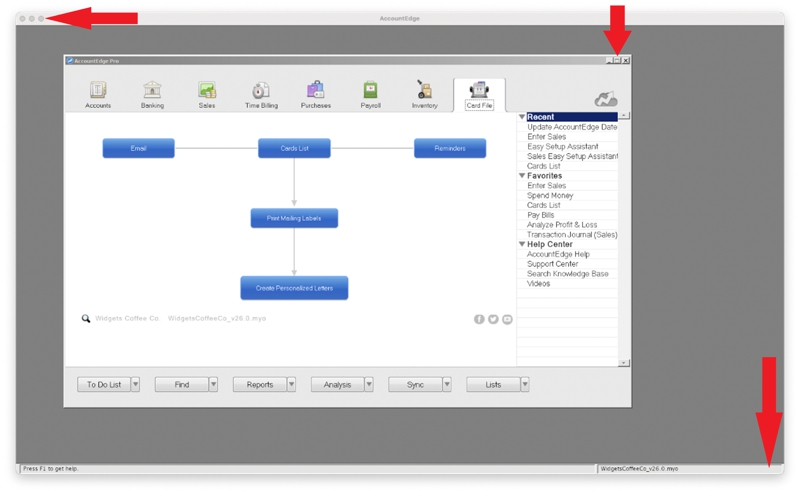
AccountEdge Pro for Mac/Windows
Robust inventory module with all major costing methods, custom reports, and scalability.
Best for: Small businesses wanting affordable, feature-rich desktop alternative.
Price Range: $200-$300
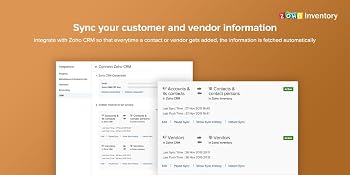
Zoho Inventory (Subscription via Amazon)
Cloud-based with weighted average/FIFO, multi-warehouse, and integrations for real-time tracking.
Best for: E-commerce sellers needing mobile access and scalability.
Price Range: $0-$100/month