Scaling e-commerce means explosive growth in orders, inventory, and channels—but mismatched accounting leads to cash flow chaos, tax penalties, and audit nightmares. Many sellers start simple with cash basis, only to hit walls at $500K+ revenue when tracking receivables, COGS, and returns becomes critical.
In this guide, you'll master scalable accounting methods like accrual and modified hybrids, tailored for e-commerce pain points like Shopify-Amazon syncs and FIFO inventory. We'll break down pros/cons, transition strategies, and software picks. Expect 25-35 minutes to read and apply concepts—perfect for advanced owners/CPAs handling 6-7 figure ops.
By the end, you'll know exactly which method fits your scale and how to implement it without disrupting ops.
▸What You'll Need
- •Advanced knowledge of basic accounting (debits/credits, financial statements)
- •Familiarity with e-commerce platforms (Shopify, Amazon Seller Central)
- •Access to current financials (P&L, balance sheet from last quarter)
- •Optional: Accounting software trial (e.g., QuickBooks Online)
Estimated Time: 25-35 minutes
Difficulty: advanced
▸Step-by-Step Instructions
Step 1: Understand Core Accounting Methods: Cash vs. Accrual
Start with the foundation: Cash basis records revenue/expenses when cash changes hands—ideal for tiny e-com but fails at scale due to ignoring receivables/payables.
Accrual basis books revenue when earned (sale made) and expenses when incurred (invoice received)—crucial for e-com with net-30 supplier terms, customer refunds, and inventory buildup. IRS allows cash up to $25M revenue, but accrual is mandatory for C-corps >$25M or inventory-heavy biz.
For e-com, accrual scales by matching sales to costs accurately, preventing underreported COGS.
💡 Tips:
- •Use analogies: Cash is like a piggy bank (simple, blind to debts); accrual is a full ledger (tracks future obligations).
Step 2: Evaluate Cash Basis Limits for E-Commerce Startups
Cash basis shines for solopreneurs (<$100K/month): Quick setup, matches bank statements, easy tax filing.
But it distorts growth: Ignores pending Amazon payouts (30-60 days), overstates profits by skipping accrued supplier bills, and bungles inventory (no matching to sales). At scale, this triggers IRS audits for 'inventories' under IRC §471.
Switch trigger: When AR/AP exceeds 10% of revenue or multi-channel delays payments.
⚠️ Warnings:
- •Avoid cash basis post-$500K if inventory >20% assets—risks distorted KPIs like gross margin.
Step 3: Adopt Accrual Basis for Inventory-Heavy Scaling
Accrual excels for e-com growth: Tracks A/R (customer owes), A/P (you owe), and inventory valuation precisely. Essential for COGS = Beginning Inv + Purchases - Ending Inv.
E-com twist: Handles returns (contra-revenue), shipping costs (as expense or COGS), and multi-warehouse stock transfers. GAAP/IFRS compliant for investors.
What to expect: More complex reconciliations, but accurate cash flow forecasts via indirect method (Net Income +/- non-cash).
💡 Tips:
- •Automate with API syncs to cut manual entry 80%.
Step 4: Master Inventory Valuation Methods (FIFO, Average Cost)
Under accrual, pick a method: FIFO (First-In-First-Out) assumes oldest stock sells first—best for e-com perishables/fashion, matches rising costs, IRS-preferred.
Average cost smooths fluctuations, simple for dropshipping. LIFO banned for tax (but ok GAAP). Weighted average via software.
Scales by enabling ABC analysis (categorize SKUs by value) and lower-of-cost-or-market adjustments for obsolescence.
⚠️ Warnings:
- •Inconsistent methods trigger IRS §446 change penalties—stick to one.
Step 5: Implement Hybrid/Modified Methods for Flexibility
Hybrid cash-accrual: Cash for ops/taxes, accrual for inventory/AR—IRS-approved via Form 3115. Perfect mid-scale e-com ($1M-$10M).
Modified accrual: Cash-like but accrues major items. Use for multi-entity (US/EU sales) to blend compliance.
Transition: Recast prior years or use cut-off method; software like QuickBooks handles automatically.
💡 Tips:
- •Test hybrid in a sandbox ledger first.
Step 6: Integrate Multi-Channel Data for True Scalability
Scaling requires automation: Pull Shopify/Amazon/Ebay data via APIs into accrual ledgers. Track deferred revenue (pre-orders), sales tax nexus.
Advanced: Variance analysis (actual vs. budgeted COGS), ABC costing for SKUs. Expect 95% accuracy post-setup.
Step 7: Monitor KPIs and Audit Readiness
Track scaling metrics: DSO (days sales outstanding), inventory turns (COGS/Avg Inv), gross margin by channel.
Prep for audits: Segregate duties, reconcile monthly, document method changes. SOX-lite for private scale-ups.
💡 Tips:
- •Set alerts for variances >5%.
▸Pro Tips
- •Use FIFO for inflation-hedging; average for volatile suppliers.
- •Automate AR aging reports weekly to catch bad debt early.
- •Benchmark: Aim for 8-12 inventory turns/year in e-com.
- •Leverage ERP add-ons for real-time COGS.
- •Annual method review: Scale doubles? Reassess hybrid.
- •Outsource fractional CFO for $10M+ transitions.
- •Excel pivot for quick hybrids before software commit.
▸Common Mistakes to Avoid
- •Sticking to cash basis past $1M—distorts valuations, misses accruals.
- •Ignoring inventory layers—leads to overstated assets, tax hits.
- •Manual multi-channel entry—errors compound 20%+ at scale.
- •Method-switching without Form 3115—IRS penalties up to $10K.
- •Forgetting nexus taxes in accrual—underreports liabilities.
▸Troubleshooting
Problem: Cash flow forecasts off by 30%+
Solution: Switch to accrual + indirect cash flow statement; integrate bank feeds.
Problem: Inventory shrinkage mismatches
Solution: Implement cycle counts quarterly; use RFID/barcode for accuracy.
Problem: Tax audit flags on method change
Solution: File Form 3115 timely; consult CPA for §481(a) adjustment.
Problem: Software sync fails across channels
Solution: Use dedicated connectors like A2X; test mappings monthly. Seek dev help if custom.
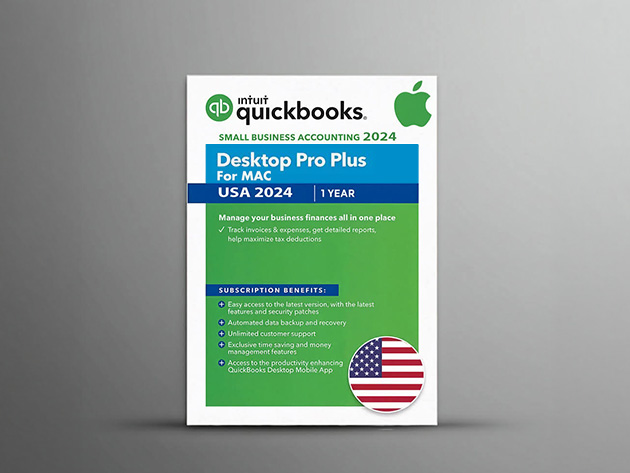
Intuit QuickBooks Desktop Pro Plus 2024
Handles accrual, FIFO inventory, multi-channel imports with robust reporting for scaling e-com.
Best for: Mid-size sellers ($500K-$5M) needing desktop control and Amazon/Shopify sync.
Price Range: $349.99
Profit First by Mike Michalowicz
Teaches cash management alongside accrual for e-com profit allocation that scales.
Best for: Owners transitioning methods to prioritize profit over growth.
Price Range: $14.99
Simple Numbers, Straight Talk, Big Profits by Greg Crabtree
Explains KPI-driven accrual for e-com, with formulas for fixed+variable costs.
Best for: Advanced users building scalable financial models.
Price Range: $18.00
Financial Intelligence for Entrepreneurs by Karen Berman
Demystifies accrual statements, inventory metrics for e-com decision-making.
Best for: CPAs/owners auditing scaling books.
Price Range: $25.00
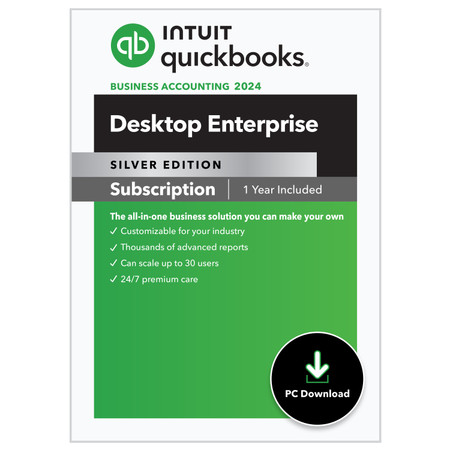
Intuit QuickBooks Desktop Enterprise 24.0
Advanced inventory (FIFO/serial), multi-location for $5M+ e-com empires.
Best for: High-volume, warehouse-heavy operations.
Price Range: $1,499+