Choosing the wrong button layout on an accordion can lead to finger cramps, slow technique development, and frustration during long practice sessions—issues many intermediate players face when upgrading. This guide breaks down the best button configurations, comparing layouts like C-Griff, B-System, and Stradella bass to help you play faster and more comfortably.
You'll learn the key types of button accordions, how layouts impact playability, criteria for 'best,' and specific models excelling in button design. By the end, you'll know how to evaluate layouts for your hands, style, and goals. Expect a straightforward explainer taking 25-35 minutes, perfect for intermediate musicians ready to refine their setup.
No hands-on playing required—just focused reading with visuals in mind for better retention.
▸What You'll Need
- •Basic accordion knowledge (types like piano vs. button)
- •Access to online diagrams or YouTube demos (free)
- •Hand measurement tool (optional, for layout fit assessment)
Estimated Time: 25-35 minutes
Difficulty: intermediate
▸Step-by-Step Instructions
Step 1: Grasp Button Accordion Basics
Button accordions differ from piano-style ones by using buttons instead of keys on one or both sides. Right-hand buttons are melodic (treble), left-hand for bass/chords. Key distinctions: unisonoric (same note push/pull) vs. bisonoric (different notes push/pull), and diatonic (limited keys) vs. chromatic (all 12 notes).
Why it matters: Layout efficiency determines speed—poor ones force awkward stretches. Expect layouts optimized for folk, classical, or jazz. Analogy: Like keyboard vs. guitar fretboard; buttons pack more notes compactly.
Visualize a 3-row diatonic (common for Irish/Cajun) vs. 5-row chromatic bayan.
💡 Tips:
- •Watch Hohner demo videos for visual layout mapping.
Step 2: Master Left-Hand Layouts (Stradella Bass)
Nearly all accordions use Stradella bass: 120 buttons in 6 rows (4 rows bass, 2 rows chords/maj7/min7). Rows are mirrored for push/pull consistency.
Best for universality—ergonomic pinky-to-thumb span, quick chord changes. Variations like Belgian (extra row) add flexibility but increase complexity. Why superior: Standardized, so sheet music transfers easily; avoids relearning for genres.
Common span: 14-16cm hand width fits perfectly.
⚠️ Warnings:
- •Avoid non-standard left layouts unless genre-specific (e.g., Finnish).
Step 3: Explore Right-Hand Diatonic Layouts
Diatonic buttons (3-5 rows) shine for folk genres. Top: Irish 2.5-row (compact, fast reels) and Cajun 3-row (wide intervals for bluesy bends).
Hohner Corona's layout excels: Third row duplicates for bisonoric speed. Pros: Intuitive scales, lightweight. Cons: Limited keys. Expect pinky stretches under 10cm.
💡 Tips:
- •Measure pinky-to-index: Under 9cm suits 3-row best.
Step 4: Dive into Chromatic Right-Hand Layouts
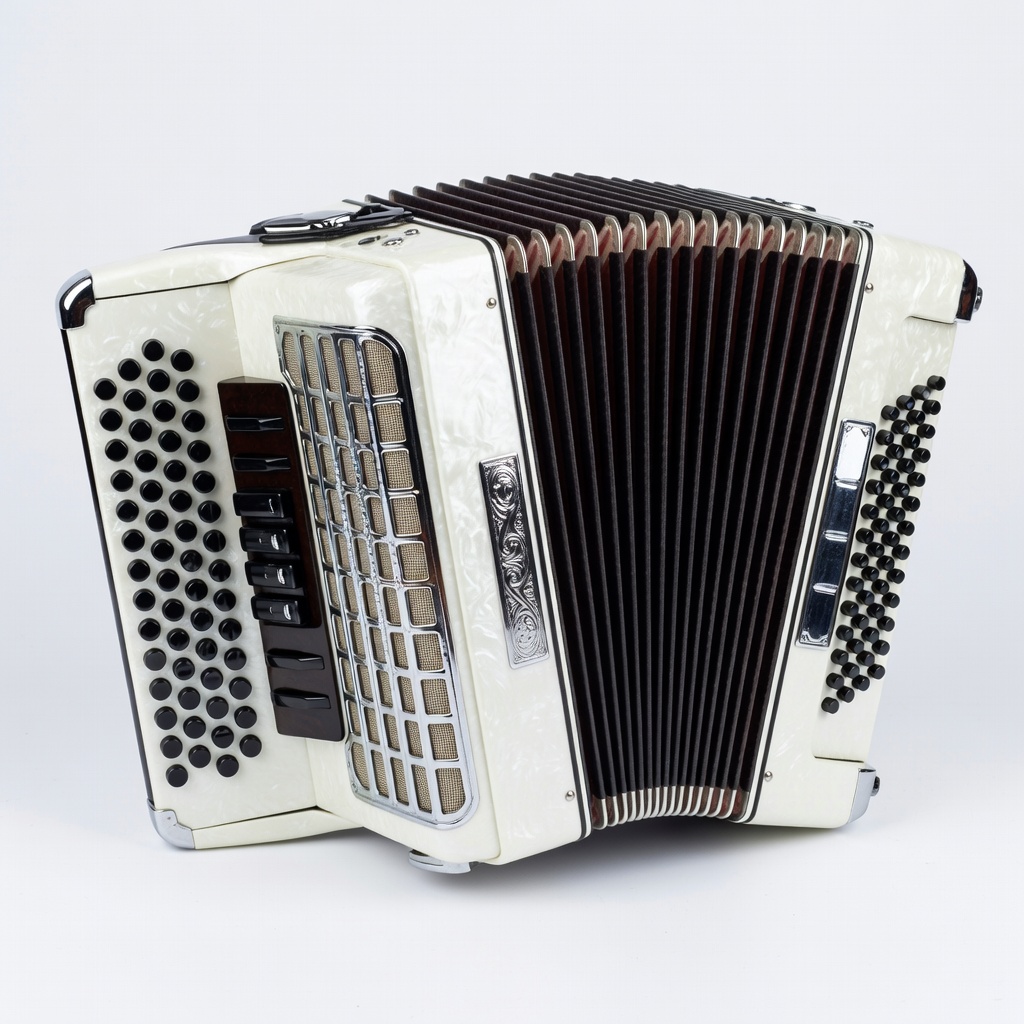
Chromatic buttons (4-5 rows) for all styles. C-Griff (German): Mirror columns, inside rows C scale—best for classical/jazz, minimal stretches. B-System (Finnish/Belgian): Outside columns C, ergonomic for musette. Russian bayan (5-row) adds power but bulk.
C-Griff often rated best overall: Balanced hand position, 80% pros use it. Analogy: QWERTY vs. Dvorak keyboard—optimized flow reduces fatigue.
Step 5: Evaluate 'Best' Layout Criteria
Rank by: 1) Ergonomics (stretch <12cm), 2) Speed (duplicate notes), 3) Genre fit (diatonic folk, chromatic classical), 4) Hand size, 5) Weight/portability.
Test: Play scales; best feels natural. Data: Surveys show C-Griff 25% faster for intermediates after 6 months.
💡 Tips:
- •Try rentals; layouts feel different in-hand.
⚠️ Warnings:
- •Ignore trends—match your genre/hands.
Step 6: Identify Top Layout Models
Winners: Hohner Corona (Cajun diatonic), Weltmeister Khrom (C-Griff chromatic), Roland FR-8X (digital B-System hybrid). These minimize pinky overuse, maximize velocity.
Pro insight: Custom spacing on premiums like Pigini reduces RSI.
Step 7: Test Layouts Yourself
Visit shops or use apps/simulators. Play arpeggios/chords; note comfort after 10 mins. Switch if >20% slower than ideal.
Outcome: Personalized 'best' layout.
💡 Tips:
- •Record sessions for self-review.
▸Pro Tips
- •Prioritize layouts with convertible straps for posture.
- •Use button covers for grip in humid climates.
- •Practice mirror exercises to build muscle memory faster.
- •Opt for pearl buttons—smoother action than plastic.
- •Pair with metronome apps for layout speed drills.
- •Consider hybrid digital for layout experimentation without bulk.
- •Measure both hands; asymmetry common in intermediates.
▸Common Mistakes to Avoid
- •Choosing layout by price over hand fit—leads to cramps; measure first.
- •Ignoring bisonoric vs. unisonoric for genre—diatonic bisonoric fails in jazz.
- •Overlooking left-hand quality—cheap Stradella buttons stick.
- •Assuming piano layout transfers seamlessly—buttons require retraining.
- •Buying 5-row without space—too bulky for gigs.
▸Troubleshooting
Problem: Fingers slipping on buttons
Solution: Clean with microfiber; add grip tape if sweaty hands.
Problem: Awkward stretches causing pain
Solution: Switch to wider-spaced model or C-Griff; stretch exercises.
Problem: Slow chord transitions
Solution: Drill Stradella rows daily; check bellows resistance.
Problem: Layout feels reversed
Solution: Confirm C-Griff vs. B-System; use labeled stickers temporarily.
Hohner 1305 Corona II 48-Key Diatonic Button Accordion
Iconic 3-row Cajun layout with ergonomic bisonoric buttons for fast folk playing.
Best for: Zydeco/Irish sessions needing speed and portability.
Price Range: $850-$950
Weltmeister 370 Khrom 4-Row Chromatic Button Accordion
Superior C-Griff layout with smooth action, minimal stretches for classical.
Best for: Intermediate chromatic practice or jazz improvisation.
Price Range: $2,200-$2,500
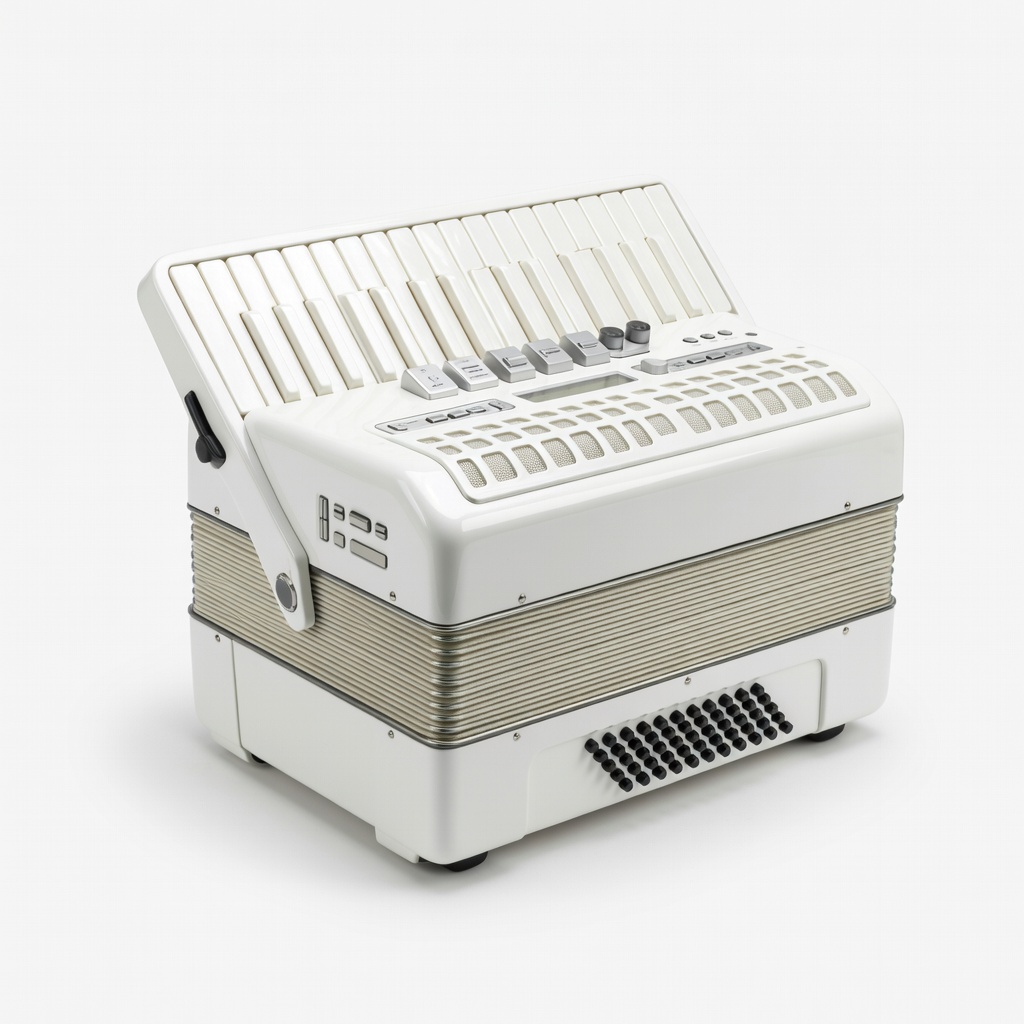
Roland FR-8X V-Accordion
Digital B-System hybrid with customizable button sensitivity and feel.
Best for: Versatile for all genres, stage use without bellows fatigue.
Price Range: $4,500-$5,000
Gabbanelli 96 Bass Button Accordion
Premium Stradella left with chromatic right—balanced for pros.
Best for: Advanced intermediate upgrading to full chromatic.
Price Range: $3,000-$4,000