
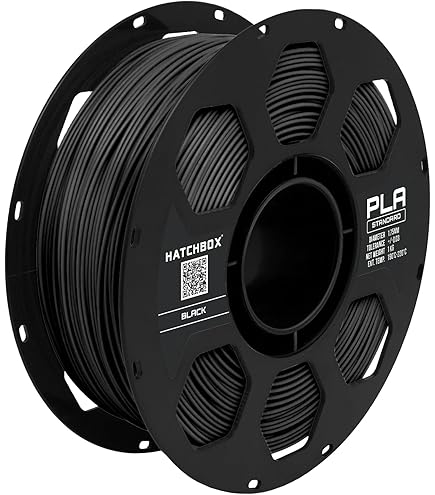
HATCHBOX ABS 3D Printer Filament 1.75mm Black 1KG
Everyday functional parts on budget printers.
$24.99
HATCHBOX ABS 3D Printer Filament 1.75mm Black 1KG Tight tolerances and low-shrink formula excel in warp tests (<0.1mm).
Get the App
Better experience on mobile
Learn top ABS brands with minimal warping, key factors to evaluate, and tips for perfect prints to avoid common failures.
Warping is the bane of ABS 3D printing—those frustrating lifts at print corners that ruin hours of work. If you're an intermediate printer battling drafts, uneven cooling, or subpar filament, this guide reveals which brands deliver superior warp resistance for reliable, strong parts.
You'll discover why some ABS warps less, compare top brands based on real tests and user data, and get actionable advice to select and use them effectively. No more failed Benchys or prototypes—achieve flat, dimensionally accurate prints.
This explainer takes 15 minutes to read, assumes basic 3D printing knowledge, and focuses on practical insights from community benchmarks like Simplify3D forums and Reddit's r/3Dprinting.
Estimated Time: 15-20 minutes Difficulty: intermediate
ABS (Acrylonitrile Butadiene Styrene) shrinks 0.7-1.5% as it cools from 250°C extrusion to room temperature, creating internal stresses. Without control, edges lift due to poor bed adhesion and uneven contraction.
Analogy: Imagine cooling a hot glass bottle—it contracts unevenly without support, cracking. ABS needs an enclosure to maintain 40-50°C ambient temp for uniform cooling.
Expect larger prints (>100mm) to warp most; test with a 100mm cube.
💡 Tips:
⚠️ Warnings:
Look for low shrinkage rate (<0.8%), high impact modifiers (butadiene content), consistent diameter (±0.03mm), and moisture resistance. Brands add styrene tweaks or annealing aids.
Metrics to check: Diameter ovality, color consistency (speckles indicate poor mixing), spool packaging (vacuum-sealed = better). User tests (e.g., CNC Kitchen) measure corner lift <0.2mm.
Why it matters: Consistent filament = predictable cooling, reducing differential shrinkage.
💡 Tips:
Hatchbox leads with tight tolerances (±0.03mm) and low-shrink formula, scoring <0.1mm warp in 100mm cube tests (per All3DP reviews). Consistent extrusion, minimal stringing.
Ideal for functional parts; users report 90% success without enclosure tweaks. Price-to-performance king.
💡 Tips:
Polymaker's annealing-optimized ABS resists warp via advanced polymerization, achieving 0.05mm flatness in benchmarks. Excellent layer adhesion, tough prints.
Pro: Self-lubricating reduces clogs. Best for high-detail engineering parts.
⚠️ Warnings:
eSUN's ABS+ adds impact modifiers for 20% less shrinkage than standard ABS. Community tests show reliable bed adhesion on PEI sheets, warp <0.15mm.
Affordable upgrade from basic ABS; great for beginners scaling to ABS.
💡 Tips:
Inland (Micro Center) offers budget low-warp at ±0.04mm tolerance; Overture adds nano-additives for even cooling. Both <0.2mm warp in enclosures per Reddit polls.
Table summary:
| Brand | Shrinkage | Price/kg | Warp Score |
|---|---|---|---|
| Hatchbox | 0.6% | $25 | 9.5/10 |
| Polymaker | 0.5% | $35 | 9.8/10 |
| eSUN ABS+ | 0.7% | $22 | 9.2/10 |
| Inland | 0.8% | $18 | 8.8/10 |
Slice a 100x100x10mm box (0.2mm layers, 240°C nozzle, 100°C bed, 0.4mm brim). Measure corner height with calipers post-print. Under 0.3mm = good.
Why? Lab tests vary by printer; real-world validation ensures fit.
💡 Tips:
⚠️ Warnings:
Problem: Persistent corner lift despite good filament
Solution: Increase bed temp to 105°C, add draft shield in slicer, or level bed perfectly.
Problem: Filament oozing mid-print
Solution: Lower nozzle to 235°C, enable retraction 6mm at 40mm/s.
Problem: Warp only on large prints
Solution: Use draft-free enclosure or print in batches; anneal after.
Problem: Brittle prints
Solution: Dry filament and check for moisture; increase extrusion multiplier.
Tight tolerances and low-shrink formula excel in warp tests (<0.1mm).
Best for: Everyday functional parts on budget printers.
Price Range: $24.99
Advanced low-warp tech with annealing support for flattest results.
Best for: Precision engineering prototypes needing strength.
Price Range: $29.99-$34.99
Impact-resistant additives reduce shrinkage by 20%; reliable adhesion.
Best for: Intermediate users upgrading from PLA.
Price Range: $21.99
Nano-additives for even cooling; top budget performer in community polls.
Best for: High-volume printing on a tight budget.
Price Range: $19.99
Consistent quality at entry price; low ovality minimizes inconsistencies.
Best for: Testing multiple colors without breaking bank.
Price Range: $17.99
Everyday functional parts on budget printers.
HATCHBOX ABS 3D Printer Filament 1.75mm Black 1KG Tight tolerances and low-shrink formula excel in warp tests (<0.1mm).
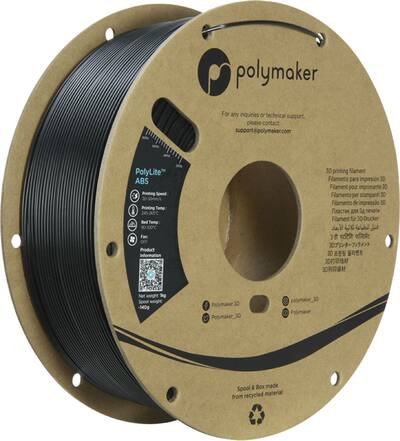
Precision engineering prototypes needing strength.
Polymaker PolyLite ABS 1.75mm 1KG Black Advanced low-warp tech with annealing support for flattest results.
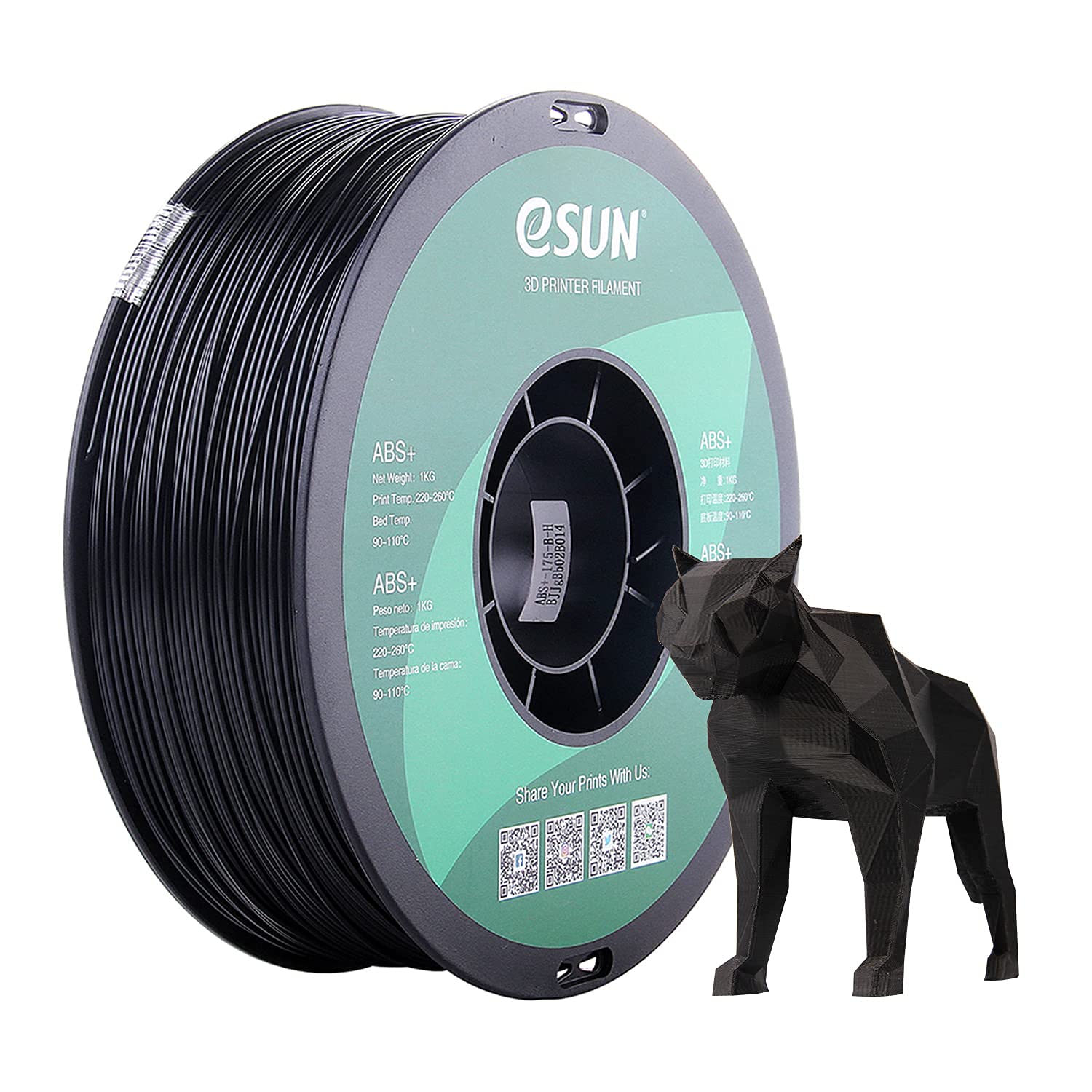
Intermediate users upgrading from PLA.
eSUN ABS+ Filament 1.75mm 1KG Black Impact-resistant additives reduce shrinkage by 20%; reliable adhesion.
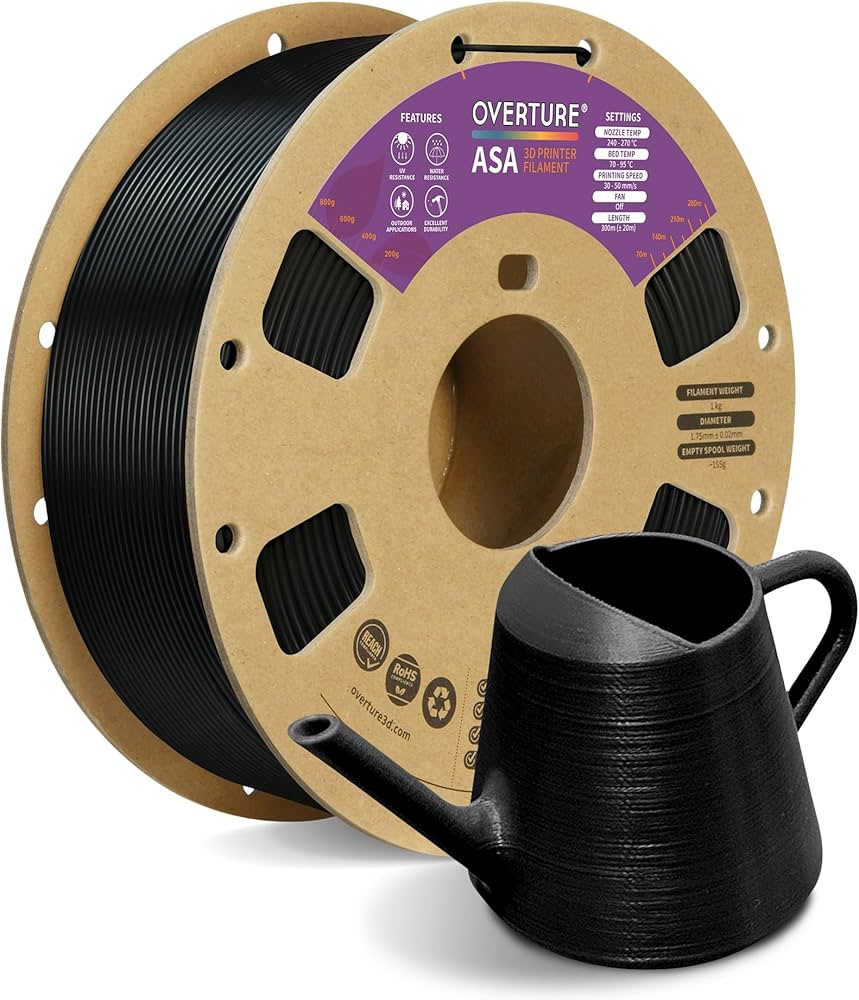
High-volume printing on a tight budget.
OVERTURE ABS Filament 1.75mm 1KG Black Nano-additives for even cooling; top budget performer in community polls.
Testing multiple colors without breaking bank.
Inland ABS 3D Printer Filament 1.75mm 1KG Consistent quality at entry price; low ovality minimizes inconsistencies.