
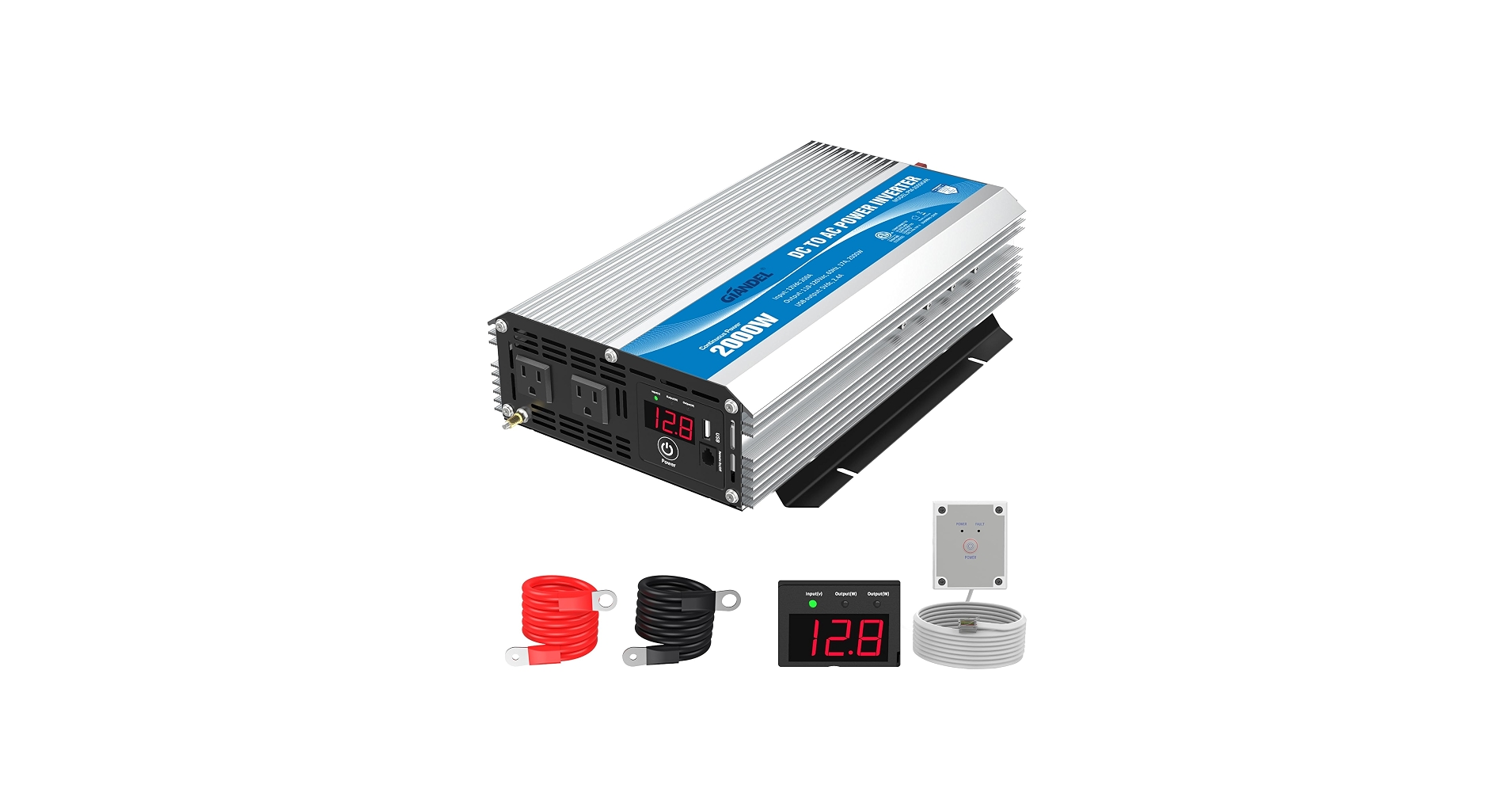
Giandel 2000W Pure Sine Wave Inverter
RV/off-grid for 1000-1500W continuous loads.
$229.99
Giandel 2000W Pure Sine Wave Inverter Affordable high-surge (4000W) PSW handles microwaves/tools reliably with GFCI and cooling.
Get the App
Better experience on mobile
Learn how to select powerful 12V inverters for running microwaves, tools, and appliances up to 3000W+ from your battery bank.
Struggling to power high-draw devices like coffee makers, power tools, or even small air conditioners from a 12V battery system in your RV, boat, or off-grid setup? Many inverters fail under heavy loads, causing blackouts, damage, or fires. This guide explains what makes a 12V inverter capable of handling high wattage (1000W+ continuous) and how to choose the right one.
You'll learn key specs like surge rating, waveform type, and battery sizing, with real-world examples and calculations. By the end, you'll confidently pick an inverter that won't let you down. Expect a straightforward explainer—no hands-on install required, just 15 minutes of reading for intermediate users familiar with basic electrics.
We'll break it down from basics to pro tips, helping you avoid costly mismatches.
Estimated Time: 15-20 minutes Difficulty: intermediate
A 12V inverter converts DC power from batteries (like in cars, RVs, or solar setups) to AC power for household appliances. High wattage loads mean devices drawing 1000W or more continuously—think microwaves (1000-1500W), hair dryers (1500W), or drills (800-2000W).
Analogy: It's like a translator between your battery's language (DC) and your plug-in gadgets' language (AC). Without a strong inverter, it stutters under heavy 'conversations' (loads).
Expect continuous wattage (steady power) vs. surge (startup peaks, often 2x continuous). For high loads, aim for 1500W+ continuous.
💡 Tips:
High wattage starts at 1000W continuous for 12V inverters, as lower ones (300-600W) can't sustain demanding tools or appliances. Surge capacity handles startup spikes—e.g., a fridge motor surges to 2000W but runs at 800W.
Example: A 1500W continuous inverter with 3000W surge can start a 1400W microwave (surge ~2800W).
Why it matters: 12V systems have limits—amps draw skyrockets (Watts = Volts x Amps, so 1500W at 12V = 125A!). Undersized inverters overheat or shut off.
⚠️ Warnings:
List appliances, add their running watts, factor 20% buffer, and double for surge.
Formula: Total Watts = Sum of devices + 20% safety. Battery Amps needed = Total Watts / Battery Voltage (e.g., 2000W / 12V = 167A).
Example: Microwave (1200W) + toaster (1000W) = 2200W + 20% = 2640W inverter needed. Use online calculators for precision.
This prevents overloads—expect real draw varies with efficiency (85-95%).
💡 Tips:
Pure sine wave (PSW) inverters produce smooth AC like utility power—essential for high-load sensitive gear (laptops, fridges). Modified sine wave (MSW) is choppy, cheaper, but causes humming, overheating, or damage in high-watt tools.
Analogy: PSW is a luxury sedan (smooth ride); MSW is a bumpy truck.
For high wattage, always PSW—handles 2000W+ cleanly.
Look for 2-3x continuous surge (e.g., 2000W cont./4000W surge). Efficiency >90% means less battery drain.
High loads amplify heat—fans and aluminum cases help. Expect 80-95% efficiency; at 2000W, it pulls ~2200W from battery.
Test: Surge for motors >2x running watts.
💡 Tips:
⚠️ Warnings:
High wattage drains batteries fast. Rule: Battery Ah x Voltage x 0.5 (50% DoD for lead-acid) > (Watts x Hours)/Efficiency.
Example: 2000W for 1hr needs ~333Ah at 12V (2000/12/0.85/0.5). Use deep-cycle AGM/LiFePO4, thick cables (4/0 AWG).
Why? Voltage drop kills performance.
GFCI outlets, low/high voltage shutdown, overheat protection, fuses. Remote on/off for installs.
For high wattage: Heavy-duty transformers, cooling fans. IP ratings for marine/RV.
Pro check: Short-circuit protection prevents fires.
⚠️ Warnings:
After choosing, test with dummy loads or real devices. Monitor voltage, temp, runtime.
Apps like VictronConnect track via Bluetooth. Expect derating in hot weather (10-20% less output).
This confirms it handles your high loads reliably.
💡 Tips:
Problem: Inverter beeps/shuts off under load
Solution: Check battery voltage (>11V), reduce load, clean connections. Upgrade cables if drop >0.5V.
Problem: Overheating during high wattage use
Solution: Improve ventilation, derate load 20% in heat >90°F. Fan clogged?
Problem: Appliances hum or won't run
Solution: Switch to pure sine wave; check for loose grounds.
Problem: Short runtime
Solution: Recalculate Ah needs; charge batteries fully. Seek pro for wiring issues.
Affordable high-surge (4000W) PSW handles microwaves/tools reliably with GFCI and cooling.
Best for: RV/off-grid for 1000-1500W continuous loads.
Price Range: $229.99
Robust build, 6000W surge, Bluetooth monitoring for demanding setups.
Best for: Solar cabins powering AC units or welders.
Price Range: $449.99
Transfer switch built-in, heavy-duty for continuous high loads with protections.
Best for: Backup power for workshops or boats.
Price Range: $549.00
Premium efficiency (93%), toroidal transformer for clean power and quiet operation.
Best for: Marine/high-end off-grid for sensitive high-watt gear.
Price Range: $1,399.00
RV/off-grid for 1000-1500W continuous loads.
Giandel 2000W Pure Sine Wave Inverter Affordable high-surge (4000W) PSW handles microwaves/tools reliably with GFCI and cooling.
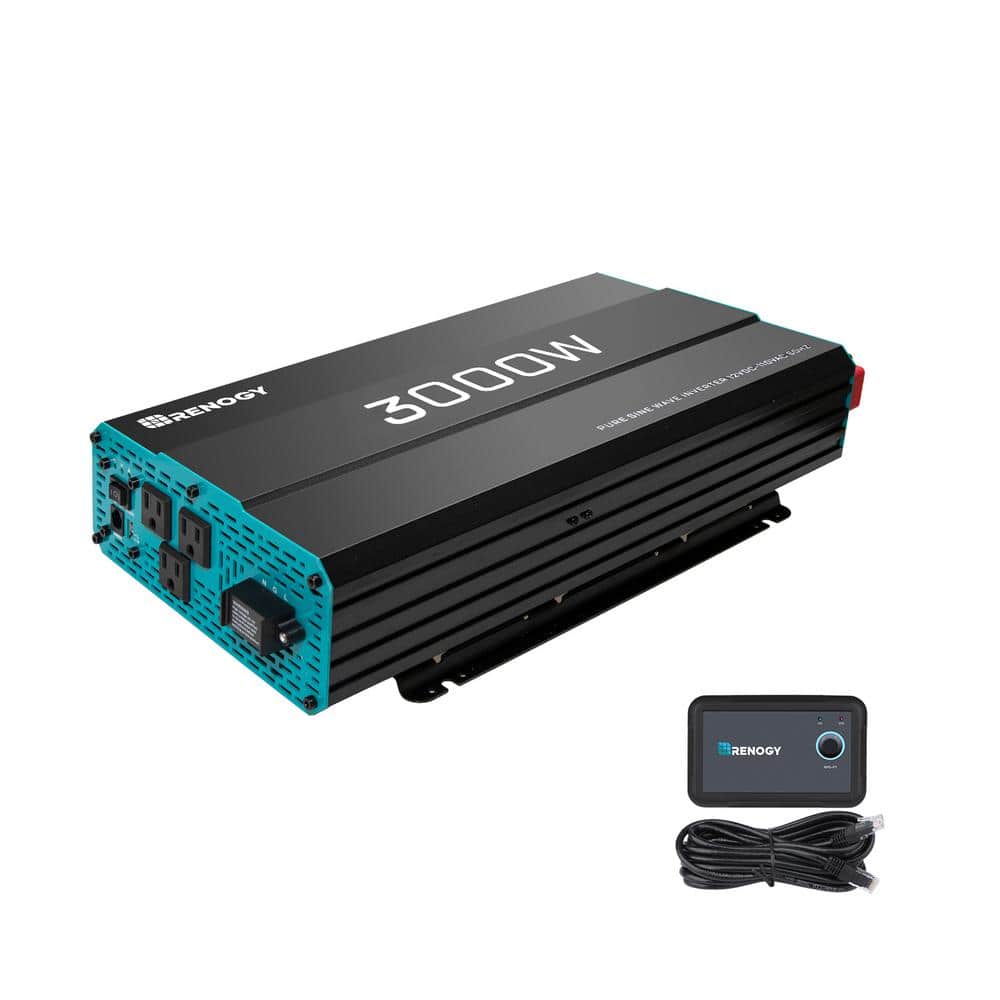
Solar cabins powering AC units or welders.
Renogy 3000W Pure Sine Wave Inverter Robust build, 6000W surge, Bluetooth monitoring for demanding setups.
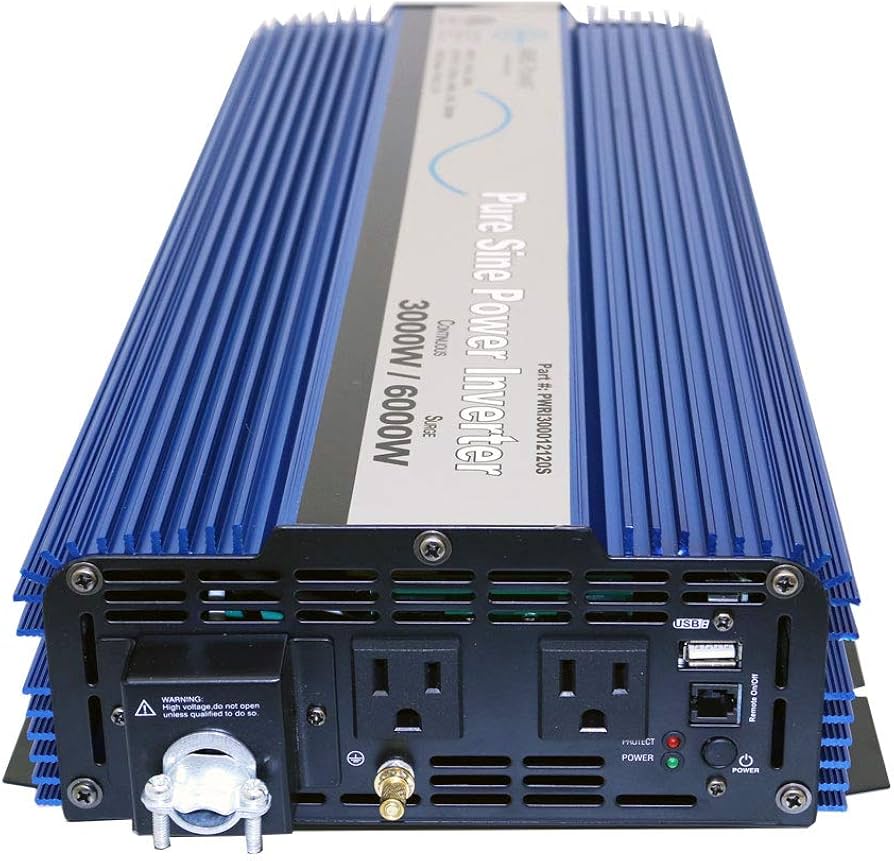
Backup power for workshops or boats.
AIMS Power 3000W Pure Sine Inverter Transfer switch built-in, heavy-duty for continuous high loads with protections.
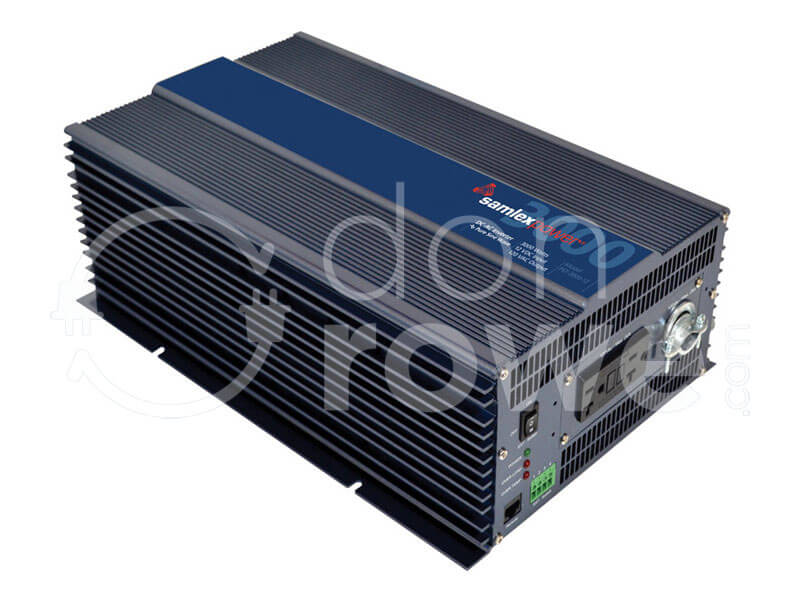
Marine/high-end off-grid for sensitive high-watt gear.
Samlex PST-3000-12 3000W Inverter Premium efficiency (93%), toroidal transformer for clean power and quiet operation.