Choosing the wrong 12V battery for your solar generator can lead to underperformance, safety risks, or voided warranties—issues advanced users encounter when scaling off-grid systems. With solar generators like EcoFlow Delta or Bluetti AC200 gaining popularity for RVs, camping, and backups, adding external 12V batteries boosts capacity without buying proprietary expansions.
In this guide, you'll master compatibility factors: voltage matching, chemistry (AGM vs. LiFePO4), capacity sizing, BMS integration, and wiring. Expect to spend 20-30 minutes reading; no tools needed beyond your solar generator manual. By the end, you'll confidently select and integrate batteries for 2-10x runtime gains.
We'll break it down from basics to advanced metrics like C-rates and Peukert's law, with real-world examples for 300-2000Wh solar generators.
▸What You'll Need
- •Solar generator user manual (for input specs)
- •Multimeter (for voltage/continuity checks)
- •Battery specs sheet or online datasheet
- •Prerequisite knowledge: Basic solar basics, Ah/Wh calculations, DC wiring
Estimated Time: 20-30 minutes
Difficulty: advanced
▸Step-by-Step Instructions
Step 1: Verify Your Solar Generator's 12V Input Specs
Start by consulting your model's manual or specs for 12V DC input port details. Most solar generators (e.g., Jackery Explorer 1000, Renogy Lyten) have XT60, Anderson, or cigarette lighter inputs rated 10-30A at 12-14.4V. Note max input voltage (avoid >15V to prevent BMS cutoff) and current limits.
Why it matters: Mismatch causes no charging, overheating, or damage. Expect inputs like '12V/10A car charger'—cross-reference with battery output.
Pro tip: Use apps like EcoFlow or Bluetti for real-time input monitoring.
💡 Tips:
- •Download manual PDF if lost; search '[model] 12V input specs'
⚠️ Warnings:
- •Never exceed rated amps—risk of fire
Step 2: Understand 12V Battery Chemistries for Solar Use
12V batteries fall into lead-acid (flooded, AGM, Gel) or lithium (LiFePO4, Li-ion). For solar generators, prioritize deep-cycle types: AGM/Gel handle 50% DOD (depth of discharge), LiFePO4 excels at 80-100% DOD with 4000+ cycles vs. 500 for lead-acid.
Analogy: Lead-acid is like a sprint car (cheap, short life), LiFePO4 a marathon truck (expensive, reliable). Solar gens prefer LiFePO4 for BMS compatibility and low self-discharge (3%/month).
Expect LiFePO4 nominal 12.8V, charged to 14.4-14.6V.
💡 Tips:
- •LiFePO4 = safer (no thermal runaway), lighter (1/3 weight)
⚠️ Warnings:
- •Avoid flooded lead-acid: spills, venting issues indoors
Step 3: Match Voltage and Tolerance Precisely
Strictly 12V nominal batteries only—solar gens' MPPT/BMS reject 24V+. LiFePO4: 12.8V nominal, 10.0-14.6V range. Lead-acid: 12V, 10.5-14.4V. Measure resting voltage with multimeter (>12.2V charged).
Why critical: Over/under voltage triggers protection circuits, halting charge. Test: Connect briefly, monitor for errors.
💡 Tips:
- •Use voltmeter on battery terminals pre-connection
Step 4: Size Capacity (Ah) to Your Power Needs
Calculate required Ah: (Solar gen Wh / 12V) x safety factor (1.2). E.g., 1000Wh gen needs ~100Ah for full recharge. Match C-rate: Battery discharge ≥ gen draw (e.g., 1C = 100A from 100Ah).
Advanced: Factor Peukert's exponent (1.2-1.3 lead-acid) for effective capacity at high loads. Oversize 20-50% for solar variability.
💡 Tips:
- •Parallel batteries double Ah (same V); use bus bars
⚠️ Warnings:
- •Undersized = slow charge; check parallel limits (4 max)
Step 5: Check Physical Fit, Terminals, and BMS
Measure dimensions (Group 24/27/31 sizes common). Terminals: SAE, M8 bolts for solar. Lithium needs BMS ≥100A continuous, with low-temp cutoff (-4°F).
Solar gens pair best with batteries having UART/RS485 for monitoring. Expect vibration-proof for RV use.
💡 Tips:
- •BMS app integration (e.g., JK BMS) for SOC accuracy
Step 6: Test Compatibility and Safe Wiring
Wire via fused cable (30A fuse), polarity correct. Charge via DC-DC or direct input. Monitor temp (<140°F), voltage stability.
Safety first: Ground chassis, use insulated tools.
💡 Tips:
- •Add DC-DC charger for lead-acid to lithium conversion
⚠️ Warnings:
- •Reverse polarity fries BMS—double-check!
Step 7: Monitor Long-Term Performance and Balance
Track cycles, balance cells quarterly (for parallels). Use shunt-based BMS for precise SOC. Expect 10-20% capacity fade after 2000 cycles.
Advanced metric: Coulomb efficiency >99% ideal.
💡 Tips:
- •Software like VictronConnect for data logging
▸Pro Tips
- •Prioritize LiFePO4 with Grade A cells (tested IR <50mΩ)
- •Parallel identical batteries only—mismatched ages cause imbalance
- •Use Y-splitters for multi-panel solar to battery charging
- •Cold weather? Heat pads for LiFePO4 BMS activation
- •Calculate total Wh: Ah x V x DOD for realistic runtime
- •Firmware update solar gen for better 12V protocols
- •Time-saver: Pre-buy XT60-to-Anderson adapters
▸Common Mistakes to Avoid
- •Using starter batteries (thin plates, fail at deep cycles)
- •Ignoring BMS current rating—overloads cause shutdowns
- •Over-parallel without bus bars—uneven current sharing
- •Forgetting temp compensation in charging profiles
- •Mixing chemistries—voltage curves mismatch
▸Troubleshooting
Problem: No charging or 'low voltage' error
Solution: Check polarity, clean terminals; test battery >12.2V. Reset BMS.
Problem: Overheating during charge
Solution: Reduce current (add resistor); ensure ventilation. Check fuse.
Problem: Uneven discharge in parallels
Solution: Balance cells; use equal-length cables <3ft.
Problem: BMS cutoff in cold
Solution: Warm battery >32°F; add low-temp BMS override.
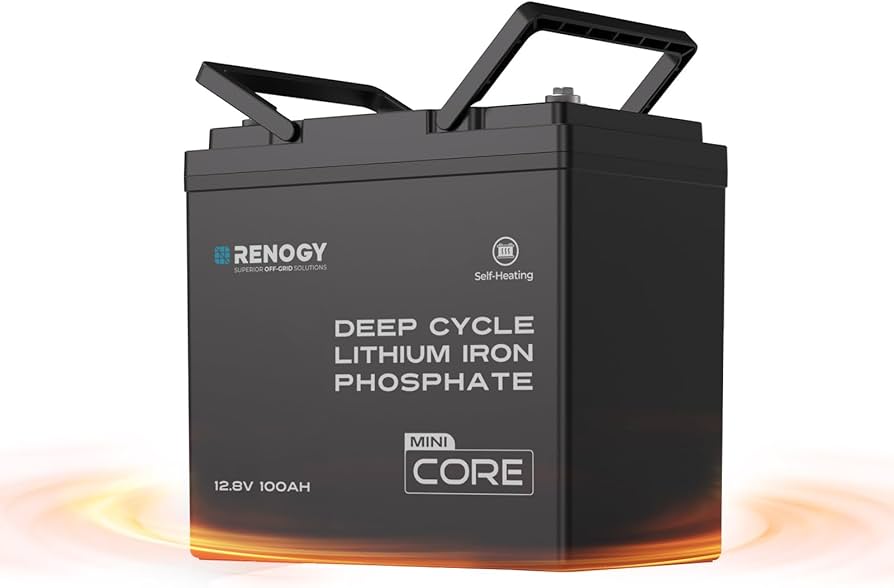
Renogy 12V 100Ah Smart LiFePO4 Battery
Built-in 100A BMS, Bluetooth monitoring, 4000+ cycles—perfect for solar gen expansion with app integration.
Best for: Daily RV/off-grid use; pairs with EcoFlow/Bluetti inputs.
Price Range: $389.99
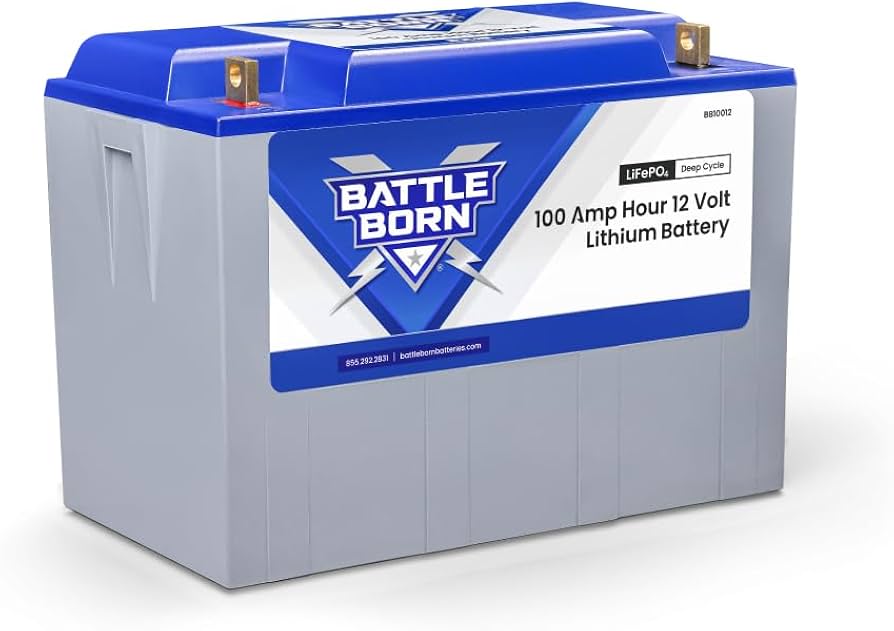
Battle Born BB10012 100Ah 12V LiFePO4
Military-grade, 3000-5000 cycles, vibration-resistant; handles high C-rates for power-hungry gens.
Best for: Marine/RV solar setups needing reliability.
Price Range: $899
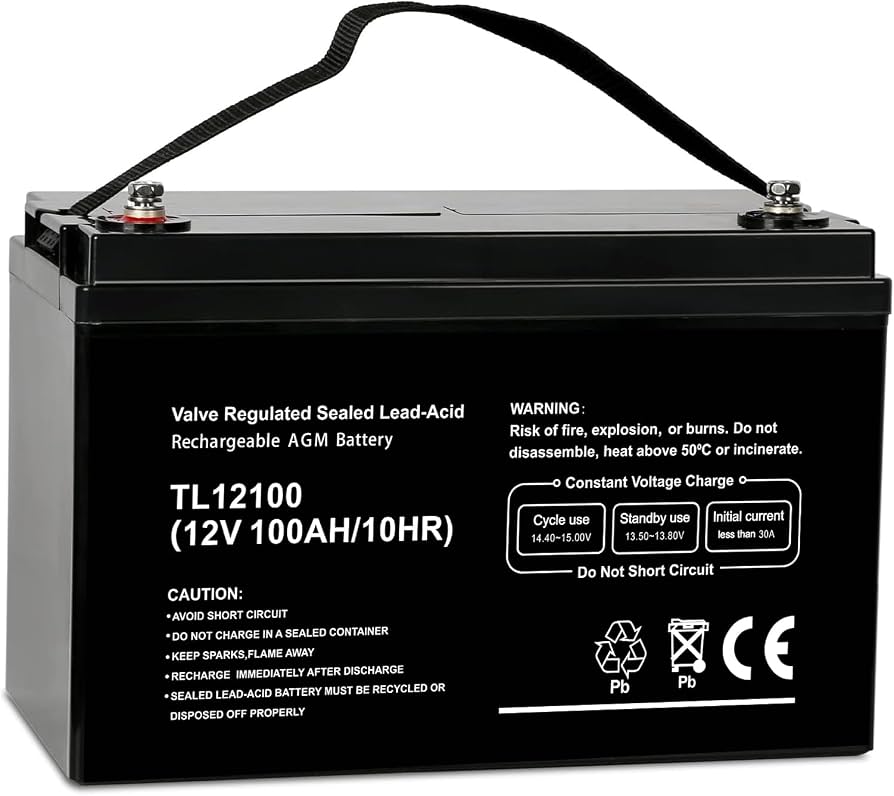
Weize 12V 100Ah AGM Deep Cycle Battery
Budget-friendly, spill-proof, 700 cycles at 50% DOD—great starter for non-lithium solar gens.
Best for: Intermittent camping; cheaper alternative to lithium.
Price Range: $179.99
LiTime 12V 200Ah LiFePO4 Battery
High-capacity with 200A BMS, low-temp protection; doubles runtime for large gens.
Best for: Home backup expansions.
Price Range: $499.99
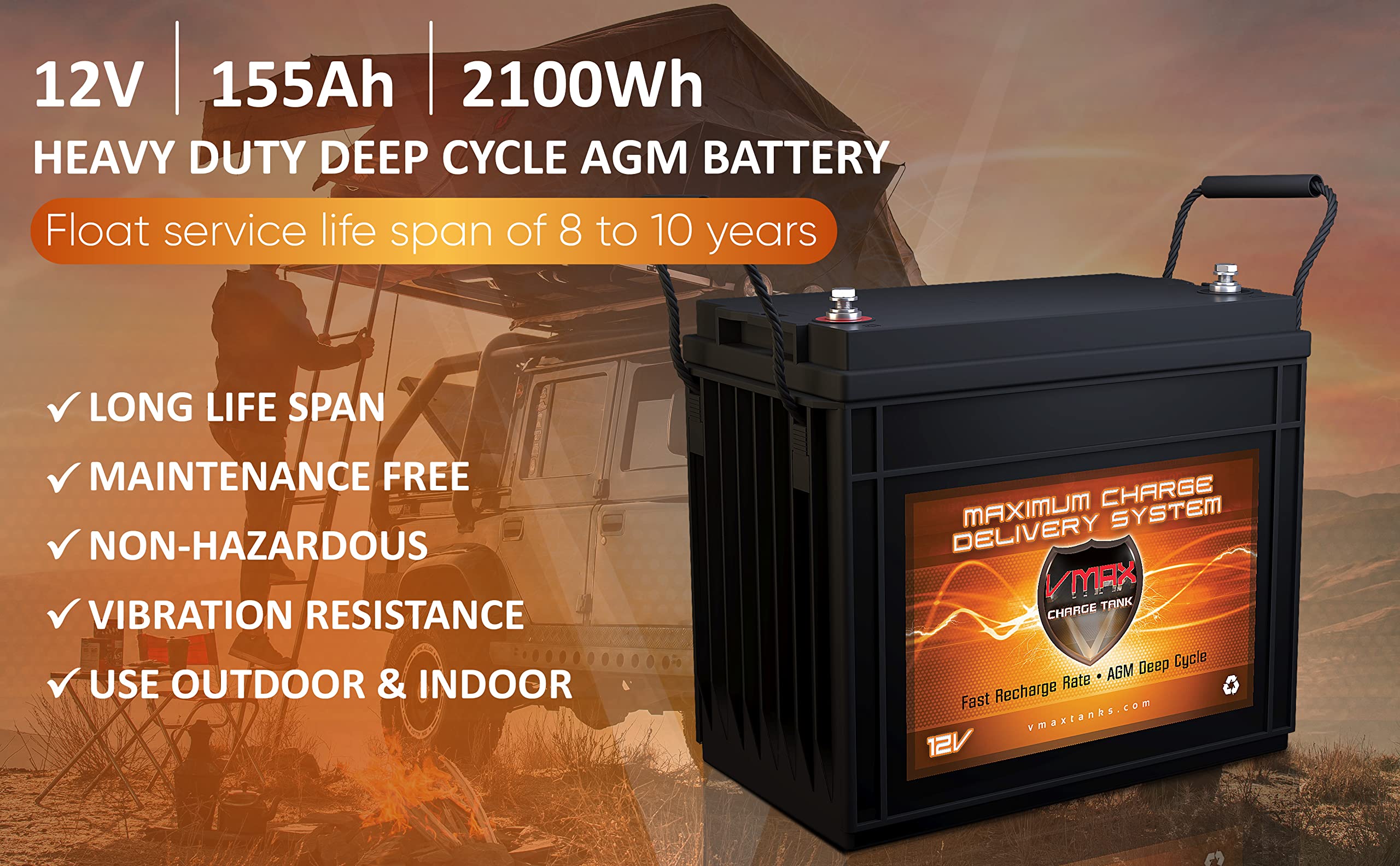
VMAXTANKS SLR155 12V 155Ah AGM
Heavy-duty deep cycle, pure lead plates for solar endurance.
Best for: Budget high-Ah needs.
Price Range: $349