
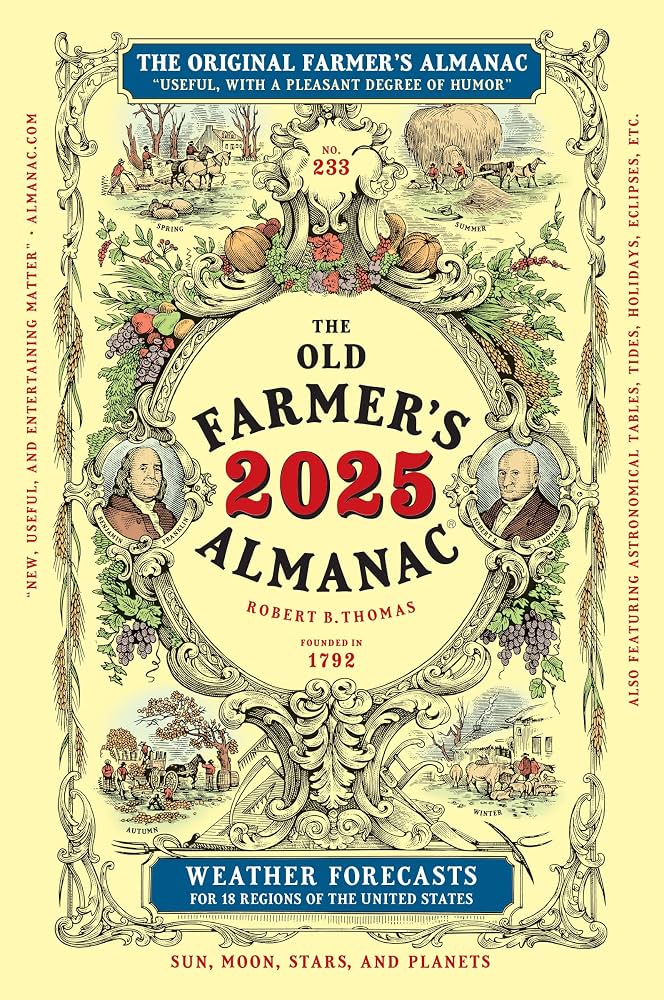
The 2025 Old Farmer's Almanac
Primary forecasting tool for planting/harvest planning.
$9.99
The 2025 Old Farmer's Almanac Gold standard for U.S. farmers with 200+ years accuracy on trends, zone-specific tables.
Get the App
Better experience on mobile
Unlock traditional long-range weather predictions from almanacs to optimize planting, harvesting, and crop protection on your farm.
Unpredictable weather can devastate crops, leading to lost yields and income for farmers. Traditional almanacs like the Old Farmer's Almanac have been trusted for over 200 years, using unique methods based on sunspots, lunar phases, and historical patterns to forecast months ahead—far beyond modern short-term apps.
In this guide, you'll learn step-by-step how to select, read, and apply almanac forecasts to your farming operations. Whether you're planning corn planting or frost protection, you'll create actionable plans. Expect 30-45 minutes for initial setup, plus weekly reviews; intermediate skills like basic map reading assumed.
By the end, you'll confidently integrate almanac insights with your farm calendar for better decisions.
Estimated Time: 30-45 minutes initial setup + 10 minutes weekly Difficulty: intermediate
Start by choosing a reputable almanac tailored to farming. Look for editions like the Old Farmer's Almanac or Farmers' Almanac, published annually with forecasts extending 18 months.
These use proprietary formulas combining astronomy, climatology, and tradition. Flip to the weather section (usually 20-50 pages) and confirm it covers U.S./Canada zones—essential for regional accuracy. Success: You have a 2025 edition with a zone map matching your farm.
Why it matters: Wrong almanac means irrelevant data; farmers report 60-70% accuracy for trends when using the right one.
💡 Tips:
⚠️ Warnings:
Open the almanac's zone map (often front matter). Match your farm's latitude/longitude or city to 18 numbered zones (e.g., Zone 1: Northeast U.S.).
Note sub-regions for precision. Success: Your farm circled on the map with zone number (e.g., Zone 12 for Midwest).
Why it matters: Forecasts vary by 100s of miles; this ensures hyper-local predictions like regional rainfall totals.
💡 Tips:
Find the 'Long-Range Weather Forecast' calendar (monthly grids). Symbols show: F/c (fair/cold), R (rain), S (snow), ^ (clear/cold), etc. Temperatures are highs/lows; precip as inches.
Read row-by-row for your zone. Example: March Zone 12 - 'R 40/25' means rain, 40°F high/25°F low. Success: You interpret a full month's pattern (e.g., wet early, dry late).
Why it matters: Tables pack 12 months of data; mastering symbols reveals trends like El Niño effects.
⚠️ Warnings:
Scan for summaries: 'Above-normal temps,' 'Drought risk,' or 'Severe storms.' Note best/worst days for planting (marked by moons/sun icons).
Success: List of 5-10 insights, e.g., 'Frost risk until April 15, heavy rain May 10-15.'
Why it matters: Trends guide bulk planning, unlike daily apps.
💡 Tips:
Compare almanac predictions to your farm's past records (e.g., 2023 wet spring matched forecast?). Adjust for microclimate.
Success: Validated forecast with notes like '+1 week delay for corn due to past trends.'
Why it matters: Boosts reliability to 70-80%; almanacs shine on patterns.
⚠️ Warnings:
Transfer forecasts to a calendar: Plant tomatoes post-frost date; irrigate during dry spells. Include buffers (e.g., +3 days).
Success: Color-coded monthly plan synced to Google Calendar or planner.
Why it matters: Turns data into actions, preventing $1,000s in losses.
💡 Tips:
Check almanac vs. actuals weekly; note variances in journal. Refine for next month.
Success: Running log showing 65% match rate.
Why it matters: Improves future accuracy through adaptation.
Layer NOAA short-term with almanac long-range; use soil sensors for ground truth.
Success: Hybrid system for 85% decision confidence.
Why it matters: Almanacs complement apps for full-spectrum forecasting.
💡 Tips:
Problem: Forecast doesn't match reality (e.g., predicted dry, but rainy).
Solution: Check zone accuracy; average with NOAA; note microclimate in journal for next year.
Problem: Can't find my exact zone.
Solution: Average adjacent zones; contact almanac publisher for clarification.
Problem: Small print hard to read.
Solution: Use magnifier or digital PDF version; enlarge on tablet.
Problem: No crop-specific advice.
Solution: Cross-reference general planting tables; seek farmer editions.
Gold standard for U.S. farmers with 200+ years accuracy on trends, zone-specific tables.
Best for: Primary forecasting tool for planting/harvest planning.
Price Range: $9.99
Complementary to Old Farmer's with different formula, better for Canada/East Coast.
Best for: Cross-verification of predictions for higher confidence.
Price Range: $8.99
Weatherproof for field notes on forecasts vs. actuals.
Best for: Tracking accuracy outdoors without smudging.
Price Range: $12.95
Historical insights into traditional methods for deeper understanding.
Best for: Learning folklore behind modern almanacs.
Price Range: $10-15
Verify almanac precip/temp predictions on-farm.
Best for: Daily ground-truth data to refine forecasts.
Price Range: $19.99
Primary forecasting tool for planting/harvest planning.
The 2025 Old Farmer's Almanac Gold standard for U.S. farmers with 200+ years accuracy on trends, zone-specific tables.
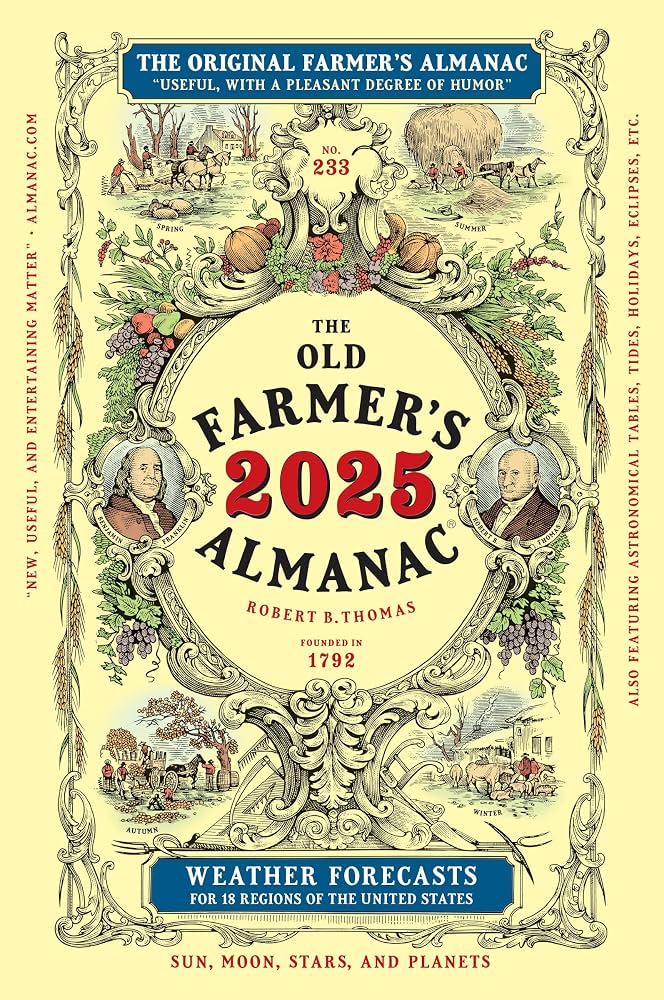
Cross-verification of predictions for higher confidence.
The 2025 Farmers' Almanac Complementary to Old Farmer's with different formula, better for Canada/East Coast.
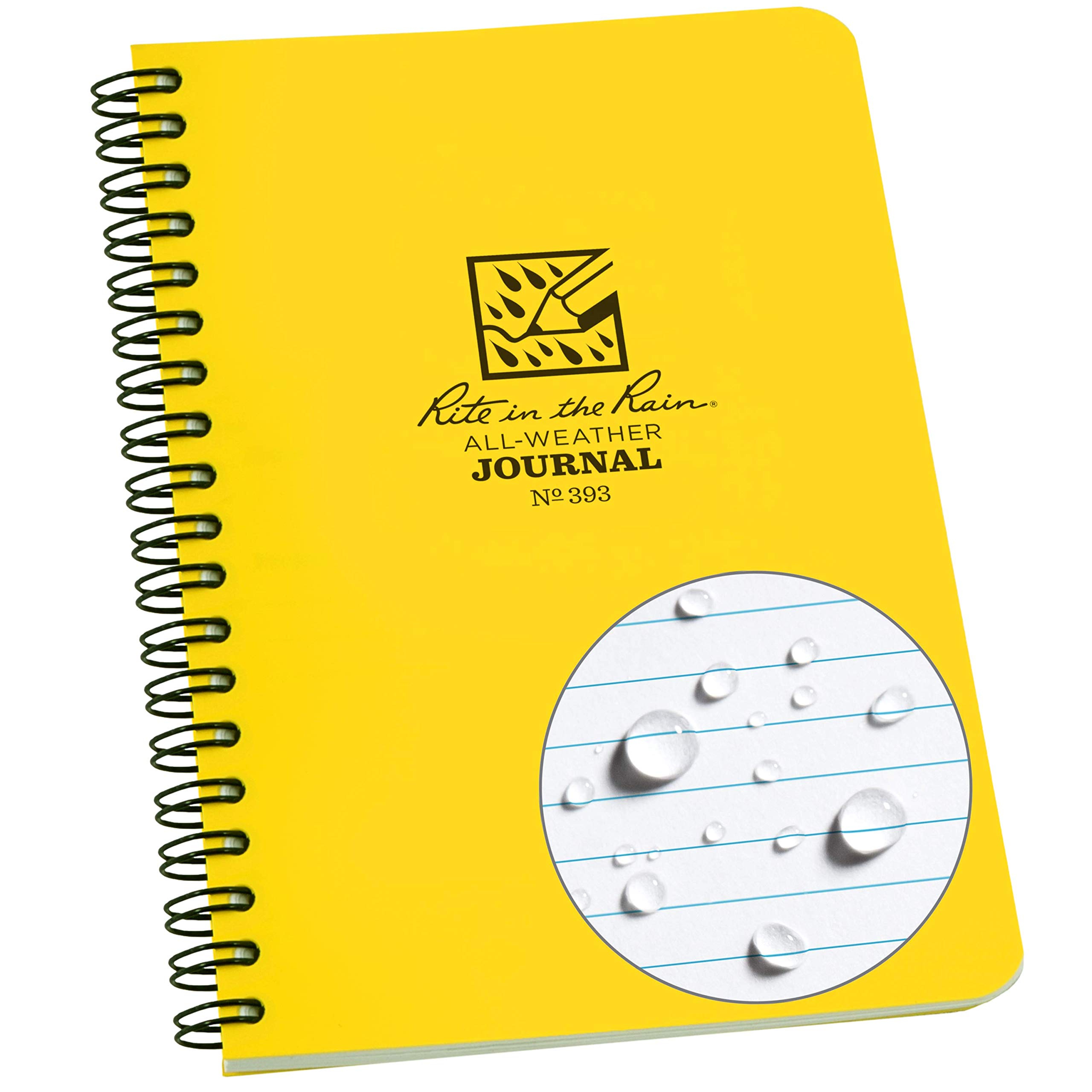
Tracking accuracy outdoors without smudging.
Rite in the Rain All-Weather Notebook Weatherproof for field notes on forecasts vs. actuals.
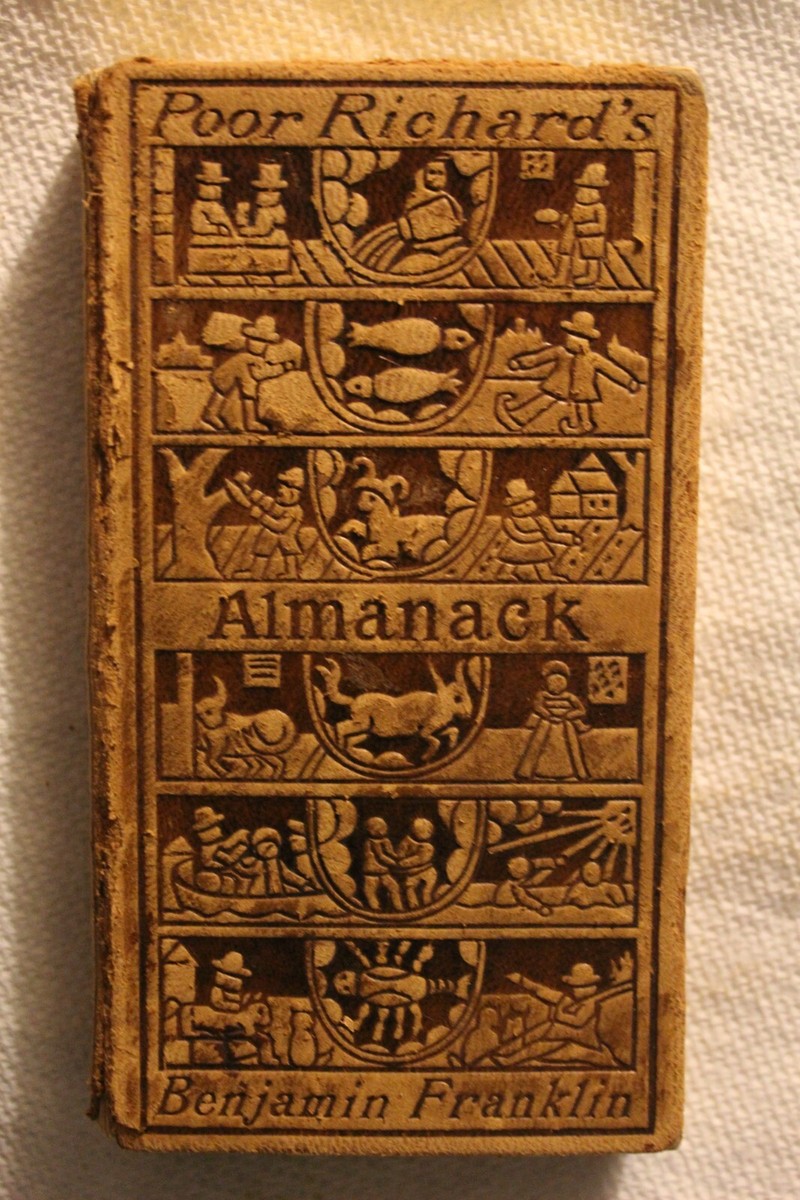
Learning folklore behind modern almanacs.
Poor Richard's Almanack (Facsimile Edition) Historical insights into traditional methods for deeper understanding.
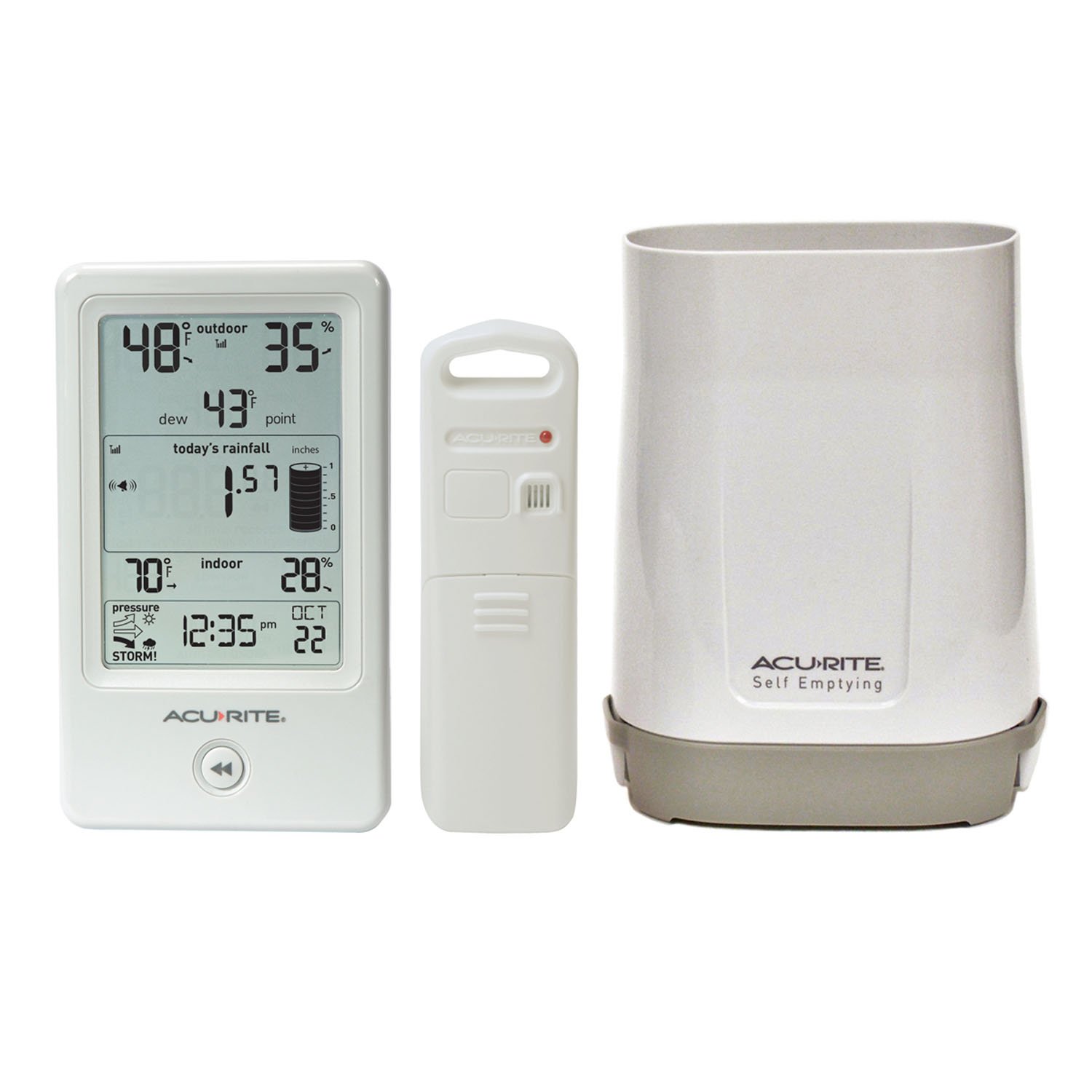
Daily ground-truth data to refine forecasts.
AcuRite Rain Gauge and Thermometer Verify almanac precip/temp predictions on-farm.