Fine motor skills are crucial for your child's early development, helping them with everyday tasks like buttoning clothes, writing, and self-feeding. Many parents struggle to find engaging ways to build these skills without screens or frustration. Activity cubes offer a perfect, all-in-one solution packed with beads, shapes, buttons, and gears tailored for little hands.
In this beginner-friendly guide, you'll learn step-by-step how to introduce and use an activity cube to boost hand-eye coordination, dexterity, and problem-solving. Expect short 10-15 minute sessions that turn playtime into progress—visible improvements in grasping and pinching within weeks.
No prior experience needed; just a cube, your child (ideal for 12-36 months), and enthusiasm. We'll cover setup, activities, tips, and troubleshooting for maximum fun and results.
▸What You'll Need
- •Age-appropriate activity cube (multi-sided with beads, shapes, gears, buttons)
- •Safe, flat play surface (floor mat or low table)
- •Supervising adult
- •Optional: Timer for short sessions, soft toys for encouragement
Estimated Time: 10-15 minutes per session, 3-5 times a week
Difficulty: beginner
▸Step-by-Step Instructions
Step 1: Choose the Right Activity Cube
Start by selecting a sturdy, non-toxic activity cube suited for your child's age (typically 12-36 months). Look for one with varied features like a shape sorter, bead maze, spinning gears, sliding blocks, and textured buttons to target different fine motor aspects.
Why it matters: The cube should match developmental stages—simpler for beginners to avoid overwhelm. Hold it yourself first to test stability and smoothness.
Success looks like: A colorful, multi-panel cube that's easy to grip and spins smoothly without pinching fingers.
💡 Tips:
- •Opt for wooden cubes for durability over plastic.
- •Check for BPA-free certification.
⚠️ Warnings:
- •Avoid cubes with small loose parts that could be choking hazards.
Step 2: Set Up a Safe Play Area
Clear a quiet, carpeted space free of distractions. Place the cube on a soft mat at your child's eye level—sitting or tummy time position works best.
This prevents slips and keeps focus on the cube. Ensure good lighting and no nearby hazards like sharp edges or outlets.
Expect: Child curious but possibly hesitant at first— that's normal.
💡 Tips:
- •Use a playpen mirror for visual engagement.
Step 3: Introduce the Cube Gently
Sit with your child and let them explore the cube freely for 2-3 minutes. Point out textures: 'Feel the bumpy beads!' Model actions by gently sliding a bead or pressing a button.
Why: Builds confidence and sensory interest before guided play. Success: Child reaches out or touches voluntarily.
💡 Tips:
- •Use excited voice to mimic sounds (beep for buttons).
⚠️ Warnings:
- •Don't force hands—let them lead.
Step 4: Practice Shape Sorting
Guide your child to pick up shapes (circle, square) and match to holes. Hold their hand lightly if needed, praising 'Great fit!'
This hones pinching and precision. Do 5-10 shapes per session. Expect fumbling at first, smoother by session 3.
💡 Tips:
- •Sort largest shapes first for quick wins.
Step 5: Work the Bead Maze
Key fine motor builder: Show how to grasp and slide beads along wires. Use two fingers to demonstrate pinching.
Why it matters: Develops pincer grip essential for later skills like zipping. Rotate the cube to access easily. Success: Independent slides after 4-5 tries.
💡 Tips:
- •If stuck, wiggle bead gently to start motion.
⚠️ Warnings:
- •Supervise closely to prevent wire pulling.
Step 6: Spin Gears and Press Buttons
Turn gears with thumb and fingers, press colorful buttons that click or light up. Encourage sequences: 'Spin, then press!'
Builds wrist rotation and finger isolation. Fun sounds keep engagement high.
Step 7: Slide Doors and Blocks
Teach sliding panels or blocks to reveal surprises. This practices bilateral coordination (using both hands).
Expect trial-and-error; celebrate partial successes.
💡 Tips:
- •Pair with rhymes for rhythm.
Step 8: Encourage Independent Play
Step back gradually, intervening only if frustrated. Time sessions to end on a high note.
Tracks progress: From assisted to solo play in 1-2 weeks.
⚠️ Warnings:
- •End if child tires to avoid aversion.
Step 9: Clean and Store Properly
Wipe with mild soap/water, air dry. Store upright in reachable spot for next use.
Maintains hygiene and accessibility.
💡 Tips:
- •Weekly deep clean for sticky fingers.
▸Pro Tips
- •Keep sessions short—attention spans are 5-10 mins max.
- •Rotate cube sides daily for novelty.
- •Incorporate songs: 'Twist the gear, oh yeah!'
- •Track progress with photos weekly.
- •Combine with tummy time for under-18 months.
- •Use mirrors nearby for self-motivation.
- •Praise effort over perfection.
▸Common Mistakes to Avoid
- •Overloading with all activities at once—start with 1-2 features.
- •Skipping supervision—leads to frustration or injury.
- •Forcing play when child is tired/hungry—reduces engagement.
- •Ignoring age fit—too advanced cubes discourage.
- •Not varying sessions—boredom sets in quickly.
▸Troubleshooting
Problem: Child ignores the cube
Solution: Add novelty like placing favorite toy nearby; model more enthusiastically.
Problem: Frustration with stuck pieces
Solution: Assist minimally, then try easier side; take break.
Problem: Cube tips over
Solution: Place on grippy mat or hold base steady.
Problem: No progress after weeks
Solution: Consult pediatrician; try different textures or simpler toys.
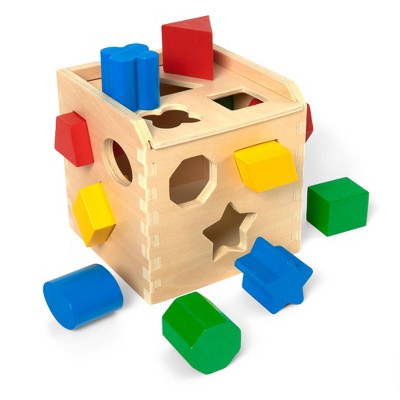
Melissa & Doug Wooden Shape-Sorter Activity Cube
Classic, durable wooden design with 5 sides for shape sorting, beads, and gears—perfect for beginners building pincer grip.
Best for: Daily 10-min sessions for 12-24 month olds.
Price Range: $18.99
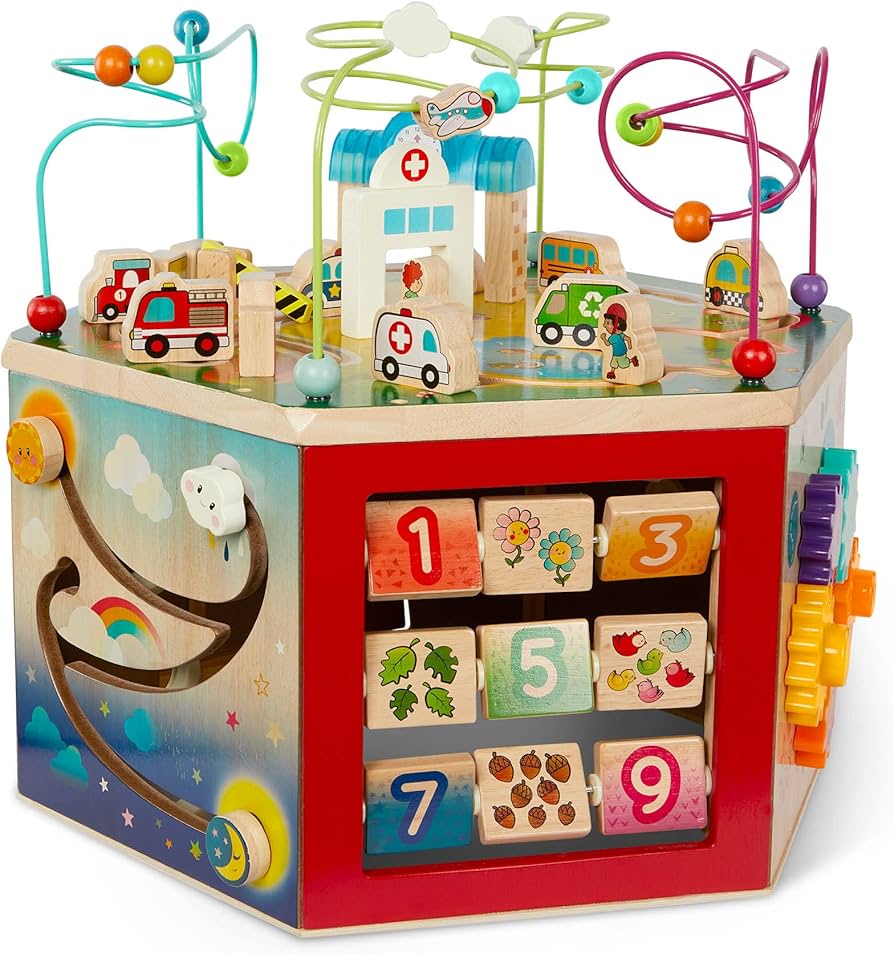
Battat Wooden Activity Cube
18-in-1 features including xylophone and abacus for varied motor challenges; stable and engaging.
Best for: Toddlers 18+ months advancing to multi-task play.
Price Range: $29.99
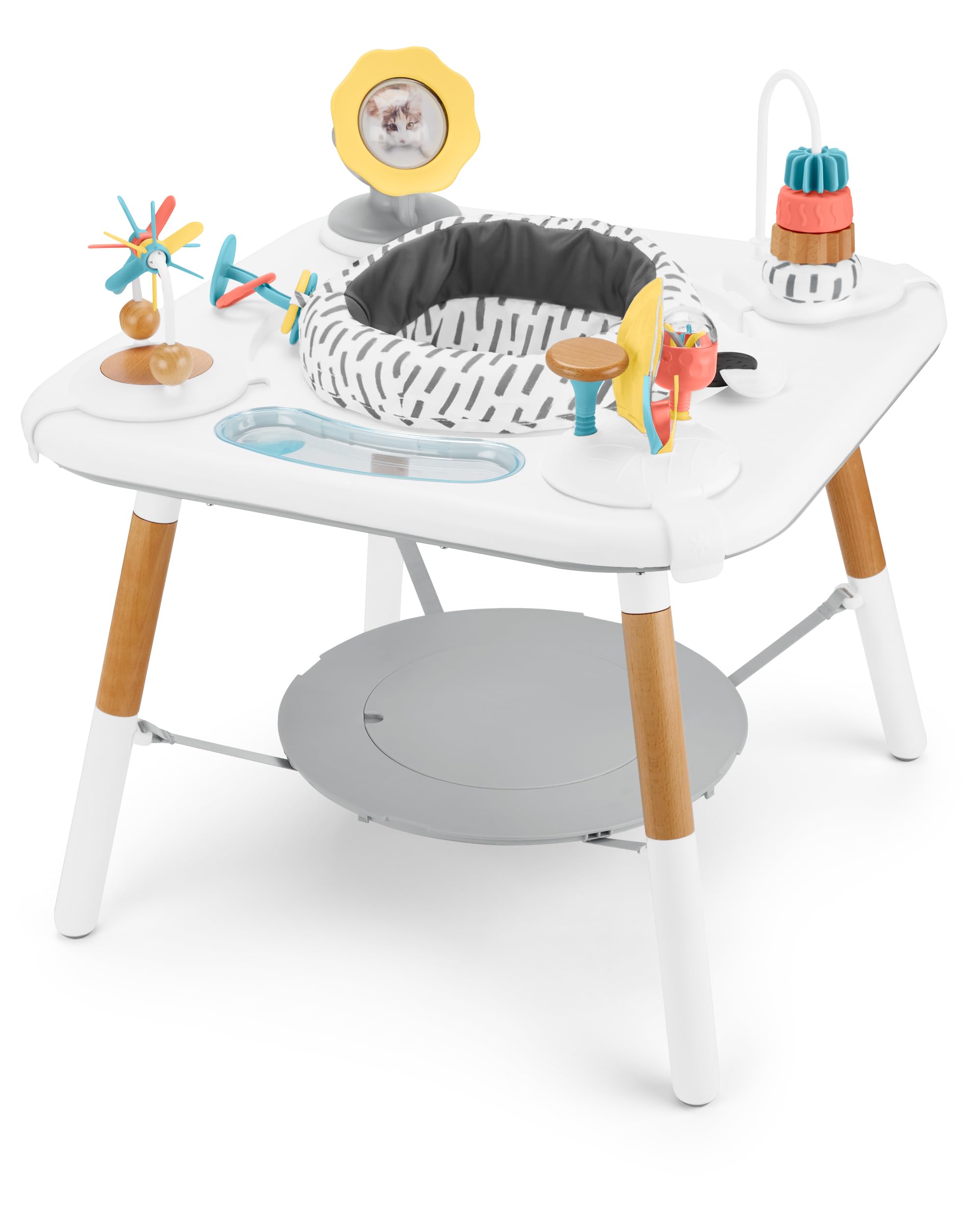
Skip Hop Explore & More 3-Stage Activity Cube
Budget-friendly with lights/sounds for sensory boost; grows with child through stages.
Best for: Screen-free intro to fine motor for under 18 months.
Price Range: $14.99
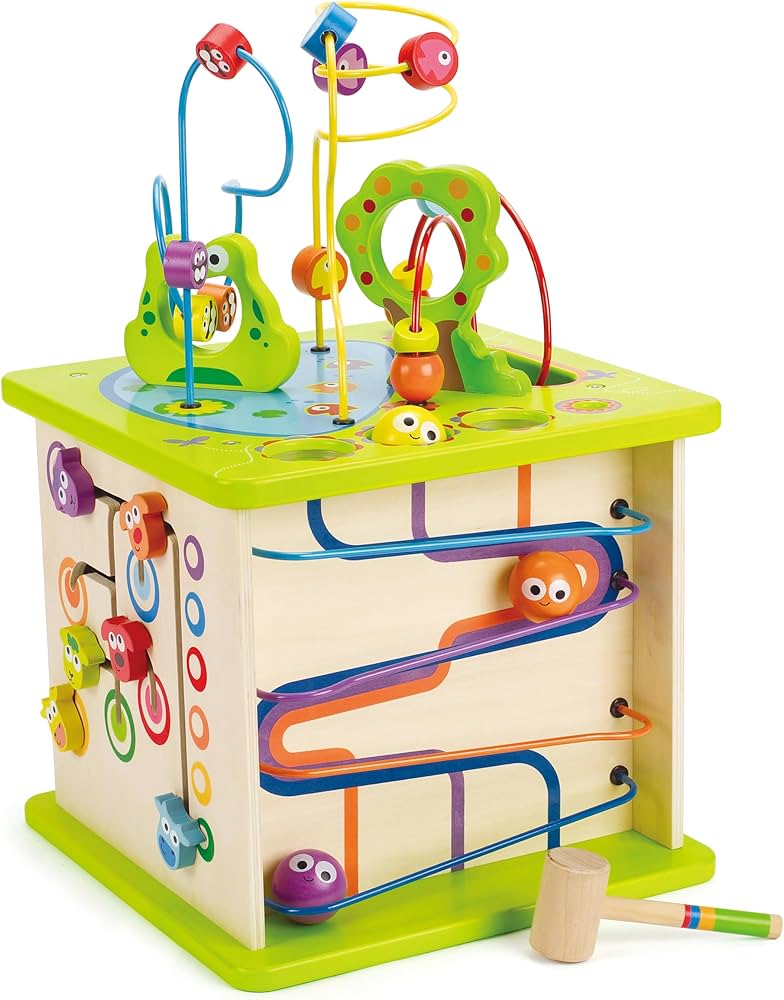
Hape Multi-Sided Activity Cube
Eco-friendly wood with smooth mechanisms; excellent for precise finger work.
Best for: Long-term use up to 3 years.
Price Range: $24.99