Picture this: you're about to play your guitar, but it sounds off. You reach for your tuner only to find the battery is dead. Don't panic. Tuning a guitar without a tuner is a valuable skill every guitarist should know. Whether you're a beginner or a seasoned player, being able to tune by ear can save you in a pinch and deepen your understanding of your instrument. In this guide, you'll learn two reliable methods: the 5th fret method and the harmonics method. Both rely on relative tuning—matching strings to each other rather than to an absolute pitch. With a little practice, you'll be able to get your guitar in tune in just a few minutes.
▸What You'll Need
- •A guitar (acoustic or electric)
- •A reference pitch source (optional but recommended: a piano key, a tuning fork, a pitch pipe, or a phone app)
- •Your ears (and a quiet room)
Estimated Time: 5-10 minutes per session (plus practice to develop ear)
Difficulty: beginner
▸Step-by-Step Instructions
Step 1: Get a Reference Pitch for Your Low E String
Relative tuning requires one string to be in tune. If you have a piano, play the E below middle C. Alternatively, use a tuning fork (A=440 Hz, then tune your A string first—see step 3) or a pitch pipe. If you have no reference, you can still tune the guitar to itself, but the pitch may not match other instruments. For this guide, we'll assume you have a way to tune the low E string (6th string) correctly. Pluck the low E string and adjust its tuning peg until it matches the reference pitch. Success check: The low E should sound exactly like the reference note—deep and clear.
💡 Tips:
- •If using a tuning fork, strike it on a soft surface and hold it near your ear. Tune your A string (5th string) to the fork's A, then proceed from there.
- •For a phone app, use a free tuner to get the initial E, then continue by ear.
⚠️ Warnings:
- •Don't overtighten the strings—they can break. Turn tuning pegs slowly.
Step 2: Tune the A String (5th String) Using the Low E String
Press the low E string at the 5th fret. This note should be an A (the same pitch as the open A string). Pluck the low E string (fretted at the 5th fret) and then pluck the open A string. Adjust the A string tuning peg until the two notes sound exactly the same. Listen for 'beats'—a wavering sound that disappears when the pitches match. Success check: The two notes ring together smoothly.
💡 Tips:
- •Pluck both strings alternately to compare, then together to hear if they blend.
- •Use your ear to detect if the open A is sharp (higher) or flat (lower). Turn the peg accordingly.
⚠️ Warnings:
- •Make sure you're pressing the string firmly behind the fret, not on top of it.
Step 3: Tune the D String (4th String) Using the A String
Now use the A string as your reference. Press the A string at the 5th fret to get a D note. Pluck that fretted note and then the open D string. Adjust the D string tuning peg until the pitches match. Success check: The D string should now sound like the A string's 5th fret.
💡 Tips:
- •If the D string sounds too low (flat), tighten the peg; if too high (sharp), loosen it.
Step 4: Tune the G String (3rd String) Using the D String
Follow the same pattern: press the D string at the 5th fret to get a G note. Match it with the open G string. Tune the G string's peg until they match. Success check: The open G string rings in unison with the D string's 5th fret.
💡 Tips:
- •Listen for the 'beat'—the faster the beat, the farther off the pitch. Slow beats mean close.
Step 5: Tune the B String (2nd String) Using the G String
Important change: To tune the B string, press the G string at the 4th fret (not the 5th). This gives a B note (since the interval between G and B is a major third, not a perfect fourth). Match that note to the open B string. Success check: The B string now sounds exactly like the G string's 4th fret.
💡 Tips:
- •If you press the 5th fret instead, the B string will be a half-step too high—common mistake.
⚠️ Warnings:
- •Be especially careful here; it's easy to accidentally use the 5th fret out of habit.
Step 6: Tune the High E String (1st String) Using the B String
Return to the 5th fret pattern: press the B string at the 5th fret to get an E note. Match it to the open high E string. Tune the corresponding peg. Success check: The high E string now matches the B string's 5th fret.
💡 Tips:
- •Pluck the high E and low E together—they should sound the same two octaves apart. If not, double-check the low E reference.
⚠️ Warnings:
- •The high E string is thin and breaks easily; turn the peg gently.
Step 7: Double-Check with Harmonics (Optional)
For a more precise check, use natural harmonics. Lightly touch the low E string directly above the 12th fret (do not press down) and pluck. You'll get a high E pitch. Do the same on the high E string. They should sound the same two octaves apart. Also check the A string's 5th fret harmonic (touch above the 5th fret) against the open A string. Harmonize them to confirm tuning. Success check: Harmonics ring clear and in unison.
💡 Tips:
- •Harmonics can be tricky; practice the 'touch and release' motion quickly.
⚠️ Warnings:
- •Too much pressure kills the harmonic—use a light touch.
▸Pro Tips
- •Practice in a quiet room to hear pitch differences clearly.
- •Use a reference pitch from a piano, tuning fork, or even a phone keyboard app for the starting note.
- •If you have no reference, try to tune to a familiar song's opening note (e.g., 'Smoke on the Water' riff uses open strings).
- •Relative tuning gets the guitar in tune with itself, but the overall pitch may be off. Use a reference if playing with others.
- •Listen to the 'beats'—the pulsating sound when two notes are close but not identical. Slow beats mean almost in tune; fast beats mean far off.
- •After tuning, play a few chords (e.g., E minor, G, C) to check if they sound harmonious.
▸Common Mistakes to Avoid
- •Pressing the 5th fret on the G string to tune the B string (should be 4th fret). This results in the B string being sharp.
- •Turning the tuning peg too fast or too far, causing the string to break or go wildly out of tune.
- •Not pressing the string firmly behind the fret, resulting in a muted or buzzy sound that misleads the ear.
- •Forgetting to recheck the low E string after tuning others—it may have shifted.
▸Troubleshooting
Problem: The strings sound worse after tuning.
Solution: Start over. One string might have been accidentally bumped. Re-tune from the low E using the 5th fret method carefully.
Problem: I can't hear the beat or difference.
Solution: Try plucking both notes simultaneously and listen for a 'chorus' effect. If you're new, use a free tuner app to train your ear.
Problem: The harmonics method sounds different from the fretted method.
Solution: Fretted notes can be slightly off due to intonation (guitar setup). Harmonics are more accurate for checking. Trust the harmonics if they disagree.
Problem: I have no reference pitch at all.
Solution: Tune the guitar to itself using the 5th fret method. It will be in tune with itself (relative tuning), but the overall pitch may be lower or higher than standard. You can later adjust with a tuner.
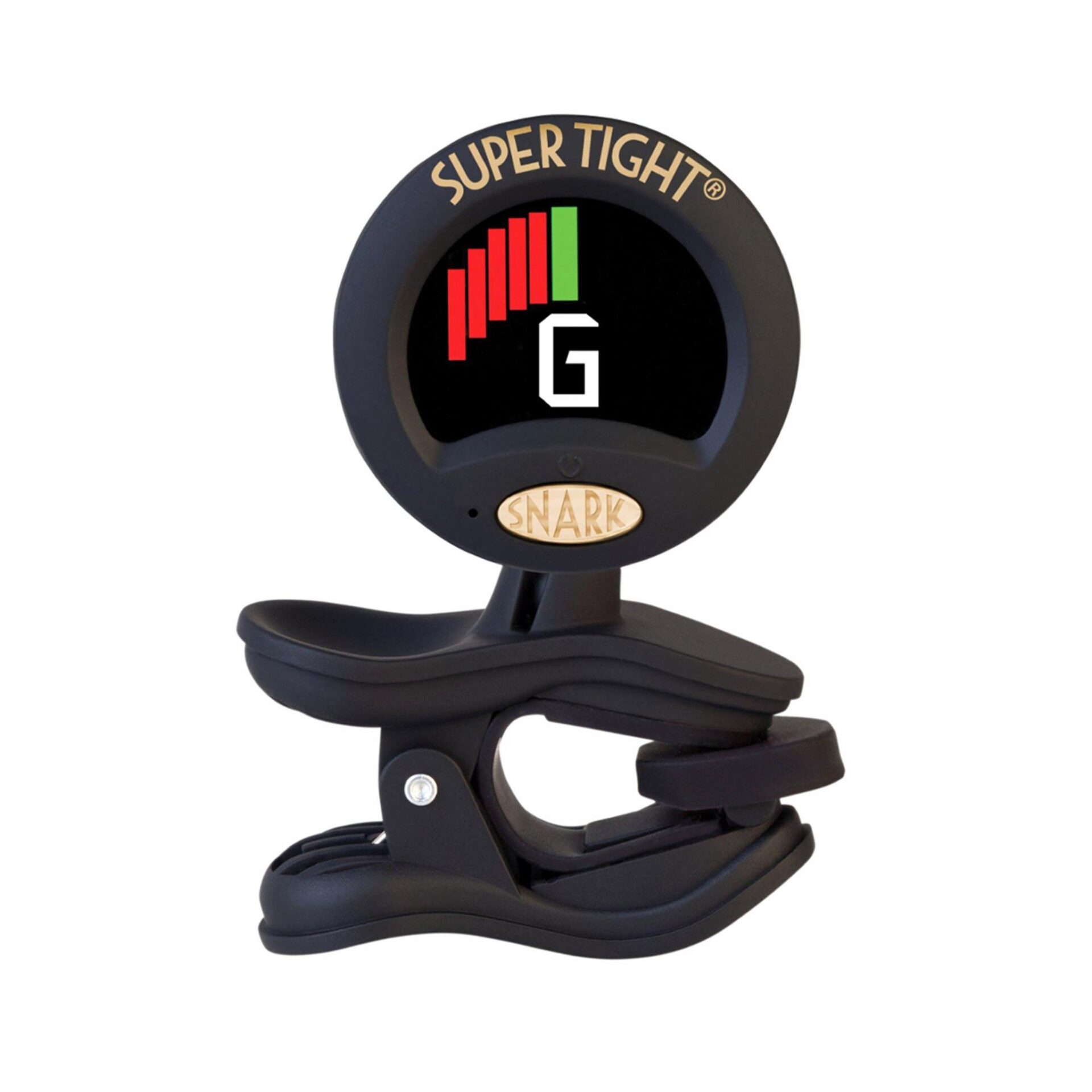
Snark ST-8 Super Tight All Instrument Tuner
A reliable clip-on tuner is the easiest way to tune accurately, especially for beginners. The Snark ST-8 has a fast response and works on acoustic and electric guitars.
Best for: When you have a tuner handy but want a quick, accurate tuning without needing a reference pitch.
Price Range: $15 - $25
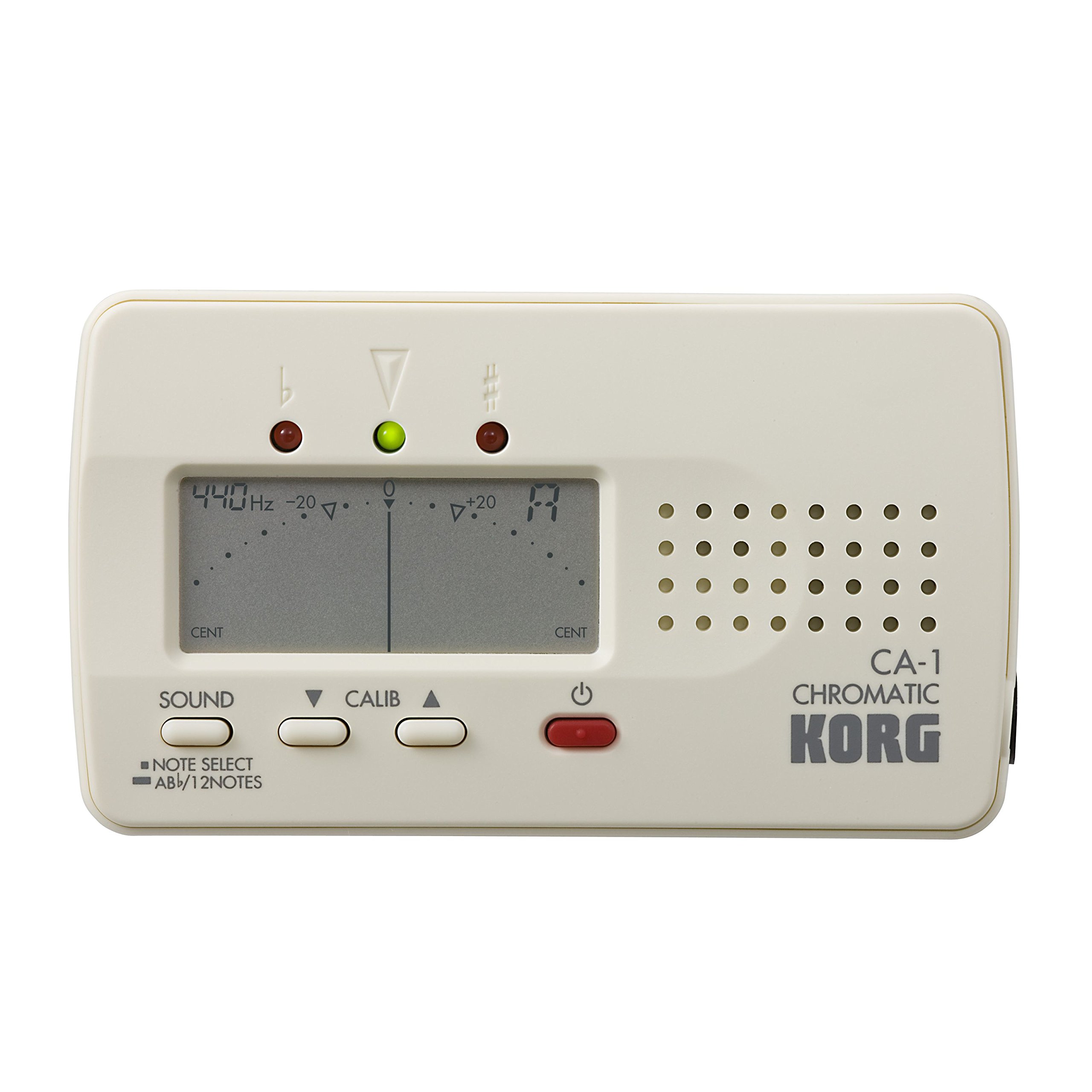
Korg CA-1 Chromatic Tuner
A budget-friendly option that picks up sound via its built-in microphone, ideal for acoustic guitars. Simple and effective.
Best for: For beginners who want a dedicated tuner without spending much.
Price Range: $10 - $15
Tuning Fork (A=440 Hz)
A simple, unbreakable tool for getting a reference pitch. Perfect for practicing ear training and tuning without batteries.
Best for: When you want a reliable reference note to start your tuning, especially in a quiet environment.
Price Range: $5 - $15
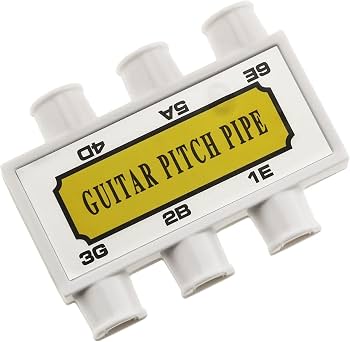
Pitch Pipe – Guitar 6-Note
A compact wind instrument that plays each string's pitch. Great for beginners who struggle with tuning forks.
Best for: Blow into the pipe for each string's note to hear the correct pitch, then match your string by ear.
Price Range: $8 - $15