Dead AAA batteries can ruin your remote, toy, or flashlight at the worst times, leaving you guessing if it's the battery or the device. Without a multimeter, many resort to tossing batteries prematurely, wasting money. This guide shows you reliable alternatives to test voltage approximately, helping you extend battery life and save cash.
You'll master visual checks, load tests, a DIY LED tester, and more—achieving results in under 15 minutes. These intermediate methods give voltage estimates like 'good (1.3-1.5V)' or 'weak (<1.2V)' using everyday items. No soldering required, but some basic electronics knowledge helps.
Expect accurate-enough results for most uses; for precision, consider a dedicated tester (recommendations below). Let's get started!
▸What You'll Need
- •AAA batteries to test (required)
- •Flat surface like a table (required)
- •Flashlight or small device that uses 1-3 AAA batteries (required for load test)
- •Red LED (3mm or 5mm, forward voltage 1.8-2.2V) - optional but recommended for DIY tester
- •330-470 ohm resistor (1/4W) - optional for DIY tester; get from electronics kit
- •Aluminum foil or paperclips for connections - optional
- •Digital kitchen scale (optional for weight test)
Estimated Time: 10-15 minutes
Difficulty: intermediate
▸Step-by-Step Instructions
Step 1: Perform Visual and Physical Inspection
Start by examining the battery exterior. Look for corrosion (white/green powdery buildup on terminals), leaks, dents, or swelling—these indicate a dead or damaged battery (voltage likely <1.0V). Clean terminals gently with a dry cloth or vinegar if corroded, but discard if severe.
Shake the battery lightly; rattling means loose internals (bad). This quick check eliminates obviously bad ones without tools. Success: Clean, intact batteries ready for further tests.
💡 Tips:
- •Test in good lighting for subtle corrosion.
⚠️ Warnings:
- •Never use leaking batteries—they can damage devices.
Step 2: Do the Roll Test on a Flat Surface
Place the AAA battery on a flat, smooth table. Flick it gently to roll. Good batteries (1.3V+) roll straight and far due to dense electrolyte. Weak ones (<1.2V) wobble or stop quickly as internals shift.
Repeat 3-5 times. This tests density indirectly correlating to voltage. Success: Straight roll = likely good; wobble = test further.
💡 Tips:
- •Use a hardwood or glass surface for best results.
⚠️ Warnings:
- •Avoid carpet—it skews results.
Step 3: Check Battery Weight (Optional Precision)
Use a digital kitchen scale set to grams. Weigh a known good AAA (new ones ~11-12g for alkaline). Test yours: Fresh ~11.5g, good ~10-11g, weak <9g (voltage drops as electrolyte depletes).
This correlates to capacity left. Success: Weight matches good reference = proceed confidently.
💡 Tips:
- •Weigh multiples for average.
Step 4: Conduct a Load Test in a Device
Insert the AAA into a flashlight or clock that uses 1-3 AAAs. Turn on for 30-60 seconds; note brightness/duration. Compare to a known good battery. Dim or flickering = weak (<1.2V under load).
Real-world voltage drops under load, so this simulates use. Success: Steady bright light = good battery.
💡 Tips:
- •Test side-by-side with new battery.
⚠️ Warnings:
- •Don't leave in high-drain devices long if suspect.
Step 5: Build and Use a Simple LED Tester
Connect the LED in series with a 330-470Ω resistor across the battery terminals (positive to resistor, then LED anode, cathode to negative). Use foil or clips for contacts. Good battery (1.3V+): LED glows dimly/brightly. No light or faint = <1.2V.
Red LEDs work best for 1.5V. This draws slight current, mimicking load. Success: Visible glow = usable voltage.
💡 Tips:
- •Polarity matters—LED won't light reversed.
⚠️ Warnings:
- •Don't short terminals directly—risk heat/spark.
Step 6: Try the Tongue Test (Last Resort, with Caution)
Lightly touch terminals to tongue tip. Good battery: Mild tangy tingle (1.3V+). No sensation or bitter = weak/dead. Saliva completes circuit for tiny current.
Use sparingly. Success: Tang = good.
💡 Tips:
⚠️ Warnings:
- •Avoid if skin broken, pregnant, or kids/pets. Risk minor shock or electrolyte taste. Not quantitative.
Step 7: Interpret Results and Label Batteries
Good: Passes 3+ tests, 1.3-1.5V equiv. Weak: Fails 2+, <1.2V—use in low-drain or recycle. Mark with tape: G/W/D. Store good ones in plastic case.
Voltage thresholds: Alkaline new 1.5V, good >1.3V loaded. Success: Sorted batteries ready for use.
💡 Tips:
- •Recycle weak ones at stores.
▸Pro Tips
- •Test multiple batteries together for comparisons.
- •Store AAA upright in organizers to prevent leaks.
- •Rechargeable NiMH AAA test lower open voltage (~1.2V) but good under load.
- •Combine methods—load test is most reliable.
- •Keep a 'known good' reference battery.
- •For bulk testing, build permanent LED jig.
- •Clean tools/contacts with isopropyl alcohol post-test.
▸Common Mistakes to Avoid
- •Ignoring corrosion—leads to device damage; always inspect first.
- •Relying solely on tongue test—imprecise and unsafe; use as backup.
- •Testing without load—open voltage misleads (1.5V open can be dead loaded).
- •Shorting terminals—causes heat/spark; always use resistor.
- •Forgetting polarity in LED test—wastes time; double-check.
▸Troubleshooting
Problem: LED won't light even on new battery
Solution: Check polarity, resistor value (too high blocks), or faulty LED. Test LED with 3V (two batteries).
Problem: Device works but tests say weak
Solution: Low-drain device masks issues; try high-drain load test.
Problem: All batteries fail roll test
Solution: Surface uneven—switch to glass. Or all genuinely dead.
Problem: Tingle but device dim
Solution: Open voltage ok, but poor under load—still weak. Discard.
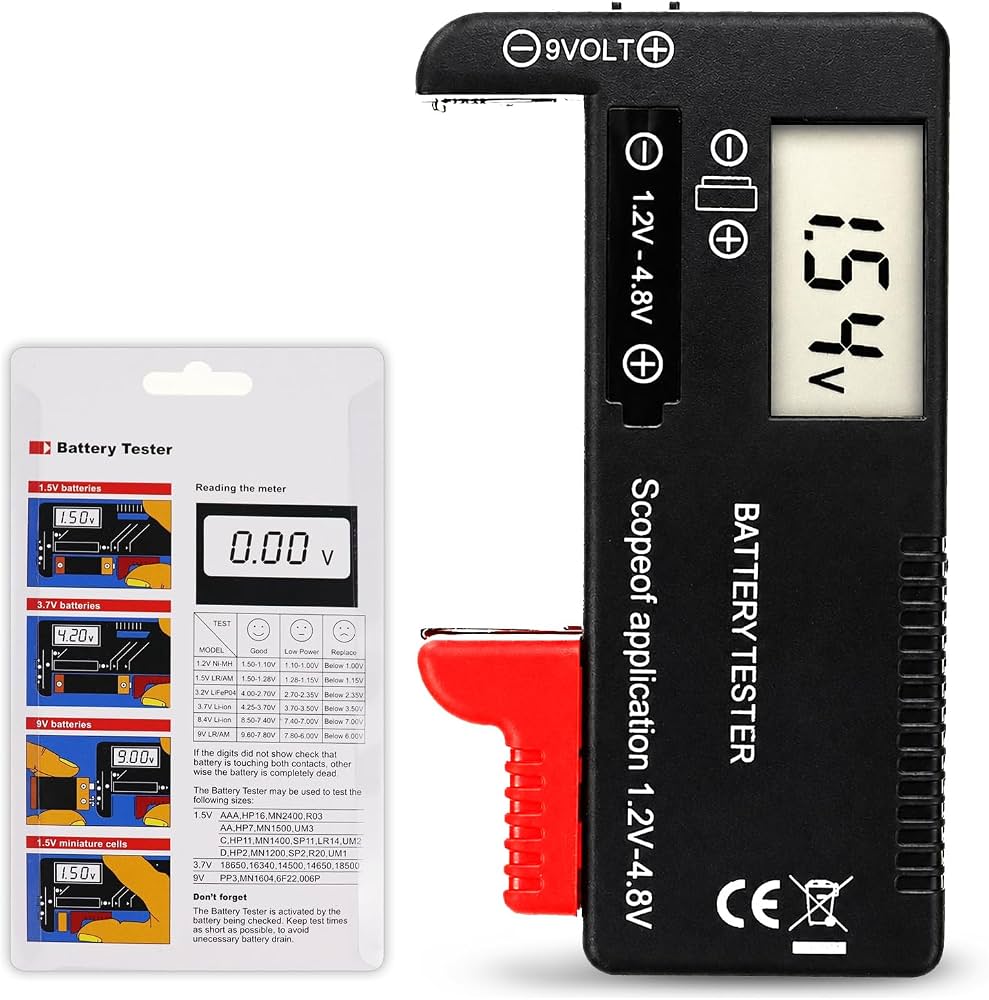
Accutest Digital Battery Tester (AA/AAA/C/D/9V)
Pocket-sized LCD shows exact voltage (e.g., 1.45V) without multimeter complexity—perfect AAA upgrade.
Best for: Quick numerical reads for dozens of batteries daily.
Price Range: $12.99
ZTS MBT-1 Mini Battery Tester
Analog tester with go/no-go LEDs for AAA—fast, no batteries needed, accurate under load.
Best for: Field testing remotes/toys without numbers.
Price Range: $19.99-$24.99
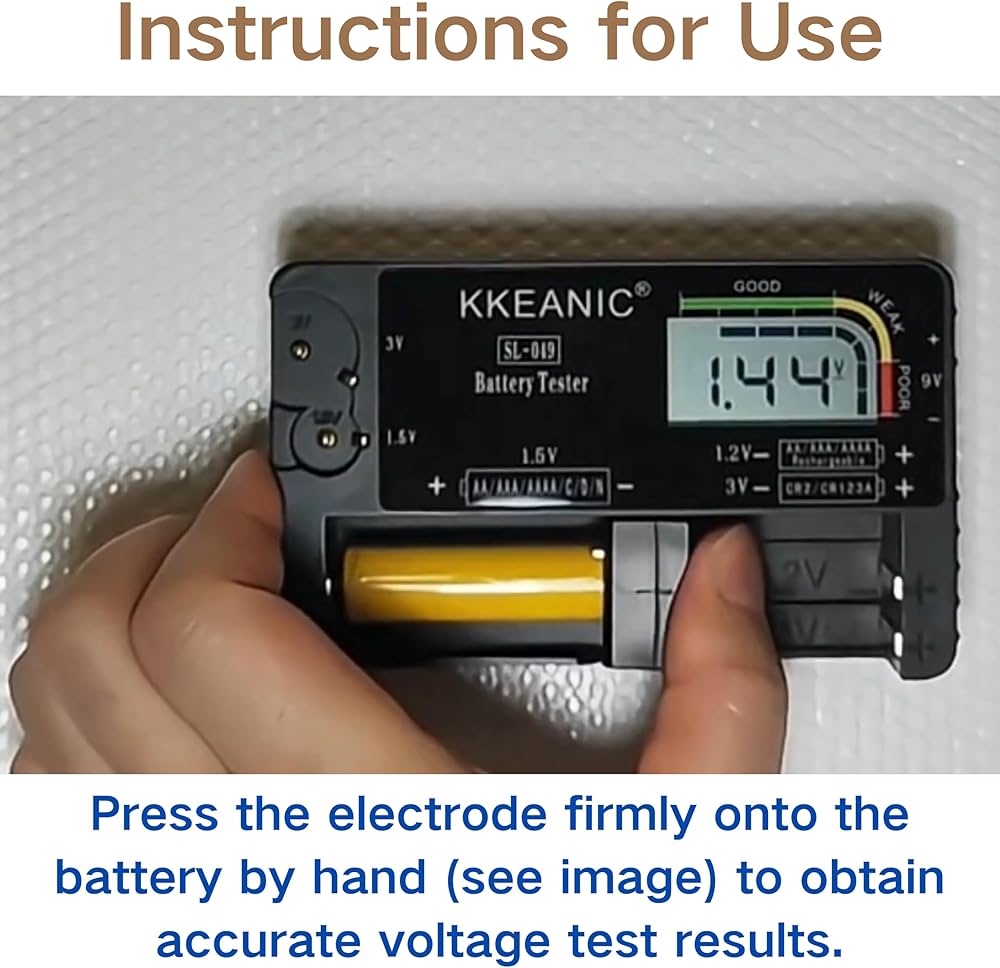
KAINO LCD Universal Battery Tester
Affordable digital display for AAA/others—easy one-button voltage check.
Best for: Home bulk testing rechargeables.
Price Range: $9.99-$12.99
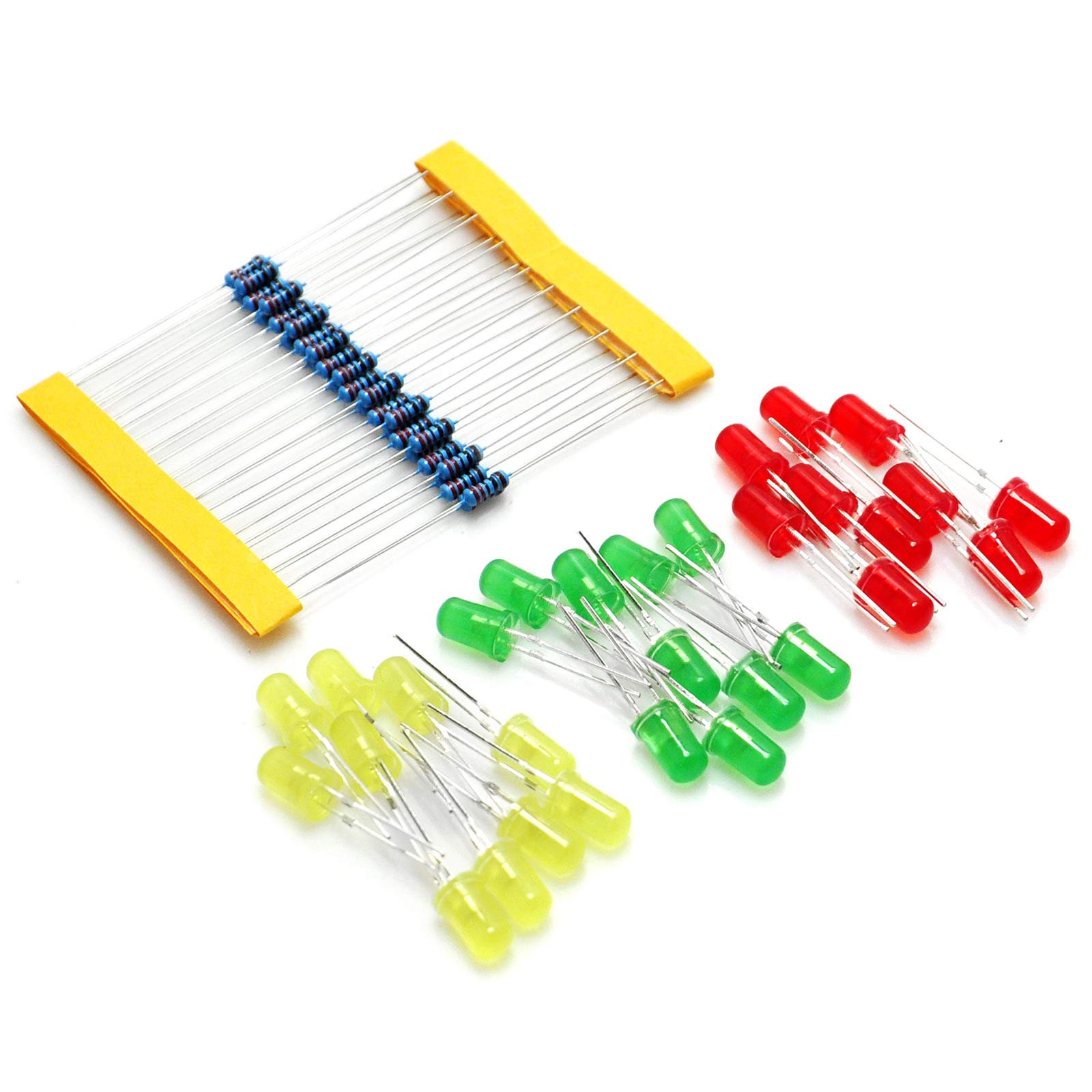
Electronics DIY Kit (LEDs + Resistors)
Build reusable tester cheaply—great for intermediate tinkerers.
Best for: Custom load testers.
Price Range: $8.99
Eneloop AAA Battery Storage Case
Organize tested batteries—prevents shorts post-testing.
Best for: Long-term storage of goods/weaks.
Price Range: $6.99