Nothing ruins a round of golf faster than a dead golf cart battery stranding you mid-course. 6V deep-cycle batteries power most Club Car, EZ-GO, and Yamaha carts in series (6-8 batteries for 36V-48V systems), but they degrade over time due to sulfation, undercharging, or deep discharges. Regular load testing reveals weak cells before total failure.
In this guide, you'll learn how to safely test individual 6V batteries using a load tester—the gold standard for assessing true capacity under stress, beyond simple voltage checks. We'll cover prep, execution, and interpretation for accurate results. Expect intermediate skills like handling tools and basic electrical knowledge; total time is 20-30 minutes per battery.
By the end, you'll know if your batteries are good (hold voltage under load), weak (excessive drop), or bad (replace now), saving you hundreds on premature swaps.
▸What You'll Need
- •6V battery load tester (rated for 6V deep-cycle, 50-100A load)
- •Digital multimeter or voltmeter
- •Battery terminal cleaning brush and baking soda/water solution
- •Safety glasses and insulated gloves (required)
- •Wrench or socket set for terminals
- •Distilled water (if topping off batteries)
- •Optional: Battery hydrometer for electrolyte check
Estimated Time: 20-30 minutes per battery (1-3 hours for full bank)
Difficulty: intermediate
▸Step-by-Step Instructions
Step 1: Gear Up for Safety
Put on safety glasses and insulated gloves before touching anything. Park the golf cart on a flat, well-ventilated surface away from flames or sparks—batteries can vent explosive hydrogen gas.
Why it matters: Electrocution, acid burns, or explosions are real risks with 6V systems under load. Inspect your workspace for spills.
Success: You're protected and cart is stable.
💡 Tips:
- •Work in daylight for better visibility.
- •Keep a fire extinguisher (Class C) nearby.
⚠️ Warnings:
- •Never smoke or use open flames near batteries.
Step 2: Fully Charge and Isolate Batteries
Charge the entire battery bank to full using your golf cart charger (typically 4-8 hours). Disconnect the bank by loosening negative (-) terminals first, then positives (+). Label cables to avoid mix-ups.
Test one battery at a time—remove it or isolate by disconnecting its cables. Let rest 1-24 hours post-charge for accurate open-circuit voltage (OCV).
Success: Batteries at 100% SOC, isolated safely.
💡 Tips:
- •Use a smart charger to avoid overcharge.
⚠️ Warnings:
- •Reverse terminal order when reconnecting to prevent shorts.
Step 3: Visual and Physical Inspection
Examine each 6V battery for cracks, bulges, leaks, or corrosion on terminals. Check electrolyte levels (if flooded type)—top off with distilled water to plates.
Why: Damage means immediate replacement; low levels skew tests.
Success: Battery looks intact, levels good.
💡 Tips:
- •Take photos before/after for records.
⚠️ Warnings:
- •Don't test cracked batteries—dispose properly.
Step 4: Clean Terminals and Measure OCV
Mix baking soda/water, scrub terminals with brush, rinse, dry. Use multimeter on DC volts: Probe + then - terminal.
Good OCV: 6.25-6.4V (fully charged). Below 6.2V? Recharge and retest.
Success: Clean contacts, OCV reading noted.
💡 Tips:
- •Voltage chart: 6.3V=100%, 6.2V=80%, <6.0V=bad.
Step 5: Connect the Load Tester
Match tester leads: Red to +, black to -. Ensure clamps are tight and clean. Set load to half the battery's CCA rating (e.g., 50A for 100CCA deep-cycle).
Zero analog testers if needed (adjust needle to zero).
Success: Tester securely attached, ready.
💡 Tips:
- •Confirm tester is 6V-compatible.
⚠️ Warnings:
- •Incorrect polarity sparks or damages tester.
Step 6: Apply Load and Monitor Voltage
Turn on load for exactly 15 seconds—watch voltage drop. Shut off immediately.
Record lowest voltage during test. Good: >5.8-6.0V under load. Weak: 5.4-5.8V. Bad: <5.4V.
Why: Simulates real drain; reveals internal resistance.
Success: Test complete, voltage stable post-load.
💡 Tips:
- •Time precisely with phone timer.
⚠️ Warnings:
- •Don't exceed 15s—overheats battery.
Step 7: Interpret Results and Reassemble
Compare to specs (Trojan/Interstate: hold 9.6V equiv for 12V under half CCA). Pass all? Reconnect. Fail one? Replace weakest first.
Log results for trends.
Success: Batteries graded (good/weak/bad), cart ready.
💡 Tips:
- •Test hottest battery last—it shows worst.
▸Pro Tips
- •Test in 70-80°F temps for accurate results—cold stiffens electrolyte.
- •Test monthly during season, quarterly off-season.
- •Balance bank: Equalize charge weak batteries.
- •Use hydrometer post-test for specific gravity (1.265-1.280 good).
- •Store at 50% SOC for winter with maintainer.
- •Buy CCA-rated tester for deep-cycles.
- •Record serial numbers for warranty claims.
▸Common Mistakes to Avoid
- •Testing without full charge: Falsely shows weak (always pre-charge).
- •Loose probes: Inaccurate drops—double-check connections.
- •Overloading (full CCA on 6V): Damages battery unnecessarily.
- •Ignoring temp correction: Cold batteries drop more—warm first.
- •Not resting post-charge: Surface charge inflates OCV.
▸Troubleshooting
Problem: Voltage drops to zero under load
Solution: Bad cell—replace battery. Check for sulfation (white crust).
Problem: Tester reads erratic
Solution: Clean contacts; test tester on known-good battery.
Problem: All batteries fail but cart ran fine
Solution: Bank imbalance—equalize charge, retest individually.
Problem: Sparks on connect
Solution: Wrong polarity—swap leads, wear gloves.
Problem: Battery hot after test
Solution: Normal if brief; cool before retesting. Seek pro if boiling.
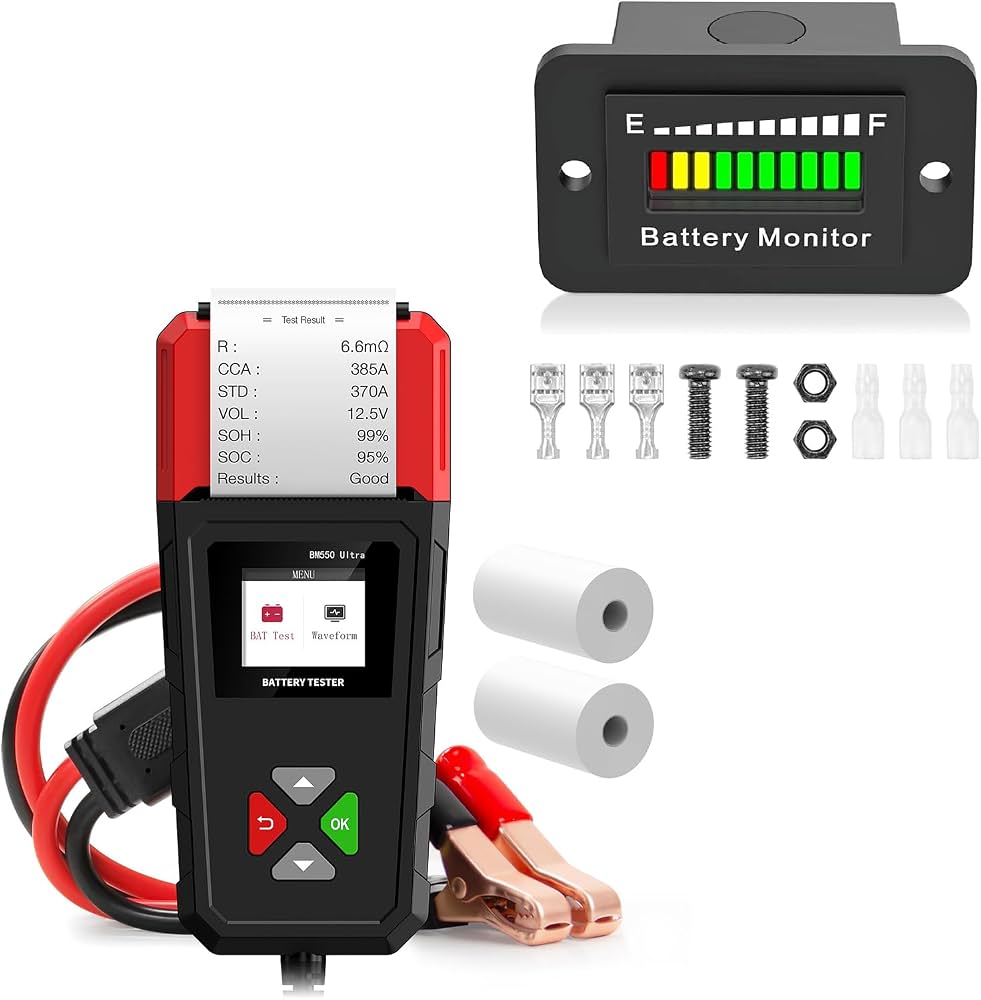
KKMOON Golf Cart Battery Load Tester (12V/24V/36V/48V Compatible)
Affordable, accurate for 6V deep-cycle with adjustable load and digital display—perfect for golf carts.
Best for: Primary tool for steps 5-6; handles series banks indirectly.
Price Range: $25-$35
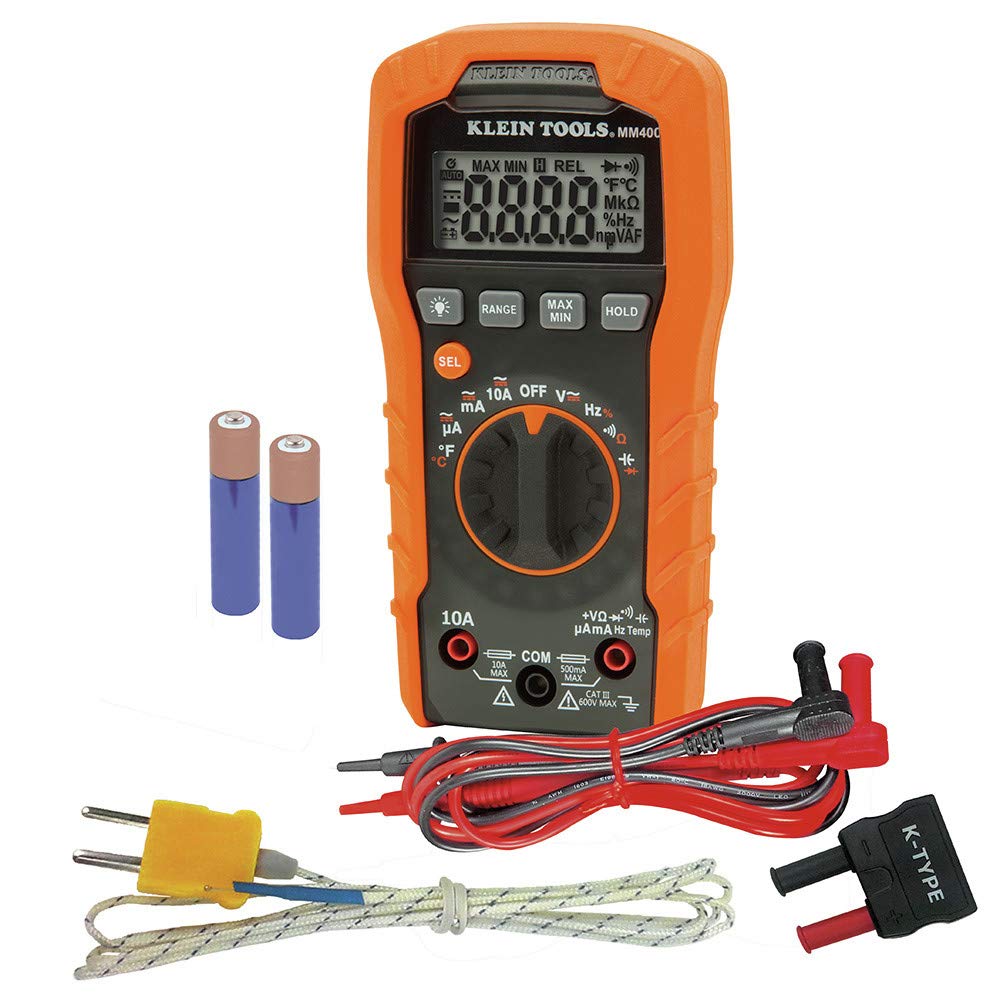
Klein Tools MM400 Digital Multimeter
Auto-ranging, durable for precise OCV and continuity—essential backup to load tester.
Best for: Steps 4 and verification; survives garage drops.
Price Range: $50-$60
NoCry Safety Glasses
Anti-fog, impact-resistant—top-rated for battery work without slipping.
Best for: Step 1 protection during acid/corrosion handling.
Price Range: $10-$15
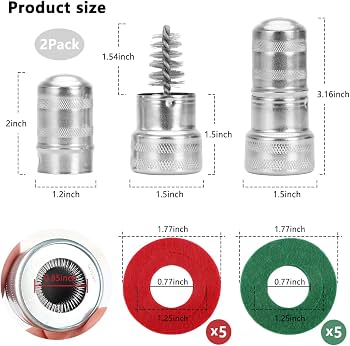
Baycom Battery Terminal Cleaning Brush Kit
Dual-head brush with scraper removes corrosion fast without scratching.
Best for: Step 4 prep for reliable connections.
Price Range: $8-$12
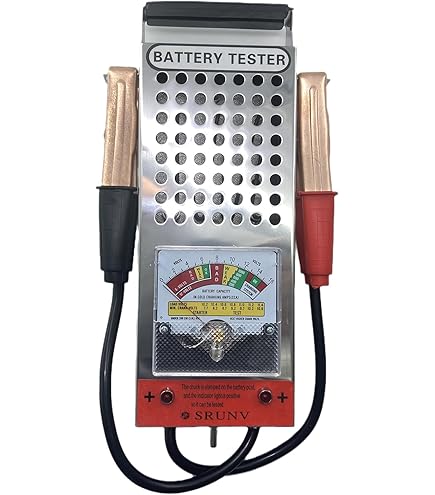
Associated Equipment 6037 6/12V Battery Load Tester
Professional carbon-pile model with 50A setting for 6V—gold standard accuracy.
Best for: High-use shops or precise testing (steps 5-6).
Price Range: $150-$200