
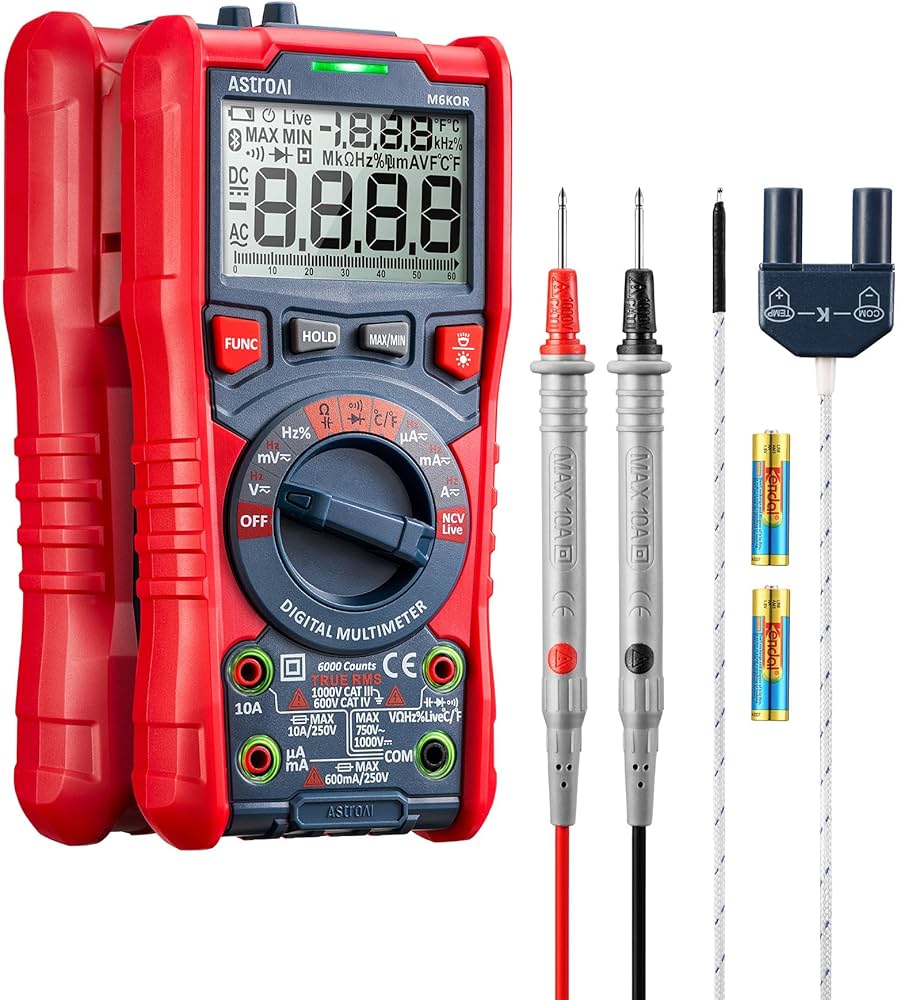
AstroAI Digital Multimeter TRMS 6000 Counts
All voltage checks in steps 4 and 6.
$29.99-$32.99
AstroAI Digital Multimeter TRMS 6000 Counts Accurate DC voltage and load measurements essential for OCV and basic load tests.
Get the App
Better experience on mobile
Master step-by-step testing to verify your 12V deep cycle battery's capacity and health for reliable RV, solar, or marine use.
Nothing ruins an off-grid adventure or fishing trip faster than a failing deep cycle battery. Deep cycle 12V batteries, used in RVs, solar setups, trolling motors, and marine applications, endure repeated deep discharges unlike starting batteries. Testing their performance ensures they hold capacity under load, preventing unexpected failures.
In this guide, you'll learn proven methods to assess voltage, specific gravity, and load capacity. We'll cover visual checks, basic voltage tests, hydrometer readings (for flooded lead-acid), and critical load testing. Expect accurate results to determine if your battery needs replacement or maintenance.
The process takes 30-45 minutes per battery, suitable for intermediate DIYers with basic electrical knowledge. No advanced tools required, but safety is key when handling lead-acid batteries.
Estimated Time: 30-45 minutes per battery Difficulty: intermediate
Start in a well-ventilated garage or outdoor area away from flames or sparks, as batteries can release explosive hydrogen gas. Don safety glasses and acid-resistant gloves. Disconnect the battery from all loads and chargers, letting it rest for at least 6-12 hours (overnight ideal) for accurate open-circuit voltage (OCV) readings.
Why it matters: Resting equalizes charge and prevents false readings from surface charge. Success looks like a clean, stable setup with no active connections.
💡 Tips:
⚠️ Warnings:
Examine the battery case for cracks, bulges, leaks, or corrosion on terminals (white/blue powdery buildup). Check electrolyte level in flooded batteries through vent caps—tops of plates should be covered by 1/4-1/2 inch. For AGM/gel, no access needed.
Why it matters: Physical damage indicates failure; low electrolyte reduces capacity. Success: Clean, intact battery with proper fluid levels. Top off with distilled water if low (do not overfill).
💡 Tips:
⚠️ Warnings:
Mix baking soda and water (1:4 ratio) to neutralize corrosion. Use a terminal brush to scrub posts and cables. Rinse with water, dry thoroughly, and reconnect loosely if needed for testing.
Why it matters: Corrosion skews voltage/load readings. Success: Shiny, corrosion-free terminals for accurate contact.
💡 Tips:
Set multimeter to DC volts (20V scale). Touch red probe to positive (+), black to negative (-). Reading should be 12.6-12.8V (fully charged), 12.4V (75%), 12.2V (50%). Below 12.0V indicates deep discharge or failure.
Why it matters: Baseline health check. Success: Stable reading matching state-of-charge chart (e.g., 12.65V = 100%).
💡 Tips:
⚠️ Warnings:
Remove vent caps. Draw electrolyte into hydrometer, note reading per cell (1.265-1.280 full charge at 77°F/25°C). Correct for temperature: +0.004 per 10°F above, -0.004 below. All cells within 0.050 of each other.
Why it matters: Measures acid strength/capacity. Success: Consistent 1.265+ SG across cells. Rinse hydrometer after.
💡 Tips:
⚠️ Warnings:
Use load tester rated for 12V deep cycle (100-200A). Apply half-rated CCA load for 15 seconds: voltage should stay above 9.6V. For capacity, discharge at C/20 rate (e.g., 50A for 100Ah battery) until 10.5V, timing runtime.
Why it matters: Simulates real deep cycle use. Success: Holds >9.6V under load and delivers 80%+ rated capacity.
💡 Tips:
⚠️ Warnings:
Pass: OCV >12.6V, SG 1.265+, load >9.6V, 80% capacity. Fail: Replace if <80% or inconsistent cells. Recharge fully with smart charger, retest after 12-hour rest.
Why it matters: Confirms true performance. Success: Data logged for trends.
💡 Tips:
Problem: Voltage drops quickly under load (<9.6V)
Solution: Battery sulfated or internally shorted—attempt desulfator charger, else replace.
Problem: Inconsistent cell SG (>0.050 variance)
Solution: Equalize charge at 15V for 2-4 hours, retest; replace if persists.
Problem: No reading on multimeter
Solution: Check fuses/probes; clean contacts; test on known good source.
Problem: Battery overheating during test
Solution: Stop immediately, cool down; indicates internal failure—seek pro diagnosis.
Accurate DC voltage and load measurements essential for OCV and basic load tests.
Best for: All voltage checks in steps 4 and 6.
Price Range: $29.99-$32.99
Affordable, reliable for 12V batteries up to 1000 CCA; tests under load accurately.
Best for: Key performance load test in step 6 for deep cycle verification.
Price Range: $22.99-$24.99
Precise specific gravity readings for flooded deep cycle batteries.
Best for: Electrolyte testing in step 5.
Price Range: $9.99-$12.99
Non-contact temp checks for safe terminal and battery monitoring.
Best for: During load tests to prevent overheating.
Price Range: $19.99-$24.99
Smart charger for safe recharging post-test without overcharge.
Best for: Step 7 recharging for accurate retests.
Price Range: $29.95-$39.95
All voltage checks in steps 4 and 6.
AstroAI Digital Multimeter TRMS 6000 Counts Accurate DC voltage and load measurements essential for OCV and basic load tests.
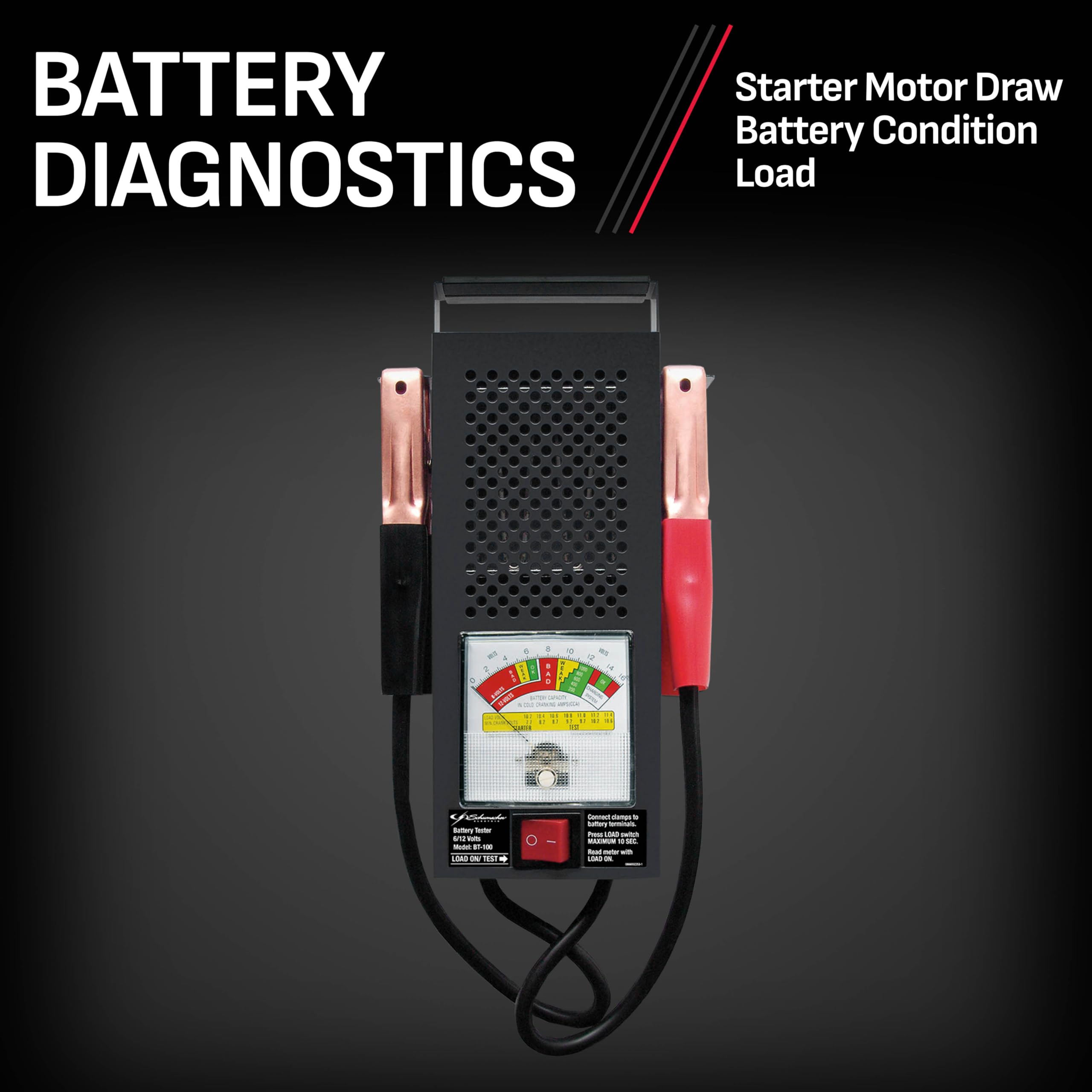
Key performance load test in step 6 for deep cycle verification.
Schumacher BT-100 Battery Load Tester Affordable, reliable for 12V batteries up to 1000 CCA; tests under load accurately.
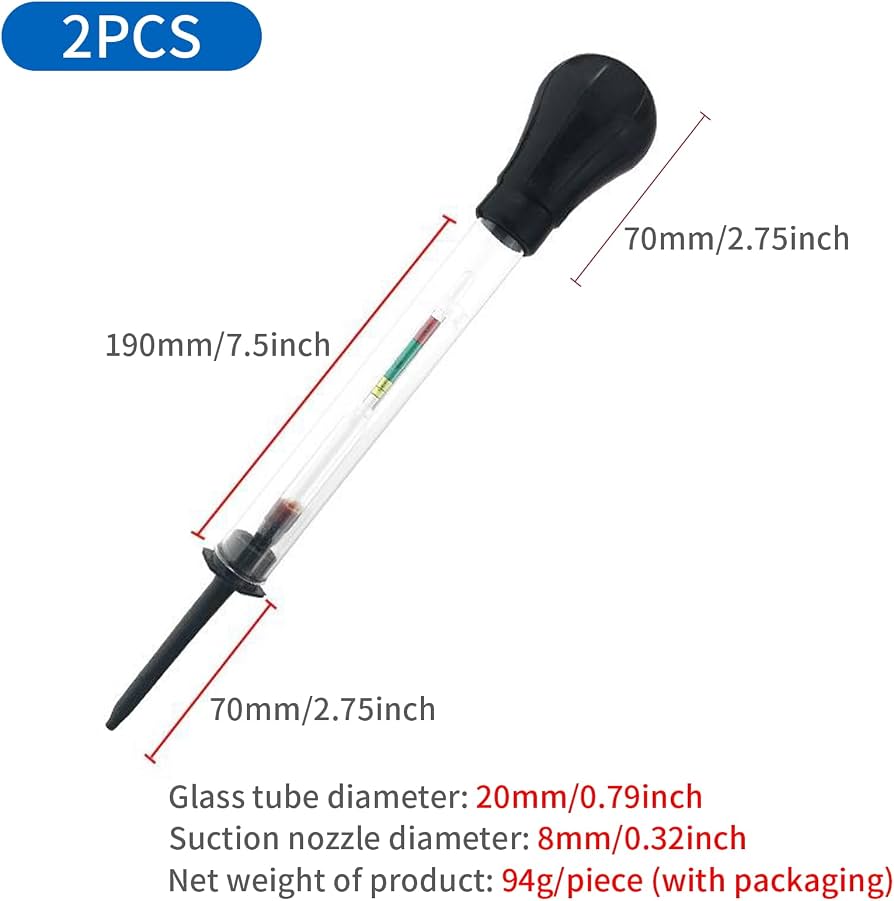
Electrolyte testing in step 5.
HulkTools Battery Hydrometer Tester Precise specific gravity readings for flooded deep cycle batteries.

During load tests to prevent overheating.
Etekcity Infrared Thermometer Lasergrip 1080 Non-contact temp checks for safe terminal and battery monitoring.
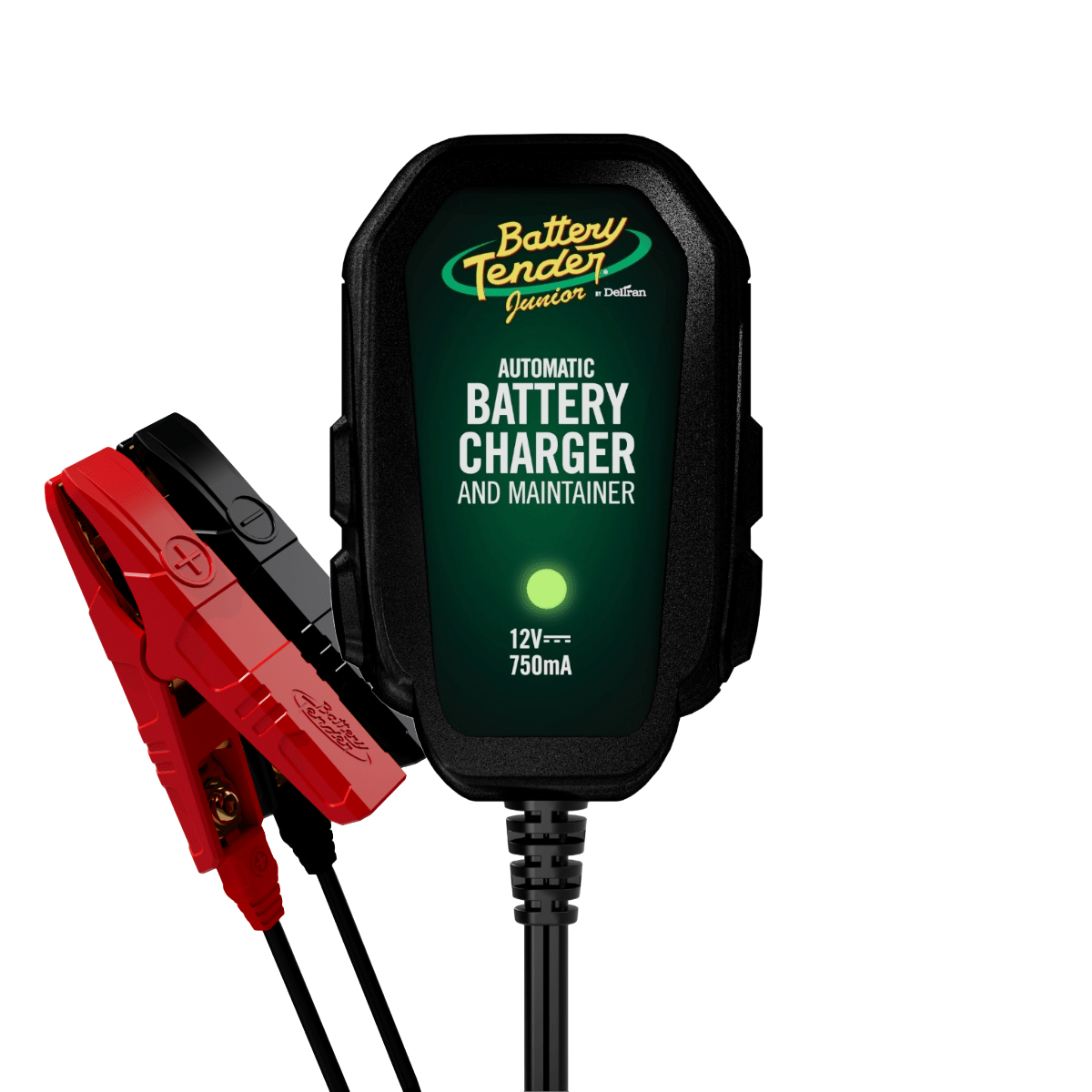
Step 7 recharging for accurate retests.
Battery Tender 021-0123 Junior Charger Smart charger for safe recharging post-test without overcharge.