
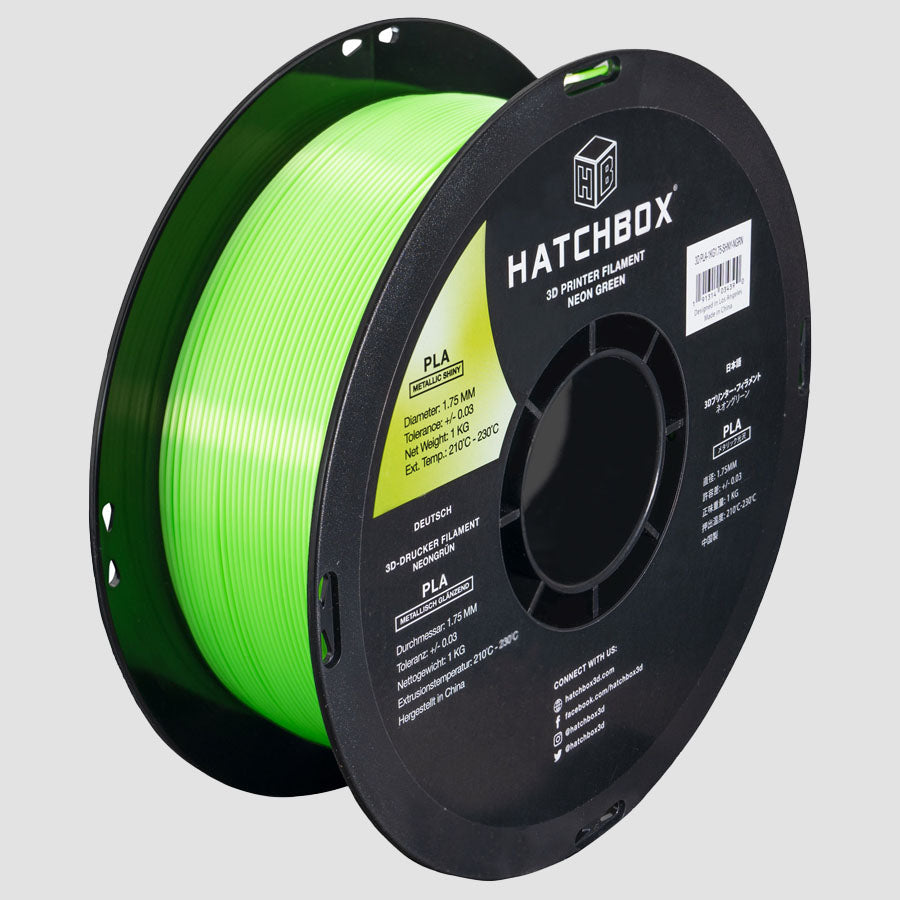
HATCHBOX PLA 1.75mm 1KG Spool
Everyday prints on Ender 3 or similar; any color.
$24.99
HATCHBOX PLA 1.75mm 1KG Spool Top-rated for dimensional accuracy (±0.03mm) and consistent extrusion—perfect for beginners.
Get the App
Better experience on mobile
Master filament selection to get flawless 3D prints without frustration—learn key factors, avoid pitfalls, and pick the best PLA for your printer.
As a 3D printing beginner, nothing's more frustrating than a print failing because of poor filament choice. PLA is the go-to material for starters—it's easy to print, affordable, and forgiving—but selecting the right one can make or break your projects. Bad filament leads to clogs, weak prints, or warping, wasting time and money.
In this guide, you'll learn the essential criteria for picking PLA filament: from compatibility and quality to colors and storage. By the end, you'll confidently buy filament that delivers smooth, strong results. It's straightforward—no advanced knowledge needed, just 15 minutes to read and apply.
Expect clear steps, real-world tips, and product picks to get you printing perfectly from day one.
Estimated Time: 15-20 minutes to read and select your first spool Difficulty: beginner
PLA (Polylactic Acid) is a biodegradable thermoplastic made from corn starch or sugarcane. It's the best starter filament because it prints at low temperatures (190-220°C nozzle, no heated bed required), has minimal warping, and smells sweet during printing.
Why it matters: PLA is rigid yet brittle, ideal for prototypes, toys, and decorative items—not flexible parts. Expect layer adhesion that's strong if settings are right, but it's sensitive to moisture (store dry).
Analogy: Think of PLA like Play-Doh—easy to mold but hardens firm, unlike tougher 'chewing gum' filaments like TPU.
💡 Tips:
Review your printer's manual for supported filament diameter (usually 1.75mm for Ender 3, Prusa; 2.85mm for some Ultimaker). Note nozzle size (0.4mm standard) and max temp.
Why it matters: Mismatched diameter causes jams or under-extrusion. Most beginners use 1.75mm—confirm yours.
Expect: Quick spec check via printer site or slicer software like Cura.
⚠️ Warnings:
Filament diameter varies slightly; good PLA stays within ±0.03-0.05mm for consistent flow.
Why it matters: Poor tolerance leads to blobs, gaps, or clogs. Measure with calipers at multiple points.
Example: A 1.75mm spool reading 1.78mm everywhere is premium.
💡 Tips:
Stick to trusted makers like Hatchbox, Overture, or eSun for consistent quality, no impurities.
Why it matters: Cheap generics often have moisture, inconsistencies, or weak bonds. Brands test for roundness and purity.
Expect reliable prints with minimal stringing.
💡 Tips:
⚠️ Warnings:
PLA comes in 50+ colors; matte, glossy, silk, or glow-in-dark. Start with basics like black, white, gray.
Why it matters: Color affects light transmission and hiding layer lines. Silk hides imperfections well.
Analogy: Like paint—matte for stealth, glossy for shine.
💡 Tips:
1kg (2.2lb) spools are standard (~$20); larger 4-5kg save money long-term.
Why it matters: Bigger spools reduce swaps; price/kg under $20 is good value.
Expect 300-500g/hour print yield.
Scan Amazon/Reddit for 'consistent extrusion', low defect rates. Look for vacuum-sealed packs.
Why it matters: Hygroscopic PLA absorbs moisture, causing pops/pops.
Dry in oven (50°C/2hrs) if needed.
💡 Tips:
Order sample, print a calibration cube (e.g., from Thingiverse).
Why it matters: Confirms flow before big projects. Adjust slicer if needed.
Success: Smooth layers, no gaps.
Problem: Stringy or blobby prints
Solution: Switch to tighter tolerance filament (±0.02mm); increase retraction in slicer.
Problem: Brittle or cracking prints
Solution: Use drier, higher-quality PLA; print slower (40mm/s).
Problem: Filament jams in extruder
Solution: Confirm 1.75mm diameter; clean nozzle; avoid direct sunlight storage.
Problem: Faded or inconsistent color
Solution: Buy from reputable brands; store away from UV light.
Top-rated for dimensional accuracy (±0.03mm) and consistent extrusion—perfect for beginners.
Best for: Everyday prints on Ender 3 or similar; any color.
Price Range: $24.99
Vacuum-sealed, low moisture, tangle-free—excellent value with strong layer adhesion.
Best for: High-volume printing; silk or matte finishes.
Price Range: $21.99
Budget-friendly with precise tolerance; great for colorful, smooth prints.
Best for: Resin printer owners transitioning to FDM; multi-color starters.
Price Range: $19.99
Affordable, reliable for newbies; good flow and minimal warping.
Best for: First-time buys on tight budgets.
Price Range: $15.99
Everyday prints on Ender 3 or similar; any color.
HATCHBOX PLA 1.75mm 1KG Spool Top-rated for dimensional accuracy (±0.03mm) and consistent extrusion—perfect for beginners.
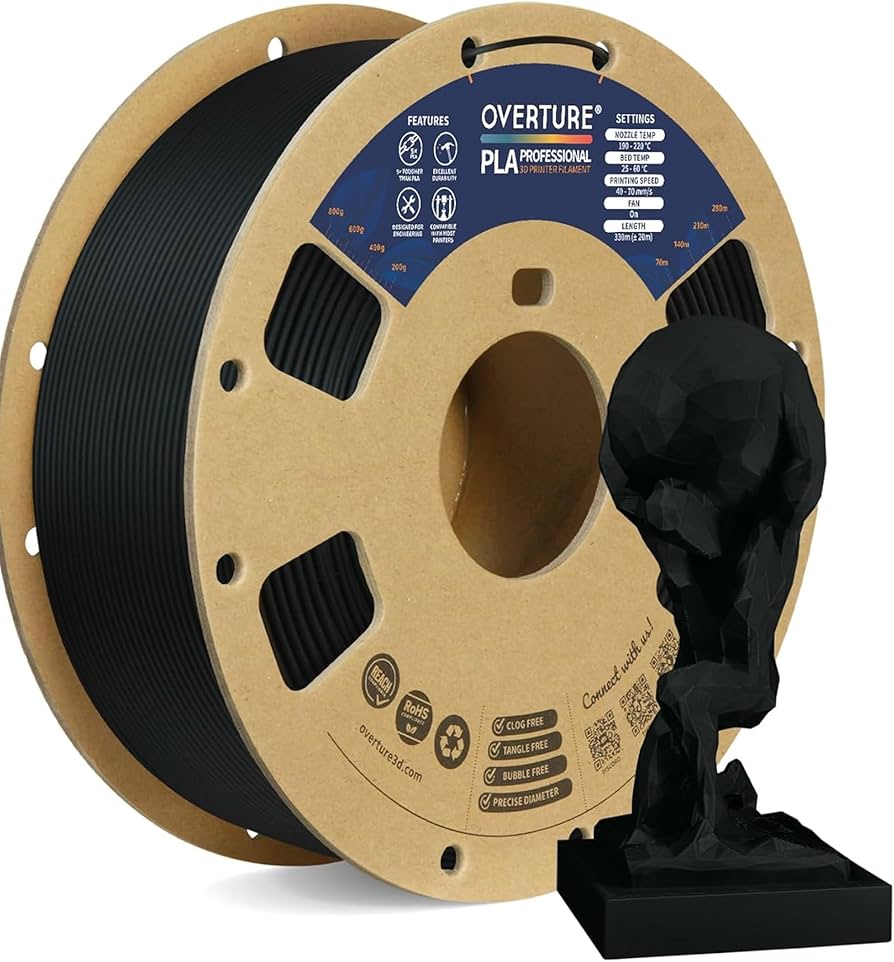
High-volume printing; silk or matte finishes.
Overture PLA Filament 1.75mm 1KG Vacuum-sealed, low moisture, tangle-free—excellent value with strong layer adhesion.
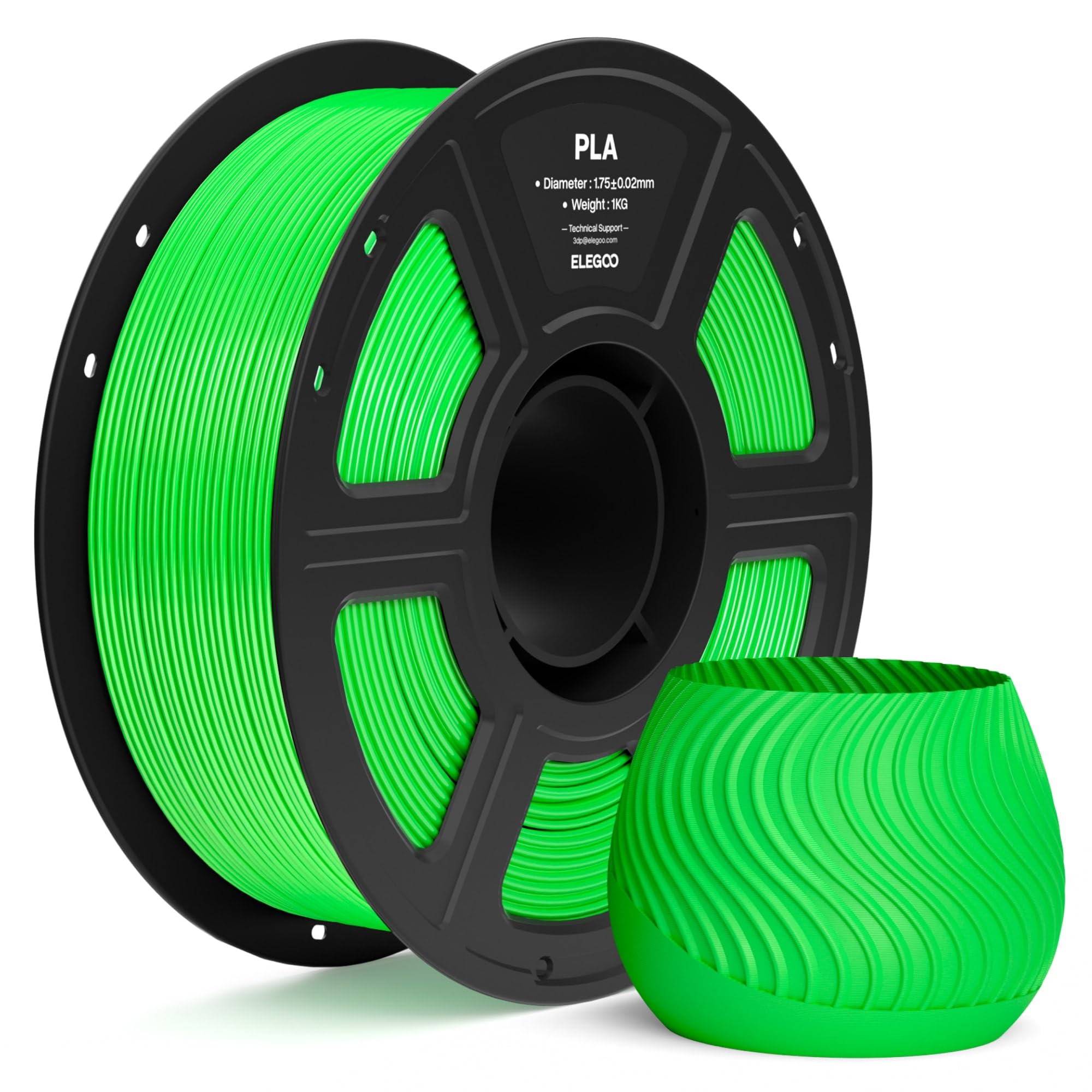
Resin printer owners transitioning to FDM; multi-color starters.
ELEGOO PLA Filament 1.75mm 1KG Budget-friendly with precise tolerance; great for colorful, smooth prints.
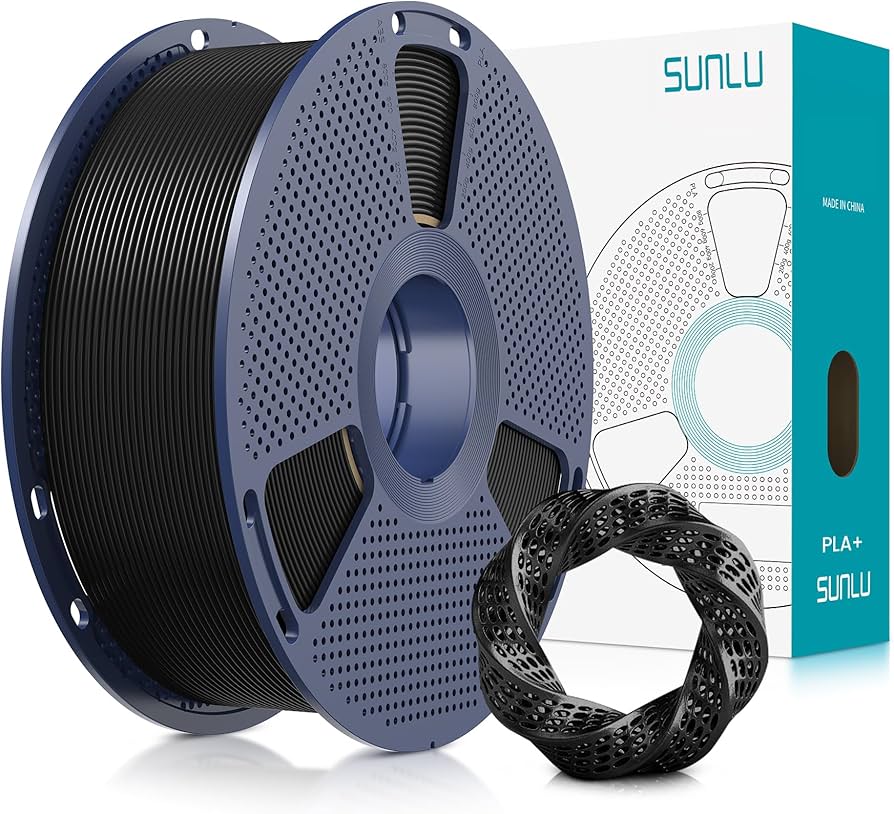
First-time buys on tight budgets.
SUNLU PLA Filament 1.75mm 1KG Affordable, reliable for newbies; good flow and minimal warping.