Imagine you're late for work, turn the key, and nothing happens—a dead battery. It happens to everyone, but knowing how to safely jump-start your 12V car battery can save the day and hundreds in towing fees. This guide is for beginners, walking you through every detail to avoid sparks, damage, or injury.
You'll learn the exact sequence using standard jumper cables and a donor vehicle, plus safety checks and post-jump care. The process takes 10-20 minutes and requires no special tools beyond basics. By the end, your car will roar to life safely.
We'll cover positioning vehicles, correct cable connections (positive first!), starting order, and safe disconnection—backed by AAA and automotive best practices.
▸What You'll Need
- •Set of heavy-duty jumper cables (4-6 gauge, 10-20 feet long, with clear red/black clamps)—required
- •Working donor vehicle with a fully charged 12V battery (similar size to your car)—required
- •Safety gloves and eye protection—recommended
- •Flashlight (if in low light)—optional
- •Battery terminal cleaner brush—optional but helpful
Estimated Time: 10-20 minutes
Difficulty: beginner
▸Step-by-Step Instructions
Step 1: Check Safety and Prepare Vehicles
Park both the dead car (patient) and donor car (with good battery) in neutral or park, engines off, and apply parking brakes. Ensure both have 12V batteries of similar capacity (e.g., don't use a truck for a sedan). Turn off all lights, radios, and accessories on both.
Inspect batteries for damage, leaks, or corrosion—if bulging or cracked, stop and call a pro. Why? Prevents explosions from hydrogen gas. Success: Vehicles secure, no electronics on.
Image description: Two cars parked close, hoods open, showing batteries.
💡 Tips:
- •Choose a donor with double the amp rating if possible.
⚠️ Warnings:
- •Never jump if battery is frozen, damaged, or hissing.
Step 2: Position Vehicles Safely
Position cars nose-to-nose or side-by-side (within 2 feet) without touching. Keep a 2-foot gap between batteries. Engines off, keys out.
This minimizes cable length needs and spark risk. Expect: Clear access to batteries under hoods.
Image description: Overhead view of two cars positioned close with hoods up.
💡 Tips:
- •Flat, well-ventilated area away from traffic.
⚠️ Warnings:
- •Avoid flammable areas like garages with gas spills.
Step 3: Locate and Clean Battery Terminals
Open hoods, prop securely. Find positive (+) and negative (-) terminals (red cover +, black -). Clean corrosion with brush and baking soda/water mix if needed.
Dry terminals. Why? Ensures solid connection. Success: Shiny, clean terminals visible.
Image description: Close-up of car battery with labeled + and - terminals.
⚠️ Warnings:
- •Wear gloves—acid burns skin.
Step 4: Connect Red Cable to Dead Battery Positive
Attach one red clamp to dead battery's positive (+) terminal. Secure firmly.
Positive first reduces spark risk near battery. Expect a snug fit, no loose wobble.
Image description: Hand clamping red cable to + terminal on dead battery.
💡 Tips:
- •Wiggle clamp for best contact.
Step 5: Connect Other Red to Donor Positive
Clamp other end of red cable to donor battery's positive (+) terminal.
Now positives linked. No sparks yet—safe.
Image description: Red cables connected between two batteries.
⚠️ Warnings:
- •Keep black cable away from parts.
Step 6: Connect Black to Donor Negative
Attach one black clamp to donor battery's negative (-) terminal.
Circuit half-complete. Success: All but one clamp attached.
💡 Tips:
- •Route cables away from fan belts.
Step 7: Ground Black on Dead Car (Not Battery)
Clamp other black to unpainted metal on dead car's engine block or frame (away from battery/fuel).
Why ground? Sparks away from hydrogen gas. Expect faint hum if connected right.
Image description: Black clamp on engine block metal.
⚠️ Warnings:
- •Never to dead battery negative—explosion risk!
Step 8: Start Donor Car and Wait
Start donor engine, rev to 2000 RPM for 2-5 minutes. Check for overheating cables.
Charges dead battery. Success: Donor idling smoothly.
💡 Tips:
- •Let charge 5 mins for weak batteries.
Step 9: Start Dead Car
Try starting dead car (don't crank over 10 seconds). If it starts, let both idle 2-3 mins.
Success: Engine turns over, headlights brighten.
Image description: Dead car starting with smoke from exhaust.
⚠️ Warnings:
- •If no start after 3 tries, stop—battery issue.
Step 10: Disconnect Cables in Reverse Order
Turn off both engines. Remove: 1) Dead car ground black, 2) Donor black, 3) Donor red, 4) Dead red.
Reverse prevents shorts. Drive dead car 30+ mins to recharge.
Image description: Sequence of removing clamps.
💡 Tips:
- •Inspect cables for damage.
▸Pro Tips
- •Use thicker gauge cables (4-6) for faster jumps and cold weather.
- •Rev donor to 2000 RPM briefly for quicker charge.
- •Carry a portable jump starter for solo jumps—no donor needed.
- •Test battery health post-jump with a multimeter.
- •Label cables if colors fade.
- •Practice on a good battery first.
- •In cold weather, warm batteries indoors if possible.
▸Common Mistakes to Avoid
- •Connecting negative to dead battery—causes sparks/explosions; always ground to metal.
- •Reversing polarity (red to black)—damages electronics; double-check + first.
- •Starting donor before full connection—risks arc; connect all first.
- •Insufficient charge time—weak battery won't hold; wait 5 mins.
- •Touching clamps together—short circuit; keep separated.
▸Troubleshooting
Problem: Dead car won't start after 5 mins
Solution: Check connections, rev donor higher, or bad alternator—drive to shop with donor following.
Problem: Sparks or smoking cables
Solution: Disconnect immediately, check polarity, replace damaged cables.
Problem: Battery clicks but no crank
Solution: Battery too dead or starter issue—use portable jump starter or tow.
Problem: Car starts but dies after disconnect
Solution: Faulty alternator or battery—get tested at auto parts store.
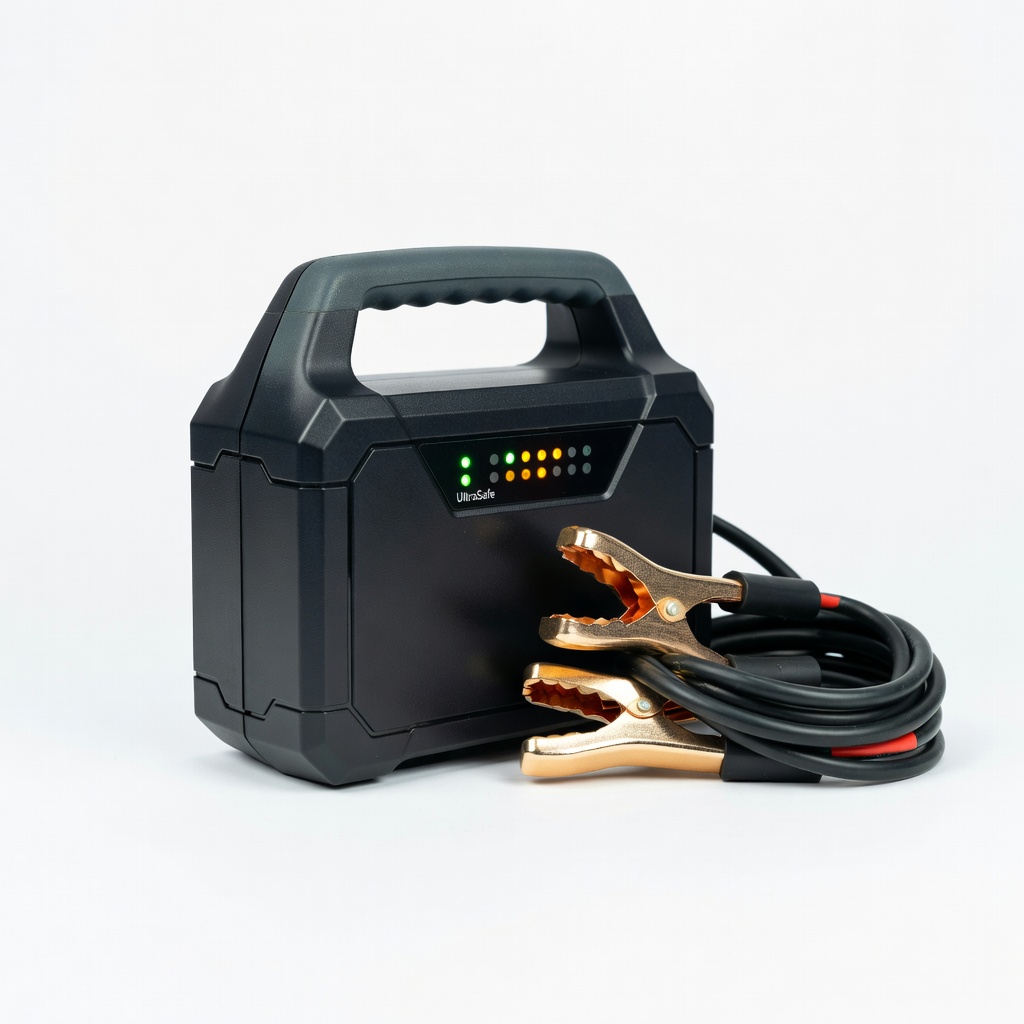
NOCO Boost Plus GB40 1000 Amp 12V UltraSafe Lithium Jump Starter
Eliminates need for donor car; smart clamps prevent reverse polarity errors—ideal for beginners.
Best for: Solo jumps anytime, stores easily in trunk.
Price Range: $124.95
Cartman Jumper Cables 16Ft 4 Gauge Heavy Duty Booster Battery Jump Start Cables
Thick 4-gauge for reliable power transfer, long length for easy positioning, budget-friendly.
Best for: Standard two-car jumps on sedans/SUVs.
Price Range: $25.99
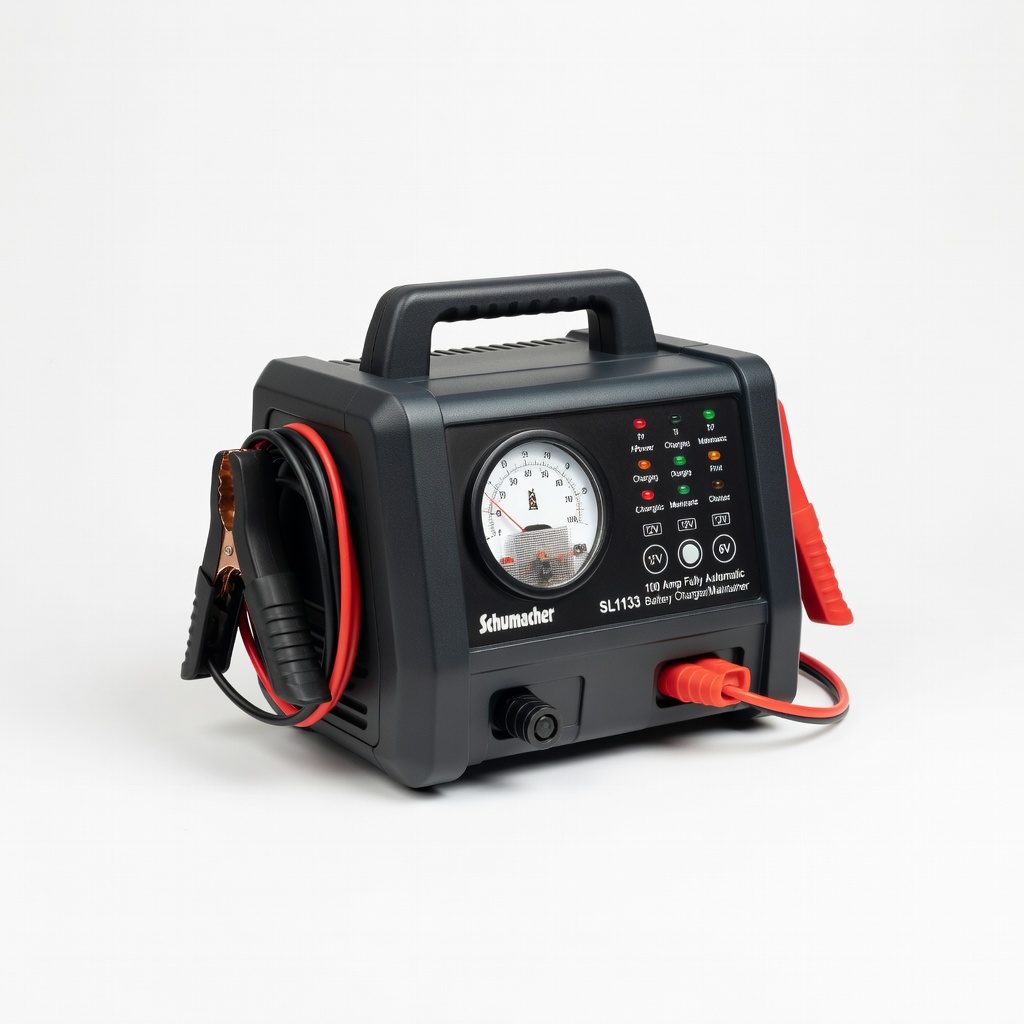
Schumacher SL1133 100 Amp Fully Automatic Battery Charger/Maintainer
Post-jump charger prevents future dead batteries; auto mode safe for storage.
Best for: Recharge after jump or maintain parked cars.
Price Range: $29.99
Energizer Heavy Duty Battery Terminal Cleaner Brush
Quickly removes corrosion for perfect connections—essential for reliable jumps.
Best for: Prep step before every jump.
Price Range: $9.99
Husky Mechanics Gloves
Durable protection from acid and sparks—comfortable for quick jobs.
Best for: Safety gear for all battery work.
Price Range: $12.98