Nutrition labels are supposed to help you eat healthier, but if you're like most people, you may find them confusing. What does "percent daily value" really mean? Is 200 calories a serving or the whole package? And why are there 50 ingredients in a box of crackers? These questions are exactly why learning to read nutrition labels correctly is essential.
In this beginner-friendly guide, you'll learn a simple, step-by-step system for reading any nutrition label. We'll break down each part - from serving size to calories, percent daily values, and the ingredient list - so you can quickly evaluate a product and confidently decide if it fits your goals. No complex math or health-science degree required.
By the end of this guide, you'll be able to scan a label in under a minute, compare products like a pro, and understand what those cryptic numbers really mean for your health. Let's dive in.
▸What You'll Need
- •A packaged food or drink with a nutrition facts label
- •A phone or calculator (optional) for light math
- •A digital kitchen scale (optional) to measure portions
- •Measuring cups/spoons (optional) to visualize serving sizes
- •A magnifying glass or good lighting (helpful for small print)
Estimated Time: 10–15 minutes to learn the system; under a minute for each label once mastered
Difficulty: beginner
▸Step-by-Step Instructions
Step 1: Start with Serving Size: The Key to Everything Else
The serving size is the first item on the label, and it's the most important. All the nutrition facts below - calories, fat, sodium, etc. - apply to a single serving, not the whole package. With the FDA's 2021 update, the serving sizes have been made more realistic based on what people actually eat. For example, a bottle of soda labeled as one serving is about 12 ounces, even if it contains 20 ounces.
To use it correctly, first check the serving size (e.g., "1 cup" or "5 pieces") and the number of servings per container ("2 servings per container"). Then compare that to how much you actually eat. If you eat twice the serving size, you need to double everything on the label. If you eat half, you halve it.
💡 Tips:
- •Use measuring cups or a kitchen scale to visually see what a serving looks like - you'll often be surprised.
⚠️ Warnings:
- •Don't assume the whole package is one serving. Even "snack" packages can have two servings.
Step 2: Check Calories: Your Energy Baseline
Calories are a measure of how much energy you get from a serving of food. They're listed right after serving size, often with the phrase "Calories from Fat" (though that is no longer required). The calorie number is a starting point for managing weight: if you eat more calories than your body needs, you'll gain weight; if you eat fewer, you'll lose weight. But not all calories are equal - two foods with the same calorie count can have very different nutritional value.
Use the serving size to calculate how many calories you're actually consuming. For example, if a serving has 250 calories and you eat two servings, you're taking in 500 calories. Your daily calorie needs depend on age, sex, activity level, and goals. The average is around 2,000 calories, but it varies widely.
💡 Tips:
- •Use a food tracking app or a calorie calculator when you're first learning to understand your own daily needs.
⚠️ Warnings:
- •Don't rely on calories alone to judge food; a 100-calorie pack of cookies is still cookies.
Step 3: Use Percent Daily Value (%DV) as a Quick Reference
The percent daily value (%DV) on the right side of the label tells you how much a nutrient in a serving contributes to a daily diet, using a standard 2,000-calorie diet. You don't need to do any math - the %DV does it for you. A simple rule of thumb: 5% DV or less of a nutrient per serving is considered low, and 20% DV or more is considered high. Use this to quickly scan whether a food is high or low in a particular nutrient.
For example, if a food has 4% DV of sodium, it's low; if it has 25% DV of saturated fat, it's high. This shortcut is especially useful when comparing two similar products at the store.
💡 Tips:
- •Memorize the 5/20 rule and use it as a mental shortcut every time you look at a label.
⚠️ Warnings:
- •%DV is based on a 2,000-calorie diet. If your daily intake is higher or lower, the exact percentage will vary, but the 5/20 rule still works for quick judgments.
Step 4: Limit These Nutrients: Saturated Fat, Sodium, and Added Sugars
The FDA requires certain nutrients to be declared because of their impact on health. For most adults, you want to keep these three low: saturated fat, sodium (salt), and added sugars. Eating too much saturated fat can raise cholesterol levels and increase heart disease risk. Excess sodium raises blood pressure. Added sugars contribute empty calories and can lead to weight gain and metabolic problems. The label lists these with their amounts and %DV.
Look for products with a lower %DV for these nutrients. A good goal is to keep saturated fat and sodium below 20% DV per serving, and added sugars as low as possible. Trans fat also falls into this category; the FDA has largely banned it, but you should still aim for 0g.
💡 Tips:
- •Check the ingredient list for hidden added sugars - anything ending in "ose" (like sucrose, fructose, maltose) plus syrups, honey, and molasses.
⚠️ Warnings:
- •A product can claim "no added sugar" but still be high in naturally occurring sugar, like fruit juice concentrate.
Step 5: Get Enough of These Nutrients: Fiber, Vitamins, and Minerals
The nutrition label also shows nutrients you should aim to get enough of: dietary fiber, vitamin D, calcium, iron, and potassium. These are essential for good health, and many Americans don't get enough of them. Fiber supports digestion and heart health, vitamin D and calcium keep bones strong, and potassium helps maintain healthy blood pressure.
Choose foods that have a higher %DV for these nutrients - ideally 10% DV or more, and even better when it's 20% DV or more. When comparing similar products, pick the one with more fiber and vitamins.
💡 Tips:
- •Think of the nutrients to limit as the "bad stuff" (keep %DV low) and the nutrients to get enough of as the "good stuff" (look for high %DV).
⚠️ Warnings:
- •Don't be fooled by fortified foods that have vitamins sprayed in; whole foods like fruits, vegetables, and whole grains offer better nutrition.
Step 6: Understand the Footnote: Daily Values and the 2,000-Calorie Diet
At the bottom of a nutrition label, you'll see the footnote with a statement that says: "The % Daily Value tells you how much a nutrient in a serving of food contributes to a daily diet. 2,000 calories a day is used for general nutrition advice." Some labels also include the full list of daily values for 2,000 and 2,500 calorie diets. This is a reminder that the %DV is based on general recommendations, not your specific needs.
Since the 2021 label update, the footnote has gotten shorter, and small packages may omit the full footnote and include just a simplified version. You don't need to change your shopping based on this footnote, but it helps you interpret the percentages correctly.
💡 Tips:
- •Use an online TDEE calculator to find your personal calorie and nutrient needs so you can better interpret the %DV.
⚠️ Warnings:
- •The footnote is not part of the product's unique information; it's a standard legal guide that appears on all labels.
Step 7: Read the Ingredient List: The Real Story
The ingredient list is often more revealing than the nutrition facts panel. Ingredients are listed in descending order by weight, so the first ingredient is the most plentiful. This tells you what's really in the food beyond the nutrient numbers. Look for whole foods as the first ingredients, like "whole wheat flour," "oats," or "vegetables." If you see lots of unrecognizable names, hydrogenated oils, artificial colors, or several types of sugar in the top five, the food may be highly processed.
The updated label now requires added sugars to be listed separately in the nutrition facts, but the ingredient list is where you'll see their actual names: corn syrup, cane juice, honey, maple syrup, maltose, and dextrose. Also watch for sodium in ingredients like sodium nitrite, monosodium glutamate (MSG), and baking soda.
💡 Tips:
- •A simple rule: if you can't pronounce an ingredient, you might want to put the product back on the shelf.
⚠️ Warnings:
- •"Made with whole grains" does not automatically make a product healthy - check the ingredient list and fiber content for the full story.
Step 8: Keep the Big Picture in Mind: The Label Is One Piece of the Puzzle
A single nutrition label doesn't tell the whole story of your diet. You eat many foods throughout the day, so it's the overall pattern that matters, not one product. Use the label to compare similar items (e.g., two brands of yogurt) and to see how a food fits into your daily nutrient goals. Don't classify foods as "good" or "bad" based on one label; instead, ask "How does this fit into the rest of my day?"
The most nutritious foods - fruits, vegetables, whole grains, lean proteins, and healthy fats - often don't have labels at all. The label is most helpful for processed and packaged foods. Use it as a tool to support an overall healthy eating pattern, not as a strict judge.
💡 Tips:
- •When in doubt, choose products with fewer and more recognizable ingredients.
⚠️ Warnings:
- •Don't become obsessive about single nutrients; aim for consistent, informed choices rather than perfection.
▸Pro Tips
- •Always check the serving size first and compare it to your actual portion - this is the most common source of label reading errors.
- •Use the 5/20 rule: 5% DV or less is low, 20% DV or more is high. It makes scanning labels take seconds.
- •Remember that "low fat" or "reduced fat" products often add extra sugar or sodium to compensate for flavor - read the full label.
- •Look at the amount of added sugars, not just total sugars. Naturally occurring sugars from fruit and dairy count in total but are not added.
- •When comparing products, compare the same serving size and use the %DV to pick the healthier option. If one cereal has 5g fiber and another has 1g, choose the first.
- •Know your own calorie and nutrient needs using a free TDEE calculator online; this makes the %DV more meaningful for your body.
- •Don't rely on memory - keep a small set of measuring cups or a digital scale in the kitchen to practice portion sizes.
- •Scan the ingredient list for "partially hydrogenated oil" even if the label says 0g trans fat - that's a sign to avoid the product.
▸Common Mistakes to Avoid
- •Thinking that a serving size equals the entire package. Check the "servings per container" line - many single-serve bottles and small bags have 2+ servings.
- •Ignoring the %DV and only looking at calories. The %DV gives context for whether a food is high or low in nutrients.
- •Trusting front-of-package claims like "gluten-free," "natural," or "high-protein" without checking the back of the package. These claims are often marketing.
- •Focusing on one nutrient while ignoring the rest. For example, a product might be low in fat but extremely high in sodium or added sugar.
- •Not adjusting for their own calorie needs. The 2,000-calorie baseline is an average; if you're a petite woman or a tall athlete, your needs differ.
▸Troubleshooting
Problem: The print on the label is too small to read.
Solution: Use a magnifying glass with a light, or take a photo with your phone and zoom in. You can also search for the product online to see its full nutrition facts.
Problem: The product has no nutrition label (e.g., fresh produce or deli meats).
Solution: Use reputable nutrition databases like the USDA's FoodData Central or calorie counter apps to look up typical nutritional values.
Problem: You're not sure how many calories you need each day.
Solution: Use an online calorie calculator that takes your age, sex, height, weight, and activity level into account. This will give you a personalized starting point.
Problem: A label says "0g trans fat" but the ingredient list shows "partially hydrogenated oil."
Solution: The FDA allows products with less than 0.5 grams of trans fat to round down to 0g. Avoid any product with partially hydrogenated oil in the ingredients, since even small amounts can add up over time.
Problem: You're trying to compare two different products that have different serving sizes.
Solution: Compare the nutrient amounts per serving, but also look at the %DV. For a direct comparison, weigh out an equal portion of each (e.g., 100g) using a kitchen scale and then compare the nutrient values.
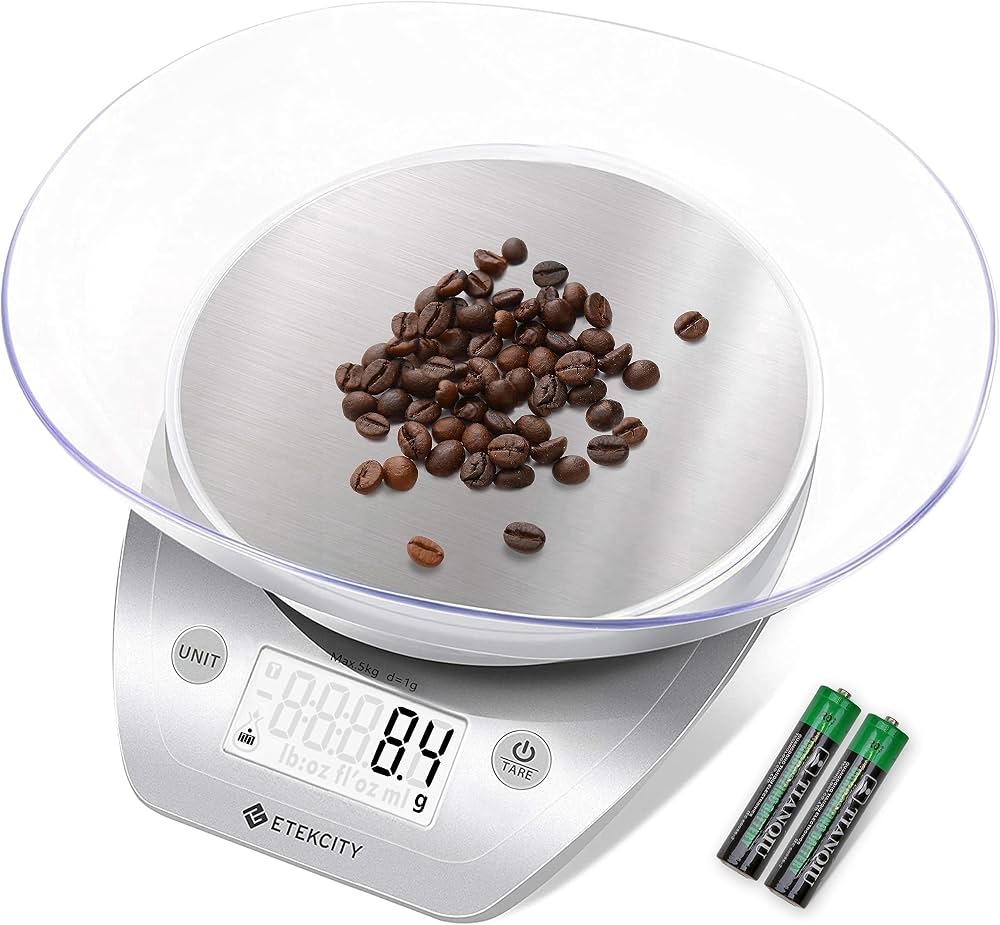
Etekcity Digital Kitchen Scale
Helps you measure your actual portion size so you can see how many servings you're really eating. This is critical for accurate label reading.
Best for: Use it at home to weigh foods like cereal, pasta, meat, and snacks to understand what a serving looks like.
Price Range: $10–$15
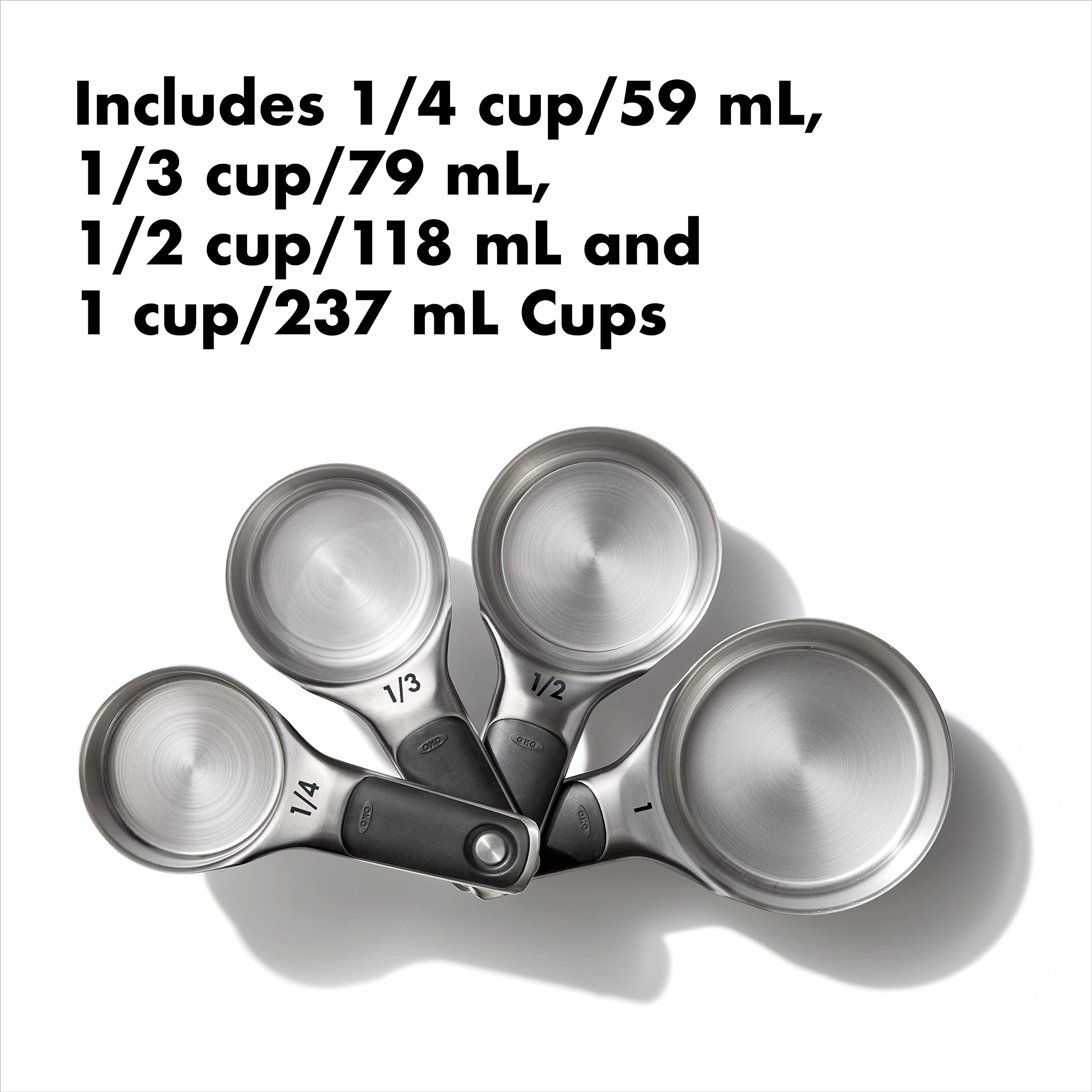
OXO Good Grips Measuring Cups and Spoons
Measure liquids and dry ingredients quickly to practice portion control and better understand serving sizes on labels.
Best for: Measure out common servings (like 1 cup of milk or 1 tablespoon of peanut butter) visually and practically.
Price Range: $20–$30
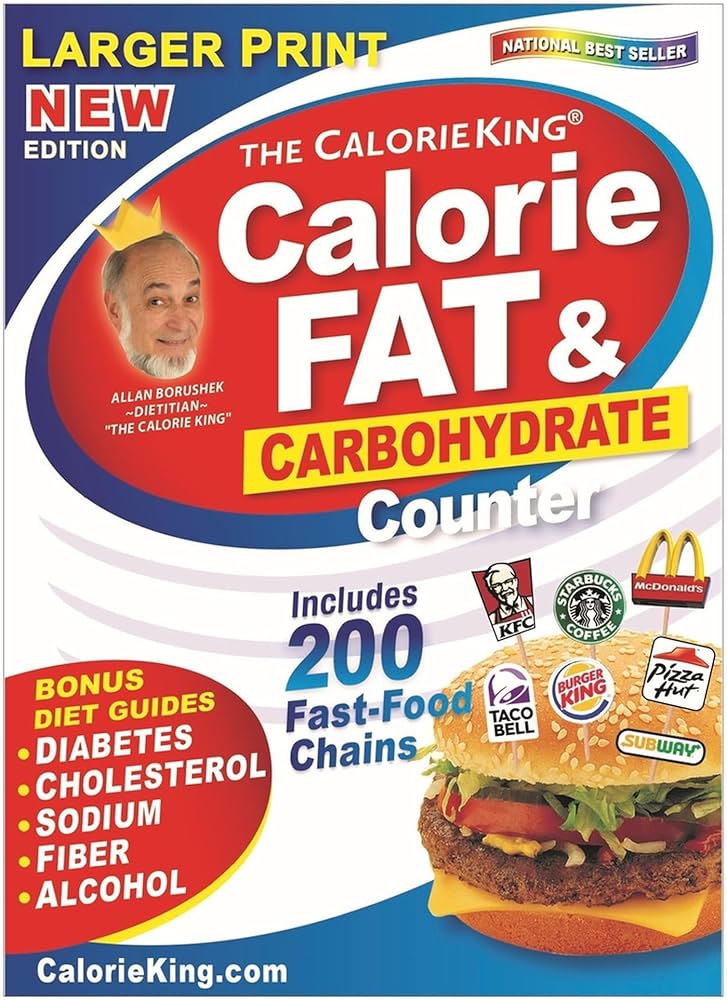
Calorie King Calorie, Fat & Carbohydrate Counter
A comprehensive reference book with nutrition info for thousands of foods, including restaurant items and fresh foods that don't have labels.
Best for: Look up nutrient values when you're eating out or dealing with unpackaged foods like fruit or bakery items.
Price Range: $10–$15
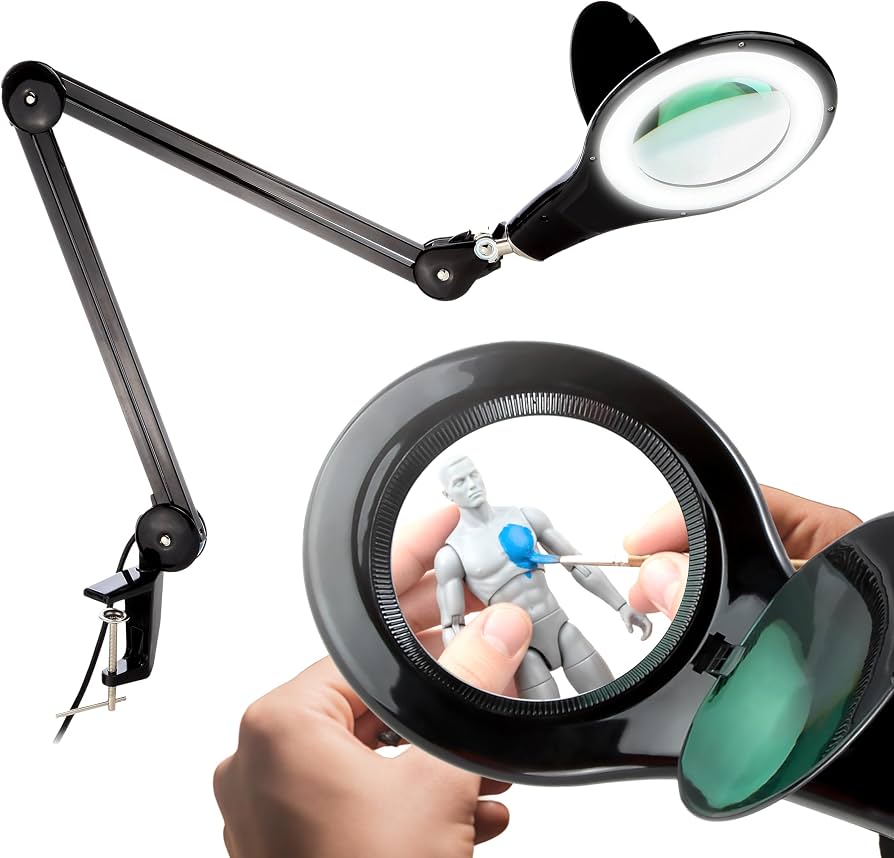
Brightech Lighted Magnifier
Tiny print on nutrition labels makes them hard to read, especially in low-light grocery store aisles. This magnifier makes it easy.
Best for: Keep it in your kitchen or shopping bag to quickly read small ingredient lists in any lighting.
Price Range: $15–$25